
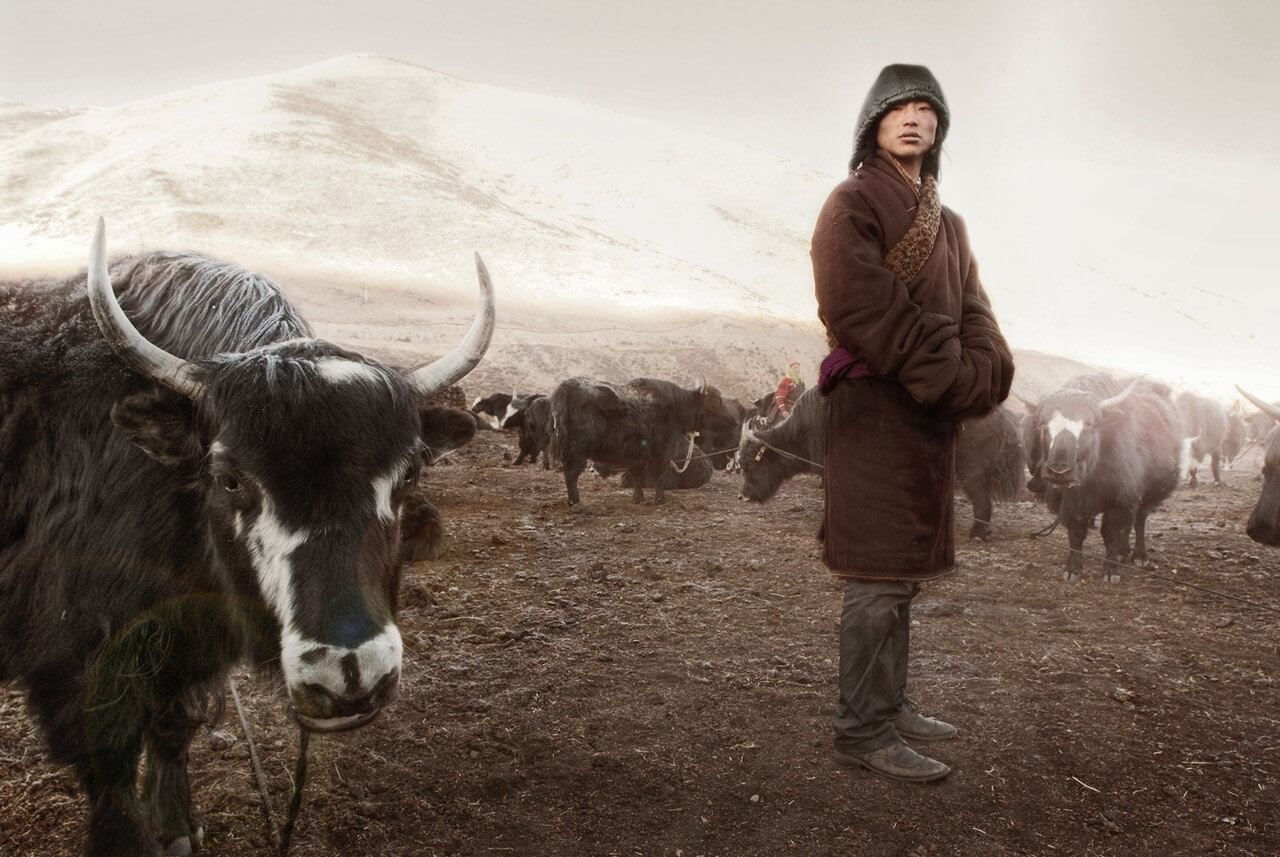


Julian Wilson, co-founder of Khunu, explains how the symbiotic relationship between Tibetan nomads and their yaks inspired a clothing brand. Olivia Selka reports.
Khunu was launched in 2009 after co-founders Julian Wilson and Aaron Pattillo travelled to the west of China and spent some time with Tibetan nomads living there. Co-founder Julian Wilson explains how the inhabitants and their daily existence inspired them: “Their whole existence is reliant on the yak, and although traditionally they have used the coarser fibres to make tents and rope, when we visited this was no longer the case and the fibre was almost viewed as a surplus resource that often blew away in the wind.”
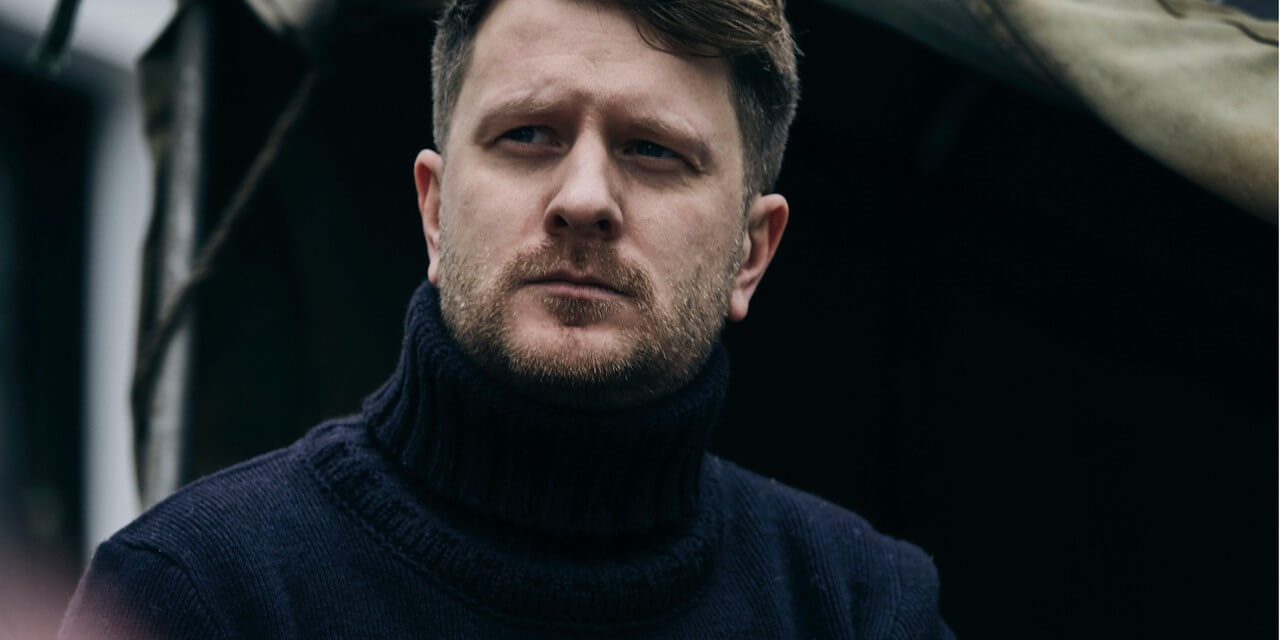
The first Khunu jumpers were launched in 2010 and the brand’s best sellers remain to be its range of jumpers
He continues: “What we learned about the properties of yak, particularly its warmth and softness, gave us a belief that this was a fibre the world was missing out on, and one that could provide the herder communities with a new and sustainable source of income.”
The idea to start the Khunu brand was hatched in a yak wool tent at 4,000 metres while sipping yak butter tea. The brand says that “ideas hatched in these environments turn out differently, you think of the needs of those around you, you think of your own needs living in such an environment, and when you come away and start building the framework of the idea, those early interactions remain central to your longer-term thinking.”
The name Khunu derives from Mongolia, and is the name given to the first collective of Mongolian tribes and thus represents bringing people together. Wilson says: “In our heads this meant bringing the customer closer to the herders looking after the animals at the source of the value chain.”
Khunu’s goal was to make the warmest, softest and most versatile clothing from yak wool: one of the world’s rarest and most sustainable fibres. And it seems the founders were onto something, as since 2009 there has been a considerable rise in demand for yak wool across the textile & apparel industry.
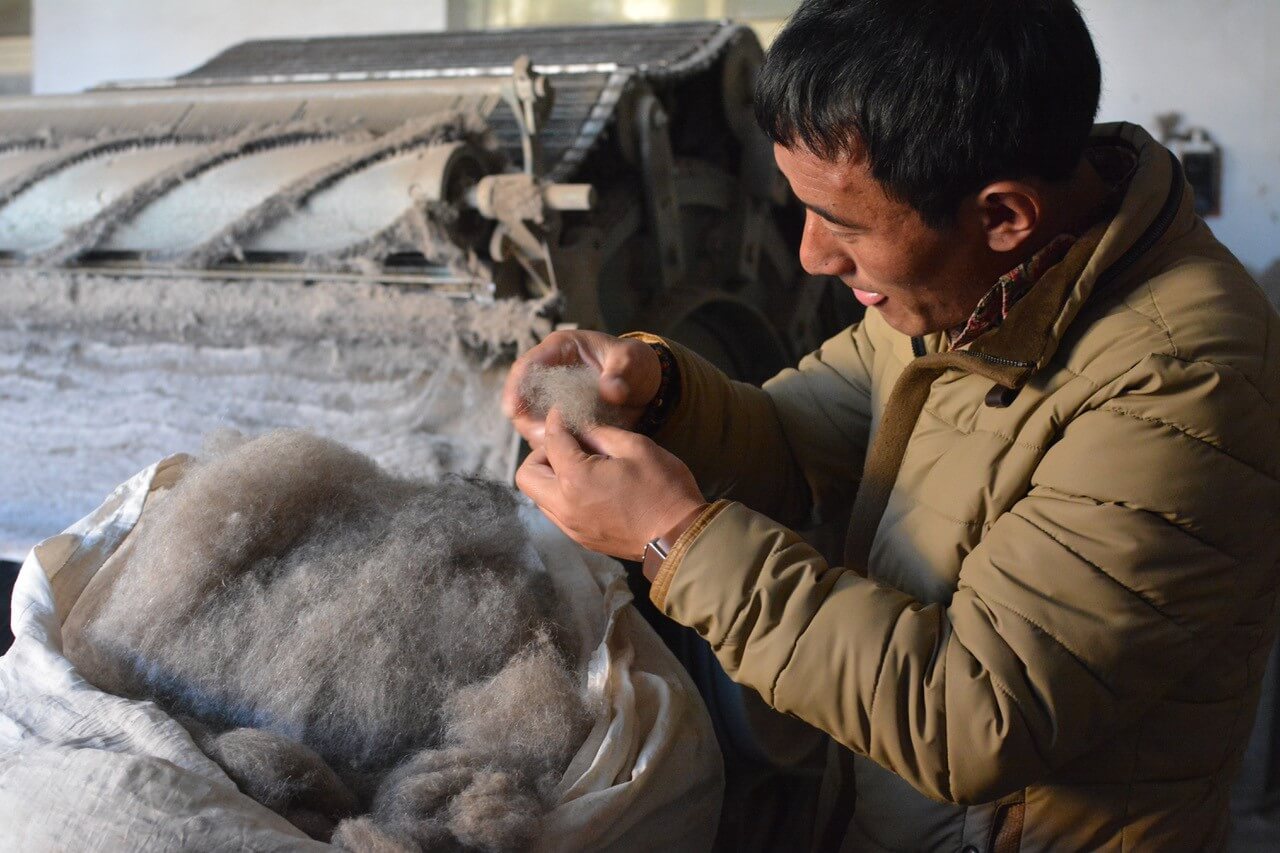
The company's goal was to make the warmest, softest and most versatile clothing from yak wool
Wilson explains the challenges the brand faced regarding textile experience and the limited use of yak wool at the time. He says: “As founders we had no experience in textiles or fashion, so we initially relied on partners to help us better understand the processes involved.”
Wilson continues: “At the time, nobody was really using yak wool, so even people in the textile industry knew very little about it. I guess we can now say we know quite a lot about the processes around yak, but there is always more to learn. Our customers tell us Khunu is a pretty unique brand, so perhaps that’s a benefit of going in with an open mind and no preconceived ideas about how things should be.”
Currently, the brand’s headquarters are in London and the supplier communities are based in Qinghai in China, where the yaks generally live on the high plateau at altitudes of over 3,800 metres – a good environment for producing fine yak wool fibres. But recently the Khunu team has been looking at new sources. Wilson explains: “Over the past year we’ve also been exploring new supply sources in Mongolia, working alongside local NGOs that monitor and help preserve the grasslands there.”
He continues: “We have access to far more wool than we can use ourselves, which means we need to look at new ways to utilise it, perhaps via retail or brand partnerships, so herders continue to make money from collecting the fibre.”

The name Khunu derives from Mongolia and is the name given to the first collective of Mongolian tribes
And when it comes to manufacturing, the brand is increasingly looking closer to home.
“The de-hairing takes place in China,” says Wilson, “and some of our yarn is spun there, but increasingly we’ve moved manufacturing to the UK and Europe.
“We are currently looking for a good UK spinner willing to work on yak and blended yak yarns, and a UK weaver to produce fabric and accessories. Our jumpers are knitted in the UK, as are our beanies, and most of the knitting is done on Stoll machines of various gauges.”
Tests conducted in the 1980s showed that in ambient temperatures of -18°C, the skin temperature of yaks remained at 8-20°C. As well as clearly being a very warm fabric, the benefits of yak wool are thought to be that it is softer than wool, it is odour resistant due to the antimicrobial properties of yak wool fibres; plus it fights off small microbes that live off sweat and build up on the surface of other fibres. And it is breathable, moisture-wicking, and of course, a natural, sustainable fibre.
The first Khunu jumpers were launched in 2010, and the brand’s range of jumpers as well as socks remain its best sellers. Some Khunu products, such as the Hemingway range, are made from a blend of yak and merino wool. Wilson explains the advantage of the mix: “One advantage of merino is that its long staple length makes spinning easier, particularly when spinning finer worsted yarns,” he says. “I like the way the two fibres work together, so although 100% yak is very appealing, if we can make a better product for a specific purpose or season by blending then I’ll do it. I’d rather innovate than stand still.”
The brand has achieved a global customer base with the largest market currently being the US, with the UK not far behind. “Our web store is the main way we sell,” says Wilson, “and people find us in all sorts of ways, hence why we have sold to customers in over 30 countries.”
In terms of the company’s approach to sustainability, Wilson explains the way in which it is utilising a highly sustainable and regenerative waste product – as yaks aren’t generally bred for fibre – that also happens to be high quality. Wilson describes the sustainable benefits of yak wool in comparison to cashmere supply chains and “the irreversible damage that can be caused to rangelands by overgrazing.”
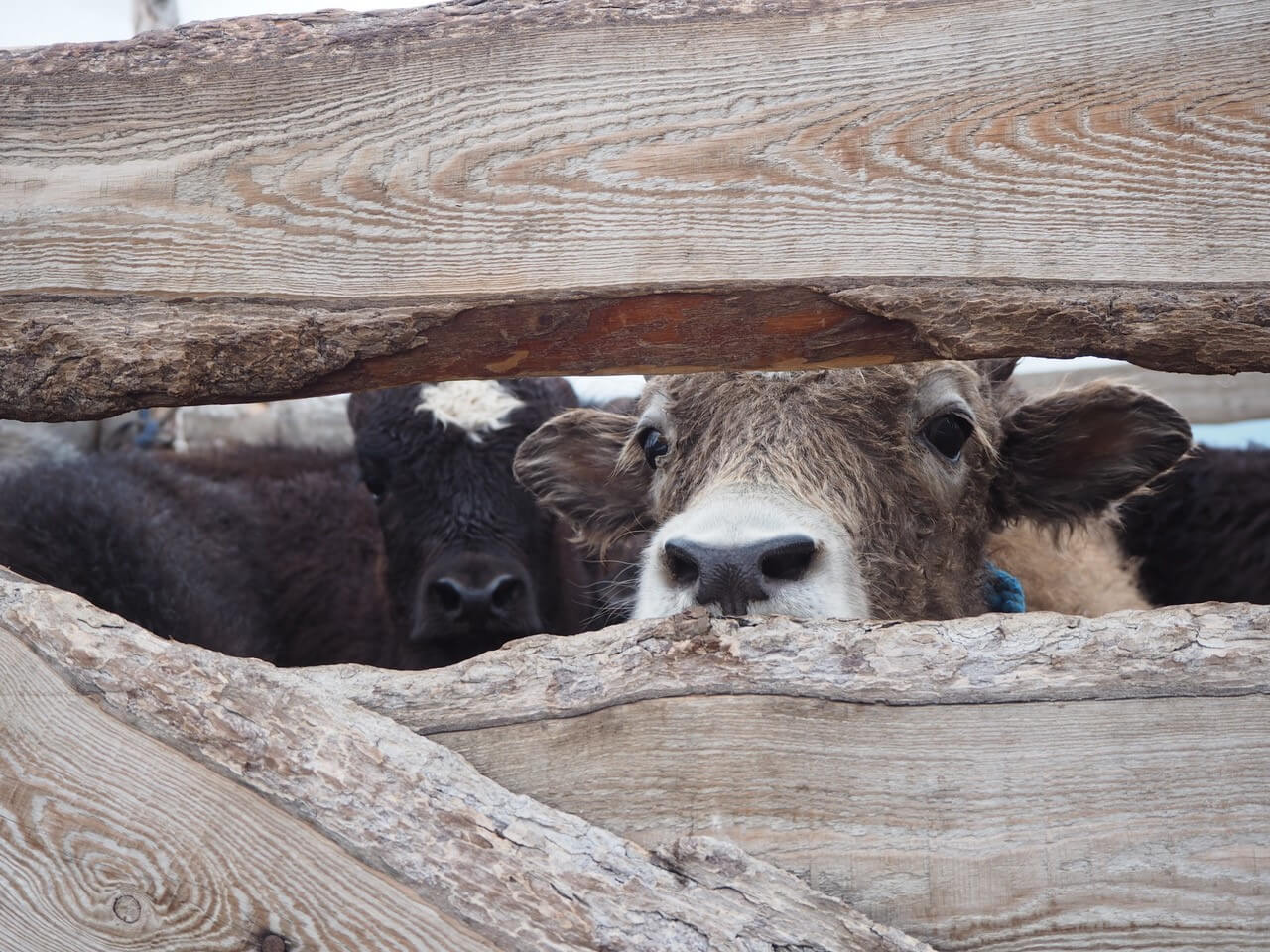
The whole existence of the Tibetan nomads is reliant on the yak
The company’s work with NGOs in Mongolia supports communities adopting sustainable grazing practices and, although it means paying slightly more for fibre, Wilson explains that the pricing gives herders “an incentive to look after their rangelands and maintain sustainable practices”.
“As for other parts of the value chain, much of our production is in Europe,” says Wilson. “So it’s pretty tightly regulated, but even in China we’ve visited all supply partners to ensure that they do things the right way.”
It is clear that the brand is very much inspired by travel, particularly to the regions it sources its materials from. “Had we not made those journeys I doubt Khunu would have ever been created, so exploring the world is a central theme to us,” says Wilson.
In 2019 the brand launched Khunu Explore, which allows customers to travel with the brand to Mongolia and Tibet, visiting remote areas and invariably involving the yaks. Wilson says: “For some years we’d wanted to take customers to the regions we source from – it gives them a greater connection to the origin and story of the product. These things are increasingly important to people.” In February 2020 Khunu announced the latest exploration entitled Arkhangai Journeys, and more information can be found on the brand’s website.
When it comes to future plans, the brand puts great focus on customer opinion, surveying its customers each year. Wilson says: “The overwhelming take-away is they want greater variety of what we already make, so that will be our main focus. That said, we are working on some really interesting new product ideas that will be unique to us when they launch. These products will be fully traceable, more sustainable than similar products out there, but also highly functional.”
With no background in textiles or fashion, the founders started Khunu on a blank canvas. Wilson explains that this was both good and bad. “We had no fear, so set out to create the brand we believed in with full oversight of the value chain and value created for people at the source of it.”
He continues: “When I think back to what we were trying to do with the resources we had it was a bit crazy, but you’re driven by belief and optimism, both of which can get you a long way with a good idea.
“We have come a long way, but our challenge now is to find the right partner or investor to help us move to the next stage.”
To find out more about Khunu, visit https://www.khunu.com/
Have your say. Join the conversation and follow us on LinkedIn