


Cyrus Gilbert-Rolfe, president and managing director, EMEA and Oceania at EVRYTHNG, talks to Jessica Owen about the company’s technology and partnership with Connected Fanatics to deliver sustainable consumer product experiences.
Founded in 2011 and headquartered in London, UK, EVRYTHNG has a mission ‘to digitise every consumer product in the world’. The reason being that it believes companies can run smarter and more efficiently in this way.
But what does ‘digitising products’ mean? Well, in this case it’s about giving every physical product produced a unique digital copy, aka an Active Digital Identity or digital twin. This digital twin makes every item that’s manufactured and sold trackable, intelligent, and interactive – connected by any type of tag form a QR code to NFC, RFID or Bluetooth.
“It all started with a very arbitrary comment that we overheard: why can’t I Google my shoes?” says Cyrus Gilbert-Rolfe, president and managing director, EMEA and Oceania at EVRYTHNG.
“It generated a conversation about why data can be available for digital products, but not for the physical item. We quickly created the idea of developing a connection between the physical and digital so that consumers, brands and manufacturers could have access to clear information about that product.”
With regard to apparel, EVRYTHNG’s technology means that brands can harness data intelligence from every garment to drive new supply chain, brand protection, and consumer engagement applications throughout the product’s lifecycle – a journey that all begins at the factory. Here, every item is activated on the production line using the EVRYTHNG Factory Activation app. An integrated workflow with labelling, ERP (Enterprise Resource Planning), and PIM (Product Information Management) systems is provided by EVRYTHNG so that each item comes out of the factory with an authenticated (stamp out counterfeiting), crypto-secure digital product profile, mapped to serialised hand tags or fabric labels.
- EVRYTHNG has a mission ‘to digitise every consumer product in the world'
And if that wasn’t enough, EVRYTHNG uses rules-based intelligence, machine learning, and other technologies such as blockchain to apply analytics and real-time intelligence to the data. For example, it can detect supply chain issues, highlight brand integrity problems, and analyse historical data to predict outcomes and identify anomalies which would be ‘impossible’ or too costly through manual analysis.
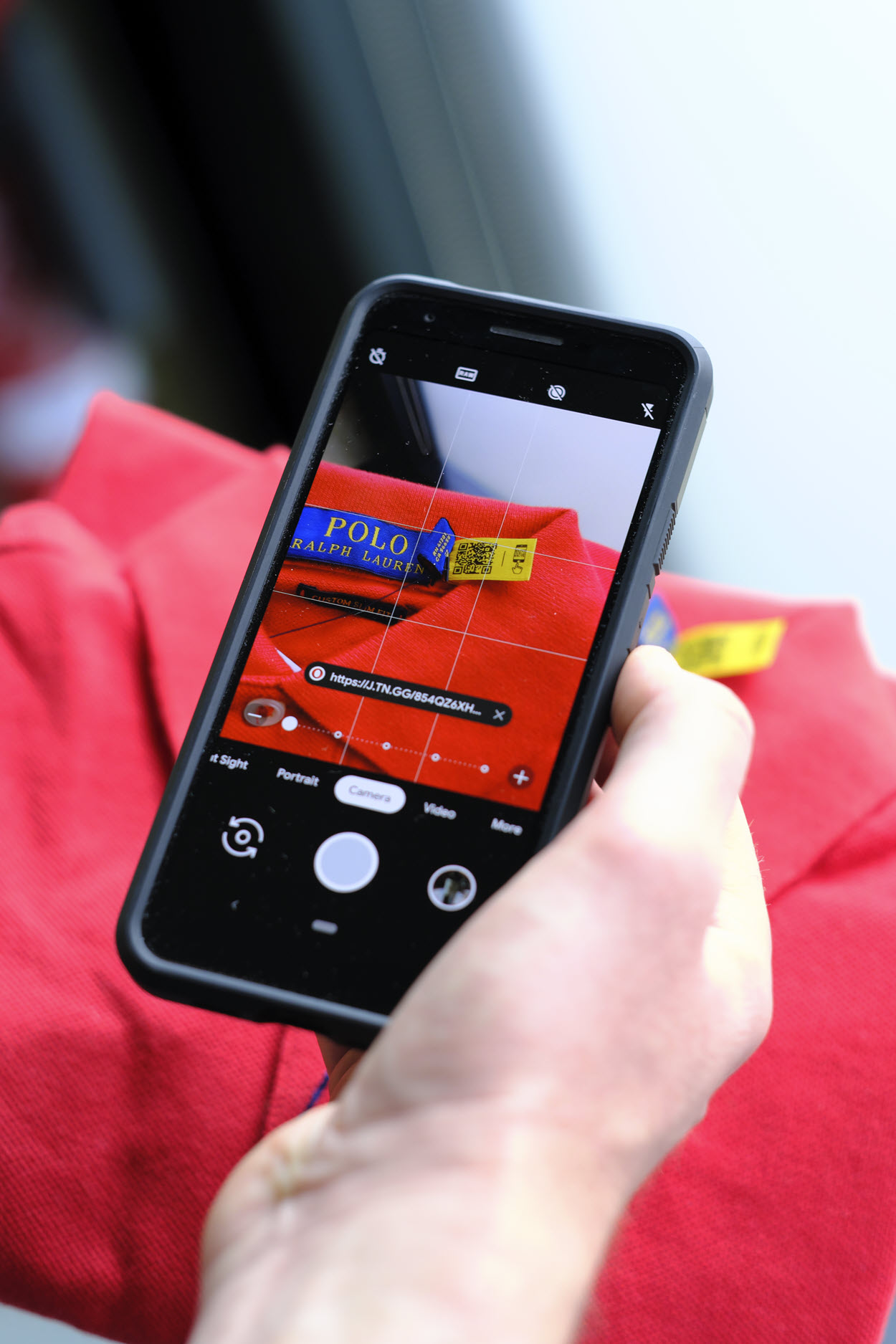
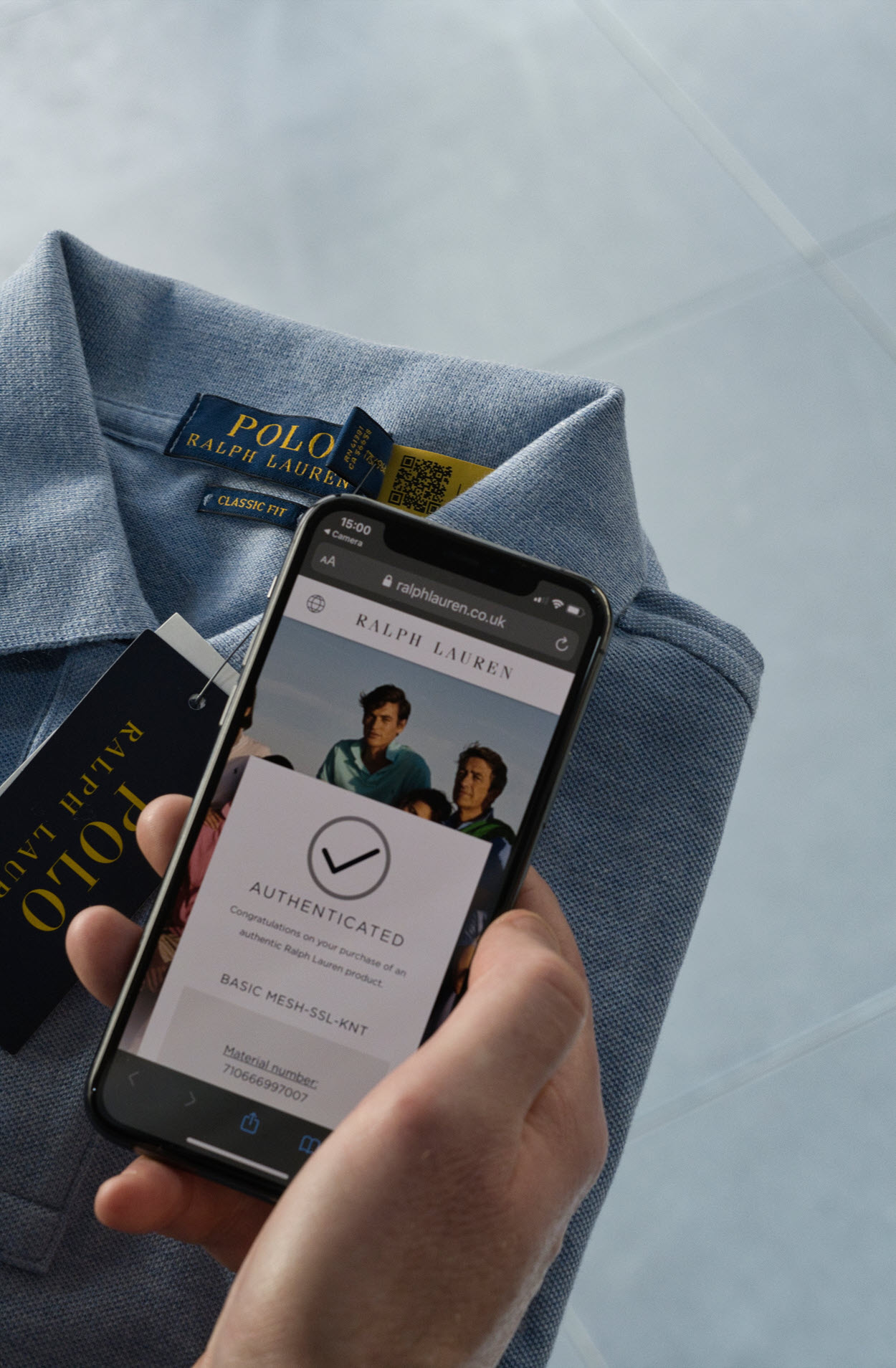
For the consumer, what EVRYTHNG does is enable them to also have access to this information. They can use their smartphone to scan the QR code or tap the NFC function to see the supply chain and sustainability information. Additionally, products can be optimised by the brand to offer experiences such as loyalty schemes, or the brand themselves can use the product purchase data to optimise further marketing campaigns and content.
“Essentially, we provide a software infrastructure solution that is useful for everyone from the supply chain to the retailer and to the consumer,” says Gilbert-Rolfe.
EVRYTHNG’s technology is already used by brands such as Ralph Lauren, Puma, and Another Tomorrow, and the company is now looking to make an impact in the world of sport and music. In fact, it has formed a partnership with the digital consumer engagement business Connected Fanatics to bring together the connected product service and fan-based experience. In translation, that means drawing on EVRYTHNG’s ability to give every piece of clothing a unique product identity and to harness data intelligence throughout the supply chain from that item and Connected Fanatics’ ability to enable any organisation offering licensed products and merchandising to their fans and consumers, the ability to provide an exclusive connected experience across a community-based channel in a sustainable way.
Every item is activated on the production line using the EVRYTHNG Factory Activation app
“If you take football as an example, every year in Europe over 15 million plastic-based football shirts are sold and then replaced the following year when the newest design is available – that’s a horrific sustainability story and that’s just the top 10 clubs,” Gilbert-Rolfe explains.
“So, what we’re planning to do is to make a much higher quality football top without the sponsor information and designs that need updating and to give that item a digital identity. The club logo on that top could then be tapped by a smartphone using NFC technology to bring up that person’s season ticket, money to buy merchandise or food in the stadium, for example.
“Hopefully, it means the wearer will keep that jersey for longer because they have a better relationship and connected experience to it, so it’s very much a sustainability story.”
Sounds like a game-changer, right? But what about the sponsors – will they miss out on advertising opportunities? And what about the clubs – won’t they lose money selling less kit? Well, Gilbert-Rolfe isn’t too worried. Indeed, he says that sponsors can move to digital marketing instead as this information can be pulled up on a smartphone along with all of the other information. That company can also harness the data and deliver freebies or VIP interaction opportunities to the consumer. And on the club front, the shirts could be sold for slightly more money, and they wouldn’t be associated with polluting the environment with textile waste.

Consumers can use their smartphone to scan the QR code or tap the NFC function to see the supply chain and sustainability information
“The incentive to wear the top is so much higher,” he says. “At concerts, you could take people behind the scenes digitally or offer them ticket upgrades if they become available. Or there are opportunities at the Olympics to deliver experiences or provide people with extra information. We’ve already got clubs like Real Madrid and Juventus considering our technology and so I think it’s going to be massive.”
Moving forward, Gilbert-Rolfe believes that every item, not just apparel, should become digitised and registered to individuals in the same way that cars and their number plates have to be. This means that you can make sustainable purchasing decisions, encourage brands and manufacturers to be more sustainable now that the consumers have access to any dirty secrets, provide people with safety information about the product, and much more.
“Take the Grenfell disaster, for example,” he explains. “I believe it all started with a fridge that had been recalled by the manufacturer because it was a fire risk. But if that item were digitally connected, then perhaps a warning could have been issued to notify the owner.
“Or say if there is some clothing or a refrigerator that has been fly tipped, someone could come along, scan it, find the owner, and then issue them with a fine, which should encourage them not to do it again.
“We’re really looking forward to the day that this becomes possible, and I think that EVRYTHNG will play a big part in making that happen.”
To find out more about EVRYTHNG, visit www.evrythng.com
And keep an eye out for an opinion article about ‘born digital’ strategies written by Cyrus Gilbert-Rolfe, which will be published next week.
Have your say. Join the conversation and follow us on LinkedIn