



Sponsored by KERAjet
If you need a real-life illustration of effective innovation, look no further than KERAjet.
The Spain-based printer OEM was established in 1998 and soon took a significant risk by pursuing contactless digital decoration in the ceramics industry – the move proved to be a lucrative one. Courtesy of research and development (R&D) conducted by KERAjet, digital printing solutions quickly became the technology of choice for ceramic decorators.
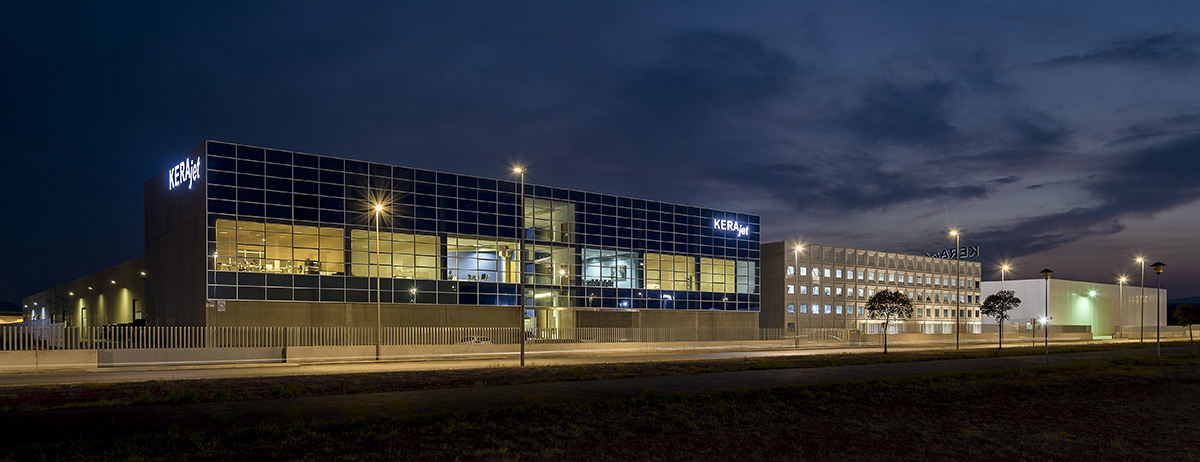
KERAjet's Spanish headquarters
Around a decade later, the textile industry found itself at a similar juncture. Digital textile printing emerged as a process for producing samples, but subsequent advancements mean industrial textile printing with inkjet heads is now commonplace.
Like in the ceramics space, KERAjet is aiming to transform the textile printing industry and has a fleet of industrial solutions in its arsenal. However, the adoption rate of digital textile printers has a way to go to match that achieved by the ceramics sector.
KERAjet’s growth, whether it be in ceramics or textiles, has been constant over the last 25 years and this is down to the evolution of its production systems; combining cutting-edge technology with design and productivity.
But for a disruptive technology to gain traction it often requires more than just R&D. Users need to trust in the technology and this is built through pre and after sales care which KERAjet says is a fundamental part of its business. The OEM’s aim is to offer advanced and innovative industrial printing solutions and after sales advice for a more technological, automated, productive and competitive industry.
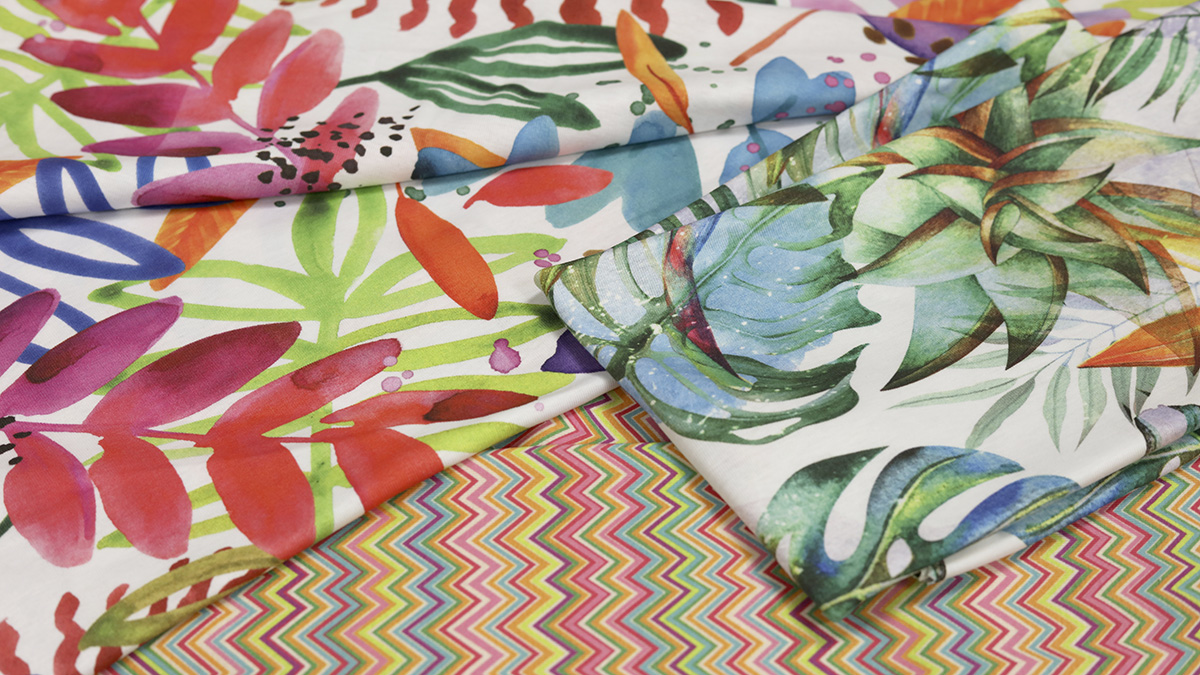
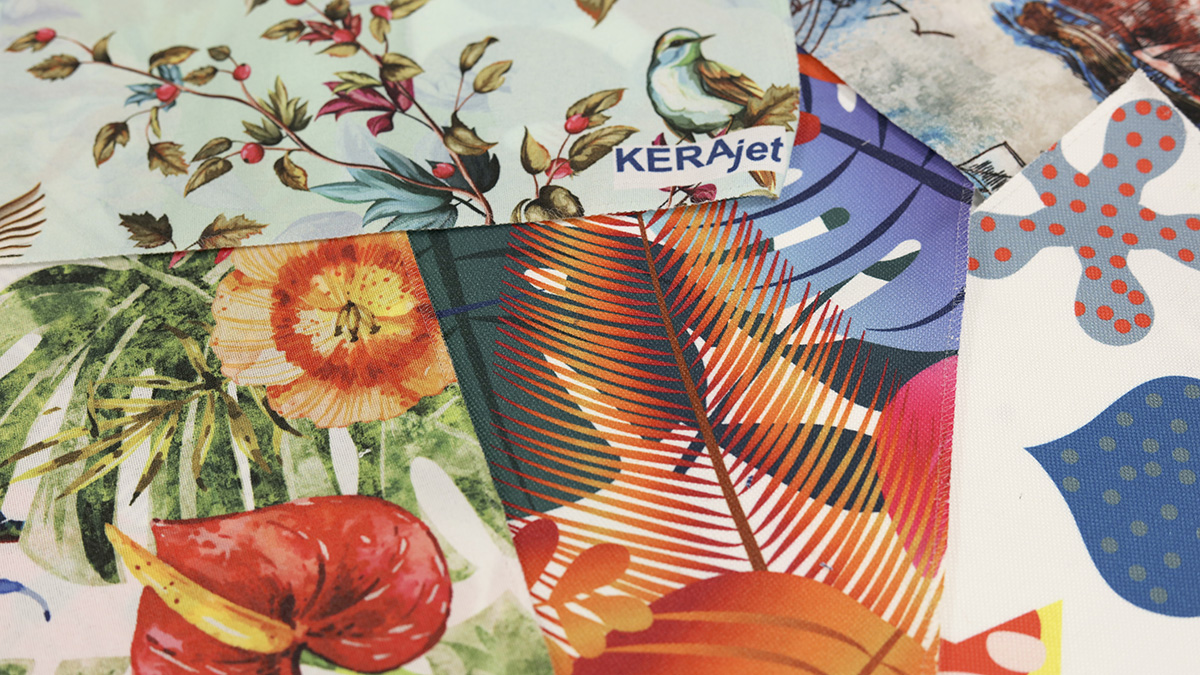
Digital textile prints produced on KERAjet printers
Equipment offering
As the digital ceramic decoration sector became more independent, the fresh and evolving textile printing market provided a great opportunity for KERAjet. By applying its inkjet printing expertise from the ceramics market, the company has now introduced three digital textile printers to accompany its debut P7-T single-pass digital machine. KERAjet showcased the latter on home soil back in 2019 at ITMA Barcelona and plans to launch further digital textile printers in the future.
The first multi-pass printer built by KERAjet was KERAtex MEGA. The printer is available in wide and super-wide formats and can print up to 12 colours. The direct-to-fabric machine is also compatible with sublimation, reactive, disperse, acid and pigment inks. According to KERAjet’s chief operations officer, Miguel Fibla, MEGA was built to compete with rotary screen printers on productivity. At 600 dpi, MEGA can reach 1,713 sqm/h.
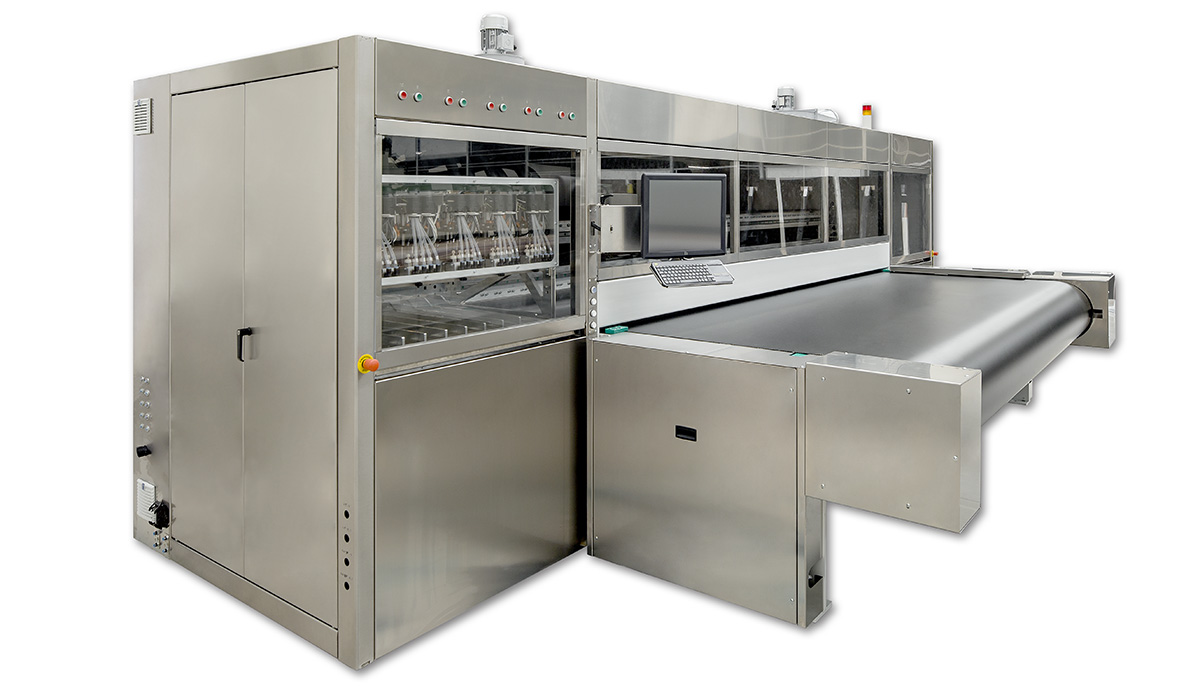
KERAtex MEGA, KERAjet's first multi-pass inkjet textile printer
However, Fibla admits KERAjet was not content with that level of throughput. Pursuing the idea that inkjet needs to match rotary and flat-bed screen printing volumes to expand market share, KERAjet launched GIGA. The printer matches MEGA in terms of printing widths, ink compatibility and number of colours, however, at 600dpi, GIGA can print 3435sqm/h. It means, according to Fibla, that print service providers benefit from the advantages afforded by inkjet - customisation, flexibility and shorter print runs – while maintaining analogue printing productivity.
GIGA also attempts to bridge the gap between multi-pass and single-pass inkjet printing. As fewer print heads are required in multi-pass printing, investment costs are lower. This breaks down an important barrier and, in theory, helps to expand the install base of industrial-grade, roll-to-roll digital textile printers.
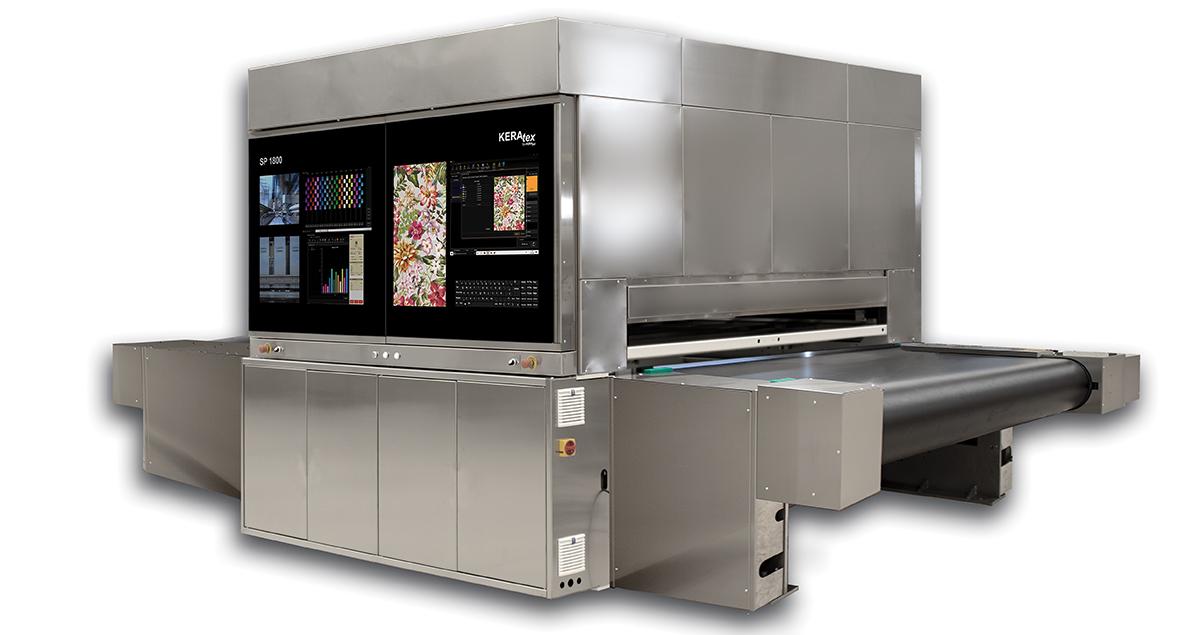
KERAtex GIGA, KERAjet's most productive multi-pass inkjet textile printer
Single-pass printing
Due to economic uncertainty, instigated by Covid-19 and prolonged by the energy and logistical crises, sales of single-pass printers have been badly affected.
Nevertheless, KERAjet wants to service the needs of every customer in the industrial printing space and so the company has also expanded its single-pass offering. Fibla acknowledges that GIGA can meet the productivity requirements of most users, but for those who demand even higher volumes, KERAjet offers KERAtex TERA.
The machine can reach 3240 sqm/h at 600 dpi and can print eight colours at a width of 1800mm. The machine is also compatible with all inkjet ink chemistries across a range of substrates.
Despite economic challenges, Fibla confirms the sale of four TERA solutions worldwide and says this number is only going to increase. As the global economy emerges from the pandemic and key industry events return, there is excitement building and new investments are taking place.
Certain advantages of digital textile printing enable users to mitigate, to an extent, current supply chain vulnerabilities. Couple this with falling prices in relation to analogue, the reasons to invest in industrial inkjet are increasing.
Supporting these machinery advancements is KERAnext 4.0. The product streamlines workflows and enables users to increase printing accuracy and time-to-market. By learning more about their production processes, print service providers can boost competitiveness. It is important in a high-growth market where new market entrants are frequently emerging.
According to KERAjet, KERAnext 4.0 links in-plant information with other enterprise information systems to boost interconnectivity. Similarly, its development under Web Service means the software can be integrated through its API to any ERP information system. The product is also scalable, adds KERAjet. There is no limit to the number of production lines or connected machines thus allowing it to grow in line with user demands.
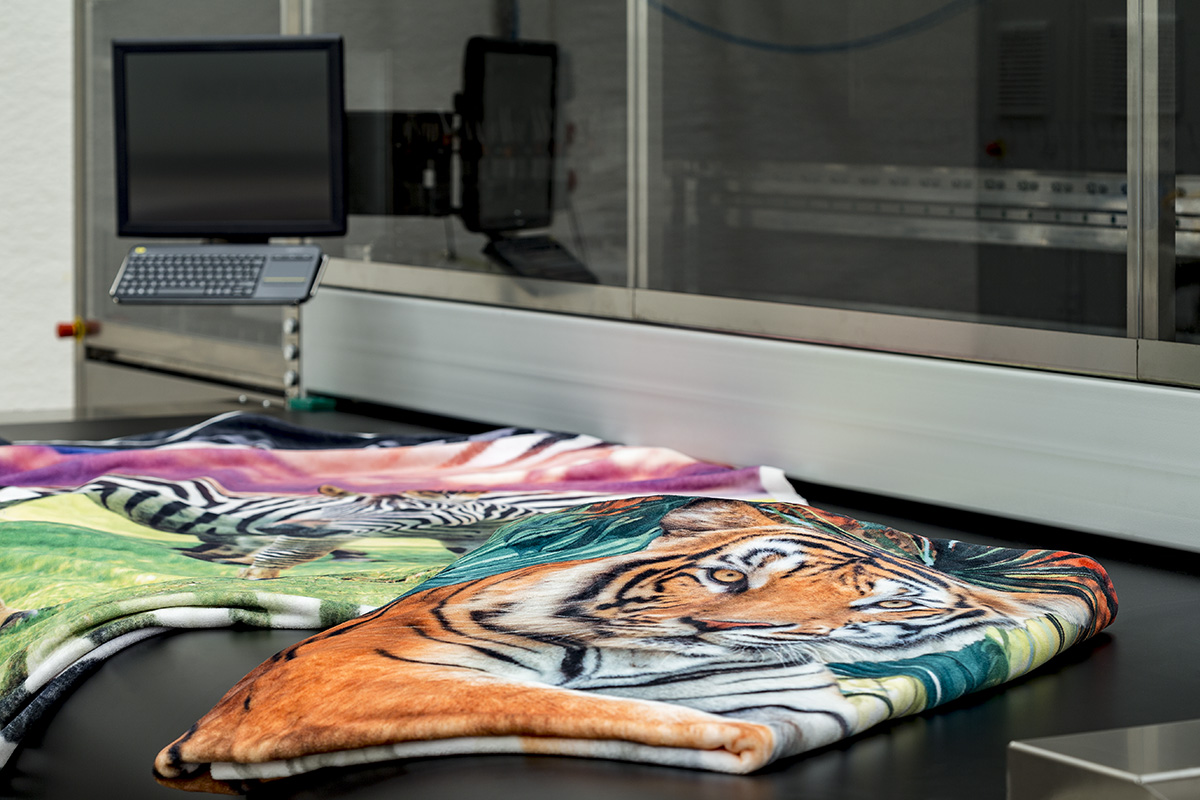
KERAjet's printers are compatible with a wide range of direct-to-fabric inkjet inks
Target markets
South Asia is an evolving market for direct-to-fabric printing and is an obvious target for KERAjet. Fibla admits the company wants to increase its presence in India and Bangladesh and will do so by maintaining close relationships with its existing customers and providing the support they need.
Every KERAjet customer has installed at least two of the OEM’s printers, according to Fibla, with some customers having implemented up to 50. It comes as little surprise, therefore, that textile printing is now forecast to represent a quarter of KERAjet’s total revenue in 2022.
KERAjet believes in increasing digital print speeds to rival analogue solutions
Have your say. Join the conversation and follow us on LinkedIn