



-
Understanding the commercial readiness scale
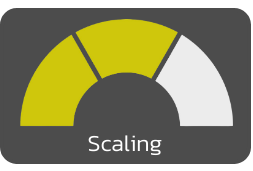
WTiN’s Commercial Readiness Scale gives an indication of what stage of commercialisation a product is at. It ranges from Emerging: a research stage development; Scaling: the product is being produced on a small but growing scale, and Commercialised: the product is well-established and ready to purchase.


Ardmel Automation, a specialist engineering and manufacturer for the clothing, electronics and motorcar industries has launched a new machine, which will more efficiently test real life condensation for the textiles sector.
Ardmel’s ambition is to maximise production efficiency and de-skill operations to improve output.
The Scotland-based machinery specialist recently announced the advancement of its textile testing technology, The Comparator, which allows fabrics to be tested in true-to-life conditions for what it calls the first time.
The Comparator will launch in the summer allowing brands to identify how fabrics perform in wet and dry conditions by measuring condensation created by the microclimate of the textile.
This could be a huge opportunity in the outdoorwear and sportswear categories. Currently the standard test method is carried out in dry conditions similar to the Sahara Desert, which has been criticised when it comes to developing waterproof and breathable apparel, for example.
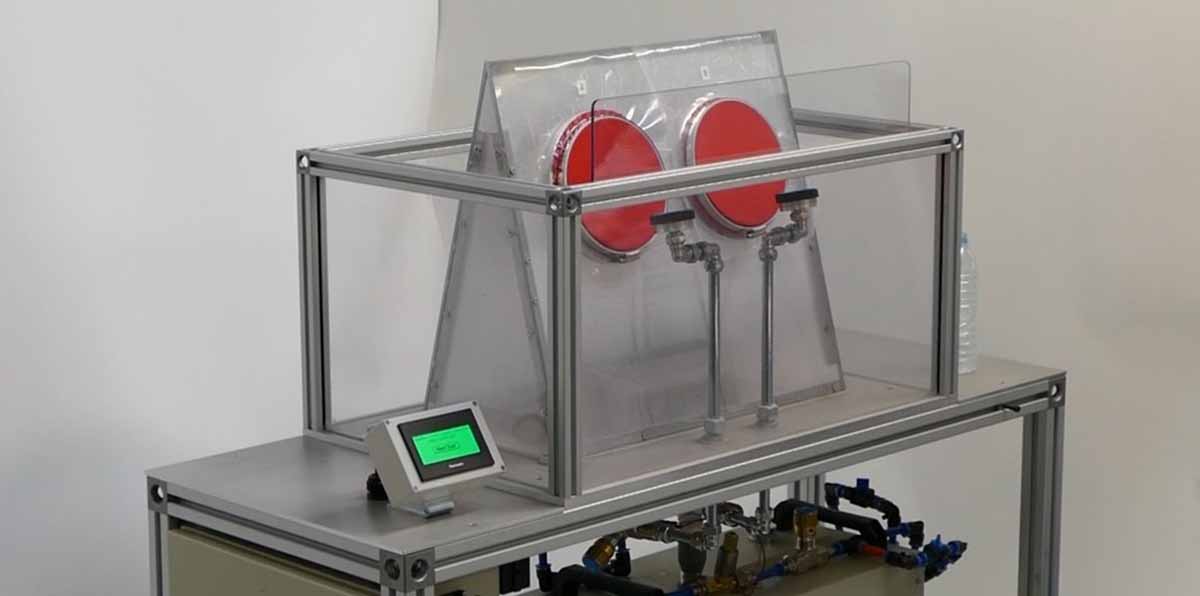
Ardmel's new testing machine The Comparator
Ardmel’s The Comparator
Arlene Kidd, director at Ardmel Group said: “The new standard relating to this testing machine is AATCC TM214, with no European equivalent that measures condensation.”
This method was introduced in 2023 by the American Association of Textile Chemists and Colorists (AATCC). It has been designed to measure the water condensation accumulation on the innermost surface of the fabric in a humid microclimate and during the test, the outermost fabric surface is subjected to dry and wet conditions.
Kidd explained the test apparatus has an inner chamber – the microclimate - and an outer chamber - simulated precipitation. The test can be conducted inside an environmental chamber or under ambient conditions. This allows broad use across various textile systems for an accurate representation of a company’s unique platform.
Since the announcement of The Comparator, Ardmel has received interest from the outdoor sector. This, Kidd believes, is because condensation is a topic that hasn’t been widely addressed by brands or media; as such she expects adoption to be gradual.
“Personally, the industry has been focused on the concept of breathability for so long that shifting this mindset will take time, with resistance to a testing standard that challenges the idea that breathability automatically leads to better comfort by keeping the user dry in cold or wet conditions,” said Kidd. “That said, with the growing focus on green durable water repellents (DWRs), it’s clear that brands will need to rethink their approach and that will mean demand for more innovative materials to improve product performance will only increase.”
The condensation problem
DWRs are coatings added to fabrics to make them water-resistant. They are commonly used in conjunction with waterproof breathable fabrics such as Gore-Tex to prevent the outer layer of fabric from becoming saturated with water.
The idea for The Comparator came to Ardmel’s managing director, Rube Fernando, while he was working in his basement, wearing a Gore-Tex jacket. Fernando noticed he could feel dampness on the inside of his jacket but couldn’t understand why.
“Despite the claims of breathability, basic physics tells us that when it’s cold outside and warm inside, condensation will naturally form, making the inside of the garment feel damp,” explained Kidd. “But here’s the question. Why is this happening when the garment is advertised as breathable? And if it isn’t, why are consumers paying a premium for products that don’t perform as expected under the conditions they’re intended for?”
To investigate further, team analysed the breathability claims often made by manufacturers and revealed a “concerning discrepancy”.
The ISO 11092 test standard, commonly used to measure breathability in wet-weather clothing, sets both the external and internal temperatures at 32°C, without any rain, not allowing condensation to form.
“Clearly, the test parameters are designed in a way that avoids the issue of condensation altogether, which seems fundamentally flawed and not aligned with real-world usage. In response, we decided to create a machine that measures the actual condensation that occurs in practical conditions. After all, it’s this condensation that users experience, and addressing it seemed far more relevant to improving garment performance,” said Kidd.
The Comparator will allow brands and manufacturers to test measure condensation within materials by testing two materials simultaneously. As such, they will be able to make comparisons and hopefully drive innovation.
A sustainable solution
Additionally, Ardmel has created the machine with sustainability in mind. The machine has been designed and constructed on-site at its headquarters in Glenrothes, primarily using in-house materials or local UK sourced components. The team have also created a closed-loop system to continuously recycle water.
The ability to conduct in-house testing should reduce the need for external resources and help minimise the carbon footprint associated with transportation and third-party testing, supporting a more sustainable production process. And by providing real-time insights, Ardmel is hoping brands will optimise material performance and reduce their waste.
Kidd added: “The machine is significantly more cost-effective than traditional test equipment, especially for smaller companies, without in-house labs, relying on external laboratories for testing. The affordability of this machine makes it accessible to these businesses, enabling them to perform in-house testing and obtain faster results.”
Staying ahead of manufacturing innovation
The family-run company has been in operation since the 1970s, it is primarily known for its tape seam sealing solutions. It has endeavoured to remain at the forefront of technological and industrial advancements, introducing equipment across multiple sectors, often being the outdoorwear, sportswear and intimates in textiles.
Key innovations include ultrasonic sewing machines, bonding presses, laydown bonding machines, and the development of consumables like adhesives and decorative outer tapes. Ardmel also pioneered of the creation of test equipment. The company is well known for its 1979 MK-1 tape sealer, which it introduced for waterproof performance and sportswear.
The Comparator is not its first venture into textile testing. Ardmel has already developed several testing machines to offer more realistic performance assessments, such as an abrasion and flex machine that simulates how fabric behaves during wear. The machine enables variables such as moisture, dirt and wet conditions to be tested.
“We remain committed to advancing realistic testing methodologies, and with additional equipment currently in development, we are excited to launch these innovations in the near future,” said Kidd.
The vision for Ardmel moving forward is the continuation of innovation within its technology to meet the needs of its customers. It hopes to eventually expand the accessibility of its solutions by making them more affordable and scalable.
Kidd added: “By enhancing product testing capabilities and enabling real-time insights, we hope to drive sustainability, improve performance, and support brands in creating more comfortable and durable products for users.”
Have your say. Join the conversation and follow us on LinkedIn