



Sponsored by PERFORMANCE DAYS
PERFORMANCE DAYS head of sustainability, Anna Schuster and head of material strategy and future trends, Regina Goller, talk to Madelaine Thomas about the upcoming tradeshow, innovation and the future.
PERFORMANCE DAYS, taking place in Munich, Germany from 29-30 October will feature brand new areas and will expand on existing areas including the Footwear Area – for innovative and sustainable shoe materials – and the Wool Area, where visitors can find any developments and innovations using wool.
Two completely new areas coming to the show are:
- The Creative Area
This segment of the exhibition showcases curated trend stories, innovative fabric applications, and visionary design concepts. Here, visitors can explore mood boards, material highlights and creative installations that spark new ideas and push the boundaries of functional textiles. It’s the place to see how trends meet technology – and where imagination fuels innovation, says Performance Days.
- Innovation Hub by Future Fabrics EXPO
The new Innovation Hub, jointly created by Future Fabrics Expo and PERFORMANCE DAYS, is a dedicated arena for “pioneering ideas to take root and grow,” according to show organisers. It will bring together suppliers, visionary designers, forward-thinking brands and thought leaders from across the textile value chain. At its core, the Hub champions early-stage sustainable innovations, spotlighting breakthrough materials, processes and technologies positioned at the initial stages of the Technology Readiness Level (TRL) scale. By showcasing these emerging solutions before they reach full-scale production, show organisers hope the Hub will act as a catalyst, accelerating the journey from concept to commercially viable, impactful application.
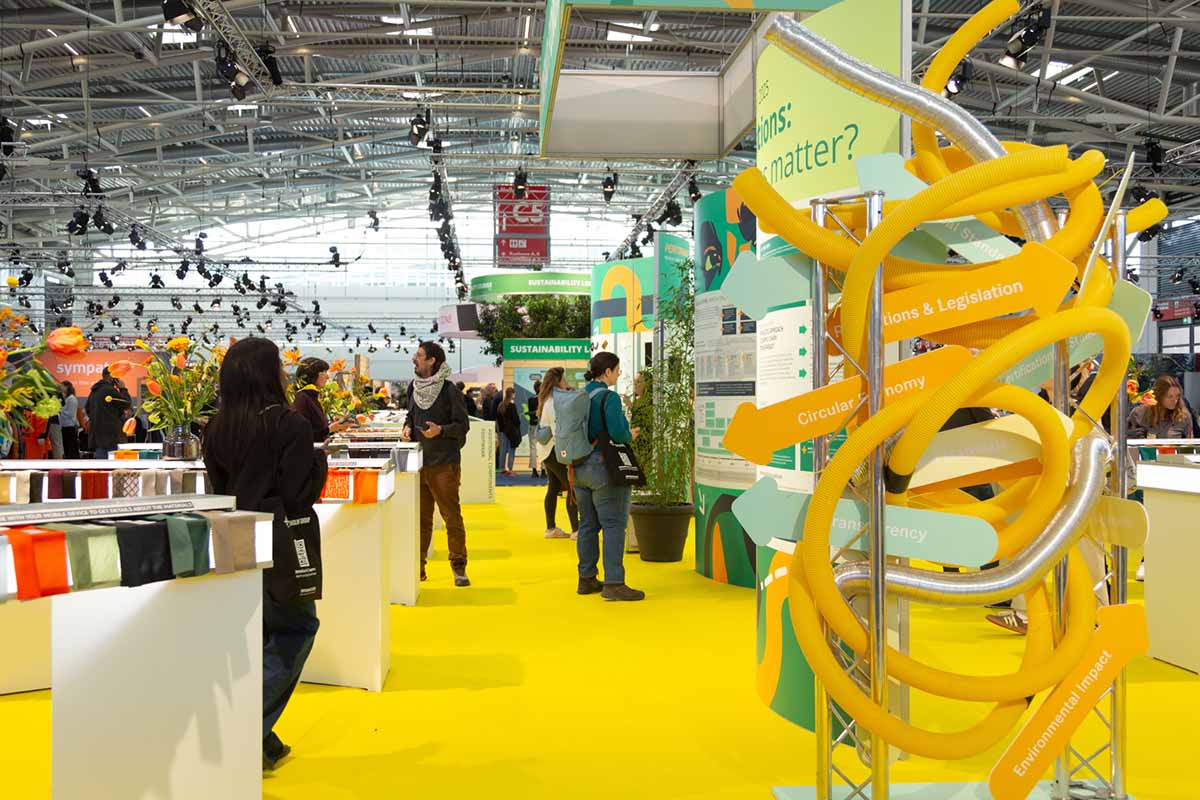
PERFORMANCE DAYS is the place to connect and exchange
Textile-to-textile recycling
This Autumn edition of PERFORMANCE DAYS has a focus topic: textile-to-textile recycling. Anna Schuster, head of sustainability at PERFORMANCE DAYS explains what led show organisers to zone in on this specific topic. She says: “Textile waste is one of the industry’s biggest untapped resources and textile-to-textile recycling offers a real path to closing the loop. We already see exciting innovations, but the challenge is not only scaling them up but also integrating them into existing systems and supply chains. The process is technically complex and infrastructure-heavy, yet absolutely essential for the industry’s future.”
Schuster continues that, if we want to move beyond “take-make-dispose,” we need fabrics that can be reprocessed into textiles of equal quality rather than downcycled or wasted. “PERFORMANCE DAYS is the place to connect, exchange and thrive together. With the focus topic Textile to Textile – The Role of Recyclers, we are shining a light on this challenge, giving recyclers the stage they deserve and encouraging the entire value chain to scale, connect and act.”
In the next five years, textile-to-textile recycling will only become more prominent. In fact, Schuster notes that in that time frame, textile-to-textile recycling will become “one of the defining benchmarks of a truly sustainable textile industry”. She adds: “What is still seen as innovation today will quickly become an expectation, driven by European frameworks such as Extended Producer Responsibility (EPR) and mandatory textile collection, as well as by growing brand and consumer demand for credible end-of-life solutions.”
And for the performance textiles industry, the textile-to-textile recycling mission is even more challenging. Schuster explains this is because high-performance fabrics are engineered for durability and functionality, making them harder to recycle. However, as a result, this also positions the sector as a test case for high-quality, scalable solutions across the wider apparel market. If it’s good enough for high-performance, high-quality functional fabrics, it’s good enough for all.
Schuster continues: “New technologies are emerging that can handle complex realities like material blends, elastane content and membranes. To unlock their full potential, we must design fabrics with recycling in mind from the start, while also paying close attention to both feedstock availability and recycling outputs. Only then can performance textiles truly fit into a circular system — and set the standard for the rest of the industry.”

Anna Schuster, head of sustainability at PERFORMANCE DAYS
Sustainability
The textile-to-textile recycling focus topic is part of the event’s wider narrative around sustainability. Schuster says that at the exhibition, “sustainability is not a side program, it runs through the DNA of the fair”. She adds: “From the focus topics and curated special areas such as the Sustainability Lounge or the Circularity Zone to our fabric selections and expert discussions, we aim to give the industry both transparency and direction. We draw heavily on the expertise of leading voices in the field, which ensures that the dialogue stays relevant, forward-looking and grounded in real solutions.”
She says that PERFORMANCE DAYS’ mission is to connect the right players, highlight what is already possible and “spark the collaborations needed to close the loop”. Schuster ads: “Visitors should leave with new contacts, product inspiration and a clearer sense of how their choices fit into a future-proof, circular textile economy. In this way, PERFORMANCE DAYS acts not only as a marketplace for fabrics, but as a think tank for the sustainable future of performance textiles.”
Regina Goller, head of material strategy and future trends at PERFORMANCE DAYS notes the textile industry is currently undergoing a major transformation, with responsibility extending across the entire value chain. “As such, sustainability has become a clear priority in the sports industry, while durability and a wide range of functionalities remain equally important criteria. Bio-based synthetic materials, textile-to-textile recycling and fibres derived from renewable raw materials with functional properties are gaining increasing interest. At the same time, keeping prices as competitive as possible [with sustainability in mind], remains a key consideration.”
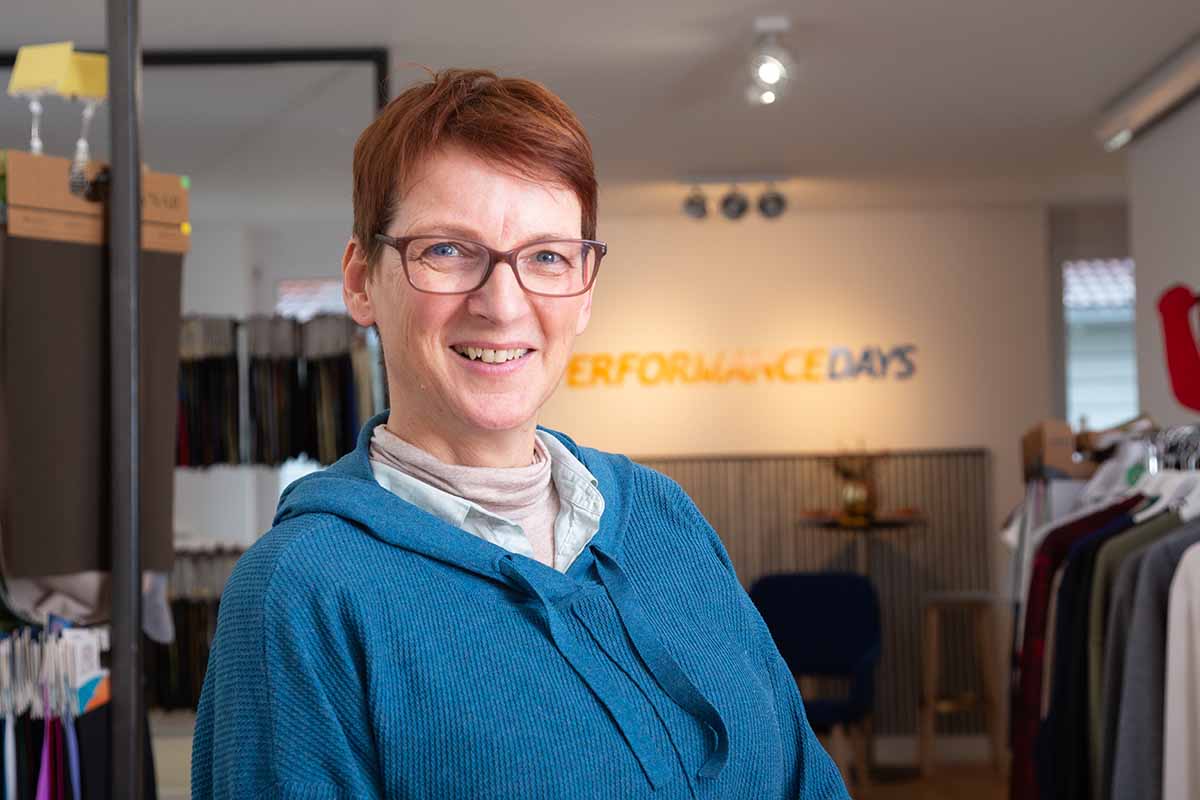
Regina Goller, head of material strategy and future trends at PERFORMANCE DAYS
Innovative development
As well as a sustainability narrative running through the event, there are a number of other trends and developments at play at the upcoming edition. Goller explains: “In the field of waterproof materials, mono-material solutions are in high demand — from PES to PP membranes and outer fabrics — in order to enhance recyclability. Bio-based membranes, as well as those developed from waste, continue to advance. The entire sector is seizing the opportunities to make the textile industry genuinely more sustainable and durable, with a strong focus on enabling garments to be recycled more easily at the end of their lifecycle. With its focus topic Textile-to-Textile Recycling, PERFORMANCE DAYS highlights one of the most crucial issues in the industry.”
And helping to drive the innovation trends forward is PERFORMANCE DAYS’ Innovation Area, which is dedicated to showcasing the latest technologies, from fibres to finishes and new technical solutions. Goller says: “Located directly at the entrance of the trade fair, it ensures that every visitor is immediately immersed in the industry’s newest developments. Designed with a welcoming and approachable atmosphere, the area encourages easy and meaningful exchanges between visitors and exhibitors. This setting fosters inspiring conversations, fresh ideas and future collaborations.”

The Trend Forum at PERFORMANCE DAYS
Through this area and others, as well as the exhibitors, PERFORMANCE DAYS has become a place for networking and exchange – a place where innovation, investment and scale up can be bridged. Goller comments: “It is where connections are made — especially in the field of innovation. PERFORMANCE DAYS brings together diverse experts to foster collaboration among the various stakeholders. If there is one thing we have learned by now, it is that only together can we achieve the essential transformation of the industry.”
For more information on PERFORMANCE DAYS, visit: www.performancedays.com
Have your say. Join the conversation and follow us on LinkedIn