
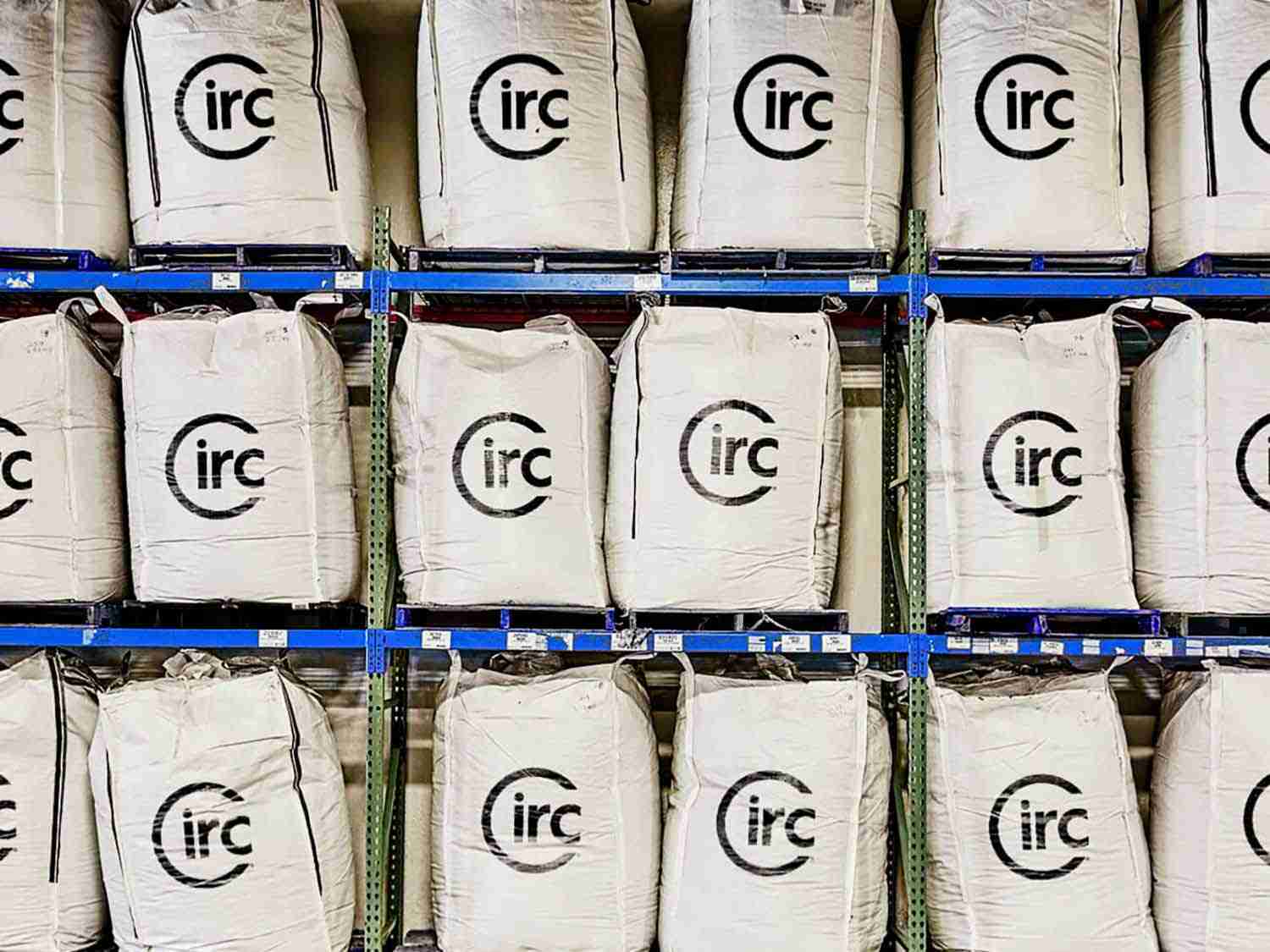


WTiN speaks to Teresa Krug, chief product officer at US-based textile-to-textile recycling innovator, Circ.
WTiN speaks to the leaders in textile manufacturing about the trends and advancements shaping the textile industry.
In this episode, we are joined by Teresa Krug, chief product officer at Circ. Circ is a US-based textile-to-textile recycling innovator working towards building circular future for fashion.
Krug speaks about Circ’s advancements in mechanical recycling and how Circ unites brands with global suppliers to accelerate the adoption of textile-to-textile recycled materials. She also touches upon the challenges Circ is working to overcome in this space, and how she fosters a culture of continuous innovation and learning.
Additionally, we touch upon the potential in cross industry collaboration when it comes to building a circular economy.
You can learn more at circ.earth.
Have your say. Join the conversation and follow us on LinkedIn
-
Transcript
This transcription has been AI generated and therefore may have some inaccuracies.
Ep. 148: Building a circular economy
WTiN speaks to Teresa Krug, chief product officer at US-based textile-to-textile recycling innovator, Circ.
Hello and welcome to WTiN's Industry Experts podcast. I'm Abi, WTiN's Features Editor and your podcast host. In this series, we speak with industry professionals from trade organisations and brands to start-ups and manufacturers about the trends shaping the textile and apparel industry and the businesses role within it. We cover everything from circularity and recycling to automation and AI. We quiz the experts in the field about their products and ideas across the huge spectrum that is the textile industry.
Welcome back. In this episode I am joined by Teresa Krug, Chief Product Officer at Circ. Circ is a textile to textile chemical recycler. The company unites brands with global suppliers to accelerate the adoption of textile to textile recycled materials. Teresa speaks about Circ's work in this space and the challenges it is working to overcome. She speaks about how Circ's work in this space and the challenges it is working to overcome. She speaks about how Circ is a leader in textile-to-textile recycling and how it fosters a culture of continuous innovation and learning.
Hi Teresa, thank you so much for joining me on WTiN's Textile Innovation Podcast. We're super excited to hear more about yourself and about Circ. So to start off, please could you tell me about your background in textiles and your work within Circ?
Krug: Thanks, Abi. It's a pleasure to be here. Actually, my background was not in textiles at all. I joined Circ three years ago after a 30 year career in pulp and paper packaging. I was brought into the company because I have a deep expertise in cellulose pulp. And now, only instead of working with pulp from wood sources, I'm working with pulp from cotton. The company had more polyester expertise at the time, so I added both that technical breadth, but also the understanding of an industry that had already moved to higher and higher recycling rates. Now at Circ, as Chief Product Officer, I lead the commercial team, but also the team focused on making sure our products deliver the technical performance that's necessary so that we can meet the needs of customers. It's been exciting because I've gotten to see our materials launch with major brands in a breadth of applications from ready wear and footwear categories, but also actual runway design looks.
WTiN: Amazing. That is super exciting as obviously we're seeing so much more like cellulosics and pulp. Could you potentially expand on the work that Circ is doing in the textile industry and what some of those challenges in the industry that Circ tackles are?
Krug: Certainly. Circ developed a patented process that separates and recovers both cotton and polyester from blended textiles, and we return both of those streams to materials back into the supply chain. So we operate currently from two pilot demonstration facilities, one in Danville, Virginia, and the other in Springfield, Ohio. Circ France will be our first commercial scale facility. That's targeted for full operations in 2028. And blended fabrics are so important because they make up a huge portion of the global clothing production. And those blends create a recycling dead end because the fibres are actually intertwined and hard to separate. Mechanical recycling already exists that works well for pure materials like 100% cotton, but blends remained largely unrecycled. So, Circ's work is focused on solving that problem and building the infrastructure that's going to be required to process those blended textile waste at industrial scale. Because textile production has such a lengthy and complicated supply chain, there are a lot of challenges to consider around that as we scale up. Those include collection and sorting of the material to be recycled, and that's what we call feedstock, those collected and sorted waste streams. And then supply chain coordination, because as I said, it's a very long and complicated supply chain to get from the starting materials to actual clothing. Brand adoption, and then building the facilities capable of actually handling the large-scale volumes of material.
WTiN: Thank you, Teresa, that's really interesting. Just thinking about all those challenges and stuff, how does your background in cellulose pulp in packaging, how does that cross over with the textile industry, is there advantages there in cross-industry collaboration that you could maybe tell us about?
Krug: So there's several crossovers between what had to happen for packaging, recycling, and what we see in textiles. One is the learnings from some of this sorting, collection and sorting infrastructure. So in packaging, it started with the sorting of single-use streams, similar to mechanical recycling for textiles, where you're sorting only or collecting only one thing.
An example of that is collecting only glass or collecting only newspapers, and those go into a recycling stream. That had to move and evolve over time so that you had mixed material point of collection where in the US, for an example, we finally got to the point where we had one large recycling container where everything went in. And the sorting actually happens at a large municipal facility that takes all of those and sorts them into the end product streams that can go to the specific recycling outlet. So, it will take all of the materials, glass goes one direction, pure fibre packaging goes one direction, and a mixed material, so maybe it's a multi-layer package that has aluminium foil and fibre, that goes a different direction. So all that sorting infrastructure had to be built up, and some of the tools, like the near-infrared cameras and some of the tools that were being deployed to do that, are now being used in sorting textiles in the same manner. So that was really exciting to see. The other thing was the learning that to get that right, you have to not only have a way to bring those materials in, collect them and sort them, but you have to have a way to actually recycle each of the streams that come out. So that recycling infrastructure has to grow and be developed at the same time. Otherwise, you have nothing to do with the materials once they're collected. And the third leg of that stool is the brand pull through and adoption. You have to have someone who is wanting to use that material in a new way and actually willing to commit and grow at volume and scale with you. Otherwise, you don't have an outlet for what you just produced. That is completely true in the textile arena as well. So what we're seeing is the need for the collection and sorting infrastructure, the build up of new ways to recycle the textile materials, all of the different chemical recycling options depending on material type, and finally the pull through from the brands to actually use and adopt the recycled content in their end products.
WTiN: That's very interesting. Thank you so much. And just going back to some of the challenges that you mentioned previously, and particularly thinking about a textile waste, textile recycling, how is Circ working to overcome these? And also, just a little add on to that, how will Circ France, the new facility that you're building, how will that contribute? So, there's quite a few questions in one there.
Krug: Awesome, I'll do my best. So, we approach the challenge from a couple of different angles. So, the first is our technology. So, we have a patented process that allows both the polyester and the cotton to be separated and recovered as high quality raw materials that go back into new textiles. That's important on a couple fronts. One is again it's handling the most complicated blend of the poly cotton but yet recovering both so we're not continuing to contribute to the waste problem. We're not recycling one and then the other is continuing to go back into waste. That is one of the tools that we have to address that big challenge. The second is that ecosystem development that we've already touched on a bit. Recycling only works if brands, fibre producers, yarn spinners, garment manufacturers, if everyone's aligned for effective manufacturing and pull through of that demand. And that's why initiatives like Fiber Club, which we had launched, bring together brands and supply chain partners to accelerate the adoption of those recycled materials. Since that supply chain can be very complicated, Fiber Club is one of the ways we try to give an easy button to the process. So that when we're working, especially with smaller brands who maybe don't have as much control over their individual supply chains as some of the larger brands do, it gives them the opportunity to innovate and try some of the materials earlier on with partners that Circ has developed through. Also, we have a couple of other programs. One of them is Circ Ready, where we've got partners who are used to using our materials and have worked with them at scale, developed materials already, and it provides the ability for brands to work with these materials in a way that de-risks it for their supply chain. And then at the same time, we are working on the engineering to scale this up to a commercial facility. It's wonderful to be able to launch collections and get material out in the hands of brands, but we need a way to make this commercial and viable on an ongoing, consistent basis. And the only way to do that is to work at the scales they work at, which means all the planning and the build out to the actual commercial facility to bring that technology to life at the industrial scale so that this is an ongoing consistent product for the brands to use.
WTiN: That all sounds fantastic. And I definitely want to come back to the Fibre Club and your other initiatives later on. But in terms of all that you've just spoken about and what brands want and just getting to that commercial level, what trends are currently framing and shaping the textile industry? What are your consumers and your partners asking for?
Krug: Right now, in terms of the trends, I would say, so the industry is moving away really from just pilot innovations toward industrial infrastructure. So as we work with the customers, specifically the brands, we're trying to educate them on what is going to be So as we work with the customers, specifically the brands, we're trying to educate them on what is going to be beyond just lab scale, because there are a lot of technologies out there and it's creating a bit of noise as to all of these options, what is scalable and what is actually going to be something that can be pulled through and be there for the long term. So while many technologies are still lab scale, a few are shifting toward building facilities capable of processing tens of thousands of tons of material. So that's starting to scale, I would say is definitely a trend.
But then regulation is overlaid and playing a big part on that and definitely in the brands minds, because especially in Europe, where extended producer responsibility policies are pushing brands to address textile waste much more directly, that is weighing on the choices and the selections they're making for what new materials to focus on next. And I'd say another important trend is that collaboration we've already spoken about across the supply chain, because recycling requires coordination between collectors, recyclers, producers, and brands. And this is very consistent, again, with what had to happen at a broader scale for recycling the packaging sector. So you're seeing that awareness and you're hearing a lot more people talk about it in that that that framework of it being an ecosystem that has to all move forward at the same time. I'd say that language is becoming more widely used and shows the recognition of that being such an important part of the solution set.
WTiN: It's great to hear what you said about kind of moving from those pilots to industrial scale, as I feel we've had so much coming through, but then we need to ramp it up in the industry. So that is fantastic to touch upon there. And just being like different types of recycling as well, am I right in thinking that you have experienced within chemical recycling?
Krug: Correct. So, so Circ's technology is considered chemical recycling, and that term can be misunderstood and scary for some people. So, first, I would distinguish it from mechanical. So, mechanical is literally a physical separation of, you know, unentwining the fibres. And so that works very well for things like a pure source, because if it's all cotton or all polyester, that works because you don't have to get down to single fibre level for that to work and it be recycled. For things that are co-mingled or blended at a more intimate level in the fabric, it's impossible to do that with a mechanical process. So chemical recycling comes into play. And, you know, sometimes the word chemical can be frightening to some people because they think all chemicals mean hazardous organic solvents or flammables, and that's not true, even water can be considered a chemical solvent because it can dissolve things. So it's not something to be scared of. The other thing that can be misleading on chemical recycling is in some regions, it has gotten in, for example, in California legislation, there was some concern about adding chemical recycling as an option.
Because in some people's minds, it means waste to energy, which is just burning the material. But what we focus on with chemical recycling is really taking and in ours, it's a hydrothermal process where we are actually depolymerizing the polyester. So, it's going back to its monomers, but then that can be repolymerized into new ARPET chip. And then the cotton is collected and further processed to replace wood pulp as a dissolving pulp source in man-made cellulosic fibres. So, when we think about chemical recycling, it's an essential part of the material processing, especially for those blended materials. And it continues to allow the material to be reused without mechanically degrading it in some manner. Circ's approach allows those fibres again to be separated and recollected, and the focus is on making sure that the quality is not degraded so that it can be reused back into textiles, not down, not down, down cycled is a term where, especially in mechanical recycling, if you do get those poly cotton streams, it can sometimes still be used once commingled as things like insulation panels. If you've ever seen that foamy looking stuff with all the multi-colours, it can go into that kind of material, but that can only be recycled once at that point. So our goal is not to replace other recycling approaches like mechanical when they can be used, but to complement that so that the industry has a full toolkit to address the breadth of textile waste that's out there.
WTiN: I like that, a full toolkit. Thank you so much for speaking through that. That makes so much sense and going through all of that. And then let's have a couple of questions about Circ and your wider community. How at Circ do you foster that culture of continuous learning, improvement and professional development? I mean, you attract so many partners.
Krug: Yeah. So it's interesting because I came from a huge company. I think it was greater than 50,000 employees when I left. It was a project of 200. It was a large global entity. To come to a smaller venture-backed team required a very agile approach. And we have a really fantastic team with varied backgrounds, not only in sciences, but on the commercial side. And we manage our projects very cross-functionally, not only with our outside partners, but inside the company as well. And it's important that we have both early in career functionally, not only with our outside partners, but inside the company as well.
And it's important that we have, you know, we have both early in career professionals, but we also have seasoned industry veterans like myself that have, you know, 30, 40 years in the industry. So we've actually scaled technologies. We've ran successful manufacturing operations at, again, at these larger scales. So it brings the discipline and the maturity and the ability to coach and mentor those with less experience on our team, while still keeping that venture backed agility and the idea that, you know, we have to be almost fit for purpose, if you want to think about it that way. We have to be able to work fast and learn as we go, and we're building something that's never been done before. So there's not as crisp a roadmap as you would have with a long-term established industry. And we also, as you referenced, we maintain those strong relationships with partners across the supply chain, which creates feedback loops for us. So that helps us improve the technology and those materials that we produce.
WTiN: Amazing. And could you tell me about some of those partners and initiatives we previously mentioned the Fibre Club and how do those partnerships foster that, that continuous innovation within the wide textile industry? And then how is that applied to that textile to textile recycling? Again, I've asked you a lot of questions in one there.
Krug: No, no worries. So when you think about, you know, encouraging continuous learning and innovation within the industry, there's a good example of sort of industry learning. And it's not just learning. I would say it's also the influence because, of legislation that's evolving that if it's worded a certain way may seem like it's coming with the right outcome, but there may be unintended consequences as it's applied to the broader supply chain. So we take every opportunity to join meaningful industry level coalitions to help influence the change in a positive way and also to learn about the needs across that broader infrastructure. So it's especially needed on we're a part of called the Textile to Textile Alliance, T2T Alliance, advocating for policy change to accelerate circular fashion by influencing legislation, but also supporting infrastructure development. So that's an example where some of our competitors are on that group, a lot of other folks from across the supply chain, and it's a wonderful forum to learn from each other and to shape the broader industry focus on this problem at the scale needed so that the right legislative incentives and programs are put into place to raise the tide for all of the recycling work that we're trying to do.
WTiN: I really like the fact you've touched upon regulations a few times, and you mentioned extended producer responsibility in Europe and obviously Californian legislation. So there is so much of those regulations, legislations that are shaping and trying to influence circularity in the textile industry. And I know that you've just spoken about it then, but please could you expand on how Circ balances its strengths and weaknesses to be an effective leader and to help maybe its partners navigate this, if we can put it on as complex environment?
Krug: Yeah, so I try to focus the team on listening to our customers, but at the same time, pushing the boundaries of what needs to be true to drive meaningful change. So regulations are still evolving and solutions like Circ’s are scaling, but never fast enough given how large the problem is. So having the right people working on the right problems goes a long way, and then we're tackling one of the hardest ones. But it's really about making sure that we keep flexible in our approach and willing to listen, but also where we see the need for impact, making sure that we speak up with data, not hyperbola, and make sure that we're coming to each of those conversations, listening but also willing and ready to engage in a data-backed practical way to make sure that the changes that we're advocating for are realistic, have strong business cases behind them and can actually become sustainability is not only, you know, an environmental sustainability, but the actual business models have to be sustainable as well.
WTiN: At Circ, you tell me how you stay on top of changing regulations. How do you monitor what is happening as obviously it changes? It feels at the moment, month on month.
Krug: I wouldn't say it's month on month, but it's certainly evolving. And so for the regulatory side, we've got folks who lean in and are part of those conversations. And again, most of the regulatory conversations are currently cantered in Europe. They're always leaning more forward, but also in the US and places like California. So we try to be part of those conversations, those bodies, make sure that we show up at the right conferences or conversations so that we can understand what's going on. The other thing that I would say we do is it's more in terms of an industry, just making sure that Circ is known to be a strong industry partner. So, and that we come to the table with a credible voice. We very much are passionate about not overselling on something that we cannot do, or cannot deliver, and that gives us a credibility so that partners will often reach out to us, which is incredibly helpful and also very powerful in terms of our industry reputation.
WTiN: You might not be able to answer this one, might not be able to reveal it, but could you maybe tell me at the moment, what do you find that your partners and your customers are asking for in terms of their textile recycling initiatives?
Krug: Faster, cheaper, when can they. It's often a challenge because again these factories aren't built yet and so it's working with the brands so that the demand signals are there and everything's ready. But everything's not ready today. So I would say that's been a major challenge is to make sure that, um, you know, we keep that brand engagement. We get the, the off takes so that the demand signals are there when we can't deliver. 10,000 times to tons to a brand today. So that keeping those relationships going at pace is something that we've had to work with because they're very much we've got brands who would love to buy right now and we don't have the factory built yet. And so that's been one ask. And then the other is we know that initially these materials, because of the cost of scale up and the cost of capital and other things, there's not cost parity to Virgin yet. And that was true in the packaging arena as well. If you look at pulp and paper recycling, initially it was not the same price as virgin solutions. And so it is going to have to scale and get to the volumes the same way that it did in packaging recycling, in order to get closer to that cost parity that brands are really passionate about getting to.
WTiN: It's something that we do hear about as well. So thank you so much for explaining that. And then I'm just thinking about your role as chief product officer. What strategies do you use for goal setting and ensuring the development of innovations and professional development of your team members?
Krug: Yeah, we've talked a little bit about agility with being a small company, but also being venture backed. We have to be small and fast moving. So while we put a lot of focus on getting the strategy right because you cannot flip-flop your strategy and your business model around, but you can be agile with your shorter-term goals and be fluid to take advantage of opportunities. We're a small team. Again, we're not a massive corporate entity. So we have to be agile and everything is very cross-functional. And so while that means we don't have deeply layered org structures, it does allow the team members to work on parts of projects in ways they wouldn't see in a more traditional corporate entity. And that cross-fertilization brings up ideas sometimes that you wouldn't have had in a larger, slower moving battleship of a company. So it's allowed us to be realistic with the ability to, if there is a better way, we can adjust our goals. They're not set in stone the way they would be. For example, a company that's reporting quarterly earnings to the stock market, we're able to actually make those decisions much quicker and move on the opportunities as we see them.
WTiN: Thank you, Teresa. And my final question is, looking ahead, is there anything that you're currently working on that you can reveal today? I know we've spoken about so much of what Circ does , but if there's anything that you'd like to highlight for the future, that would be amazing.
Krug: I've got I've got a couple. So one is one is you've heard me talk about Europe in terms of regulations a lot. And it is very important from that standpoint, as well as from all of the end consumers who are part of that ecosystem. But also, Asia is a big part of this conversation because that is where so much of, so big a part of the textile value chain, and so much of our textiles are manufactured there. So you will hear some talk soon of our expansion of our Asian partnerships. Which is very exciting. And then we've produced over 107 fabrics that are in our fabric library. So you can expect to see a lot more of us actually in market with brands soon as well.
WTiN: Oh, I'm so excited. That's great. Thank you so much, Teresa, for joining me today on WTN's Textile Innovation Podcast. I am very excited to see what comes in the future.
Krug: My pleasure. Thank you for having me.
WTiN: Thank you so much for listening. If you have any questions or want to learn more, you can follow us on LinkedIn at World Textile Information Network, or you can contact me directly at content at WTiN.com. If you are interested in sponsoring an episode of the podcast, please content at WTiN.com. If you are interested in sponsoring an episode of the podcast, please email sales at WTiN.com. Thank you and we'll see you next time.