



WTiN speaks with Cam Myers, CEO and founder of CreateMe about how digitalisation can help protect global supply chains against geopolitical uncertainty.
CreateMe is a US-based AI robotics company pioneering automated manufacturing for soft materials, starting with apparel.
Myers speaks about how the company has advanced and developed digital solutions for global apparel supply chains and touches upon the benefits of this in an uncertain economic climate.
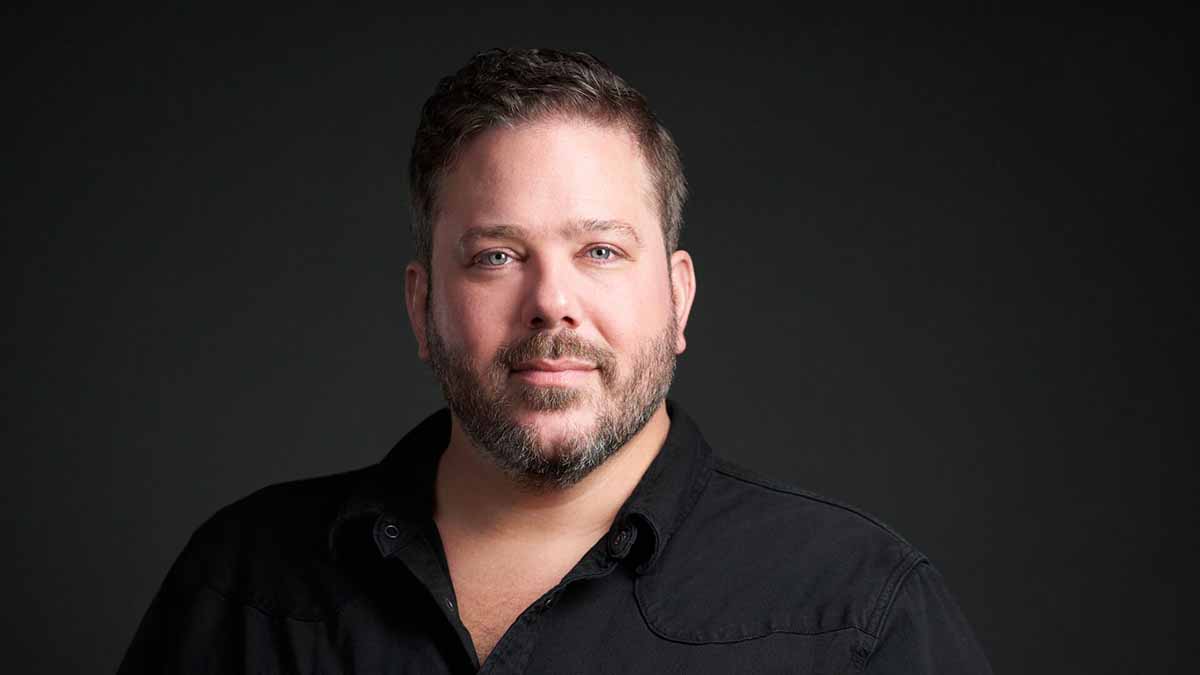
Cam Myers, founder & CEO at CreateMe
We also touch upon how recent events such as Covid-19 and US President Donald Trump’s tariff announcements have affected the apparel industry worldwide.
Additionally, we speak about how digitalisation can go someway to enabling and aiding in de-risking apparel supply chains and what this risk looks like for different actors.
Find out more at createme.com.
Have your say. Join the conversation and follow us on LinkedIn
-
Transcript
This transcription has been AI generated and therefore may have some inaccuracies.
Ep. 155: Can digitalisation derisk supply chains
WTiN speaks with Cam Myers, CEO and founder of CreateMe about how digitalisation can help protect global supply chains against geopolitical uncertainty.
WTiN: Hello, and welcome to WTiN's podcast, all about the regulations and legislation the textile and apparel industry needs to know. I'm Abi, WTiN’s features editor, and your podcast host. In this series, we speak to the experts who are navigating and aiding navigation in this complex arena. From digital product passports and ESPR to exports and international trade. Brands and manufacturers have a lot to keep on top of. So each month we speak to the experts about what the textile industry should be focusing on and the tools available to them.
In this episode I am joined by Cam Myers, founder and CEO of CreateMe an AI robotics company pioneering automated manufacturing for soft starting with apparel. Today we speak about How AI and robotics can help futureproof supply chains against geopolitical uncertainty and compliance regulations. We also touch upon the challenges and risks associated with this.
Hi Cam, thank you for joining me today on WTiN's Textile Innovation Podcast. Please can you tell me about CreateMe and the ambition of the company?
Myers: Yeah, great, To meet you, Abigail, and thank you for having me on. So, in terms of CreateMe's background, we're an AI robotics company and we started in 2019, and we're going after the automation of soft materials, focused principally on Apparel, but it does have use cases for other industries. And we built a really interesting tech stack around the use of obviously robotic tooling, some of the physical AI software perception tools for manipulating and assembling fabric. But probably what's most unique about a solution is that we use digitally printed adhesives in the encephaly process in place of thread. And the use of adhesive in the assembly process has allowed us to drive a lot more automation. And in doing so, we've been able to build a manufacturing model to support close to consumer manufacturing, so essentially on demand. And that could be in the US, but also relevant in other high wage rates, consumption environments, whether that's in Western Europe, Japan, that kind of thing.
WTiN: Amazing. I definitely want to come back to that adhesive sector later. But could you tell me how CurateMe is shaping new manufacturing models with that digitalisation, automation and AI that you just touched upon?
Myers: Sure, sure. So when we set up the company, we realized that from a solutioning perspective, Looking at automation, the apparel industry has some unique challenges. Obviously, fabric in and of itself has its challenges. It's not what the traditional automation guys usually work with in terms of materials with a solid state, with stable physics. So it's not a sheet metal, it's not a machined part like in consumer electronics. So we had to think about those problems. But probably the other area where we had to think about applying technology is the sort of oppositional forces of super high voltage. The apparel industry produces about 100 to 150 billion units a year in manufacturing capacity.
Everyone on earth is a customer. But it's this high flex that goes with high velocity that I think is unique when you look across size grading, colours, silhouettes, fabric types, garment types. That's a huge amount of variety. It's literally billions of permutations. And that's very different from how most folks in manufacturing automation have to contend with. There's sort of several varieties of car that Tesla have or another automotive provider or there's several types of iPhone, but not literally dozens and dozens of permutations that each brand or factory has to deal with. And so the way that we dealt with those kind of oppositional sort of stakes from a technology point of view is we said, can we look at things very much from a blank sheet of paper, very much from a first principles perspective, and say, yes, there's all this variety. But are there certain things that have commonality across the seam construction that would allow us to sort of build commonality? And indeed, there are. So, you know, if you look at top tops and bottoms, they have you know, still most of them will have like side seams. Obviously, all tops have shoulder seams, even if at the neckline or you know, in the sleeve itself, things will change. And so, we said, let's try and build as much of a garment as possible in 2D space. So, our manufacturing process looks like a newspaper printing facility, so very different from how normal apparel is made in terms of going to a factory, big stacks of fabric. This is a single piece flow methodology. It's a roll-to-roll system. And we cut out the panels, dispense adhesive in two-dimensional space. We can actually work with two layers of fabric. So we can laminate layers. Obviously, a tshirt has a front and a back, whereas a simpler type of garment like an underwear you could build in a 2D plane for about 60 Of the construction and then 35 is a part that's peculiar to the garment because obviously the human form is 3D. And so we have these modular finishing steps. And so what I mean by that, and that's where we use a lot more of the physical AI, is a tshirt there's obviously different types of necklines. You have a Vneck you have a crew neck, you could have a a placket as a basis for a Henley or going into a soft collar with a Polar.
You don't need to change all of the tooling, you just change the plate because we use these sort of mold type devices for a v neck versus a crew neck. And so that's the idea of our system we build what we can in 2D that can be common across garments. And then we have this modular system that will do the parts that are peculiar to the garment, whether, as I said, it's a v neck or a crew neck t shirt or eventually a Henley or Polo. And that's the architecture behind our system. It's called Modular Engineering Robotics Assembly or MERA. And so that's the idea of how we deal with high velocity and flex. And it sort of integrates this adhesive dispense, the physical AI, and the robotic tool.
WTiN: I just want to take a step back there because you've mentioned those different parts, and obviously, the textile supply chain is huge. So, I just want to take a step back a minute and just say, what is maybe driving the need to future proof global supply chains against shocks such as COVID wars and tariffs? I mean, at the time of recording this podcast, there have been more tariff announcements kind of going on. It'd be really interesting to get your insights on. What is driving us to future proof and look at these digital solutions?
Myers: Yeah, so I think you hit the head on a couple of really, really great, you know, cogent examples, you know, what's going on tariffs. You know, I think it's worth remembering, and this is, you know, even a stimulus for the company when we set up eight years ago, you know, the tariff regimes and changes, you know, at least from a US context, you know, go back to the first administration, first Trump administration. You mentioned some of the other ones in COVID, you know, things like. You know, in the Suez Canal, when a boat literally gets stuck in the canal. And I think, in aggregate, all of these things are sort of waking up supply chain leaders to there is a need, a really important need to de risk the supply chain. You know, this industry has been so focused for so long on lowest cost. But, you know, the theme I hear is more about, you know, some de risking in that process and matrixing your supply chain. So, what I mean by that is yes, obviously it makes sense to have a lot offshore. Maybe it shouldn't be 100 in China. I think, you know, a lot of people woke up to that last. April and looking at how you have across Southeast Asia, South Asia, but also the importance, whether you're in Western Europe or in the US, to have some production near shore and really also to have some onshore. And maybe between those two, that could be 15 each. So I think those are the themes. And I think it's really a theme of de risking. And having some optionality. And then the last thing I would say in terms of trend lines is that's sort of a macro geopolitical context. And I think it's ongoing. The fact that some tariffs were put on hold for a while and now they've come back in the last day or two. Courts are going to contest it. But I think the theme, you know, it would be naive to think that this isn't going away.
I think this is going to, you know, continue continue because this is a point of view, at least from a North American perspective, that the administration wants to. So this derisking theme is important. So that's geopolitical side. I'll pause there, but I think there are also some other consumer trends that are driving the changes to relooking at how you're situating your supply chain model.
WTiN: That's really interesting what you said there about de risking. That's something that we are looking into a lot at WTiN at the moment. I feel like that is something that is at the top of many people's minds. So, with that in mind, could you maybe tell me how what you're doing with digitalization, how does maybe that enable manufacturers to de risk? And could you explain how Create News technology could support that or is supporting that?
Myers: Sure. And I think this is derisk you know, both for the manufacturer and also downstream for the brand. So value prop of the technology, you know, is not only about the sort of automation aspects in terms of offering a model that can be cost competitive, close to market. It's also about a manufacturing platform, which a little bit I alluded to, that's high flex, because I think the production that should be closest to market should be incredibly high flex. And you mentioned the word digitalization. And so that's something that's very much a part of our manufacturing process is a digitally driven manufacturing process. So, what I mean is the CAD file, the individual CAD file, because this is a single piece flow system, a lean manufacturing method. It's not a batch manufacturing method. So, each CAD file that's saying, okay, this is this particular recipe for this. Particular garment is tracked the whole way through the manufacturing process. And the tooling that picks up that piece, you know, if it's a particular type of t shirt, you know, a 3XL, you know particular type of t-shirt you know, a 3XL, you know, big and tall, classic fit t-shirt the tooling is adjusting dynamically in real time across that size, grading, and silhouette. But then for the next piece, it could be adjusting again, you know, to, and there's obviously certain rules on how you nest the fabric to get the most efficiency, but the principle is that the tooling across size, gratings, and silhouettes is agnostic, so it's just picking up whatever part that that comes in. And so the constraining factor is the fabric. That's what you know, you you're changing within the boundary conditions of a certain type of assembly of garment, like a crew. But all that variety of size ratings, if it's a 3XL, a half size, tween sizes, potentially even custom sizes, different silhouettes of fit, all of that is digitally controlled. So it makes it hyperflexible. The net effect of that is we can run very small, you know, minimum order quantities down to maybe 100 units and with staged fabric can do this high retail turn model, moving from a 4 to 12 model typically up to maybe 40 turns, almost once a week. And we also have some interesting connecting points with embellishment. So it's very much about this low lot size flexibility model. Certainly, what the brands are interested in. It's got these use cases around the harder to forecast things like fringe sizes. These types of use cases are very much a flex model because we're not doing hard tooling changes between size gratings and silhouettes.
WTiN: That's interesting. Do you forgive me if I've connected the dots and got it completely wrong? But with that flexible model, does the adhesive sector that you mentioned right beginning what you're doing there does this fit into that flexible model? Am I right?
Myers: Yeah, no, 100 that's a very important vector of driving that flexibility. So, if you think about a traditional sewing operating line, you know, you have this issue that when you move between a fabric and a colour, you know, you have to re spool have to re spool every time the colour of that fabric changes. That's a change cost, essentially. The adhesive is translucent, so there's no change there. And also, importantly, there's no sort of safety stock that you have to manage all these colours. The colour matching, that's a huge thing operationally, because you want to have the lime green fabric with the right sort of shade of lime of the thread. So it takes that added complexity of moving across cut colourways out of the model. So the adhesive is very much a part of it. And then also it's gantry driven. So it's almost like a CNC machine that it is, as the cutting of the parts is laid out, the adhesive is laid on top of that. So whatever CAD design is being driven, that will drive where the adhesive forms. So we don't do every sort of garment, but within the types of garments that we do, we offer this kind of high flexibility. And so, yes, the adhesive is very much a part of our solution to provide this flex model.
WTiN: Just thinking about that, I've probably going to ask you a quite complicated question. But could you maybe speak to me a bit about if you're able to do any case studies or just generalisations about how different geopolitical and global relations crises have affected the brands you work with and how you have helped them achieve low risk supply chains, for example, whether that's tariffs or, as we mentioned, the war? Affecting different export routes or even just natural disasters that happen, if that makes any sense.
Myers: Yeah, I mean, I think I would say these sort of supply chain shocks, if you will, from a geopolitical perspective.
WTiN: That's a better way to word it.
Myers: Yeah, I think it can be kind of a catalyst to, you know, brands looking at new models. But usually there's going to be some more long form business imperative behind all business strategy, but it needs to have longevity. So, probably the examples I would speak to are more on that end of the spectrum. So, I think, for example, one of the use cases is how air freight is used. And that's obviously been pretty influenced by the sort of Sheehan model, but also it has been a way for some brands to kind of react in market and in season. And that's air quotes how they are offering on demand production a little bit for replenishment. And so, you know, if you have the round trip, you know, from China or Southeast Asia, you know, that's measured maybe, you know, from an order to delivery. You know, still in a couple of weeks, you know, from order to delivery, going through custom flying, even though it is air freight. And so the vision or the model with our model is to reduce that down, you know, literally to days with stage fabric.
So I think that's kind of a really good use case of where, you know, like for example, in underwear, where bonded underwear is made in Asia, it's manually done, not automated. We can kind of integrate into that supply chain. And work around quick response. I think that's kind of one really interesting use case across size grades, particularly at these kind of fringe. I would say that's the other part of a very concrete use case, is fringe sizes are the hardest to forecast. The theory might be to burn down the tails, burn down the 3, 4XL or twin size of underwear, and then do that quick response. But the large volume, less spiky supply, you know, still to produce and pull it from Asia. And pull information.
WTiN: Amazing. And am I right in thinking that, create me, you are wanting to develop more nearshore supply chains?
Myers: Yeah, but that is literally like 100 focus of the business.
WTiN: Amazing. And I really like the fact you touched upon the Shein model then, because obviously, fast fashion giants are still dominating the apparel market and their supply chains obviously are huge and global. Can you explain why they are still dominating that power market when obviously there is so much education and news out there about more sustainable, better alternatives?
Myers: So, so. The question is, why is the model still popular even in light of the acknowledgement of the impact of the model? Is that essentially. Yeah, well, I think it's a great question. I think sometimes what consumers say and the behaviours that they actually do don't always perfectly line up. I think it's perfectly understandable. People are going to look for what's affordable. And I think if you look at, I've seen studies that sort of rank the hierarchies of purchase decisions. Almost always fit is like the first thing. Fabric is certainly right up there. Value sort of follows a bit after that. And then further down the line is sustainability. So I think because that piece of the model is still a really important aspect to consumers, there can sometimes be a little bit of cognitive dissonance between the importance of our environment, but also impact on the model. I think the way to. Reconcile those twin goals, if you will, is cutting waste out of the production process. So there's obviously this point about overconsumption, which is a valid one. But I think also what is really bad is that the other end of the tail is liquidations and discounts that end up in landfill. That can be a function of not having the right thing for the right consumer. And I think the demand sensing by bringing production close to the market, you're going to get more efficacious at that. And I think if you look at within the fast fashion world Inditex has much more of their supply chain very, close in Europe, in Portugal and Spain, versus some of the other fast fashion retailers that have a lot more of it, maybe in South Asia, Bangladesh, that kind of thing. And I think that certainly does impact their ability to be more. Tightly coupled with smaller lot size with what the customer wants versus just testing and then chasing in Asia.
WTiN: I really like that you just mentioned that Cam. Are you okay to delve a bit further into maybe what some of the limitations and challenges within those larger supply chains are?
Myers: Sure, yeah, very happy to. Is there a particular angle that you're kind of interested in?
WTiN: Just about in terms of those bigger fast fashion models, you know, they move so quickly, they have huge global supply chains. What's like are maybe the limitations and challenges that they are facing now or maybe could face in the future?
Myers: Yeah, I mean, I think it's always sort of interesting as a counterpoint to that, to look at what Sheehan has done right about their business model. There are obviously problems with their business model in some respects around the sort of environmental side, but it's maybe not quite as clear as it could be. They do a lot of things right. And so the challenges is often that some of the other folks are playing as a counterbalance point to some of the things that Sheehan is doing right. So I think one of the things Sheehan does is they have a very tight coupling upstream of their supply chain. And I mean that in terms of the ERP to The ERP tools, the PLM tools, and very tight connectors into a whole network of very smaller manufacturing players, and the co-location of what they do in China with a network and resource of factories around it. And that's allowed them to bring the lot size that they sell massively down. And what's interesting about that model is by bringing that lot size down, it's very much obviously analytically analytically driven Driven. They are able to sell in less amounts of a particular SKU, but across a much higher variety of SKUs. And so that's how they can get a sell through rate of 90 to 95 not an industry average of 60 to 65 So I think I sort of mentioned those points about the model from the point of view of of what's good as Counterpoint to what's hard for some of the other folks to do it. And it's easy to say a 95 to 90 sell through rate, but it's just important to remember what that means. It means that only 5 10 has been liquidated, which is bad economically, but doesn't end up in landfill. So it's really, really important. We have a business model where it's more sort of 65, 70 So that part is actually a good thing. The air freighting is not necessarily a good thing from an environment point of view. So I think those are some points. And so I think the challenges some fast fashion brands have is that orchestration of technology and analytics connect connect the points. The points into a supply chain of smaller manufacturers is obviously harder because a lot of those companies are not obviously homegrown in Asia. The ones that have some of that developed in Western Europe, I don't really see as much of that in the Western hemisphere, is obviously harder because it takes time to put that kind of infrastructure in place to have that high flexibility. It's certainly possible. It's obviously a part of what our solution is about building that infrastructure for brands. But these things take time to build up. It will happen because the market is clearly wanting it. It's a better model, obviously economically, but also for the environment. As I said, if we can push, I think that's a unifying metric that we use how can we, as an industry, push towards. Bringing cell through higher. It's really good for the environment. We're not wasting things in the same way. And it's obviously very good from an economic point of view.
WTiN: And with just that in mind, what in your opinion could maybe governments and policies do to support that vision at a price point that brands and consumers can afford?
Myers: Oh, there's lots of things. I think you can talk about things at an industry company level. There are obviously things in terms of coordination between different parts of the value chain. And also maybe at the government level. So, I'll take maybe two or three. So, I think at the brand level, part of a demand sense model, a close to production model, is about recognizing that being in the zip code of equivalence on a landed duty paid price is obviously important, but rather than going after just a relentless focus on shaving off more and more costs, because the bigger eyes on the prize is looking at total costs. Looking at the inventory holding costs, looking at the impact of the liquidation, looking at the impact of stockouts, because I don't have the right thing at the right time. And I think getting a greater collective awareness across the organisation in terms of how are buyers incentivised in an organisation from a remuneration and performance perspective? It's obviously on driving unit costs down. How does a finance team think about what they do? It's about managing working capital, collective total costs. So I think there's certainly an opportunity in the brands to drive incentives, because incentives drive everything in business around a greater focus on total costs, because it's a really bad. Cost for companies is unused inventory. So I think that's a really practical way that you can get better alignment across the organizations. I think if you look at an intraorganisational the value chain is really important to support onshore and near shore because this is a complex coordination, fabric and mills and things like that. So I think from, say for example, from a US perspective as an example, We are between one and two largest ex You know, we're between one and two largest producers of cotton, but obviously most of us exported. You have this boomerang trade with Asia.
And so now you're seeing different groups in government getting really behind a whole initiative around US cotton and how that can be more incentivized for building infrastructure to then support that in the US. And obviously, there are other government initiatives as well around re industrialization, you know, capex funding through, say, for example, the Small Business Administration in the US. You know, so those are some examples, but I think the same thing could be said in Europe. You know, better coordination across the supply chain, you know, between, you know, and obviously Europe has a very rich industry around, you know, trims and, you know, sort of. Mills and things like that, even if the product is cut and so on in Asia. And so, looking at coordination between different parts of the value chain, I think it's also very important to stimulate manufacturing capacity close to the customer.
WTiN: Thank you so much, Cam. And then, my final question is looking ahead, what are CreateMe's ambitions for using digitalization and robotics to enable efficient supply chains and everything that you have spoken to us about today?
Myers: Yeah. So I think our vision is sort of twofold in the sense that we want to scale up the infrastructure, scale up the type of technology, but we're also about an adoption of this adhesive type of product which we think is a fundamentally Better product and so you know our vision over time on that on that second point is as a world. Where you know a significant amount of people world where a significant amount of apparel is bonded and we're the sort of change that's our vision is we think it produces better apparel across many dimensions just in the way that EV cars are better across multidimensions It's not just about EV cars that they have a good profile from an environmental perspective. They also have less waste, sorry, less less maintenance issues, you know, that they have a great greater torque, there's a lot more, you know, electronics integration. And so, you know, the same thing for us and what we're doing with bonded apparel, it's multidimensional better from an end user perspective, that there's certain ways that we can create garments that you can't create with sewing, in terms of how you can, you know, laminate, you know, fabric. It creates a more seamless, you know, more comfortable product that has properties, you know, it's very interesting in sport, you know, with compression garments, with, you know, garments with compression garments, with garments that are close to skin from a non-chafing perspective. It's got a lighter gram weight. It's got better breathability, better biomechanical movements. So, very interesting for the sports performance players. And so, I would say that's our vision, as we think that's where a significant portion of apparel is going to go. And we're a change agent for bringing in a fundamentally better type of apparel. So, that's a very important part of our vision. I'd say the other side of our vision is really from an infrastructure point of view. Our vision is distributed manufacturing. Obviously, it's not just one node, it's a hub and spoke model. The whole idea is these are very efficient manufacturing systems. I mean that not only from a velocity perspective, but from the footprint perspective, how much revenue can be generated per square foot. And so a 1200 square foot cell of a t-shirt line can produce about a million units per year on a five day three shift model when those mass production systems come out next year. And so the whole vision and idea is, hey, we could put these close to distribution centres across the US. They could be in North Carolina next to a large big box brand or you know, in Europe next to a hub of a Fast fashion retailers distribution centre. So that's very much the vision is that this distributed model having these nodes out close to where they can be bought in next to population centres. And then lastly, the other part of the infrastructure growth story is we're not going to play in every kind of garment. We're not doing sort of blouses and cocktail dresses and bridal couture, but we want to be playing in with high, flex Playing with a high flex model and a whole range of consumer staple garments. So it's not just t shirts and women's underwear. It'll be a whole range of tops. There are going to be in these kind of consumer staple categories, whether it is t shirt, men's, women's underwear, hoodies, long sleeve shirts, these kinds of leggings, these kinds of big categories. And even in our most direct roadmap, we're going to have several variations of t shirts, long sleeve t shirts, crew sweaters, and more coming out in the next 12, 18 months or so.
WTiN: That's really interesting. Thank you. So much Cam. I'm very excited to see what comes from all this. Thank you for going into digitalization. It's really interesting to see how technology can advance that derisking in supply chains. I'm sure we'll speak again on WTiN, but thank you so much for joining me today on WTiN's podcast.
Myers: Yeah, pleasure. Really, really WTiN's podcast. Yeah, pleasure. Really enjoyed this, Abigail, sharing with WTiN what we're building and how it'll be rolling out of the next 12 to 18 months.
WTiN: Thank you so much for listening. If you have any questions or want to learn more, you can follow us on LinkedIn at World Textile Information Network or you can contact me directly at content@wtin.com If you are interested in sponsoring an episode of the podcast, please email sales@wtin.com Thank you, and we'll see you next time.