



Sponsored by The Italian Exhibition Group
The 29th edition of Ecomondo, the Italian Exhibition Group’s (IEG) international event on the green, blue and circular economy, is scheduled to take place at Rimini Expo Centre (Italy) from 3-6 November 2026. Here, Andrea Fluttero, a member of Ecomondo's Technical Scientific Committee and Textile Experts Board, and President of Erion Compliance Organization (ECO), talks to WTiN about the exhibition and its expansion into textile recycling and progress within the sector.
Why is Ecomondo expanding into textile recycling? And why is now the right time to do that?
When discussing textile waste in Europe, the term refers to clothing, accessories, footwear and household textiles that their owners intend to discard and are therefore classified as waste. These are municipal waste streams that contribute to the approximately half a tonne of waste generated annually by each Italian citizen. Ecomondo has always provided both exhibition space for companies offering technologies and services for waste management and a conference programme that fosters dialogue among industry professionals, institutions, researchers and innovators.
For many years, Ecomondo has focused on this specific municipal waste stream and the time is now ripe for a significant step forward. The European Strategy for Sustainable and Circular Textiles (2022), the mandatory separate collection of textile waste across Europe from 2025, and the requirement for all EU Member States to establish Extended Producer Responsibility (EPR) schemes by 2027 are the key factors underpinning Ecomondo's decision.
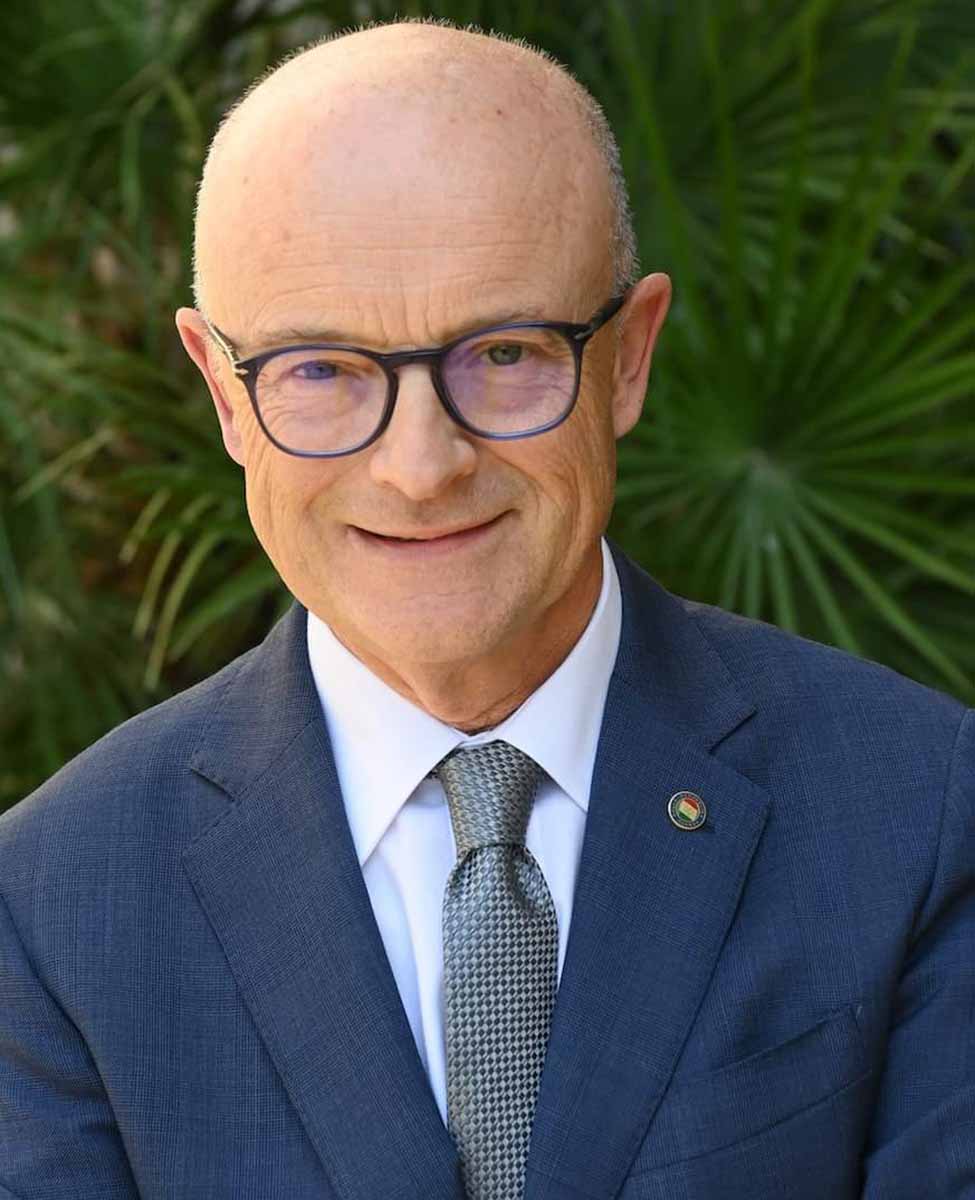
Andrea Fluttero, a member of Ecomondo's Technical Scientific Committee and Textile Experts Board, and President of Erion Compliance Organization (ECO)
What will a textile-focused visitor discover at the show?
A comprehensive conference programme will provide in-depth insights into the Italian and European regulatory framework, the market dynamics of the textile value chain, research centres representing Italy's historic textile districts, associations representing the collection sector. The programme will also include the sorting and recovery of the textile fraction of municipal waste and the new producer consortia established to meet the requirements of the forthcoming Extended Producer Responsibility (EPR) schemes.
Textiles sit at an interesting intersection of waste management, material and technology innovation and chemistry. How does bringing them into Ecomondo's wider ecosystem create value you can't get at a textile-only event?
First of all, because, as already mentioned, the term "textile waste" is a simplification. It refers to waste consisting of clothing, footwear, accessories and household textiles that originate from production chains far broader than the textile industry alone.
Secondly, the focus is not on the manufacturing of textile products, but on their post-consumption management once they are classified as municipal waste. The objectives of this new European challenge can only be achieved through the involvement of all stakeholders: manufacturers, consumers, public authorities, cooperatives, collection and sorting companies, reuse and recycling operators, and finally the global second-hand market. Ecomondo's ecosystem naturally provides this cross-sectoral environment.
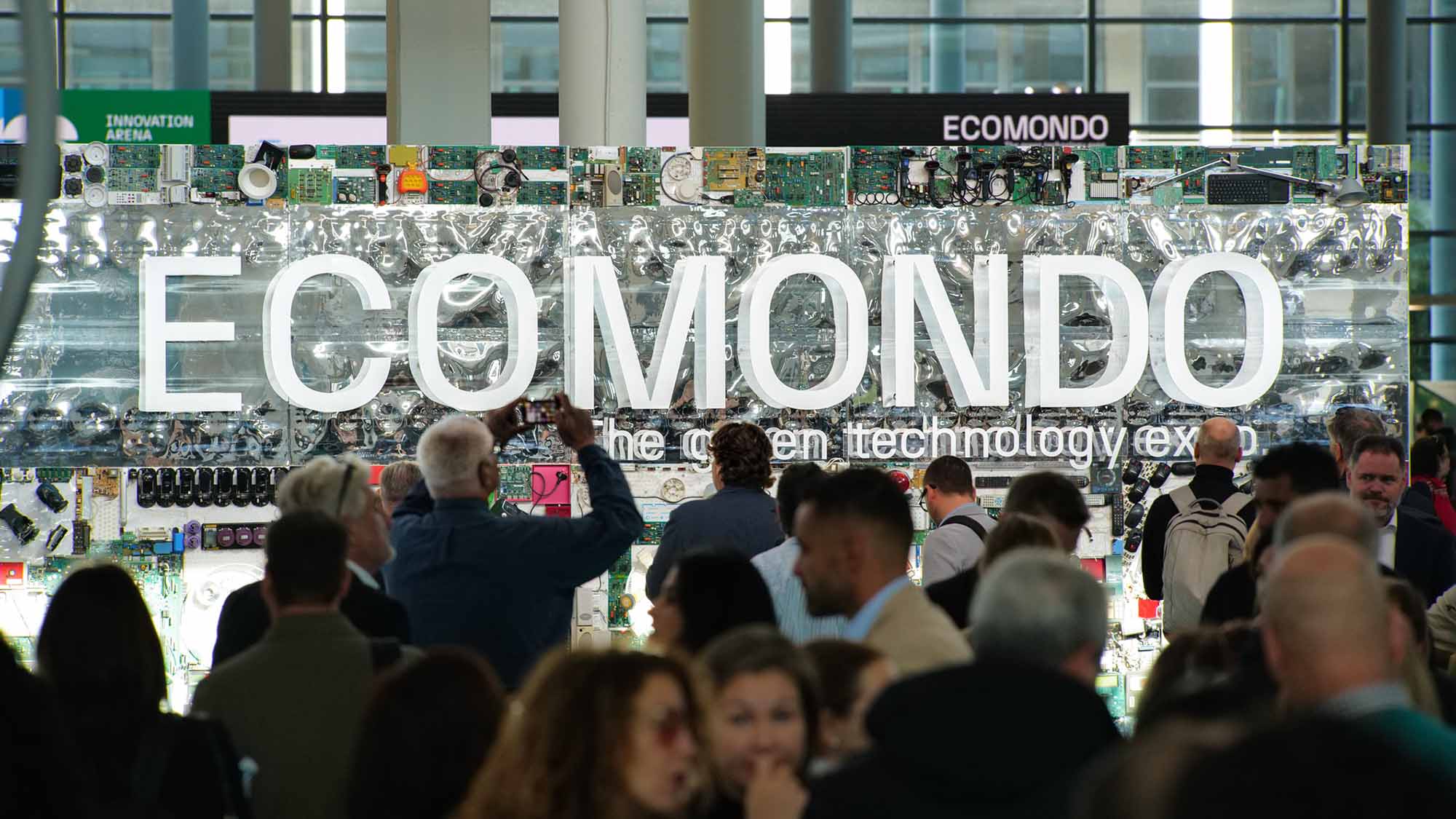
Ecomondo first took place in 1997, pictured here in 2025
Collaboration is key for successful recycling on an industrial scale. How does a show like Ecomondo help players along the supply chain to collaborate and move the industry forward when it comes to recycling?
It is important to be clear: the extreme diversity of products and the materials they are made of, all grouped under the term "textile waste", means that recycling currently plays only a marginal role compared with sorting activities aimed at preparing items for reuse. Given the scale of this challenge, dialogue among all the stakeholders involved – manufacturers, producer consortia, consumers, institutions, local authorities, innovative start-ups, cooperatives and urban waste management companies – is essential. This is precisely the kind of dialogue that Ecomondo fosters.
In terms of textile recycling (in particular textile-to-textile recycling), where do you see the most meaningful technical progress right now and what are the key challenges?
Apart from wool recycling, in which Prato excels (although this represents only a very small share of the products placed on the market) recycling in this sector mainly refers to downcycling activities, such as converting textiles that cannot be prepared for reuse into cleaning cloths, padding or soundproofing materials. As for textile-to-textile recycling, there is still a long way to go. Even at the latest trade fair in Brussels, the technologies on display were primarily prototypes and pilot projects rather than solutions with proven industrial maturity.
The main challenge lies in the extreme heterogeneity of textile products, both in terms of the materials they contain and the variations from one item to another, even within seemingly uniform batches. Given the characteristics of the products currently placed on the market, I believe the most promising developments understandably concern the chemical recycling of synthetic fibres.
What emerging technologies or research directions should the textile community be watching when it comes to textile recycling over the next three to five years?
As mentioned, chemical recycling of synthetic fibres is one of the most promising developments. However, I would like to emphasise that the issue should be addressed at the production stage through careful eco-design, with the aim of placing less fast fashion and more durable, repairable, reusable and recyclable products on the market. This is as envisaged by the European Strategy for Sustainable and Circular Textiles, published by the European Union in March 2022. This is a highly challenging objective.
Have your say. Join the conversation and follow us on LinkedIn