


Tintte is now exploring screen printing as it aims to meet growing demand for its bacterial-based colour pigments. Abigail Turner asks how the bacteria-based dye developer has adapted its pigments for this discipline.
Tintte, the biotech Argentinian startup, has expanded its technology into screen printing to meet growing demand for faster, lower-commitment ways to work with its bacterial-based colour pigments.
Tintte, the spin-off of Summabio, has created a ‘biobank’ of over 100 microorganisms to create bacterial-based colour pigments for sustainable fabric dyeing. Screen printing has presented itself as complementary pathway for the company to test early applications and meet near-term needs, without shifting its focus from its core dyeing solutions.
Magali Mendez, co-founder & CPO at Tintte says: “Screen printing emerged as a natural extension of our work with biobased pigments. While Tintte’s core focus is industrial dyeing, we were interested in understanding how our bacterial pigments could perform in printing applications that are widely used by brands today.”
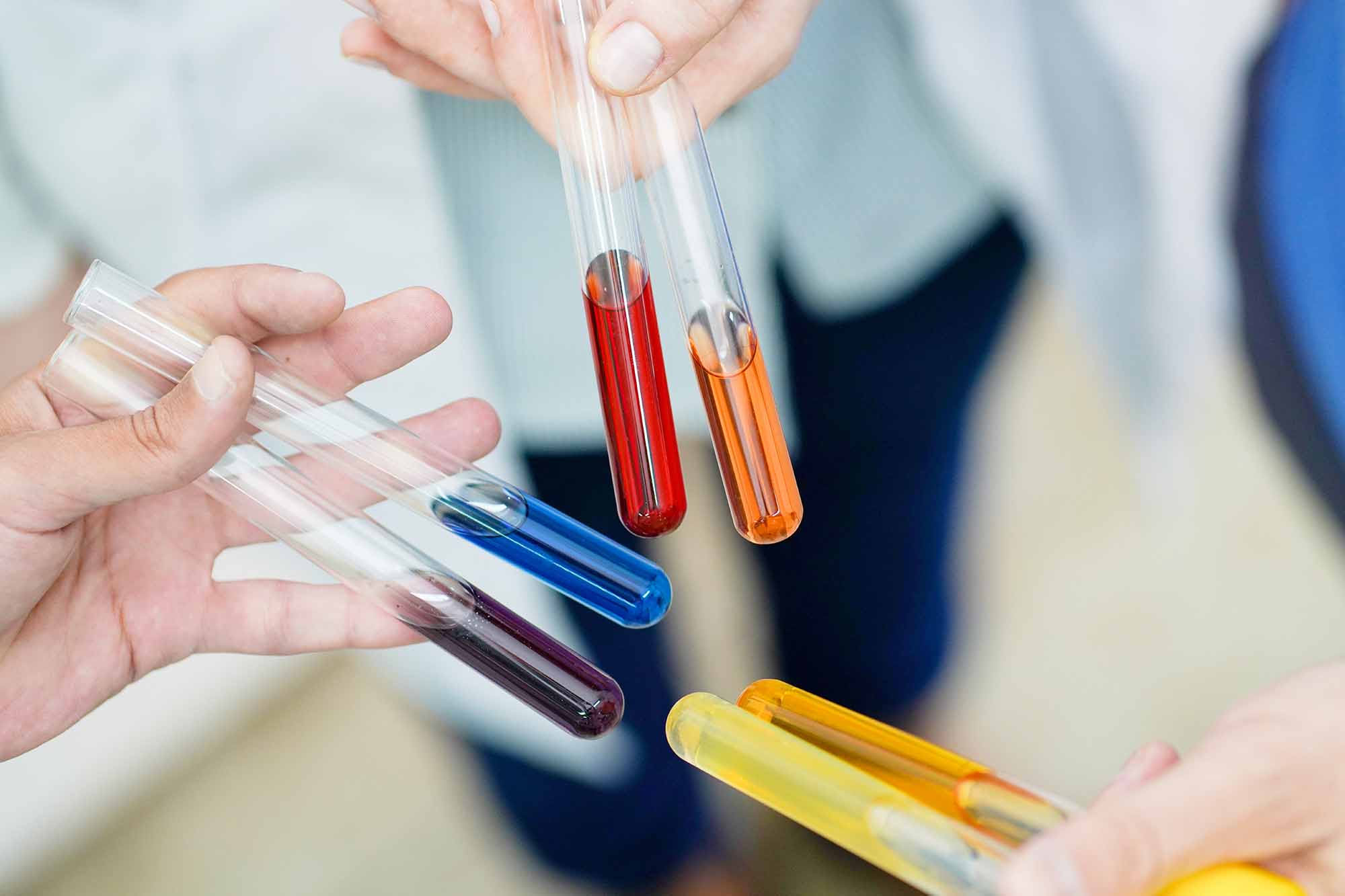
Tintte creates biodegradable dyes made from microorganisms, free from petroleum and toxic chemicals. Image - Tintte
Already, Tintte has completed screen printing production runs with social-impact textile cooperative, Alternativa Marginal, to demonstrate the versatility of its pigments across both dyeing and printing applications.
“Screen printing allowed us to test colour performance, fixation, and scalability in a more accessible and modular production context, especially for capsules, graphics, and limited runs,” adds Mendez.
As a more traditional printing technique, screen printing involves pushing ink through a stencil onto fabrics to build an image. It is arguably better suited for high-volume production with fewer colours. Each colour requires a separate screen and pass, followed by a heat-curing step to set the ink, resulting in durable, vibrant prints.
Screen printing is known to produce consistent, bold and solid colours as a thicker layer of ink is applied – compared to digital methods. Additionally, washfastness is typically good as the colour remains consistent and is resistant to fading, cracking and peeling, even after many washes. You can read more about the different types of textile printing on WTiN.com.
Mendez tells WTiN: “We chose screen printing because it is a mature, globally established process with strong alignment to textile production workflows. Unlike direct-to-film (DTF), screen printing integrates more naturally into existing textile supply chains and allows for easier adaptation of biobased pigments. For Tintte, this meant faster validation, clearer scalability pathways, and immediate relevance for manufacturers and brands.”
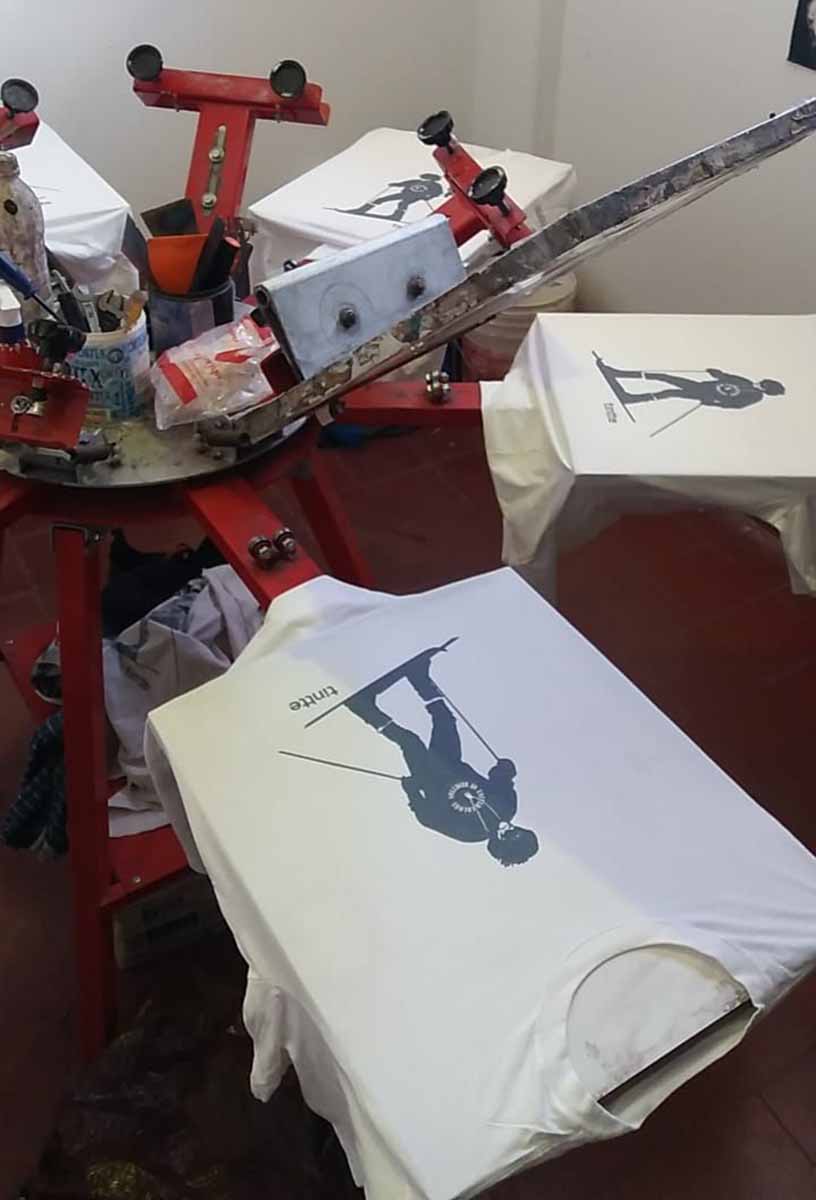
Tintte has completed screen printing production runs with social-impact textile cooperative, Alternativa Marginal
Comparing the discipline to its work in the industrial dyeing space, Mendez adds it has allowed Tintte to respond more swiftly to market interest, while continuing to advance its core dyeing technology, which requires longer pilot cycles and deeper process integration.
“Screen printing—being a more flexible and craft-adjacent technique—enabled us to meet near-term demand, run meaningful tests, and deliver early applications, while our larger-scale dyeing pilots continue to mature.”
It has also enabled Tintte to respond to commercial agreements for large-scale dyeing across Pakistan, India, Latin America, and brands within the US and EU. Mendez adds that interest reflects a global push toward more sustainable and scalable colouration technologies.
In November 2025, Mendez spoke to WTiN about Tintte’s launch and how it has developed its bacteria-based colour pigments for sustainable fabric dyeing. At this time, she referenced the company’s scaling and developing of pilot tests at its’ investors’ facilities. She said results had been promising and Tintte’s pigments performed well across natural and synthetic fibres.
Derived from bacteria - microorganisms that generate colour through a controlled fermentation process – Tintte’s pigments can be applied without toxic auxiliary chemicals and have been proven to lower dyeing temperatures and reduce water and energy consumption. Depending on the fibre, dyeing temperatures can be reduced by approximately 20–50%, contributing to a more efficient and less resource-intensive colouring process.
To pivot to screen printing Mendez says the pigments required a different formulation to perform reliably.
She explains: “While the core pigment remains the same, the final product is adapted to meet the specific requirements of this technology, including viscosity, dispersion, and interaction with binders and auxiliaries used in printing.”
Mendez says the adaptation was “relatively straightforward” due to the scale and volume typically used in screen printing, allowing for closer collaboration and faster iteration. However, the process required testing and specific formulations to ensure consistent performance.
“Once adapted, the pigments integrate easily into existing screen-printing supply chains, requiring minimal changes to established processes. This has made screen printing a practical and accessible entry point for early pilots and collaborations,” she adds. “Their consistent quality, color strength, and stability allow for faster adoption within screen-printing workflows, making them an effective pathway for early validation and market engagement.”
Furthermore, Mendez says that the pigments have seen good results in wash and rub fastness, with light fastness results consistent with early-stage industrial applications. She adds that performance is improving as Tintte refines formulations alongside its broader fixation technology - DyeLink™.
She says the key takeaway from piloting screen printing was validation. “Tintte’s pigments can perform beyond dyeing, without compromising sustainability or colour quality. We also confirmed that screen printing can act as a fast entry point for brands while longer-term dyeing integrations are developed.”
As mentioned, Tintte is currently advancing its technology through partnerships with international fashion brands and textile manufacturers, while continuing to expand its pilot programmes and production capacity.
“Tintte’s long-term vision is to transform textile coloration at an industrial level, with dyeing as our core focus. Printing—particularly screen printing—remains a complementary pathway that enables faster adoption, creative applications, and market entry, and we expect to continue exploring it alongside our primary dyeing solutions.”
Have your say. Join the conversation and follow us on LinkedIn