



-
Understanding the commercial readiness scale
WTiN’s Commercial Readiness Scale gives an indication of what stage of commercialisation a product is at. It ranges from Emerging: a research stage development; Scaling: the product is being produced on a small but growing scale, and Commercialised: the product is well-established and ready to purchase.


Scientists have found a natural rubber alternative in the roots of the Kazakh dandelion plant. QuberTech founder and CEO Dr. Ofir Meir speaks to WTiN about the plant’s potential and how gene-editing technology can scale its adoption.
UK-based biotechnology company QuberTech is addressing declining natural rubber supplies by scaling a sustainable, high-quality, traceable material for global industries.
The company, which has identified the Kazakh dandelion plant as a viable source of natural rubber, announced in January it had signed a Memorandum of Understanding (MoU) with US-headquartered material science company, Yulex Brands, to strengthen its reach in the textile industry.
QuberTech was founded to address challenges faced by the US$20bn global natural rubber industry, which is under huge pressure due to sustainability concerns, political risk, climate vulnerability and supply chain pressure.
Research has shown the global production of natural rubber is declining while demand is increasing. QuberTech reports demand is currently at 15 million tonnes per year, while production falls short at 14 million tonnes per year.
This is made even more problematic as all the world’s natural rubber is produced from one tree in Asia – The Hevea brasiliensis – which is threatened by climate change and disease.
Natural rubber plays such a vital role in manufacturing that it is included on the EU’s list of critical raw materials. Meanwhile synthetic alternatives lack natural rubber’s superior qualities and come with environmental risks as they are created predominantly from fossil-based materials.
As another natural alternative is needed, the QuberTech team believe they have found it in dandelions, which they are now improving using gene-editing.
Dr. Ofir Meir, founder and CEO of QuberTech says: “This industry is facing a lot of problems, which I believe our expertise in biotech approaches can solve, such as gene-editing.”
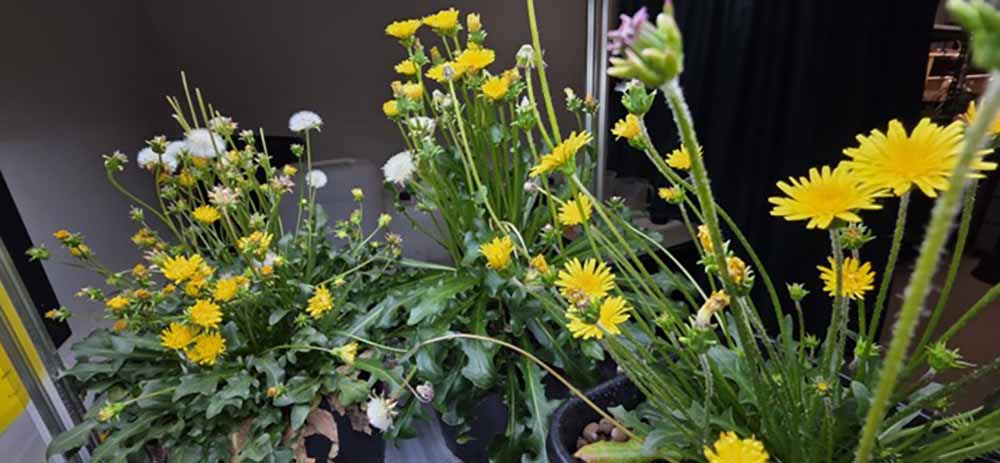
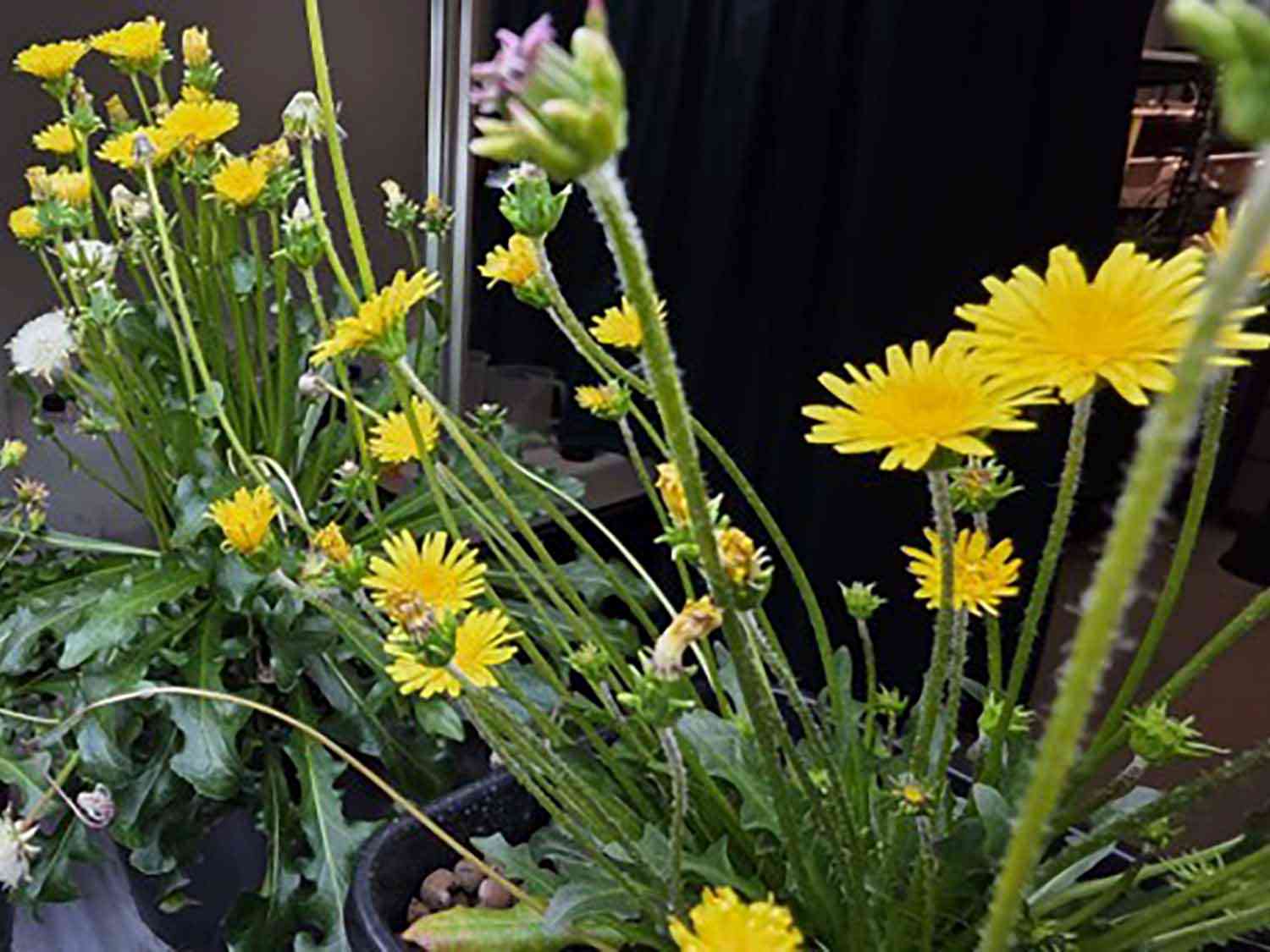
The Kazakh dandelion plant has been identified as a viable source of natural rubber
The Kazakh dandelion
Current Kazakh dandelion cultivars generally yield less rubber per hectare than Hevea brasiliensis, often in the same order of magnitude but typically below. Latex has been found, to be naturally produced, in the root system of the dandelions, and is extracted by crushing and pressing the roots.
In the field this latex is ready to harvest in five to six months. Coupled with the fact that dandelions produce large amounts of seeds, makes them easy to plant and scale up.
“What we are doing at QuberTech is improving the dandelions to produce more rubber and bigger roots, which in turn produces more rubber,” explains Meir. “We can guarantee the high quality all year round since we are growing them in Greenhouses and without soil.”
QuberTech has identified potential genes in the plant to tweak so to regulate the amount of rubber they can produce. The team use gene-editing to modify the dandelion plants, as this allows them to control genes, by turning them on and off, speeding up the natural process of improving crops.
In phase one, QuberTech plans to grow the dandelion plants at a ~100 sq metre plot in Norwich, using the John Innes Centre facilities, a plant research institute and LettUs Grow, a company that specialises in growing crops without soil, as part of its precision breeding project – QuBOOSTR. QuBoostr is being funded with GBP£2.4m from the UK Government’s Defra Farming Innovation Programme, in partnership with Innovate UK.
By combining the John Innes Centre’s plant science with QuberTech’s gene-editing expertise and LettUs Grow’s advanced aeroponics technology, the partnership will improve and optimise dandelion crops for high-density, soil-less indoor farming.
Because the dandelions are grown in misty air in glasshouses, the rubber could, in future, be produced on brownfield sites rather than competing with farmland that can be used for food.
Additionally, Meir says, companies don’t solely have to rely on importing rubber from Asia and they can build nearshore supply chains in the US, Europe or everywhere.
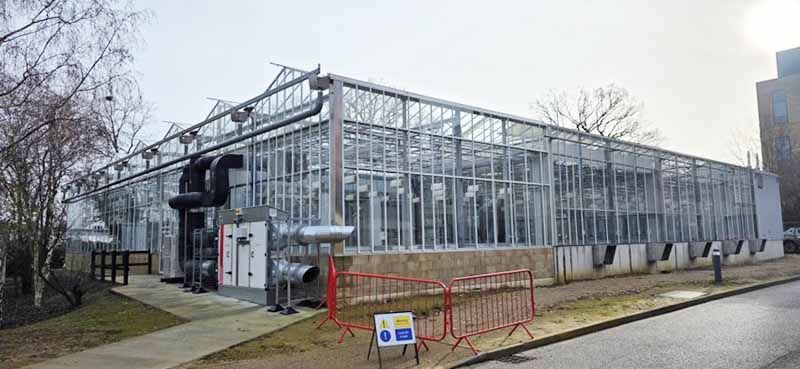
QuberTech is growing dandelions at John Innes Centre facilities in misty air in glasshouses
Scaling up production
Within the next 12 to 18 months QuberTech expects to be in pilot production and in a position to provide samples to commercial partners, initially targeting markets such as medical, footwear and fashion.
By partnering with Yulex, which produces natural rubber for wetsuits made by Finisterre and Patagonia, QueberTech will bring its enhanced crop platform and controlled environment production system together with Yulex’s proven expertise in alternative natural rubber commercialisation, product development and global supply chains.
Meir explains: “There are several initiatives globally to develop more sustainable alternatives for natural rubber. We decided to partner with Yulex because they are pioneers in this field, with deep experience in natural rubber materials, and commercialisation with leading brands. Their technical know-how and existing supplier network make them an ideal partner to help us scale Qubertech’s business in a robust and responsible way.”
There are many applications that you can only use natural rubber for. In conversations with industry and academic experts, there is a growing expectation that climate stress, ageing plantations, low replanting rates and competing land uses will drive a sharp decrease in effective natural rubber supply over the coming years, which is likely to result in higher and more volatile prices.
By producing dandelion roots in a closed and regulated environment, QuberTech is confident it can achieve greater control over rubber yield optimisation, batch-to-batch consistency, full traceability across the supply chain, and regulatory compliance. Meir says will give QuberTech’s natural rubber an advantage as regulatory updates come into play in Europe, such as the EU Deforestation Regulation (EUDR).

QuberTech founders Dr. Ofir Meir (L) and Dr. Neil Clelland (R)
QuberTech, is currently in the process of finalising its pre-seed round of funding that will enable it to achieve its objectives before progressing to the pilot scale in around two years’ time.
In February, QuberTech announced on LinkedIn it was partnering with Rezylix on RootSight – an artificial intelligence (AI)-powered platform to track dandelion root development in real time.
RootSight uses imaging and computer vision to measure rubber-rich taproots non-destructively, replacing manual assessments with automated, data-driven insights. QuberTech hopes to optimise cultivation protocols and validate a system that can scale from lab to greenhouse to commercialisation.
“The vision is to lead this change and create a new supply chain with this amazing material,” adds Meir. “I think timing is everything in startups and the fact that we see a decrease in production every year is huge and we need to solve this challenge. To secure natural rubber for the future – this is our vision.”
Once QuberTech’s 1000 sqm second pilot scheme works out (in 3-4 years), eventually the company would like to have a two-hectare commercial site producing around 3,000 tonnes of rubber.
Have your say. Join the conversation and follow us on LinkedIn