


In this special podcast series, we speak to the winners of the WTiN Innovate Textile Awards 2025.
World Textile Information Network (WTiN) is thrilled to announce the winners of the Innovate Textile Awards 2025. In this special podcast series we speak with the winners of the awards about the challenges, possibilities and successes of innovation within the textile industry.
In the first episode, we are joined by Melik Demirel, co-founder of Tandem Repeat. Tandem Repeat won the Product Innovation award for Sonachic – a collection of luxury basics inspired by sweater and cardigan knitting, featuring Procell™ fibre made from fermented proteins.
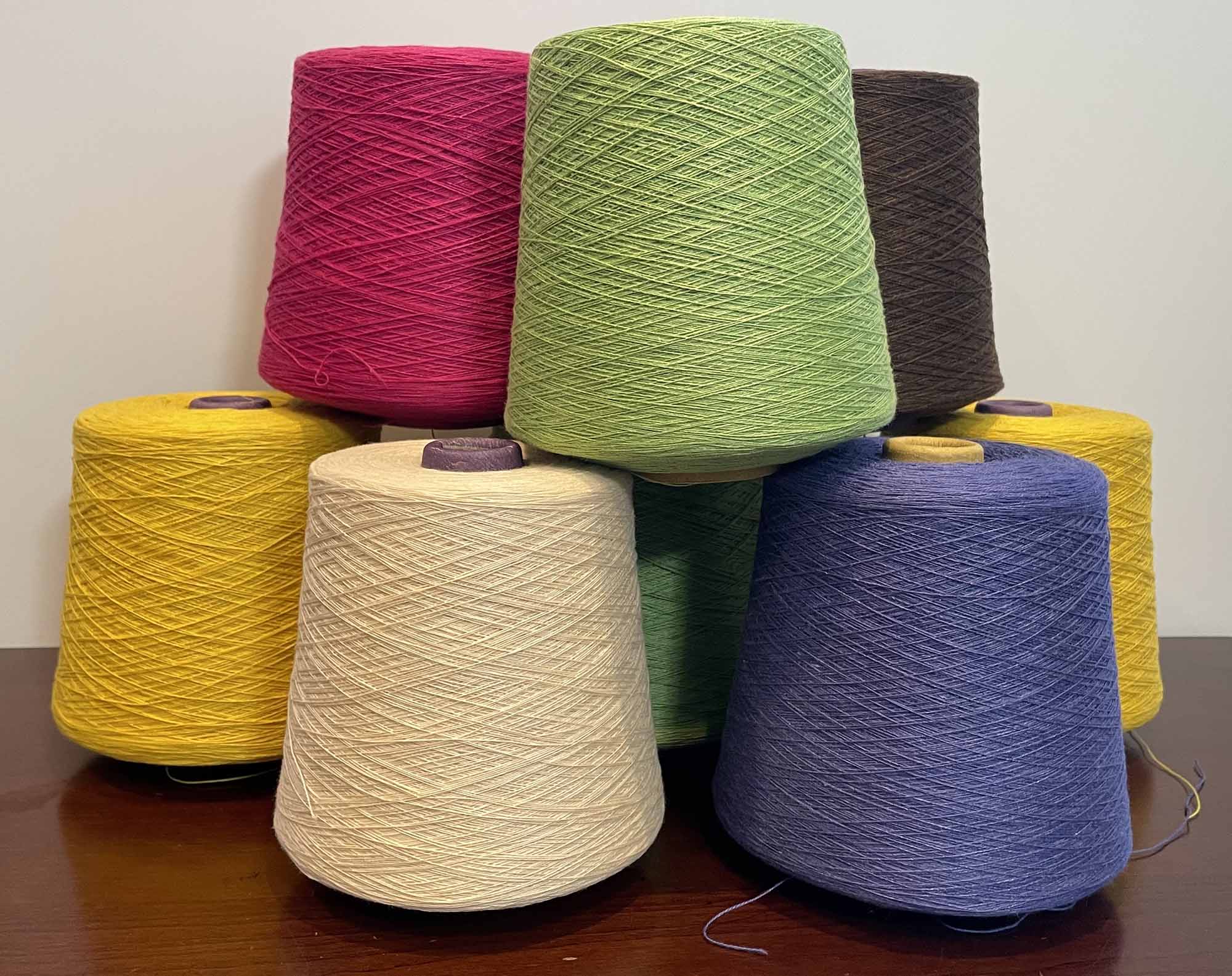
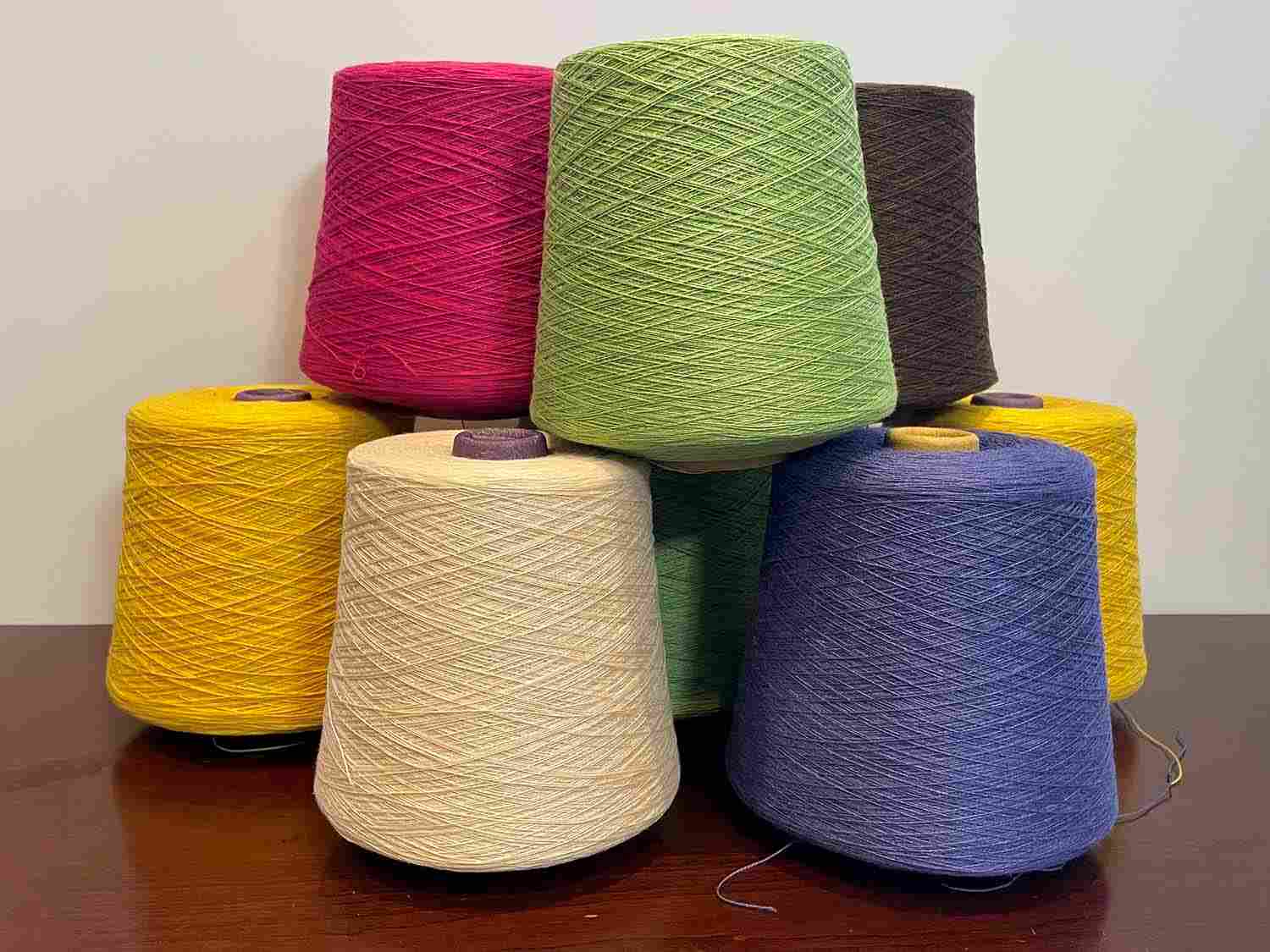
Procell™ fibre is a new, sustainable, protein-based textile developed by Tandem Repeat
Tandem Repeat has developed a patented fermentation microbial process that transforms proteins into valuable products, including textile fibres and nonwovens. This process encompasses synthetic biology, strain and fermentation engineering, and downstream processes. Demirel speaks how the company has combined circular design with functionality.
You can learn more about Tandem Repeat at tandemrepeat.com. Read Demirel’s report on biomanufacturing protein fibres to achieve sustainable development here.
WTiN announced the winners in a virtual ceremony on 5 December 2025, which you can now watch on demand at WTiN.com.
Have your say. Join the conversation and follow us on LinkedIn
-
Transcript
This transcription has been AI generated and therefore may have some inaccuracies.
Ep. 138: Product Innovation Winner
In this special podcast series, we speak to the winners of the WTiN Innovate Textile Awards 2025.
WTiN: Hello, and welcome to Textile Innovation, hosted by WTIN. My name is Abi, and I'm the Features Editor and your podcast host. In this special series, I will be joined by the winners of the WTIN Textile Awards 2025. The awards recognize and celebrate excellent leadership and innovation in the textile industry. And throughout this series, we will delve deeper into the challenges, successes, and possibilities of these industry leaders. In this first episode, I'm joined by Melik Demirel co -founder at Tandem Repeat. Tandem Repeat won the award for product innovation with its Sonichick range, which is a collection of luxury basics inspired by sweater and cardigan knitting, featuring pro -cell fiber made from fermented proteins.
In this episode, Malik delves into blending high fashion with biotechnology and how this reflects innovative biomanufacturing focused on circularity and sustainability design. Hi Malik, congratulations on your Product Innovation Award at WTiN's Innovate Textile Awards 2005. Please can you share the story behind your winning innovation and what inspired its development?
Demirel: Thank you. It's an honor to take this award. So our innovation stems from 15 years of research in biomanufacturing. The inspiration comes from nature, originally from a protein appeared in squid ring teeth and then moving into proteins in yeast, a waste product of yeast. Basically, we leverage different techniques including genetic engineering and synthetic biology to understand the underlying principles. But then we decided to move into from precision fermentation to biomass fermentation to get these materials. So it's actually quite amazing because the problem has been around almost 150 years and we are glad that we finally solved the major challenge in this area.
WTiN: Amazing. And in terms of that challenge, what challenging gap in the textile industry are you filling? What does your innovation address?
Demirel: So we see our pro -cell fibres as an alternative to wool, as a vegan wool that doesn't depend on animals, but also it's a good alternative to synthetics. From a primary focus perspective, you know, there are substantial contribution of the textile industry for greenhouse gas emissions and unsustainable resources such as microfiber pollutions and so forth. So these led to our, you know, studies on this domain. And we believe that our fibres directly tackle these challenges by providing a climate -positive and bio -based alternative to both natural and petroleum -based fibres.
WTiN: Amazing. And what sets your innovation apart from others in the market? And how do you see it disrupting the industry moving forward?
Demirel: Yeah, so our fiber has a unique advantage. It's coming from fermentation, right, biomanufacturing. So it's a protein -based materials with, you know, reduced carbon footprint and it actively, you know, have advantages are basically superior properties than wool. It is almost double the strength of the wool and it's also soft, it's durable. And, you know, beyond the performance, there's also climate positive advantages. It uses less water, it uses less air, energy and it uses less carbon footprint, which we published some of the life cycle assessments in a paper recently in Proceedings of National Academy of Sciences.
WTiN: It'd be great to get a link to that and we can include that for our listeners to read. And so it was amazing to have you enter the Innovate Textile Awards and winning it is a huge achievement. What does this recognition in the product innovation category mean to you and to your team?
Demirel: Yeah, so this is a big recognition for us. It's an affirmation of our team's years of dedication to science and sustainability. It validates our mission to revolutionize the textile industry and realize our ambition, dream of becoming a leader in both green and blue economies so that we can have a big impact on climate positive solutions.
WTiN: And while you were developing the material, what was the biggest hurdle you faced and how did you overcome this?
Demirel: Yeah, so the biggest hurdle was the scale up, because we were starting with small amounts initially in the lab, and then recently, last year, we made 500 kilograms of this material. And so now we are aiming to jump into commercial scale, starting 5 ton and we are hoping to achieve first 100 ton and then the 1000 metric tons. So during this innovation, the funding was the critical also issue and we were lucky to secure multiple funding from BioMADE, an advanced institute in the US, funding from sources such as Defence Industrial Base Consortium and other venture funding that have led to the solutions on the scale up.
WTiN: And I just want to ask you about Sustainability and circularity in your approach, as obviously these are huge topics in the textile industry. Was this important to you during the development of the product?
Demirel: Yes, so we see sustainability as the core mission of our company. And we ensure, of course, this through carbon negative production, meaning producing our fibers using methods that are actively, you know, removing greenhouse gases and being a protein -based materials, a bio -based solution, which doesn't depend on synthetics and reduce pollution because it doesn't have the negative effect of microfibers as in polyester. And these are not only promising ideas, but already proven by using life cycle assessments, as I said, We recently published a major paper about this recently. But beyond sustainability, we also see this as a industrial symbiosis because, you know, the whole circularity will be only realized when you completely close the circle. And industrial symbiosis is a key part of this problem.
WTiN: Of course. And I must say, speak to lots of people in the industry about closing the loop and about how all actors need to work together. Did you collaborate with any key partners, institutions or brands to bring Seneca to life and how did those collaborations shape the final product if so?
Demirel: Absolutely, so we do and being a professor at Penn State as the Hockendal Chair Professor in Biomimetics, I do, you know, collaborate within the university. But as a company, we have collaborated, for example, with another university, University of Georgia, to understand the intersection of biomanufacturing and public opinion, because we wanted to understand the impact of these type of materials on the On the technology side, we have been interacting with multiple companies and the latest one is Androids. We are now trying to partner with them to scale up the technology and leverage their extensive experience in non -wovens. We also interacted with companies like Arthos, where there are some defense applications of the fibers. We also constantly interact with many, many brands in the US, in Europe, and so on, to test our products and to see how we can improve them.
WTiN: And just coming off this, you've obviously just touched upon this, but how does the role of the customer and industry feedback play then in refining your products?
Demirel: So through projects such as BioMates grant that we received, so we were able to assess the performance and longevity of our products. The process is generating interest in clothing brands and ensuring the final product meets market demands for both high performance and sustainability. But we also started an experimental brand, we call it Sonachic, basically, because of the color, natural color, the acryl color of the of the fiber, it's a gold color. So that gave us direct feedback from customers. friends, families, and some of the unknown customers that we have never met. They have been feeding us on the data and the use cases of these sweaters. So it has been an interesting pathway for us to understand this innovation.
WTiN: That's very interesting. And Everything you've spoken about sounds fantastic, sounds like you've really thought it out and everything that you're doing sounds wonderful. Coming off this, what advice would you give to any aspiring innovators within the textile industry hoping to make their mark?
Demirel: So I would say focus on climate positive sustainable solutions. So don't be afraid to draw inspiration from nature and be persistent through long -term and development cycles. As I mentioned, this took us for 15 years to come here from lab scales to later the company scale and the pilot scale and so forth. But more importantly, don't ignore the performance part of the project, because, you know, sustainability by itself would help you to gain attraction, but without the cost and the performance, it will not be successful in the market.
WTiN: And how do you hope what you are doing with Sonachic will inspire others in the industry to make sustainability a priority?
Demirel: Yeah, as I mentioned earlier, so we have to not forget that the performance and climate sustainability are not mutually exclusive, right? So our success proves that biotechnology and biomanufacturing can create a climate -positive future for tech science, you know, going with advanced bio approaches to more commodity textiles. This was This thought to be a big challenge, but we now know that by promoting these ideas to textile mills, brands, we can have them adopt circular approaches and rethink the material reliance.
WTiN: And my final question for you Malik is, what would you like the broader industry to understand about the importance of innovation and research in the textile industry today?
Demirel: The industry must understand that innovation is essential for survival and resilience. So the textile industry is substantial. environmental impact and reliance on unsustainable and non -domestic supply chains are major risks. Therefore, pioneering new sustainable materials like our Procell is critical for reducing environmental impact, ensuring domestic supply chain security, and staying ahead of consumer preferences and government regulations that increase demands for circularity and climate positive solutions.
WTiN: Amazing. Thank you so much. Thank you for joining me on GTN's Tesla Innovation Podcast. And congratulations again on your product innovation win.
Demirel: Thank you.
WTiN: Thank you so much for listening. If you have any questions or want to learn more, you can follow us on LinkedIn at World Textile Information Network, or you can contact me directly at content at WTiN .com. If you are interested in sponsoring an episode of the podcast, please email sales at WTiN .com. We look forward to you joining us next time for the next winner in our special series.