
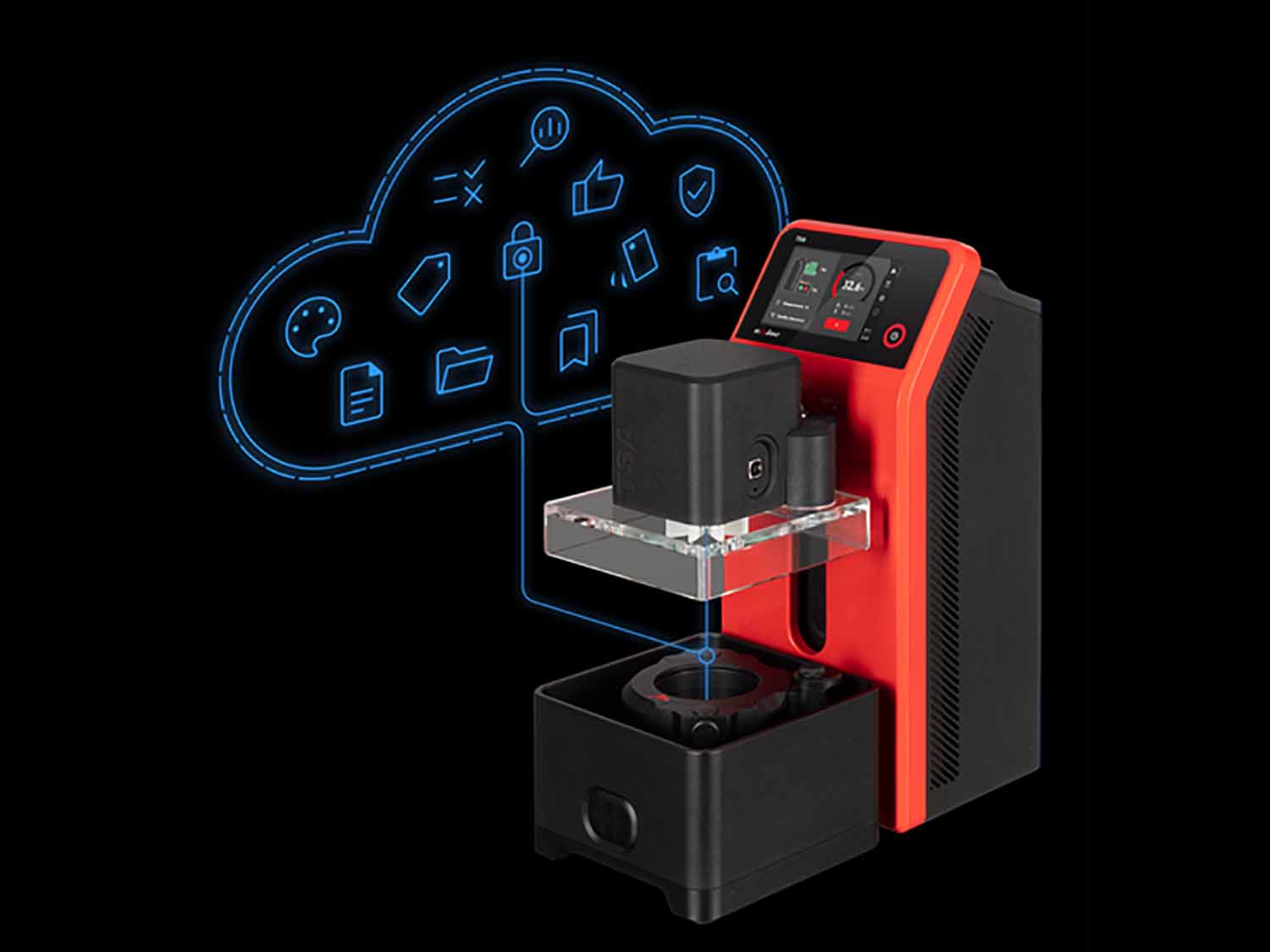


In this special podcast series, we speak to the winners of the WTiN Innovate Textile Awards 2025.
World Textile Information Network (WTiN) is thrilled to announce the winners of the Innovate Textile Awards 2025. In this special podcast series we speak with the winners of the awards about the challenges, possibilities and successes of innovation within the textile industry.
In the second episode, we are joined by Alexander Grüner, global business development manager, emtec Electronic. Emtec Electronic won the Changemakers award for Tactile Sensation Analyser and cloud-based Virtual Haptic Library.
The emtec TSA Tactile Sensation Analyser evaluates parameters such as surface softness, surface smoothness, stretch and recovery, thermo-haptic properties, friction, and crumple or drape behaviour. This level of detailed analysis allows textile manufacturers to maintain the highest standards of quality and comfort in their products.
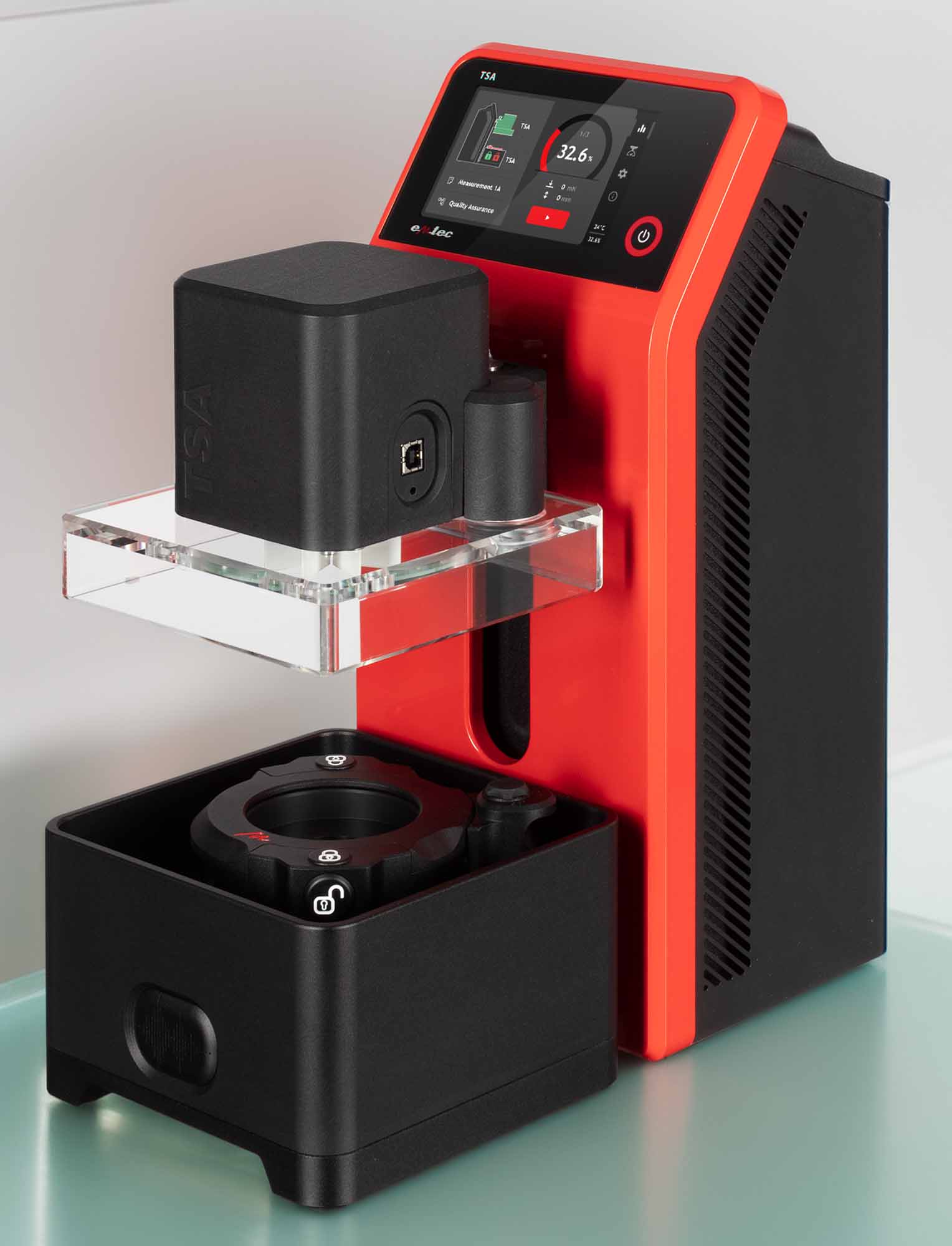
Emtec Electronic won the Changemakers award for Tactile Sensation Analyser. Image - Emtec
One of the standout features of the updated TSA device is its integration with the cloud-based Virtual Haptic Library. Developed in collaboration with Black Swan Textiles, this innovative online database digitises and categorises TSA sample data, making it accessible to authorized personnel worldwide in real-time.
Grüner speaks about the company’s development and journey. He details how it started out in the pulp and paper industry but how interest from manufacturers including the likes of Lenzing opened doors for emtec in the textile space.
You can learn more about emtec Electronic at emtec-electronic.de.
WTiN announced the winners in a virtual ceremony on 5 December 2025, which you can now watch on demand at WTiN.com.
Have your say. Join the conversation and follow us on LinkedIn
-
Transcript
This transcription has been AI generated and therefore may have some inaccuracies.
Ep. 140: Changemaker Winner
In this special podcast series, we speak to the winners of the WTiN Innovate Textile Awards 2025.
WTiN: Hello, and welcome to Textile Innovation, hosted by WTIN. My name is Abi, and I'm the Features Editor and your podcast host. In this special series, I will be joined by the winners of the WTIN Textile Awards 2025. The awards recognize and celebrate excellent leadership innovation in the textile industry. And throughout this series, we will delve deeper into the challenges, successes, and possibilities of these industry leaders.
In this second episode, I am joined by the winners of our Changemaker Award, Emtec Electronic. Changemaker Award honors those who champion sustainability, ethical practices, and technological advancements, celebrating groundbreaking ideas that are redefining how we produce and interact with and utilize textiles.
Emtec won for its tactile sensation analyser and cloud -based virtual haptic library. On this episode, Alexander Gruner, Global Business and Development Manager at Emtec, speaks about how the company has advanced its offering and moved into the textile industry.
Hi, Alexander. Congratulations on your win for the Innovate Textile Awards 2025. Can you share the story behind Emtec's winning innovation and what inspired its development?
Grüner: Yes, of course. I'm happy to. Well, The development goes back many years and has actually nothing to do with the textile industry. In 2005, Emtec had a sales meeting with a customer from the tissue paper industry. So tissue paper industry, they make toilet paper, handkerchiefs, and these kind of products. And this is where actually Emtec comes from. And we introduced a totally different test instrument to this customer. And I liked it. but at the end of the meeting, they said that they actually want to have something different. They would like to have something what can objectively measure the softness of tissue paper products.
And this was the starting point. And about two years later, the first prototype could be introduced to the industry. And we had a lot of scepticism at the beginning, but this turned into excitement pretty fast, because people realized that the device is not just the nth one which says it can measure softness, but it actually kept its promises. So today the device is a standard on the global tissue paper production and used by the complete supply chain from the fibre maker to the actual manufacturer. And in 2015, the Austrian company Lansing contacted us because they were looking for a tool to measure haptic properties of fabrics objectively, and their research led to us finally. And this is when we started to look into the textile industry. But today, The successor device, which has first been introduced to the textile industry in 2023, is fully adapted to the needs of the tissue paper, nonwoven, and textile industry. So we can meet all the needs of all three industries. And yeah, the instrument is ready, functioning, reliable, and provides accurate test data.
WTiN: That's brilliant how you've expanded out. And what an amazing partnership to have with Lenzing. So focusing just on the textile industry, What challenge or gap does M -TEC's haptic sensors address?
Grüner: Well, in short words, we enable the objective quantification of the hand feel of fabrics, which is a highly subjective parameter, actually. And this has the potential to change the industry in many ways. For example, the product development can be accelerated significantly. The production quality can be monitored in real time, which allows immediate actions if the haptic quality gets out of spec. Today, often enough, issues with haptic quality are recognized late in the process, sometimes too late. And all this helps to avoid misunderstandings in the textile industry if hand feel is discussed.
WTiN: What sets what Emtec is doing apart from potentially other companies in the market? And how do you see it disrupting the textile industry as we move forward?
Grüner: Well, it's a totally different approach compared to other principles, other concepts. And by the way, it has proven to be reliable over many years in the tissue paper industry. You cannot produce tissue paper efficiently without the device now. So most principles use mechanical tests to measure some of the individual components that together make the human hand feel. The TSA does that too. So parameters like stretch, recovery, compressibility, and crumple resistance are measured mechanically. But in addition, we use a vibration analysis to determine surface softness and surface smoothness. And this is new. No one else has done this before. And this is more or less a simulation of the processes that happen in the human hand when you touch a surface. And this is probably why the test results correlate so well with the human perception in most cases.
WTiN: That's really interesting and literally why you won the Innovate Textile Awards, which is a huge achievement. What does winning WTiN's Innovate Textile Awards, our Changemaker Awards specifically, what does that recognition mean to you and your team at Emtec?
Grüner: Well, we at Emtec feel really honoured and recognise the hard work that was necessary to get to where we are now with the device. And I've shared when I got this news, I shared this immediately with our R&D team because they are actually the guys who made this possible. We have to be that honest.
WTiN: Amazing. What was the biggest hurdle you faced while you have been developing this innovation? How did you overcome it? I imagine that's quite a big question because obviously you've been developing for such a long time.
Grüner: Yeah, this was was a long process. At the end, it's not done. It's always something new, you know, always some innovation, some optimizations. But at the very beginning in 2005, 2006, before the instrument has first been introduced to the tissue paper industry, the main thing was to create a real device from the concept and to get this device on a satisfying level. regarding accuracy, repeatability, and reliability. And it took a couple of years to get to the level where we are now, to be honest. And when we started to introduce the device to the tech side of the industry, we learned quickly that changes to the device were necessary to make sure that it provides similar good results as it does for tissue paper. And this finally led to the new device, which just won this award. And all in all, at the end, it was the strong will of all who have been involved in the development to get this working. which finally made it work at the end.
WTiN: And how do you ensure sustainability of circularity within your approach? And is this something that you are working towards?
Grüner: Well, the instrument helps the industry in many ways to be more sustainable. So on the one hand, it can help to optimise the amount of chemicals, for example, that are used in the processes, in the production processes. On the other hand, it can help to reduce sample shipments significantly in the product development and it can help to avoid production. of fabrics with unsatisfying haptic quality and both have a positive impact to the textile industry's ecological footprint and I think the textile industry is often accused of greenwashing Well, in this case, it's real. It's no greenwashing. It all can be proved by numbers. By implementing the device and the virtual haptic library which comes with it into the process, big steps forward can be made regarding sustainability, decreasing ecological footprint.
WTiN: That's fantastic. And obviously, like, you know, obviously move from like tissue paper into the textile industry during this move, like, did you collaborate with any key partners, institutions, or brands to bring your product to life? And did those did potentially this collaboration shape the final product?
Grüner: Well, since the beginning of the company, we work together closely with industry partners, institutes and universities. So this is very important for us. In the case of the TSA, it was actually a customer from the tissue paper industry, what I earlier mentioned, who asked us to develop something like this. And when we started to optimize the device for the use in the textile industry, we had a lot of support, again, mainly by early adopters, which were brands, some universities, but also mills. And at the end, it is one thing to have a good idea, but to get to an applicable and functioning test device, partners from the industry are just necessary. So, yeah, we work with partners a lot. I cannot name any of these brands, unfortunately, or they're very confidential, always, you know that. But, yeah, it's necessary. This is no question.
WTiN: Then kind of coming off that. Obviously, partners are necessary. But have, like, has customer like obviously I can answer this myself what you just said but industry feedback has that played a part in refining what you have created here?
Grüner: Definitely, especially when we're talking about the test procedure to make it easier, make it faster, make it more applicable to the industry. Again, it's something if you develop something in the lab. But once it is used, it needs to be adapted to the needs of the user. For that, the industry feedback is very important. But also in terms of test results, we had to optimize test procedures that we could closer to the reality and all these things and casting of feedback and the feedback of their hand panels for example was very helpful to us.
WTiN: That's very interesting and what advice would you give to any aspiring innovators hoping to make a mark in the textile industry?
Grüner: If you have a good idea which can help the industry and you are convinced that it can help the industry then you will be successful no matter how impossible this might seem at the beginning. Like if you take Emtec and our TSA, not many believed in our concept at the beginning But we did not stop, we improved, we optimised and kept on working hard. And today, after many years, the device is industrial standard in the one industry and in the other one, it is on a very good way to get to the same level. So, yeah, just believe in yourself and do not stop and work hard. I think this is most important. And a little bit of luck, of course.
WTiN: Of course. And do you hope that your innovation will inspire others in the industry to prioritise sustainability or creativity or even both of these concepts?
Grüner: I think, you know, our TSA and also the cloud which comes with it, they're a good example that being more sustainable doesn't have to be a huge investment. And at the end, it can actually help to save money and time by keeping the desired quality level. So I think this is not inspiring to be more sustainable. Yeah, so this is what I would say.
WTiN: Thank you so much. And my final question is, what would you like the broader textile industry to understand about the importance of innovations in textiles today?
Grüner: Well you know, I mean if you look at the textile production or textile industry 150 years ago and compared to now with all this automation and all these things going on and also AI, you can see how important innovation is. Plus the textile industry was Mine still is an industry with a heavy ecological footprint. So I think that innovation in the textile industry has helped to decrease the ecological impact of the textile industry in the past decades and will help to even further decrease this in the future. So innovation is important, not only in the textile industry, in any kind of industry.
WTiN: Amazing. Thank you so much, Alexander, for coming on the Textile Innovation Podcast. And congratulations again on winning the Changemakers Award.
Grüner: Thank you very much. We really feel honoured by this. Thank you. Thank you. Thank you.
WTiN: Thank you so much for listening. If you have any questions or want to learn more, you can follow us on LinkedIn at World Textile Information Network, or you can contact me directly at content at WTiN .com.
If you are interested in sponsoring an episode of the podcast, please email sales at WTiN.com. We look forward to you joining us next time for the next winner in our special series.