



WTiN speaks to Patrik Frisk, CEO of textiles-to-textile regeneration company, Reju.
WTiN speaks to the leaders in textile manufacturing about the trends and advancements shaping the textile industry.
In this episode, WTiN’s managing director, Madelaine Thomas, speaks to Patrik Frist, CEO of Reju. Reju is a textiles-to-textile regeneration company focused on circular polyester manufacturing.
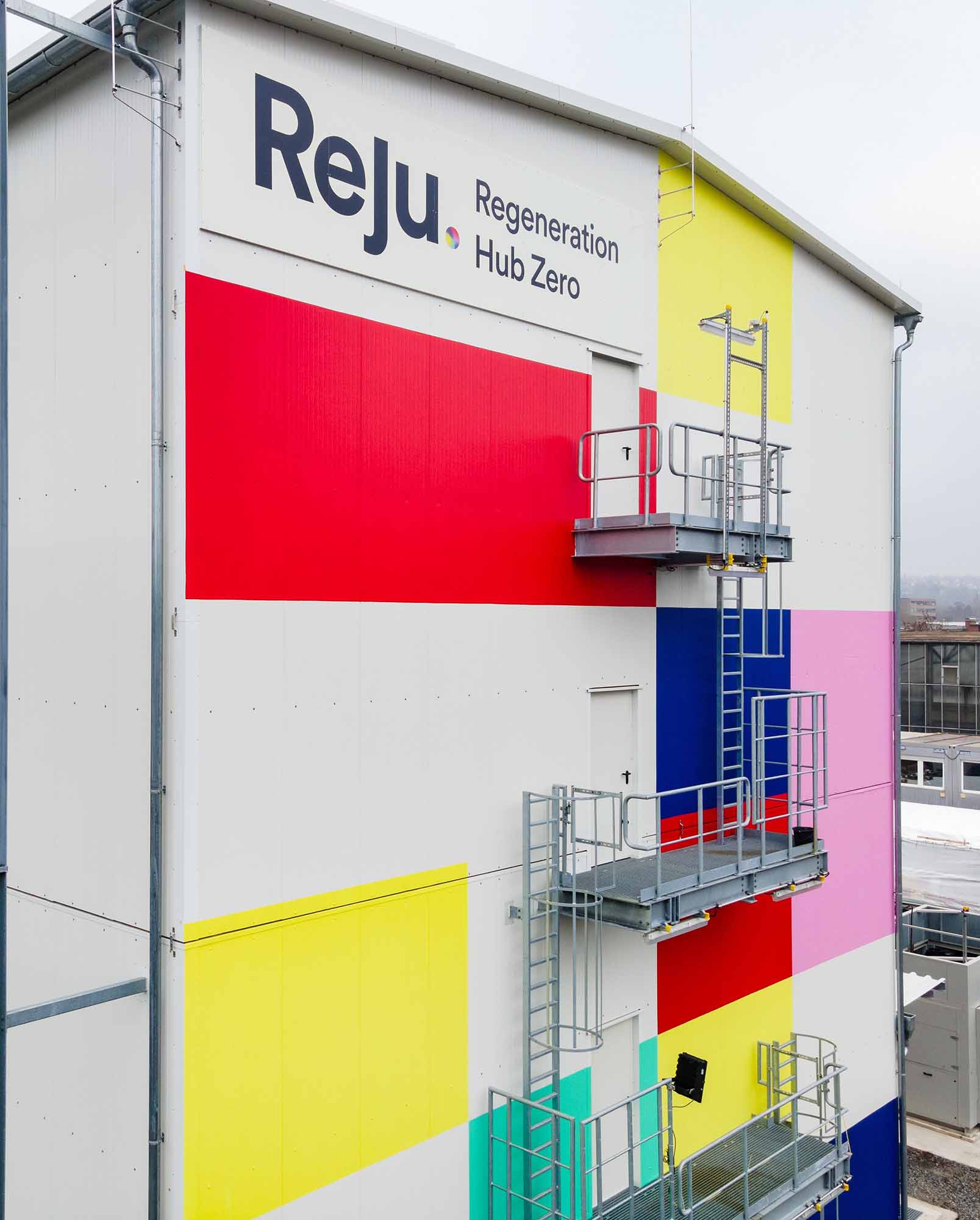
Exterior of Reju's pilot Frankfurt Regeneration Hub
Throughout his career, Frisk has led many major apparel and footwear brands. Throughout the episode he shares his knowledge and how his experience has shaped the way he leads circular textile business models and integrates textile-to-textile recycling into supply chains.
Frisk also touches upon how Technip Energies, a leading engineering and technology company for the energy transition, and creator of Reju, works with Reju and other industry experts to turn waste polyester and polyethylene terephthalate (PET) into infinitely recyclable materials.
Learn more at reju.com.
Have your say. Join the conversation and follow us on LinkedIn
-
Transcript
This transcription has been AI generated and therefore may have some inaccuracies.
Ep. 152: Building circular business models
WTiN speaks to Patrik Frisk, CEO of textiles-to-textile regeneration company, Reju.
WTiN: Hello and welcome to WTiN's Industry Experts podcast. I'm Abi, WTIN's Features Editor and your podcast host. In this series, we speak with industry professionals from trade organisations and brands to startups and manufacturers about the trends shaping the textile and apparel industry and the businesses role within it. We cover everything from circularity and recycling to automation and AI. We quiz the experts in the field about their products and ideas across the huge spectrum that is the textile industry.
This episode is hosted by WTiN's managing director, Madeleine Thomas. In this episode, Madeleine is joined by Patrik Frisk, CEO of Reju.
Reju is a textiles-to-textile regeneration company focused on circular polyester manufacturing. Patrik has led many major apparel and footwear brands throughout his career and delves into them in this episode. Madeleine and Patrik speak about building circular textile business models. textile to textile recycling and integrating it into supply chains. They also touch upon scaling up systems and how to build effective and profitable circular economies within the textile and apparel industry.
Thank you once again Patrik for joining us and I'm really excited to kind of delve into these key topics with you today. So firstly, can you tell us a bit about your experience at Reju and your mission there and how the company's come about?
Frisk: Absolutely Madeleine and thank you for having me. Reju is now on its third year but the project actually started about six years ago and that was when I was running Andromeda as the CEO, we were looking for a technology later. Early 2020 that could help us transition from using bottles to textile into a textile to textile solution. And at that point in time, we saw this problem that was starting to emerge in a very real way in terms of the need For the industry to do something about the ways that we ultimately create at the end of life, but also for us to be able to make sure that we were creating a sustainable path for the company going forward. So we joined forces with the most unlikely type of companies I think to come together ever, which was IBM that had a technology that we saw. could actually do what is the most difficult thing to do, which is to actually take post -consumer textile waste, the most mixed and difficult composition, if you like, to actually disentangle together with also another company called Technip Energies, which is one of the largest engineering companies in the world and also just happens to be experts in polymer science and the experts in polymerizing, so building technologies and factories for making polyester.
So the three of us got together to actually try to commercialise the technology that IBM had. That's how it started back in 2020. We then moved the technology very quickly to Frankfurt, where Technip Energies has their polymer division, Technip Simmer. And that's also where we have since built our first demo plant. And that was done in 2024 in just one year. But when we moved it to Europe in 2021, and I subsequently left down in 2022, there was a decision to be made around how to go to market and how to commercialize technology. And that's when the decision was ultimately made in the summer of 2023 by Technip Energies to actually take this technology on board, own it and drive it. to commercialization and I was put in charge to do just that.
WTiN: How exciting. So was that kind of like a key moment when you saw that you know the future of leadership wasn't in selling more and developing more kind of new products but it was in building infrastructure to handle them once they're finished or switching to a more circular model. Was that kind of like a key moment in your head where things just switched for you?
Frisk: When I think back actually that moment was when I was running a very large footwear company, fast fashion footwear company, one of the largest in the world. I woke up one morning and at that point in time, we had about a thousand stores across the US and Canada and we were restructuring. So we were we were actually getting rid of some of the stores that were that were not performing. And I just had this realization one morning. It was in January in 2016, that there weren't any more shopping malls that were being opened. I just realised that we were kind of getting to the end of the runway of the world that I had been part of developing over 35 years, which was open. You know, whether it was, you know, through distribution, either e -commerce or new stores or geographies, new countries, new markets. And there was a need to think a little bit differently around how to do business. So it started for me way back then. But then, of course, once I saw this opportunity for technology to actually help the industry transition from this usage of finite resources, how do you create growth and an opportunity to survive when you know that what you're using is going to not be endless, right, to be finite. And in our case, dealing with the polyester of textiles, and it's not just apparel, it's also home textiles, car interiors, you name it, you know, polyester is pretty much everywhere today, carpets and so forth.
You know, the trick here is the fact that, you know, polyester is about 60 % of all textile fibre that's being made. So the realization for me as I joined this project and as I was asked to actually run Reju, was that we could help the industry, but also find a solution to two things. One was the waste itself, right? How do we deal with the waste that we're creating that has no home today? 87 % of everything that we make in the textile world today is either incinerated or thrown in a landfill at the end of life, which is, of course, not a great idea with something that's finite to a large extent.
And then the second thing was to also find an opportunity for the industry to survive, if you like. Now, that's, of course, not anything near term. But if you think about it a little bit longer, in a longer term horizon, you also understand that if you're dealing with a finite resource, it's going to end at some point. But if you can put that resource back into the loop, if you like, in a smart way, in a cost efficient way, in a way that creates less carbon, that would be something great. And that's something that I want to spend the rest of my career doing.
WTiN: How does that fit in with the wider model that you were used to in fast fashion, in Under Armour, VF Outdoor, et cetera, where you've been in the past? It's all, as you said, about growth, and it's about profits. And how does the need to sell more link in with the circular economy and having more circular and recycled solutions? Because if we kind of, we need to create less, but we still need to sell more.
Frisk: Yeah, yeah. You know, it's a very difficult, you know, equation, of course, to get right. But I think we can, we all at this point, and I think especially in the current circumstances, you know, the interesting thing, I think, with Reju and this initiative is the fact that when we began, we did not have anything but a global marketplace. We did not have a discussion around secondary materials necessarily being a strategic asset in terms of things being finite and now everybody's fighting for it. We did not have a regionalization agenda geopolitically like we have today. And so fast forward from six years ago to three years ago to today, and now suddenly we're faced with a world that is less global, where to compete if we just go on competition for a moment, if you want to compete beyond tomorrow, you need to have a more agile and more adaptable model.
You can't take shipping for granted. You can't take access to manufacturing far away for granted. You can't take access to finite resources for granted. So if you're starting to play all those different scenarios, as a CEO for a company, even if it's a small company, medium -sized, large company. And you put that into context, you're starting to see that you need to have various business models. I'm not naive enough to think that suddenly the industry is all going to jump on the circularity train and go like, oh, yeah, let's all go back to being regional and do things closer. That's not going to be possible for a lot of different reasons, because You know, over this period of the last 30, 40, 50 years, and very much, you know, my career, we've become more and more and more global. And larger companies have become more and more and more decoupled from their supply chains. So much more reliant on other people doing the work for them. Not necessarily anymore having the capabilities, the understanding and the expertise to actually make things, but rather out farming or outsourcing most of the work. So for somebody to start to suddenly think circularity suddenly start to think about maybe bringing things more into region or more, let's say, circular near to home, that's a very hard thing to do.
It's going to take time. There's a time aspect to this. You have to take that into consideration while you, of course, also think about, well, if I'm dealing with finite resources, how do I continue to think about growth then going forward if I'm going to have limited access to various things? It doesn't mean necessarily that you have to give up on growth. And why is that? Well, because you can start to use also different types of material. We're not wed to just one material.
At the moment, we are certainly expanding our usage of polyester because it is the easiest material to make. It has the largest infrastructure footprint. In other words, you have more places that are able to spin polyester yarns than there is demand today. So there's still a tremendous amount of opportunity there to utilize what's already there. So I think it's a combination of making sure that you understand that, you know, the world we live in today will evolve and change. If you want to be competitive going forward, you probably need to start to think about having a mix of models that you operate within to be able to sustain your company. to be competitive in the future environment, and to also continue to ensure resilience in what you're providing to the end consumer. So if you're able to do all those three things, I think you can also map out a future where you have an opportunity to grow, but it might look very different than the way you think about how you do business today.
WTiN: Interesting and I do want to pick up further on that kind of regionalisation point that you made because that was really interesting but just taking a step back and thinking about textile to textile recycling in general you know for a good few years now it has been seen as the holy grail for recycling if you will within textiles and apparel but in terms of you know actually getting into the infrastructure of the supply chain.
It has been a real struggle for companies and we have seen, unfortunately, some really good companies that are involved in this space failing and having to close. So, technically and economically, what is the specific barrier that we do is breaking that others couldn't or are struggling to do?
Frisk: That's a great question, and one that I did not necessarily know the answer to when I began this journey. So what do I mean by that? Well, when we first started this and when the decision was made, and actually it was made a little bit earlier than mid 2023, it was actually made at the end of 22 when I got together with Arnaud Piéton, who's the CEO of Technip now. They were my partners, Arvind Krishna is the CEO of IBM, and we decided that we were going to push ahead with the commercialization of technology. We said, well, before we do that, we have to actually understand what is going on. take? Because we, of course, knew to your point that many had, you know, not made it or failed or were still struggling or trying. So what we did was from January 2023 till about June 2023, we spent a lot of time understanding the space.
So in other words, understanding what was the gap. OK, why was it not necessarily done What were the, let's say, barriers that we needed to overcome? And what was the problem to solve for? And how would you do all of that and actually make economic sense out of it, right?
Because ultimately, we're talking about some pretty awesome, pretty big companies here. Why on earth would somebody like an IBM or Technip Energies or multi -billion, tens of billion dollar type of companies actually get engaged in this? Well, first of all, We believe that the problem, and this was one of the first insights, was that post, and I'm talking about post -consumer textile waste now, the type of waste in textiles, and we're talking about everything from home textiles, carpets, and all of the apparel, and industrial wear, and everything you can think of that we make out of fibre yarns into fabric and into textiles. All of that, you know, what happens to it at the end of life? And we saw that, you know, it was creating a tremendous amount of waste. We also saw that it was increasing. And we saw that there was no real solution to it apart from putting it in the ground or burning it. That was the first insight. And we just simply did the math. And we said, wow, you know, everybody's talking about bottles. Right. Bottles is a very small problem compared to all of this other stuff. So there is a problem here that is so large and so difficult that that it probably would take a new type of company to attack it. When we went a little bit deeper, we saw that it was a systemic problem. You actually were not aggregating textile waste anywhere in the world at scale. The only aggregation that really happens and still happens today is at the non -for -profit level, right?
So predominantly through donations. And in some cases, also through aggregation at waste management company a scale, for example, through hotels, medical gowns, and stuff like that, that is being aggregated. Very small volumes in the big scheme of things. So nothing was being aggregated. Nothing, nobody, and nowhere was textiles sorted for fibre content. And if you're thinking about, you know, getting into recycling of post -consumer textile waste, one of the first things that you need to realize is that if you're going to try to do that, you're going to get everything. What does everything mean? Well, everything means everything.
The problem is you can't tell people, I only want textiles from five years ago with whatever, because nobody knows. And by the way, about 50 % of all of the labels that you have in the textile industry do not tell the truth. So you can't use the labels. We don't have QR codes. There's no coordination. So essentially, you need to sort it through either optical reading, infrared, or all of the above. And you need conveyor belts. You need to semi-automate it because you're talking about extremely large volumes here. And what we found was that all of the text that was being sorted in the world was sorted by hand. And you went like, well, why is that? Well, because everything is sorted for wearability. The only value, the hierarchy of value in textile waste, and still today this is the case, begins at the top with, if I can take this one garment out of this big pile and get $2 for it, $1 for it, get, I don't know, $3 a pound for it, then it's valuable. Right, it has value and then when I go one click down the stuff that I can't actually take out for wearability. Some of that other stuff I might be able to sell to somebody that is using it for insulation or. you know, padding or something like that. But then you get to a little bit further down and actually now you have a lot of textile waste and that has no home. Well, it's not true that it has no home because we also sort for export, because what is wearability or something that people are prepared to pay for in the Western world might be very different in the third world. So there's still one more sorting to be done for people to try to pick out some nuggets.
So you go through this hierarchy, but at the very end, You know, you have a very large volume that still has no home. But the biggest problem of all is the fact that what I'm talking about now is the stuff that's being donated. What is not considered is everything that goes into the black bag or the trash, which is, depending on country, you know, it differs.
In the United States, for example, 80% of all textile waste goes into the bin. 80%, right? If you go through every individual country in Europe, it's going to be different, right? You have variations from similar to the US to some countries that actually do a pretty good job at about 50%. But the reality is most of the waste is thrown in the bin. And what is not thrown in the bin is not being sorted for fibre. So that was the second problem we found. Well, if you're going to build a recycling facility, you need things to be sorted for fibre. You need to know what you have. The third thing was the fact that before you get it to the recycling factory, you need to take out disruptors.
You need to take out zippers and buttons and things that could disrupt the chemical process if you're doing chemical recycling, or destroy the machinery if you're doing mechanical recycling. So you have to actually shred the fabric, or you need to cut it and take that stuff out. Not done at scale anywhere in the world. So we said to ourselves, wow. We have a problem here of the entire future pipeline, right? So if today the pipeline, for example, for polyester is oil, those pipelines, of course, have been built a long time ago. We now need to create a new pipeline, which is discarded end of life textile.
There is no pipeline today. So if you're going to build a very large recycling or regeneration centre, you better make sure that you set up your upstream before you try to build something. That was a big realization. And then, of course, the technology itself. You needed to have a technology that could deal with this waste we just talked about. And that was one of the key reasons why, initially, I got involved was because, number one, I needed a technology that could handle this mix. I needed to have a technology that could handle. And today, in textile, you deal with, of course, as you know, natural fibres, synthetic fibres. And last time, but then you also deal with about six to 7000 different chemicals. And if you're dealing with opening up the funnel to any type of textile, you're dealing with stuff that's 50, 60 years old, there was some pretty nasty stuff. Even nastier than today. right? So we needed that. So we knew we had the technology to be able to do it, but we also saw we need to build a system. And that's where the realisation was that actually what you're needing to do is you need to build a circular textile system where the technology is just the key, the enabler, if you like, to be able to do it and to be able to take care of all of these chemicals that we just talked about and the mix of, you know, natural and synthetic fibres, you need a technology that could do that. But it isn't just about the technology you need, you needed a technology that can also do it fairly fast, because you're talking about enormous volumes. And you needed a technology that could do it and without using a lot of energy so that it was, you know, carbon positive. And then you needed to also make sure that it was technology that had high yield because if you don't have high yield, even if you have low energy and you have you have an ability to to actually sort things out. you will still use too much energy for it to be economically viable, and also you would not have a positive carbon impact.
So we knew we had all of those things, but we also knew we had to help build the system. And then, you know, once you go through a chemical process, you don't actually get polyester out of that process. What you do is you break down the molecule, and you get to what's called a monomer. And you actually have to then go and polymerise it. So that meant you needed expertise in that area. And we had that, because that's what we do at Technip Energies, right, through our polymer division. So we looked at all of this, and we said, oh, wow. No wonder nobody's made it. This ain't no walk in the park. This is very complex stuff. So the first decision we had to make was, Do we really want to try to build it? system? Because what we have is a technology, you know, we really just want to build our technology and be the enabler. But wait a minute, you know, that would be like, like just building an oil refinery without making sure that you can drill for the oil, right? It just doesn't make any sense. And that was what I had to do, which was the hardest for us in the middle of 2023 was to actually convince the Technip Energies board that this was a worthwhile endeavour, despite the fact that we had to build a textile system or circular textile system.
WTiN: How did you go about that? And it's just really interesting how then, yeah, you've had to pivot and switch to creating and building this system.
Frisk: Well, first of all, remember what I told when I began speaking about it, you asked me about the barriers, you know, we saw that one of the biggest things that we needed to do or one of the biggest opportunities was this problem that was being created with the textile waste. And so remember, if you go back in time a little bit here, you know, three, four years ago, that's actually when we really started to talk about textile waste as a growing problem. Before we talked about it as a problem, pictures were shown, you know, oh, there's stuff in Ghana, there's stuff in the desert of Chile.
But suddenly we're going like, wait a minute, the EU is actually making regulation around actually having to sort textile waste separately. We're going to have to deal with this stuff. And oh, yeah, by the way, we're selling more and more fast fashion. fast fashion, and that means lower value goods. Lower value goods means more polyester. That means more problems because it's not going to be possible to take care of it apart from putting it in the landfill or burning. So this problem, and then the consumer behaviour. What do you mean by that? Well, what we also saw was that people were buying more, using it a shorter period of time, and throwing it away. More buying, shorter period of time, throwing more away. So now you have a problem that's accelerating. And actually, wearability in terms of how long we keep our garments have gone from five to three years. So actually, the avalanche I'm talking about, or the snowball effect, is just starting to hit us. If you look out a few years from now, it's going to be pretty dramatic, right? Because you will have more and more waste building quicker and quicker of lower and lower value stuff that's going to have less and less opportunity to, for example, go into the second hand channel.
So when we saw that, we said, wow, somebody's going to have to solve this. Somebody will solve this. What are the capabilities you need to solve this? And I think that's where we ended up was, well, wait a minute, you know, it isn't just about the technology. No, it's not. Why not? Well, because technology is great. Technology is a key thing. It's an enabler, but what are you going to do with the technology? Yeah, well, actually, once you have technology, you go, you have to design and go through different steps to take that technology to commercialisation. First, what happens is you have it in a little test tube and you have these guys with white lab coats somewhere with a little Bunsen burner and they're, you know, they're kind of going about their thing in the lab. Once you see it working there, you take it into a pilot, which could be, you know, I don't know, five pounds or two kilos or something like this.
And then once you've done it and you've proved it out there, you have to go to demo scale and that's, you know, Well, we that's the decision we had to make. We had to make a decision around 1000 tonne demo. And when you do that, what's required is a lot of engineering because now you have to design the equipment. that is supposed to be actually doing this technology. You have to also design the process. How are all of these different pieces of equipment going to work together to get the output that you're looking for? And once you've done that, you have to build it. And once you build it, you have to run it. And once you run it, you have to take all of the information and understand how to take that information and scale it into a 50,000 tonne, 50 times bigger plant for real production.
So what I said to myself, who else has that? No one. Could that be one of the barriers to why people haven't actually been able to be successful? And what we saw was pretty much yes. Because there have been a lot of people that have had a lot of technologies, but most of them have been companies or startups or university efforts that have no engineering capability. And the problem is, you don't need just engineering, right? You need chemical engineering to understand the chemistry. And then you need process engineering to understand the process. And then you need construction engineering to build. And then you need to understand how to do that at scale. And that's the unique thing about our company is we said, OK, wow, we had that. And we're also experts at polymer science, chemical science about polymer. We've built over a thousand polyester factories.
We know everything about making polymer. Who else but us? Yeah, exactly. Because what we saw was we could build this technology, right? We could build a demo plant and say, oh, somebody want to license this? But remember what I said before, if you haven't built this pipeline of how to manage all of this textile waste and coordinated that, it wouldn't matter. you had this great technology and you would be able to license it. Nobody would buy the license because how are they going to organize all of this textile waste, right? So it's all about the system here ultimately. And that was the reason why we came to the conclusion that very big problem, a lot of work to build, You need unique competency and you need an ability to do it also financially. And so far, you know, Reju has no outside financing. We're all financed by ourselves. And when we started to build the Regeneration Hub Zero, as we call it at Frankfurt, we did that in September of 2023. It was finished on the 2nd of October 2024. And in this space, and it's a thousand tons, the largest one in the world, you know our entire aim of this exercise is you know kind of zero waste it will never be zero waste to make sure you get it down into the low percentages of waste in the end that's the aim of the exercise that was a long explanation but it's a conflict you know you need to you need to kind of work your way through it to get the full picture yeah definitely and I guess thinking about you more personally and what your experience has been in terms of a leader at big global corporations within the supply chain and now being at this system technology venture that's building up and scaling.
WTiN: What do you feel were the most important leadership traits that are required in building this system compared to when building a brand? And what did you need to do differently? And how difficult a switch was that for you?
Frisk: That's a very good question. and I think I'm uniquely competent for this job because I started my career actually not in the brand space per se. When I came into the textile industry at the end of the 80s or the 90s, it was as part of the W.L. Gore and Associates company. So I was selling fabric. And so I came in and when I started that job, I remember my first days on that job, I was completely incompetent, right? Because they essentially said to me, hey, Patrick, here's, you know, we had these books with fabric swatches here. And then you went to your customer and you talked about what fabrics to use and so forth. I didn't understand anything, quite frankly. So what I did was I came out to my first customers and I started showing this stuff and they talked a language I didn't understand necessarily because I didn't come from the textile. I didn't do textile education. I was a sales guy, right? Quite a lot of jargon in this industry, isn't there? Yeah, it is. And I thought I could do anything, but I was very young. So what I did instead was I said, well, I have to understand context. So I actually went a different route I went back to my customers and I said listen I don't I’m not gonna sell you anything whatever because you know what to buy anyway what I want to do is I want to go with you to your factories right and I want to spend time with you looking at what you make and how you make it and where you make it so I spent my first year, year and a half going to over 100 factories Back in those days, it was still more nearshoring. We weren't, you know, I was based in in Europe, so we didn't actually most of the textile was really at that point in time emerging into the new countries in Europe. Right. The Iron Curtain was coming down. So Poland was opening up. The Baltics was opening up Romania, Hungary, Bulgaria. So Bulgaria. So it was really a lot of new production there. And then also Portugal was still producing a lot of textile. Finland was producing a lot of stuff, especially technical stuff. So I spent my time there. So my basic education in this industry actually started as a as a as on the supply side, and the manufacturing side, and then went more into the brand side, because once I understood how to make a garment, how we as a company at WL Gore & Associates selling Gore -Tex added value to what was being manufactured.
It was a cinch selling after that, right, because it was a no -brainer. So for me, that also taught me an important lesson, right. And I've done, and I also worked, by the way, you know, we had a Our laminator, we had two laminators in Europe, we laminated a membrane to the fabric. We did that in Livingston in Scotland, and also in Pittsburgh in Germany. So I worked in the laminators, right, to understand how we laminated, how we, the glue we were using, how this was coming. I've always done that the same way ever since in every job that I've ever had. So when I came to Reju, at the end of leading 18 different brands right in my career, ultimately, that's a fair bit. You've been busy. I think it's fair to say. The other thing that's really interesting about that is I've done it through 11 different countries.
I've lived in 11 different countries and worked in 11 different countries, so I understand culture pretty well. But then I also have done it across all of the different categories, you know, most people end up in a category You're either a shoe dog or you're working apparel or you but I've run, you know The largest outdoor brand in the world the North Face. I've run the largest brown shoe brand in the world Timberland, right? I've run Under Armour one largest sports brands. I've long run Jan sport one biggest pack brands and I run Aldo, one of the largest fast fashion footwear brands that also had a lot of accessories, jewellery and stuff. And my point with saying all of that is the fact that I understand all of the categories, apparel, footwear and accessories and equipment. But I also understand the different end use categories. So sport, outdoor, leisure, fashion and so forth. When you do that, what happens is you get an understanding of context. And that's really a general management benefit, right? Because if you understand how things come together, how things work, how systems work, and if you think about the linear system we have in textiles, it starts with design or thought and design over here into something that, you know, then becomes something that's sold and distributed and then used and so forth.
If you understand all of that, and you're now tasked with speaking to that industry about how we're going to come together to actually change into a circular system or at least begin that journey and how we should be dealing with the ways that we create as an industry through all of the EPR framework and other things that are coming. It certainly helps if you've gone through all of those steps yourself. You have context across all the different type of brands and product categories and what have you. Understand all of the ins and outs and problems and opportunities, right, that sit in that space. So when I think about it personally, which was your question, you know, I think that I would feel very bad if I didn't do this, when I know how I can contribute. And, you know, I think that would be a hard thing to live with.
If you walked away, when you actually knew that you could have impact, that's, that's would be, that's not the kind of person I am. So, but the judge is still out. You know, Reju could potentially fail. There are things certainly today that play a big role externally into everything. We see it every day. So there could certainly be things that impact us that I don't even know about today in two months or three months. But I can tell you this, you know, at Reju, one of the things that we do, every day is we focus on the things we can control, right? So we know that we can, that our technology works, we know we need to sort through this, we need, you know, all the things that we need to do, we are laser focused on doing our very, very best on the things we can control. And that, I think, gives us a shot.
WTiN: Yeah, there's always going to be some outside risk, isn't there? What do you think are the kind of the key risks for you at Reju?
Frisk: Well, I think part of it is certainly the volatility that's in the marketplace, because volatility automatically means people tend to just take a more conservative view. Right. And that means change becomes harder to affect. It's just the reality and we need the industry to come along and change with us What's working for us is the fact that this is going to take time So it might be sounding really strange that what would you mean by that Patrick? Well, you know, it's going to take time and that's actually not a bad thing because it also gives all of the brands and retailers an opportunity to go through this change in a very a better chance now than it would have had maybe five or ten years ago is because five or ten years ago we were just solely focused on the sustainability aspect of this to a larger extent or let's say the green aspect of this. Today it's a business. It should be a business decision. Yeah. Because it makes tremendous amount of business sense and oh yeah how great isn't it that we're also driving a circular agenda, we are also using less carbon. For example, to make polyester from how we do it versus if you have a virgin source oil, we're using 50 % less carbon.
And you can do what we do infinitely, because what we do is we essentially break down the molecule and we build it back up again. You get a 50 % improvement every time. So it isn't just a one shot, one fix. No, every time you go through it, you have 50%. You know, there is a, there's a, there's a such a good story in, in, in this now from an, from an economic and, and also from a sustainability lens. I think now is the time, you know, the time has come for the industry to really begin this journey. And a part of the reason why I believe it's going to be successful is because it will take time. So the industry can easily adjust into it as they make decisions to, to join. you know, to join the effort. Yeah, it's exciting and I really do hope that it is successful.
WTiN: Just sticking with that risk element because that's something at WTiN that we've been really looking at and assessing closely at the moment, you know, political risks and compliance risks, financial risks, technology risks with things like AI, etc. If a brand or a manufacturer wants to de -risk their supply chain, what is kind of the first tangible step that you feel they should take when it comes to textile waste and circularity?
Frisk: Well I mean the most impactful thing you can do is to decide what to make and then you know the second thing you can decide is what are you going to make it with and then you can decide how to make it then you decide where to make it right and then so you have a choice cascade that is very clear And I think one of the choices here, as you go through that cascade, is in the case of what are you going to make it with, is there an opportunity, as you think about that, of using more circular materials? Question mark. As you go through that choice cascade, is there a choice of where you're going to make it? Because if you have made a choice of what to make, what to make it with, you can also then start to think, where am I going to make it, right? So can I continue that circular approach? And if I do, is that also an opportunity then for me to think about risk through my business model? Okay, 20 to 40 % of everything that's made today is being discounted at the point of sale. That is one of the big drivers of overproduction, is the fact that we make things very far away. And because we make it very far away, and we position materials and so forth, and we want to make sure we're not out of stock on a size or a colour or what have you, we tend to make too much. We always make too much. Well, if you make things closer as you go through your choice cascade, and especially since this is going to take a long period of time, you don't need to do that on everything. But on the things that make sense, which could be perhaps your more premium product, you make it closer to home.
You don't need to make as much of it. You can lower your inventories. You can now have quicker cash to cash cycles. which makes a lot of sense, right? And so ultimately, you can de -risk yourself through that entire choice cascade. And that's why I believe it's such an opportunity is because if you look at the value of polyester in the actual chain of making a garment that's part of being a raw material, it's about 6 % of your cost on an average. If you make something at 100 % polyester. The whole thing, 100%. It's about 6%, OK? That is a huge opportunity, because if you compare that to a bottle, for example, we talked about bottles before, 70 % of the raw material cost in a bottle, 6 % in apparel. So now that we're going to go through this change, because it's only 6%, and you have this fantastic choice cascade, all these levers, as I call them, where you say, OK, what am I going to make? Where am I going to make it? How am I going to make it? What am I going to make it with? And how am I going to ship it? How am I going to store it? You have all these things you can affect. And you have time to think this through, because you're going to have very little access to material early on. And it's going to grow slowly over time. You can step by step implement this into your supply chain. and de -risk your model by now having more than one model, not just a linear, but also a circular.
You also have access to material that is de -risking you from a compliance perspective, from a regulation perspective. And here's a novel idea for you. How about I also show you how to make more money doing that? Sounds nice. You talked about growth. Let's make some more money together. How am I going to make more money? Well, you've got to make more of the right stuff. have less inventory of it, have a quicker cash -to -cash, you don't have to discount as much. And that's one of the problems we have in a textile system, you know, in this linear system that we have, especially in big companies. You know, the person that's incentivized to make the stuff, right, intake margin, has a different objective than the person trying to get rid of the stuff. My point is, you could actually try to combine more of your potential margin inside of a circular model, because you can control it much better than you can a linear model. You have less control in a linear model than you have in a circular model.
WTiN: That's an interesting point. I guess we're running out of time, so I just want to finish on the one thing in the industry, I like to ask people this, what's the one thing in the industry we should be talking about but we're not talking about, or that we're not talking about enough?
Frisk: Well, I think for me, to think that we are going to be able to drive a linear model with finite materials and just do that. I think that is naive, that's for sure. So I think we need to make sure that we're building more resilience into our model. That's going to be very important, I think, going forward. Whether you're a small, medium, or large company, that is going to be very important.
I would say the other thing is, we hear this a lot, when are you going to get to price parity? Price is really important. You have to get these regenerative materials or recirculated materials at the same prices That's what we have to pay for Virgin. And when I think about that, and I think about everything I've just told you about stuff that needs to be built, right? We need to aggregate, we need to sort, we need to prepare, we need to build all these things. There's a great report for you that you could look into, just came out from Rehubs and BCG around textile waste in Europe and the fact that you're going to need nine 11 billion just to get the infrastructure built to take care of 15 percent of the waste by 2035. You go 2035, 15%. So that means that by that time you would have created a platform where you can actually start to make impact.
We're not talking enough about that because that is, even if those numbers aren't exact, it doesn't matter. What that tells you is that if you don't begin now, you're going to have a very hard problem going forward. And for the industry, what that would mean is that you're going to have regulation forced upon you. right? Because there's no, you know, this is just not going to be sustainable. So I think that's something to be really thinking about as a leader. And if I were the CEO of another big company, you know, I would, I would definitely think about that. And, you know, it's possible, it's possible to do, you know, when I ran Under Armour, our sourcing platform was 50 % in Asia, 25 % in Europe, and 25 % in Americas. And we were a pretty big company. And You know, is that true for everyone? Maybe not. But to begin to explore an ability to have a more resilient model and more adaptability and be ready for anything. I think that is the job of every CEO out there.
WTiN: And I think that's the ideal point to finish on. So thank you so much, Patrik. I feel like I could pick your brain on this stuff forever. But unfortunately, we have to end it. But thank you so much. I really do appreciate that and your time.
Thank you so much for listening. If you have any questions or want to learn more, you can follow us on LinkedIn at World Textile Information Network, or you can contact me directly at content@WTiN.com. If you are interested in sponsoring an episode of the podcast, please email sales@WTiN.com. Thank you and we'll see you next time.