



Sponsored by Taiwan Textile Federation
Industrial textiles rarely attract the cultural attention afforded to fashion or sportswear. Yet increasingly, it is with industrial applications where some of the textile industry’s most consequential innovation is taking place. From filtration systems and conductive yarns to protective workwear and thermoregulating composites, industrial textiles have become central to how economies approach infrastructure resilience, worker safety, healthcare and advanced manufacturing – and Taiwan has emerged as one of the industry’s more strategically important players in this transition.
Long associated with performance apparel supply chains, the island’s textile sector has steadily expanded into high-value industrial materials – an area less vulnerable to fast-fashion volatility and more aligned with global demand for technical capability, regulatory compliance and specialised manufacturing. According to Taiwan’s Ministry of Economic Affairs and the Taiwan Textile Federation, technical and industrial textiles now form a major pillar of the country’s export-oriented textile strategy, supported by investment in functional materials, smart manufacturing and sustainability technologies.
The timing is significant. According to Grand View Research, the global technical textiles market is forecast to exceed US$300bn by the early 2030s, driven by demand from transportation, healthcare, filtration, defence and industrial safety sectors. At the same time, governments and manufacturers are placing greater emphasis on domestic industrial resilience following years of supply-chain disruption, geopolitical instability and stricter environmental regulation.
Taiwanese companies are increasingly positioning themselves at this intersection between advanced materials science and industrial utility. Advance Hitech Textile Int'l Corp, for example, reflects this broad diversification. Its technical textiles span aviation, marine, healthcare, transportation and protective applications – sectors where materials are judged less on aesthetics than on tensile strength, durability, thermal performance and compliance with exacting international standards. The company’s portfolio illustrates a wider shift within Taiwanese textiles away from commodity production and towards engineering-intensive manufacturing.

Advance Hitech Textile Int’l Corp reflects a broad diversification of advanced materials science and industrial utility
Meanwhile, worker protection has become one of the defining industrial textile growth areas globally, particularly as climate volatility and occupational safety regulation intensify. According to the International Labour Organization, extreme heat and unsafe working conditions are placing increasing pressure on employers to adopt higher-performance protective clothing systems. Taiwan’s suppliers have responded accordingly.
Hitex Textile Co Ltd, for example, produces high-visibility workwear fabrics certified to EN ISO 20471 standards, alongside waterproof and breathable protective textiles meeting EN343 requirements. Such certifications have become commercially essential as multinational buyers seek globally harmonised compliance across industrial supply chains.
Sustainability is also reshaping industrial textile development, though often in ways less visible than in consumer fashion. Industrial buyers increasingly require longer-lasting materials, lower-emission manufacturing and products compatible with circularity targets. Asiatic Fiber Corporation’s AFC ECO Workwear highlights this movement towards environmentally conscious protective apparel, where durability and reduced lifecycle impact are becoming intertwined commercial priorities.
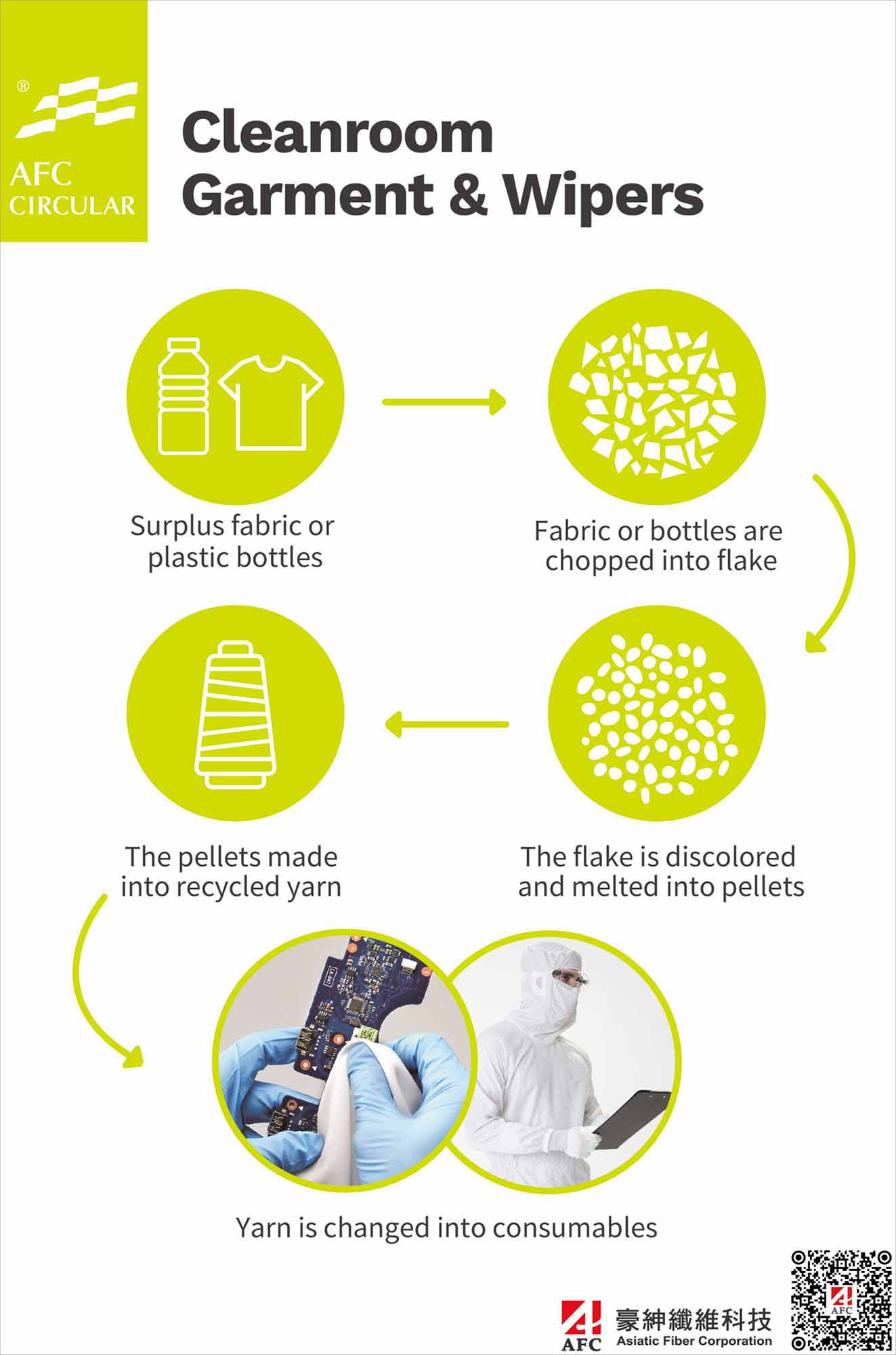
Asiatic Fiber Corporation’s AFC ECO Workwear highlights a movement towards environmentally conscious protective apparel
Filtration materials represent another rapidly expanding category. According to MarketsandMarkets, demand for advanced filtration textiles is growing due to tightening air-quality regulations, industrial emissions controls and healthcare preparedness. Taiwanese supplier GE TECHNOLOGY INC operates directly within this space, producing air and water filtration systems, industrial filter screens and carbon nonwovens for respirators – products whose strategic importance became especially clear during and after the Covid-19 pandemic.
Meanwhile, material convergence is accelerating between textiles, electronics and healthcare. Smart textiles, antimicrobial systems and wearable technologies are increasingly overlapping industrial and medical markets. Yuang Hsian Metal Corp develops antibacterial, antifungal and conductive yarns designed for healthcare applications and electronic wearables, illustrating how textile functionality is expanding beyond passive protection into active performance and data-enabled applications.
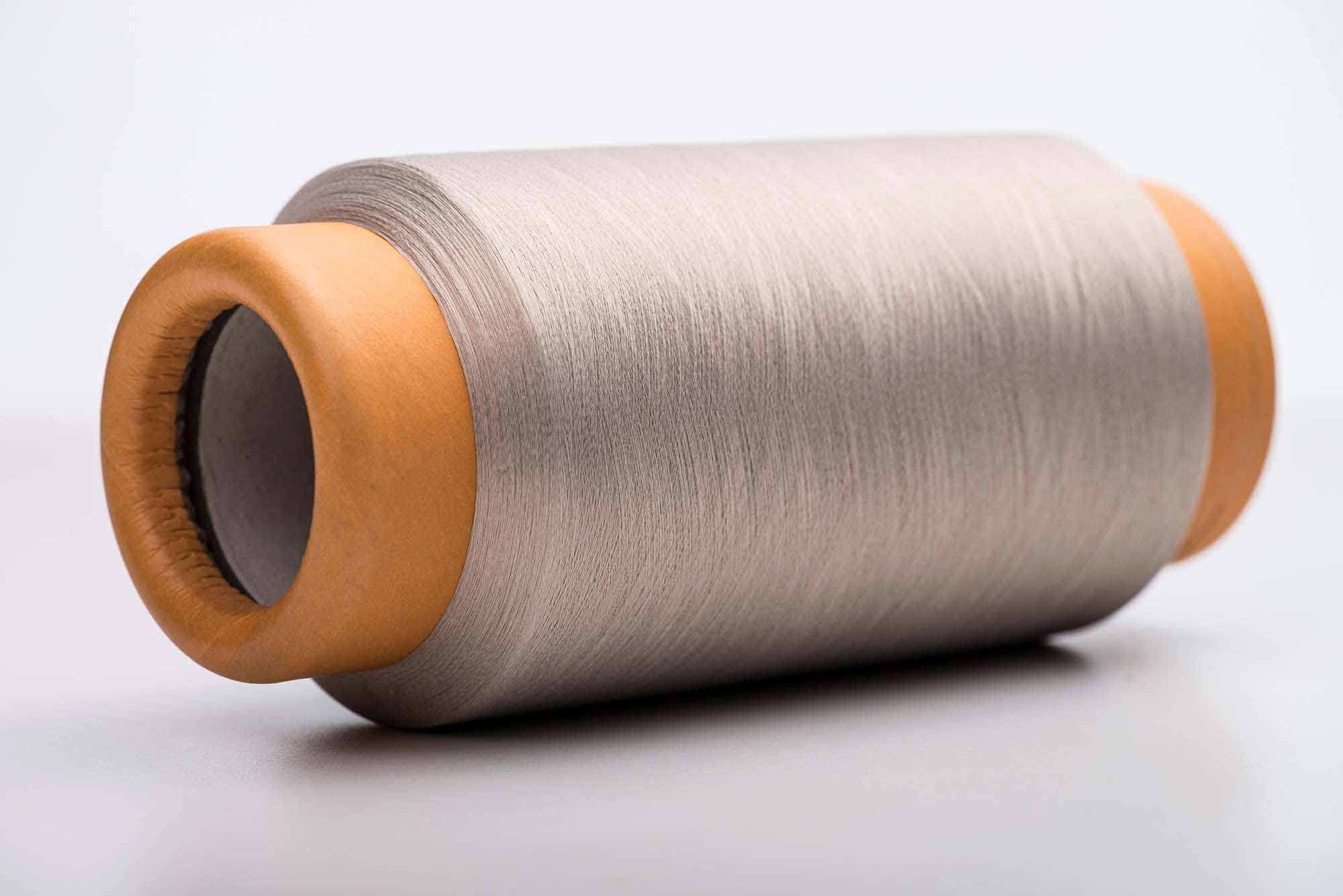
Yuang Hsian Metal Industrial Corporation develops antibacterial, antifungal and conductive yarns. Pictured: the company’s AB65 copper alloy yarn
The same convergence is visible in advanced fabric engineering. Liongtex Innovation Enterprises Co Ltd integrates Outlast® temperature-regulating materials, ionic+® antibacterial technologies and CORDURA® abrasion-resistant fabrics into technically sophisticated textile systems. Such products reflect a broader industry trend towards multifunctionality: industrial textiles increasingly need to regulate temperature, resist microbial growth, withstand abrasion and remain lightweight simultaneously.
This complexity is changing the competitive dynamics of textiles altogether. Low-cost manufacturing alone is no longer sufficient in many industrial categories. Instead, competitive advantage increasingly depends on polymer science, composite engineering, certification capability and traceable manufacturing systems.
Taiwan appears acutely aware of this shift. While mass-market apparel sourcing continues to migrate across lower-cost regions, Taiwanese firms are moving further into specialised industrial applications where technical knowledge, quality assurance and innovation ecosystems matter more than production volume alone.
In many respects, industrial textiles now represent the textile industry’s most strategic frontier. They sit at the intersection of manufacturing policy, environmental regulation, infrastructure investment and occupational safety. Taiwan’s ecosystem – spanning protective apparel, filtration systems, conductive yarns and advanced composites – suggests the island is positioning itself not simply as a textile producer, but as a critical supplier of industrial material intelligence for a more technically demanding global economy.
For more information, visit the Taiwan Textile Federation here.
Ad by TITA
Have your say. Join the conversation and follow us on LinkedIn