



Sponsored by Taiwan Textile Federation
For decades, textile trading companies occupied a largely invisible position in the global apparel industry: intermediaries tasked with matching mills to brands, coordinating production schedules and moving fabric across continents at speed. Today, that role is changing rapidly. As supply chains become more technically demanding, more regulated and more sustainability-conscious, textile traders are increasingly evolving into strategic managers of material innovation – and Taiwan illustrates this shift.
Long known for functional fabrics and technical textile manufacturing, Taiwan has quietly cultivated a network of trading companies specialising not in commodity sourcing, but in high-value material ecosystems spanning performance sportswear, outdoor apparel, workwear and increasingly sustainable textile systems. According to Taiwan’s Ministry of Economic Affairs and the Taiwan Textile Federation’s Textile Export Promotion Project (TEPP), the country is positioning itself as a hub for “sustainable, high-performance and technologically advanced textiles”.
This evolution reflects wider pressures reshaping the textile trade itself. The era when sourcing decisions revolved primarily around price and production capacity is fading. Brands are now under mounting pressure to verify environmental claims, improve supply-chain traceability and comply with tightening global regulation. The European Union’s Ecodesign for Sustainable Products Regulation (ESPR) and digital product passport (DPP) requirements are expected to significantly increase data and transparency obligations across textile supply chains. According to McKinsey & Company’s State of Fashion 2025 report, sourcing executives are increasingly prioritising resilience, sustainability compliance and near-partner collaboration over purely cost-led procurement.
Taiwanese trading firms have responded by moving further into technically specialised and environmentally differentiated materials. BESTEX ENTERPRISE CO, LTD exemplifies this trend through its AeroGreen+ water-based low-carbon composite fabric systems. Water-based textile technologies are gaining attention globally as brands seek alternatives to solvent-heavy coating and lamination processes associated with volatile organic compound emissions and higher environmental impact. According to Textile Exchange, material innovation and lower-impact chemistry are becoming central to next-generation textile sourcing strategies.
At the same time, performance functionality remains commercially essential. Erictex Fashion Co Ltd supplies an extensive range of technical fabrics and yarns including breathable waterproof textiles, thermal-regulating systems and recycled fishnet nylon yarns. Its use of branded technical fibres such as Coolmax, Thermolite and Lycra reflects another major trend within textile trading: the increasing integration of fibre science, fabric engineering and sustainability narratives into sourcing decisions.

Erictex Fashion Co Ltd supplies an extensive range of technical fabrics and yarns
This convergence between sustainability and technical performance is increasingly visible across Taiwanese traders. GRANDTEK ASIA CORP focuses on environmentally friendly high-performance knitted fabrics, while YUANTEX CO LTD similarly positions sustainable woven and functional fabrics at the centre of its offering. The message is increasingly clear across the sector: environmental credentials alone are insufficient unless accompanied by measurable durability, comfort and performance capability.
That demand is also reshaping aesthetics. Technical textiles are no longer confined to overtly ‘sporty’ design language. Global consumers increasingly expect everyday apparel to perform – regulating temperature, managing moisture and retaining comfort across multiple use environments. LAKA ENTERPRISE CO LTD addresses this shift through fabrics engineered to mimic natural textures such as linen, wool and cotton while incorporating technical functionality through SMART POLY and TEC-WARM systems. The growing fusion of comfort, utility and lifestyle performance reflects broader athleisure and urban mobility trends that continue to blur distinctions between fashion and technical apparel.
Meanwhile, textile traders are becoming important innovation coordinators rather than simple brokers. Companies such as Essence Textile Co Ltd and FAR AHEAD DEVELOP CO LTD operate within increasingly interconnected sourcing ecosystems where mills, yarn developers, dye houses and brands must align on compliance, certification and material performance simultaneously.
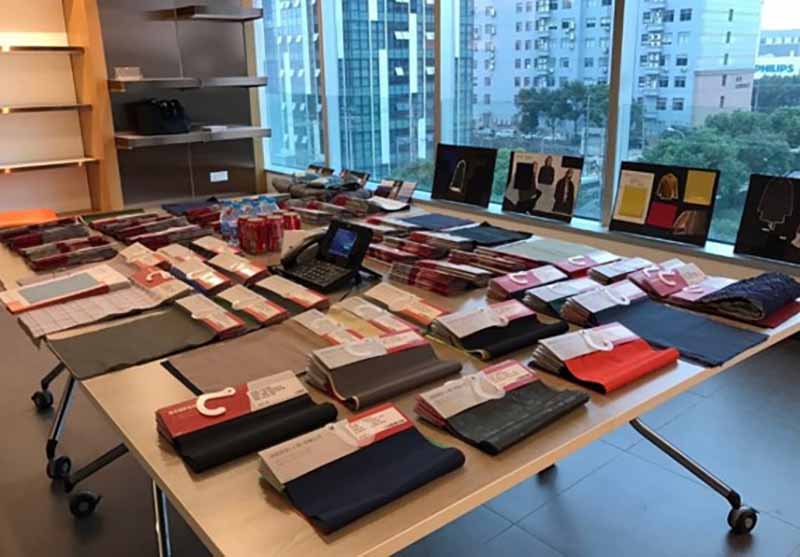
FAR AHEAD DEVELOP CO LTD operates within increasingly interconnected sourcing ecosystems
This role has become strategically important because textile complexity is rising sharply. According to the World Economic Forum, supply-chain resilience, resource efficiency and advanced material innovation are now central industrial priorities globally. Taiwan’s trading companies appear to understand this well. Rather than competing directly with low-cost sourcing hubs, many are positioning themselves as curators of specialised textile capability, bridging advanced materials, sustainability regulation and global brand requirements.
In an industry where margins remain under pressure and regulatory scrutiny continues to intensify, that shift may prove decisive. The future textile trader is no longer simply moving fabrics between factories and brands. Increasingly, they are managing knowledge, technical credibility and material intelligence across the global supply chain itself.
For more information, visit the Taiwan Textile Federation here.
Ad by TITA
Have your say. Join the conversation and follow us on LinkedIn