


In this special podcast series, we speak to the winners of the WTiN Innovate Textile Awards 2025.
World Textile Information Network (WTiN) is thrilled to announce the winners of the Innovate Textile Awards 2025. In this special podcast series we speak with the winners of the awards about the challenges, possibilities and successes of innovation within the textile industry.
In this final episode of the series we are joined by our Innovation of the Year winner – Yulex. The WTiN Innovation of the Year Award honours the industry's most groundbreaking developments. It recognises advancements that push boundaries and set new standards.
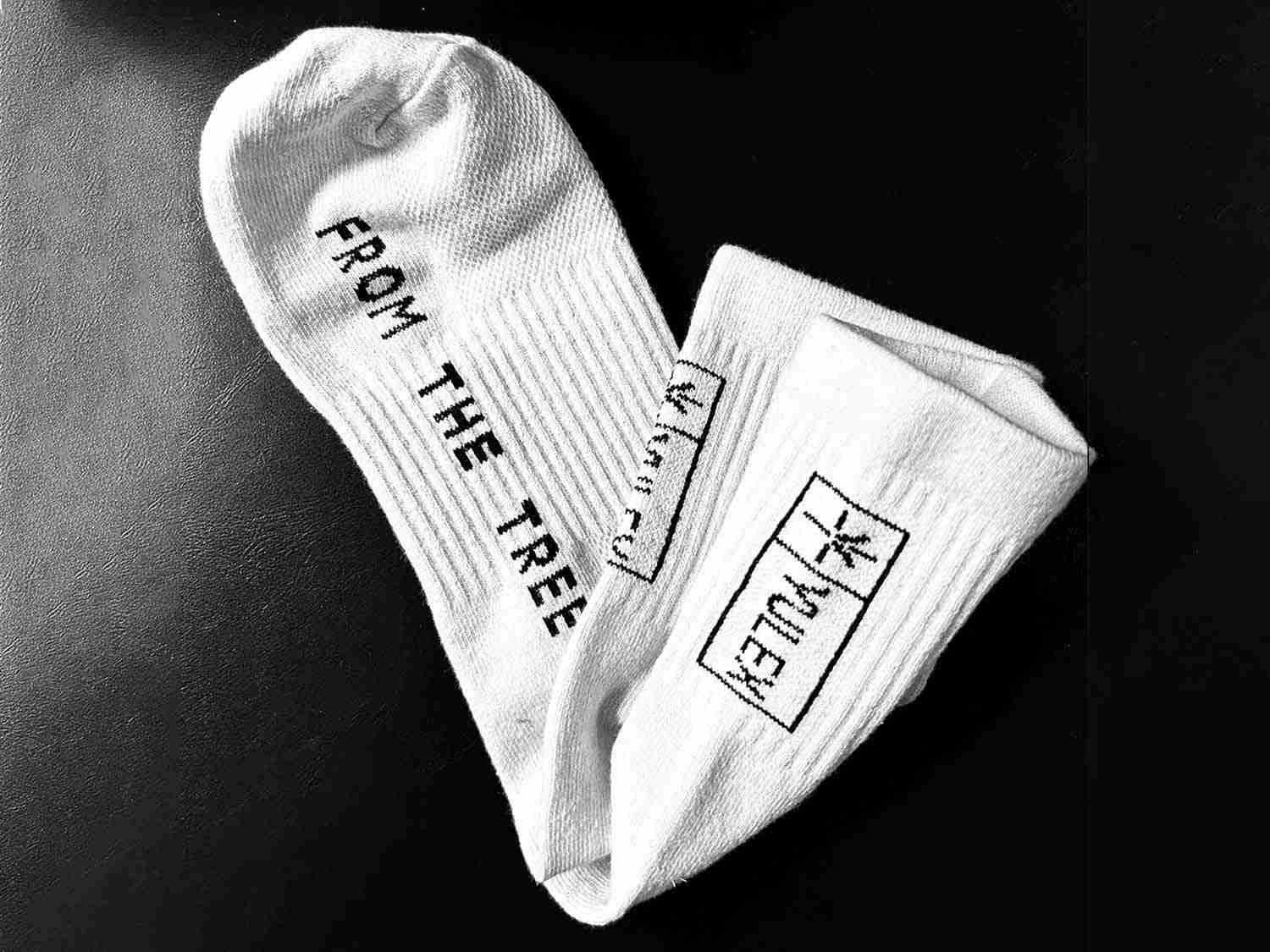
In this episode Yulex’s CEO Liz Bui speaks to us about the company’s award-winning innovation Yulastic - a biobased elastic to replace spandex. Launched in 2025, Yulastic is a fine, natural rubber filament harvested from the Hevea brasiliensis tree. It is fully renewable, responsibly sourced and as Bui explains hopes to become the ‘go-to stretch fibre for brands looking to reduce their reliance on synthetic materials.
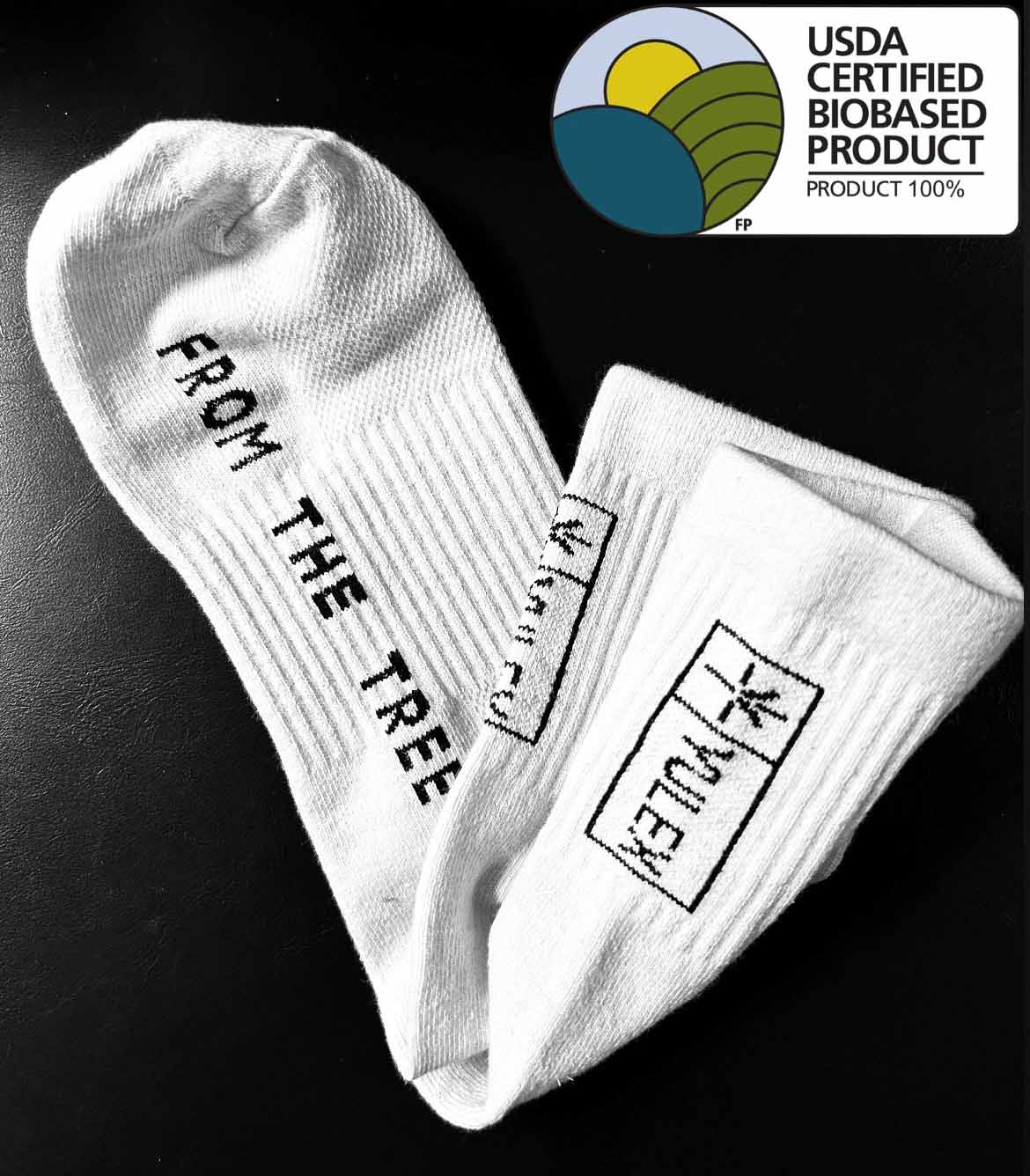
The natural rubber used by Yulex is from the Hevea Brasiliense or the “rubber tree
Bui speaks about the advancement of Yulastic and how Yulex has grown its product offering in recent years. She speaks about the need for the textile industry to look towards biobased alternatives to synthetic fibres and how innovators can help brands and manufacturers adopt these alternatives.
She also touches upon adoption throughout the supply chain and how Yulex designs products with existing production machinery in mind.
You can learn more about Yulex at yulex.com.
WTiN announced the winners in a virtual ceremony on 5 December 2025, which you can now watch on demand at WTiN.com.
Have your say. Join the conversation and follow us on LinkedIn
-
Transcript
This transcription has been AI generated and therefore may have some inaccuracies.
Ep. 145: Biobased alternative wins textile award
In this special podcast series, we speak to the winners of the WTiN Innovate Textile Awards 2025.
WTiN: Hello and welcome to Textile Innovation, hosted by WTiN. My name is Abi and I'm the Features Editor and your podcast host. In this special series, I will be joined by the winners of the WTIN Textile Awards 2025. The awards recognise and celebrate excellent leadership and innovation in the textile industry. And throughout this series, we will delve deeper into the challenges, successes and possibilities of these industry leaders. This is the final episode in our special Innovate Textile Awards 2025 series. For this final episode, we are joined by the winner of the Innovation of the Year Award.
Yulex has created Yulastic, a bio -based elastic to replace spandex. We are joined by CEO Liz Bui, who speaks through the development of this groundbreaking product. She discusses the need for replacing synthetic and plastics in the textile industry and how Yulex has developed its award -winning product as a bio -based alternative.
Hi Liz, congratulations on Yulex winning Innovation of the Year. That's such a fantastic achievement. Can you share with us the story behind the winning innovation, Yulastic, and what inspired its development?
Bui: Yeah, no, absolutely. So years ago, our founder, Jeff Martin, probably, I would guess, you know, 10 years ago, when we actually, when he innovated, and was working on a new grade of rubber called Yulex Pure Latex, and it's just a purified form of latex. So typically, in a regular tree latex, there's two to 6 % of non -latex, or, you know, for all intents and purposes, non -rubber particles. And so he had this idea that, particularly for medical devices such as medical gloves, catheters, and things like that, that if we removed basically these non -rubber particles, including dirt, metals, certain things like that, and including also large proteins that are involved in allergic responses, that it would make for a really good product. And that's actually how we got started. And then when he was doing the testing for this, what he did was he basically We started to pour films, which is kind of how people test the latex, is they pour in a petri dish a very thin film and you notice that the YULEX pure latex actually was more fine or thinner than regular latex. And that's really what kind of set off light bulbs in his head that this could potentially be a really fine monofilament. And then so we discussed this with some sort of people in the denim industry, where basically where spandex is often used, and they also further inspired that development. So that's really how it came about, was really from the basis of the raw material, which is kind of what we've been doing for the past 20 years.
WTiN: That's really cool. And just thinking like more currently, what challenge or gap in the textile industry does elastic fill today? What does it address?
Bui: Well, I think it's a better end of solution than, obviously, spandex, which is non -biodegradable and really hard to recycle. So for all practical purposes, it's really not recyclable. And it's a petroleum -based, long -chain polyurethane, whereas Yulastic from the beginning, from design, is really designed to be durable, but then to have a reasonable sort of end -of -life solution, which is opening up more and more, and that's industrial compostability. We know that it's biobased because we got that tested as well under the USDA Biopreferred program and it came out to be 100%, but that doesn't necessarily mean that it's more biodegradable just because it's 100 % biobased.
It has to be. tested. And so we tested it under standard sort of biodegradability conditions under ASTM D5338 and it degraded And basically demonstrated that, you know, through again, through emission of CO2. So it was observed that basically degraded 33 % over 90 days. And so that basically showed us that, you know, obviously, you're not going to wear your denim, your garments and your clothes in a biodegradable context, right? I mean, you're not going to be in a high temperature, tons of microorganisms, you know, high moisture, you're not going to be in a industrial compostability, so you don't have any fear that your genes are going to biodegrade. It's just that when you're done with them, you know, is there an option for that besides recycling, which obviously there's not a lot of stuff in our total textiles that actually gets recycled, right? Maybe about 2 % if we're lucky. And so just trying to find another sort of end -of -life solution that already exists that we can potentially work on. And a number of the industrial composting facilities worldwide are, you know, beginning to be receptive to textiles.
WTiN: That's really cool. I feel like you have just answered my next question, but I'm going to ask it anyway. What sets Yulastic apart from other products on the market in the same kind of way? Although I do think it's very unique. And how have you seen it disrupting the industry?
Bui: Yes, it's unique and it's not. So, consider that natural rubber is Mother Nature's best stretchy polymer. So, in many sense, we're taking a physical property of a natural polymer that already exists. And so, unlike other sort of natural alternatives or bio -based alternatives to spandex, which are made from cellulose, you're taking a natural material that already exists. not inherently stretchy, and you're making it stretchier, you know, mechanically or chemically, whereas with natural rubber, it's already naturally stretchy, it already can stretch, and it has great recovery, so you don't have to sort of, you know, overcome those barriers. And then a lot of the, also, I think a lot of the alternative spandex solutions, unlike ours, are still under R&D.
WTiN: That's really interesting and winning the Innovate Textile Awards is a huge achievement and we have been so happy to cover you Yulex throughout the whole year on WTiN. But what does this recognition mean to you and your team?
Bui: I think it's well, you know it was a huge surprise because we really have no marketing dollars. We spend all we spend all our money Basically, on the innovation on R and D on testing on building out the supply chain on solving various different partnership and issues all along and bringing value to the supply chain. So, like I said before, we're really just out there grinding. And so, when you think of other brands, particularly big brands, I mean. their marketing dollars overshadow the cost of their actual products, you know, manufactured products. And we don't have that. I don't know if that's a luxury, but we don't have that focus on markets yet. So we're just really working hard to try to, you know, build that resilience side chain and answer and, you know, provide solutions for our partners all along it.
WTiN: Although you don't have any marketing, we have definitely heard about you this year.
Bui: So Thank you also for following the story. Sometimes you do you talk to journalists and you talk to various folks and then you just don't know if they continue to sort of follow up and it can be complicated. of, because I'm sure you see so much.
WTiN: So that to me, since you've been, like since Wetsuits at Finisterre. Yeah. Oh, great. Fantastic.
Bui: No, they're great partners. Finisterre for sure.
WTiN: I know they are brilliant and just kind of stepping back a little bit. So obviously you said the budget is going into the innovation and developing the product. What has been the biggest hurdle you have faced while you have been developing Elastic and how did you overcome it? I imagine that's quite a big question.
Bui: It is a big question and it's always really adoption. So you know the first problem you have of course is you have to come up with something for us that replaces another product that is not necessarily good for the planet or the people. In our case, it's always a petroleum -based product. So, you know, with the Eulex foam, it replaces a petroleum -based polychloroprene, which is neoprene. And then for elastic, it replaces, you know, long chain polyurethane, which is spandex. And so, you know, and so that in itself is hard enough. But the next part really is to get the adoption. and to get, and in order to get, and it's not just the brand adoption, because the brands, you know, and I may be answering more questions, you know, coupled to this, but the brands basically, because brands typically deal mostly with tier one manufacturers or their OEM manufacturers, right? And so in a longer supply chain like Elastic, you really have to work with, you know, all the tiers in between, you know, basically really adding value all through up and down the supply chain to make it easier for brands to adopt. And then brands actually have to do that adoption. So adoption is really always key, because consider that, you know, for well over, like, almost what, over 50 years, we've been dependent really on petroleum based products. Right. I mean, even myself now, I look at what I'm wearing, and there's definitely a poly blend in my, you know, my shirt, in my pants. You know, all of us, basically, it's impossible to probably not to have some form of polyester, nylon, or acetate in our closet. And we're so used to it that we don't almost appreciate it, and consumers don't really appreciate it. And, of course, consumers, you know, are the same people, really, that work in the brands, don't really appreciate that they're not natural. that they actually, you know, did come from a petroleum -based product. And so that knowledge and awareness is really important too. But it all comes down to acknowledging the fact that first you have a problem and then looking to see what that solution is. And then, you know, and having taking some risk and adopting it or working with the innovator, you know, to tweak it or give them feedback and certain things like that.
Yeah, no completely. I mean, I sometimes think with what I'm wearing, I'm like, oh, I think I'll be really good. Then you read the labels and it's like, oh, it's right. Exactly. And people, I see people shopping. They're like, oh, this is so soft. And then, you know, you read it and it's just this like, yeah. And I read labels like crazy now. And it's really it's shaped my own consumerism. So ever since I started working for you, Yulex, I buy so much less than I ever did before.
WTiN: I feel the same way. When I speak to everybody, it's like, oh my gosh, I had no idea. And when I go shopping with my friends, it's like, I was out on Saturday and my friend was literally buying napkins and she was like, oh, these look really cheap. And then I looked and I was like, oh no, it's got some decent certifications. That's actually not that bad. And she did not believe me, but I was like, no, no, I swear.
Bui: Yeah, everything's like that, right? I mean, like, even cloth napkins, you know, most of them are not made of cotton, right?
WTiN: Yeah.
Bui: And so it, yeah, it's, you know, there's a really good quote, actually, by Catherine Wheatman, who's also from the UK, you know, in her Circular Economy Handbook. And something she the way she stated it, it's not the fact that, you know, the idea of the concept is novel, it's just the way she stated it really stuck with me. And she said, basically, you know, we need to as a society decouple resource use from economic growth.
WTiN: I like that.
Bui: And that's so succinct, isn't it? It's just so relevant. Right. And for so many years, year in, year to year, we're always talking about, you know, building up revenues, one X, multiples. And, you know, and then basically in order to do that, we make more stuff. Right. And so, you Lex, you know, what we've always done is we've always tried to replace or substitute. So kind of a zero sum game, you know. not really necessarily, you know, so the net is always zero. So again, you know, just that whole concept of decoupling resource use from economic growth. And it just gives you a nice kind of a global sort of focus that, you know, when you innovate that you're like, okay, you know, which is very hard to do.
WTiN: I can imagine. And yet again, I think you've just touched upon the next question I had, which was how do you ensure sustainability or circularity in your approach? And you've answered the next part of the question, but why is this important to you?
Bui: I think it's important because, you know, for a number of reasons, obviously, it's also very much our ethos. you know, with regards to that. And so we try to, instead of trying to figure out a solution, once you've made the product, like, how do we do it now? You know, now that we have all these textiles, now that we have all this waste, now what do we do? It's more of like, how can we design it? And I really have come to believe that designers have so much of a role in, you know, brands with regards to how they use technology. How many materials they use. And when you talk about recyclability, for example, you talk about how difficult it is to separate different types of fab. fabrics, different types of materials, right? And you think about, oh, it'd be easier if it was a monomaterial, right? But then you really need to talk to designers who basically design with that in mind. And so the same thing, we basically had in our crosshair sort of an end -of -life solution for our spandex replacement. And so like other YULEX products, we start always with a responsible, deforestation -free, natural rubber grade. supply chain. So, the raw materials itself is, you know, from the very beginning is certified and, you know, as responsible as we feel at this point for scaling that we can do. I'm sure there's always ways in which we can do better. So, in this instance, the elastic filaments are made from, again, YULEX pure latex that I spoke to about earlier, a special grade of latex, which has been purified of most of the non -rubber particles in it.
WTiN: That's really interesting. And do you collaborate with any key partners, institutions or brands, like I know we mentioned Finisterre before, to bring your innovation to life? And how have those collaborations shaped the final product and even future products?
Bui: Yeah, so I wish brands, you know, financial and strategic investors would step in earlier. you know, in the whole innovation process and help with the R &D, they're always much more receptive once you have a product. We have no shortage of people wanting to try, for example, Elastic necessarily, you know, but I think so, but in a way it's a bit short -sighted because so much of that risk then is on the smaller companies to come up with a product and to innovate in the first place, right?
The cost of, you know, IP filings, access, equipment, labs, et cetera, et cetera. So there's so many innovation dollars that the small companies most and it's really most innovation is done by small companies and small brands like ourselves. And so I wish they would shift sort of their collaboration or spread that out a little bit more evenly. But right now, for example, oh my gosh, we have like probably 80 material transfer agreements in place for people who for different manufacturers and mills in particular who want to try elastic, for example. And the supply chain for elastic is interesting because it's actually quite long, right?
So we need basically partners to spool it, to make the different types of yarns, then to make basically the knits, the fabrics, you know, so they have to have different types. They have to, you know, some knitters specialize, they're coarse button, they're air knitting, they're circular knits, they're seamless knits. And then others basically make denim or wovens, but they don't make their own yarn, so they need to buy it from a yarn producer. So all throughout the supply chain, Right now, we haven't even spoken about tier 1. So that's just basically the tiers after tier 1. Supply chain, all those solutions with Elastic have to be answered. In order for us to have an answer, we have to have a partner. And so that means that we partner even after the innovation. innovation is complete, we have to partner with all, you know, various different suppliers worldwide. And I say worldwide because innovation and, you know, and adoption is all about accessibility, right? It's, you know, no different than, you know, human nature and communities at large. And so that accessibility basically means that we have to partner with so many different or similar types of suppliers worldwide, making it more kind of a local accessibility versus so that people are also reducing their transport costs. right? And so, you know, the whole adage of think globally, act locally is also something we do. And so, for example, all our raw materials can, you know, go in to make our products are also local. So if we make filaments in Thailand, the raw materials and the UX pure comes from Thailand. If we make them in Vietnam, the raw materials and everything comes from Vietnam.
So we're not importing and exporting, you know, bringing, extracting raw materials from one region to give value to another region. So we were trying to keep that value. And so for working in South Asia, we're trying to solve, you know, all those solutions with different partners within South Asia, or other regions, such as Turkey, and then within South Asia. And so I think that's just always, you know, and to us, that's sort of part and the difficult part of building that resilient supply chain is that once you even have the innovation, it takes many partners to bring it to life.
WTiN: I feel like throughout the year I've heard more and more people speak about making those localised supply chains. And in terms of that, does customer or industry feedback, maybe like through these different partnerships that you have, does that play a part in refining the product and the innovation process at all? Or am I off the mark with that?
Bui: No, no, absolutely 100 % because for a company like us, we don't own all these assets, right? We don't even own, you know, the filament access. We license that. So consider, for example, we don't have circular knitting machines. We don't have corkscrew machines. We don't even have single and double covering machines. We don't have spooling machines. We don't have looms. We don't have jacquard looms. We don't have, we don't produce denim. We don't produce fabric. We don't do any of these things, right? And so that really means that we're also not experts in how they use their equipment, which again has been adapted for spandex. And so in order to make an innovation that gets well that it gets adopted. all along the supply chain, you have to think about all those existing, the existing equipment in each of those suppliers. And how will Yulastic work in a regular machine, knitting machine, for example, or in a yarn producing machine that has been basically using spandex. you know, for decades. And so how does that work?
And basically, you know, Idrish Munshi, our general manager of textiles, helps us really with regards to the technical aspect of that by working closely with mills and manufacturers just to tweak and modify Ulastic, you know, to adapt it to existing equipment for that purpose. But again, no new equipment is being purchased. So YULEX designs products in mind that use existing equipment, you know, that has been whether or not it's a Ulex foam, same equipment as neoprene, whether or not that's elastic, same equipment as spandex. Again, reducing the barrier, improving adoption, but also think of it as keeping the whole CO2 energy consumption, things like that, you know, basically for the most part, very similar or substantially similar. So I'm rising thinking like drop -in solution that hopefully can be scaled up on existing Exactly, right, right. So there is already, in other words, there's already a supply chain, there's already a scaled supply chain for that. And so when people ask about, you know, scaling, it's like, you know, we have to focus on scaling the filament, but as far as the supply chain, it already exists. It's just a matter of basically working and collaborating with them. So we've been obviously very busy doing this all over.
WTiN: That is really exciting and you've achieved so much. So thinking about that, what advice would you give to any aspiring innovators hoping to make a mark in the textile industry?
Bui: Yeah, I guess, you know, in this age of remote work, I would say that if you want to be an innovator, you really just have to get out there, you know, shake some hands, meet people. Because it's always because you don't really know the true problem. I mean, you know, asking AI and internet searches can get you so far. But you know, but in reality, people who have to solve these problems on a day -to -day basis don't necessarily always share that stuff and it's not made public. So I think it's a hard industry to go it alone. So it's not like a software engineer or a coder who basically has the internet and a computer and machines right in front of them, that if they have that skill and that talent, potentially they get most of the way there on their own. But in an industry like ours, it's really hard to do. So let's say if, for example, Yulex made Yulastic. Okay, we did that all by ourselves, and now we have it. But now that I've already shown how basically how long the supply chain can be and how all the partners you need, you still have to get out there, right? Otherwise, the innovation would fall on the ground. All that time would have been wasted and all those resources. So you still have to get out there. And it is a tough industry. But I think the best thing you can do is sort of, if you will, live it, you know, understand the different parts, understand your partners, their pain points, what they do, what their challenges are. And that, you know, it's a different perspective than your own. And so constantly just talking to them. I learn, you know, something new every single day from a new customer, a new partner. And I'm always thinking over, like, how can we help lower that bar for them?
WTiN: I love that. That sounds so good.
Bui: Yeah, basically just like get out there and just start learning.
WTiN: Yeah. Absolutely. And how do you hope what you are doing will inspire others in the industry to prioritise sustainability or creativity or even both?
Bui: Yeah, and I think it goes again to, you know, I mean, we always talk about this and sometimes it just seems so lame because everyone always says, you know, what do you leave your children? And I think like, wow, you know, I'm old enough to know, like, my children are, you know, this is like, they're here, they're existing and they're asking for different materials, right? Think of Gen Z. Gen Z is the, you know, the first generation, you know, within sort of memory who have really taken the secondary markets, right, thrifting, vintage, they call it, right, to sort of a whole new art. That to them is really, and you probably, Abigail, are part of that generation, where that's like a legitimate form of, like, love shopping.
Like, how can I get what I need on the secondary markets, right? And that's great, and that fits into, you know, what Catherine Wheatman said, which is decoupling resource use from economic growth. So you're still giving someone who's selling you that growth or revenue or income, but you're not necessarily taking anything more. from the planet to do that. Basically, you know, the world cannot exist on buying clothing and things from the secondary market, but that is definitely one way and that is growing. And so I think just always thinking of that in mind is, you know, thinking a few steps ahead.
And I try to limit my sort of, and I myself, to be honest, I'm not an innovator in that sense. That's really Jeff Martin, our founder. I execute well, but I'm not sure that I would call myself that that fabulous visionary. And I think you have to sort of innovate and think about what is the, do consumers need this? And even if they don't need it, does the world need it? Right? So, I mean, are they designing things now such that basically they break down so that you actually need a new version as opposed to getting it replaced? I mean, so certain things like that, that just don't really make sense in this, you know, the way that we think of growth. Again, decoupling resource use from economic growth, you know, how can we do that?
WTiN: Well, my final question is, and again, I feel we've covered it, but I think it's a really nice one to end on. What would you like the broader textile industry to understand about the importance of research and development and innovating in the textile industry today?
Bui: That they kind of need to grow comfortable with taking more risks, just like innovators do. So it's nice enough to be there and go, oh, there's not a good solution. It's quite another to say, oh, can I be a part of that solution? And that would be really nice.
And so I come from a biotech and pharma industry, you know, where that is a little bit more sort of like how you have financial and strategic investors basically get involved early on in development and sort of, you know, it's mitigation of risk because oftentimes, you know, that brand involvement or that financial or strategic involvement helps, you know, take risk and you get that feedback early on and you don't get that so much necessarily in this industry. And so I would say that, you know, that mitigation of risk, if it could be shared, you know, throughout the supply chain, and not in a way, you know, the existing model. Yeah. I think that would be I think that's what's kind of missing in this industry.
WTiN: That's really interesting. Well, thank you so much, Liz, for joining me on WTiN's Textile Innovation podcast. And congratulations again on winning Innovation of the Year.
Bui: Absolutely, thank you so much and thank you for the WTIN, you know, for following us and for, you know, just the support and just coming back. And I know we talked very early on in the year, so it's just nice to see you again. So I started with you in the year, I think January, right?
WTiN: It was, yeah, it was right in the beginning.
Bui: Yeah, 12 months later, so I'm glad we made progress.
WTiN: Me too, and it's so good to see you again.
Bui: You too, Abigail.
WTiN: Thank you so much for listening. If you have any questions or want to learn more, you can follow us on LinkedIn at World Textile Information Network, or you can contact me directly at content at WTiN.com. If you are interested in sponsoring an episode of the podcast, please email sales at WTiN.com. Thank you for joining us on this series with our Innovate Textile award winners. The awards will be taking place again this year, so stay tuned for more details.