
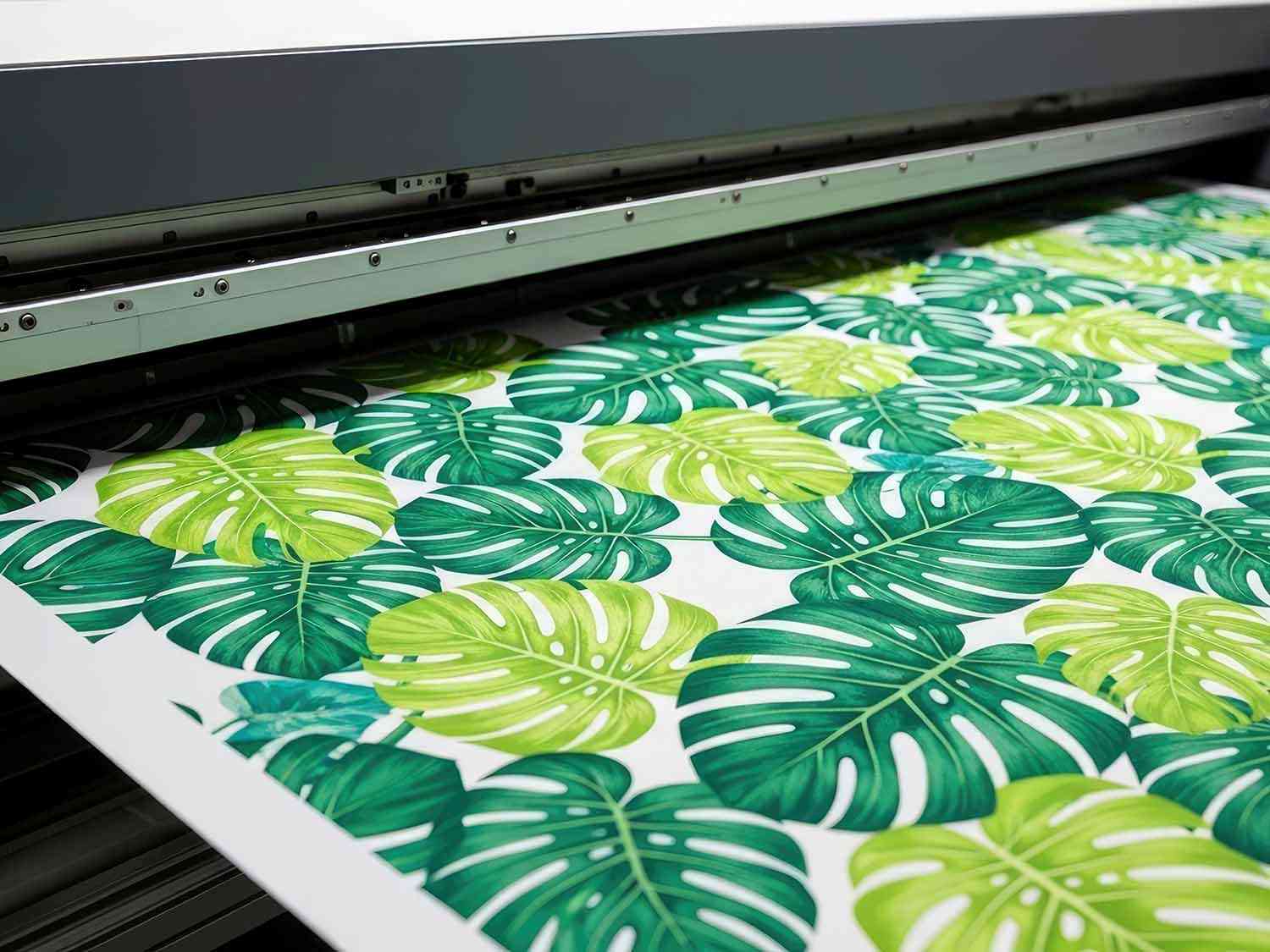


Sponsored by Hongsam
As global regulatory pressure intensifies and supply chain sustainability disclosure requirements expand, integrated technology-service platforms such as Hongsam's represent critical enablers of industry transformation within the digital textile printing segment.
-
Contents
Abstract
Introduction
1. Core technological innovation: The Jettextile® textile pigment ink platform
1.1 Formulation architecture and environmental compliance
1.2 Performance characteristics
2. Integrated product portfolio and process solutions
2.1 JETALL water-based latex ink platform
3. Global market deployment and operational validation
3.1 Asia-Pacific: Scale manufacturing and environmental compliance
3.2 Europe: Premium market penetration
3.3 North America: Distributed manufacturing and supply chain optimisation
3.4 Africa: Technology transfer and sustainable industrial development
4. Innovation ecosystem and standardisation leadership
5. Global service infrastructure and technical support capability
Conclusion
Abstract
The global textile printing industry is undergoing a fundamental transformation driven by stringent environmental regulations and accelerating digitalisation. This paper presents a comprehensive analysis of Zhengzhou Hongsam Digital Science and Technology Co, Ltd. (stock code: 430616), a leading Chinese enterprise that has established technological leadership in the global textile pigment inkjet printing market through two decades of specialised research and development. The study examines Hongsam's core technological innovations, particularly the Jettextile® textile pigment ink series, and evaluates their technical performance, environmental benefits and commercial scalability across diverse international markets. Drawing upon operational data from enterprise deployments in Asia, Europe, North America and Africa, this research demonstrates how Hongsam's integrated approach – combining advanced nanoscale aqueous formulations, proprietary Rapid Colour Technology (RCT) processes and extensive global technical support infrastructure – enables the textile industry to achieve substantial reductions in water consumption (≥70%), energy usage (≥50%), and chemical discharge while maintaining production efficiency and product quality. The findings indicate that Hongsam's technological ecosystem represents a replicable model for sustainable digital textile manufacturing in the context of global carbon neutrality objectives.
Keywords: Textile pigment inkjet printing; digital textile printing; sustainable manufacturing; waterless printing; nanoscale aqueous ink; rapid colour technology; global technical service network.
Introduction
The textile printing industry, historically characterised by resource-intensive wet processing and substantial environmental influence, faces unprecedented pressure to decarbonise and digitise. Conventional reactive dye printing typically consumes 100–150 litres of water per kilogram of printed fabric and generates effluent containing heavy metals, residual dyes and auxiliary chemicals [1]. Regulatory frameworks including the EU Green Deal, China's ‘dual carbon’ targets and evolving corporate sustainability mandates have rendered traditional production modalities economically untenable for an increasing proportion of market participants [2].
Pigment-based digital inkjet printing has emerged as a technically viable and commercially scalable alternative, offering elimination of water-intensive washing and steaming stages, reduced energy consumption and enhanced production flexibility [3].
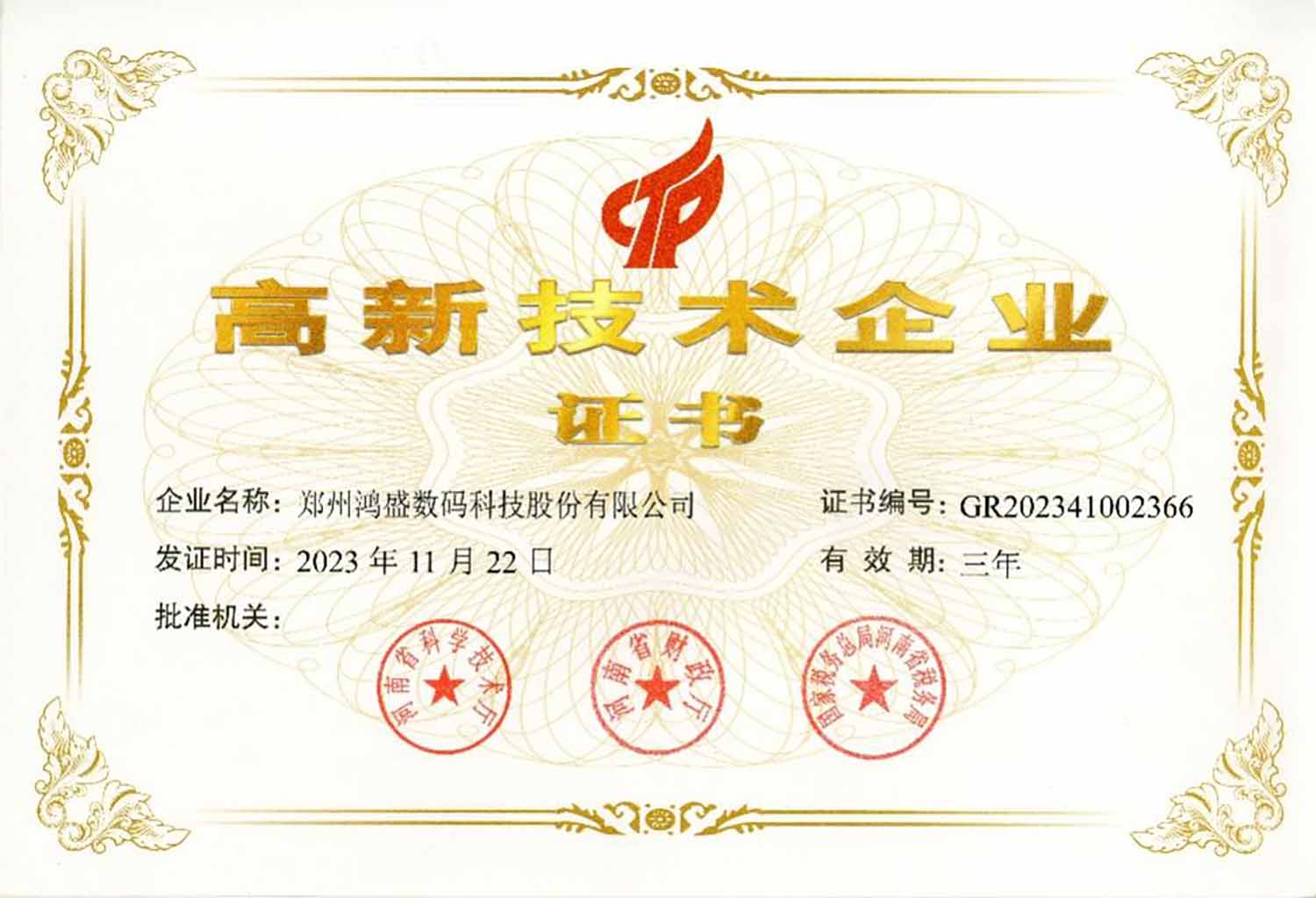
Hongsam’s High-tech Enterprise Certificate
However, historical limitations in colour fastness, hand feel and process reliability have constrained market penetration, particularly in premium textile segments.
Zhengzhou Hongsam Digital Science and Technology Co, Ltd – founded in 2001 and designated a National High-tech Enterprise since 2003 – has systematically addressed these technical barriers through sustained investment in materials science, formulation chemistry and process engineering. This paper analyses Hongsam's technological architecture, commercial deployment patterns and service infrastructure to elucidate the mechanisms underlying its competitive positioning in international markets.
1. Core technological innovation: The Jettextile® textile pigment ink platform
1.1 Formulation architecture and environmental compliance
The Jettextile® textile pigment ink series represents Hongsam's principal technological achievement, developed through proprietary nanoscale aqueous processing techniques. The formulation achieves complete aqueous carrier systems without organic solvent content, thereby minimising volatile organic compound (VOC) emissions throughout the product lifecycle. Independent certification includes the OEKO-TEX Eco Passport, REACH compliance and Global Organic Textile Standard (GOTS) accreditation, satisfying the most stringent requirements of international brand owners and regulatory authorities.
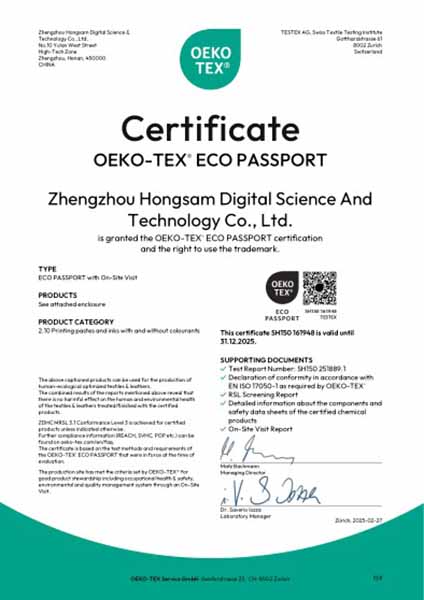
OEKO-TEX Eco Passport
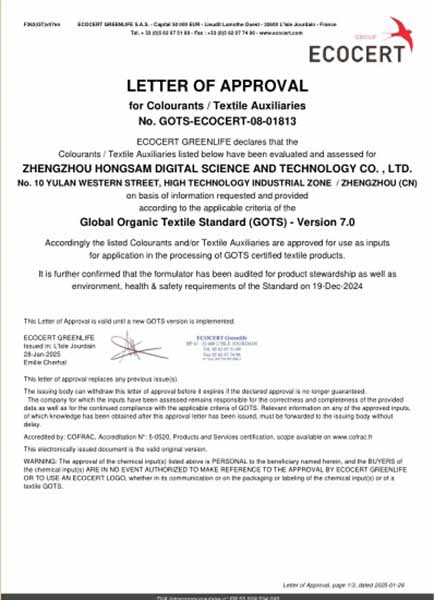
GOTS Approval
Intellectual property protection encompasses four national invention patents awarded between 2006 and present, with the technology recognised by the China National Textile and Apparel Council (CNTAC) through the 2022 Excellent Patent Silver Award and inclusion in the China Dyeing and Printing Association Energy-Saving and Emission-Reduction Advanced Technology Recommendation Catalogue (2016).
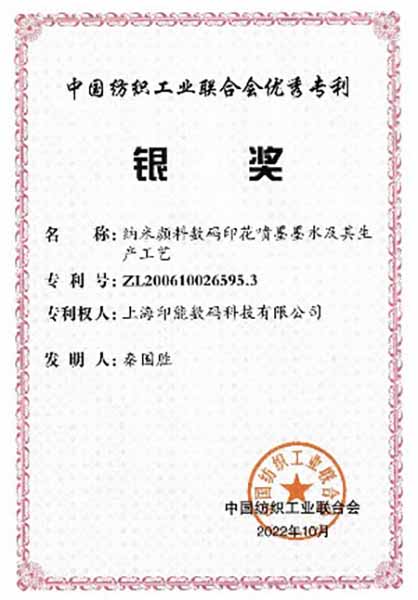
CNTAC 2022 Excellent Patent Silver Award
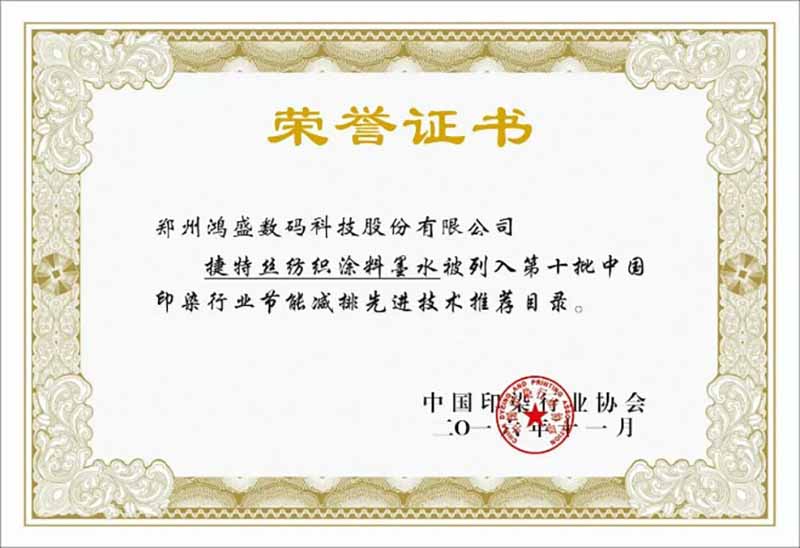
Certificate of Honor from the China Dyeing and Printing Association Energy-Saving and Emission-Reduction Advanced Technology Recommendation Catalogue (2016)
1.2 Performance characteristics
Technical evaluation of the Jettextile® platform reveals six interconnected competitive advantages that collectively enable industrial-scale deployment:
Substrate versatility. The pigment-based chemistry exhibits compatibility with cellulosic fibres (cotton, linen), protein fibres (silk, wool), synthetic fibres (polyester, polyamide), and blended constructions across woven, knitted and nonwoven architectures. This universality reduces technical complexity for multi-product manufacturing environments and supports mass-customisation business models.
Process streamlining. Production cycle compression represents a critical operational benefit. Conventional reactive printing requires 7–9 discrete stages: pretreatment (sizing), printing, drying, steaming, washing, soaping and final drying. The Jettextile®-enabled process reduces this to three core operations: optional pretreatment, printing and fixation, achieving cycle time reductions exceeding 70% and enabling linear production flow compatible with digital manufacturing execution systems.
Resource efficiency. Quantified environmental performance demonstrates water consumption reduction of ≥95%, energy reduction of ≥50%, and chemical usage reduction of ≥60% relative to conventional reactive processes. The elimination of aqueous effluent generation removes the capital and operating burden of wastewater treatment infrastructure, particularly significant for facilities in water-stressed regions or jurisdictions with stringent discharge regulations.
Economic optimisation. Cost structure advantages manifest across multiple dimensions: reduced capital investment requirements for entry-level system configurations; diminished utility consumption (water, electricity, steam); simplified quality control protocols due to reduced process variability; and elimination of environmental compliance expenditures associated with effluent management. Digital production planning systems further amplify these advantages through precise cost attribution and continuous optimisation.
Reproducibility and quality consistency. The direct digital workflow eliminates variability sources inherent in analogue processes (screen engraving, paste preparation, colour matching). Reduced sensitivity to environmental conditions (temperature, humidity, water quality) ensures batch-to-batch and sample-to-production colour consistency essential for data-driven quality management and digital twin implementation. First-grade yield improvements directly enhance economic returns.
Durability performance. Advanced binder chemistry and optimised pigment dispersion achieve light fastness ratings of 6–7 (ISO 105-B02) and excellent chlorine bleach resistance, satisfying requirements for outdoor textiles, home furnishings and technical applications previously considered exclusive to reactive dye systems.
2. Integrated product portfolio and process solutions
Hongsam's ‘HONGSAM+’ operational philosophy encompasses a comprehensive product ecosystem extending beyond core ink formulations to encompass pretreatment agents, post-treatment chemistries and application-specific process protocols. Table 1 presents the systematic product architecture organised by printing methodology.
| Printing application | Ink | Pretreatment agent (sorts) | Posttreatment agent (sorts) | Process |
| Roll-to-roll (piece goods fabric) |
K C M Y HY R G B OR V VM GY LC LM OP CO W |
PP-01, (1:20-35) PP-03 (1:20-35) PP-17 (1:20-100) |
PA-03 (1:9-19) PA-04 (1:9-19) PA-05 (1:50-100) |
1. (Pretreating), printing, fixation, (posttreating) 2.RCT 3.LATAX |
| DTG | K C M Y VM LC LM R G B OR FM FY OP W |
PP-05 (Direct use) PP-08 (Paste use) |
Pretreating, printing, fixation, (posttreating) | |
| DTF | K C M Y VM LC LM R G B OR FM FY OP W |
Printing to film, (powder coating), heat transfer printing | ||
| Functional applications | Enhanced colour saturation and printing precision | Improved handfeel or fastness properties | Customised per application requirements |
Table 1. Hongsam’s integrated product portfolio for textile pigment inkjet printing.
Note: K = Black, C = Cyan, M = Magenta, Y = Yellow, HY = High-Yield Yellow, R = Red, G = Green, B = Blue, OR = Orange, V = Violet, VM = Vivid Magenta, GY = Gray, LC = Light Cyan, LM = Light Magenta, OP = Opaque, CO = Coating, W = White, FM = Fluorescent Magenta, FY = Fluorescent Yellow. Dilution ratios indicate pretreatment agent-to-water proportions.
The product architecture demonstrates systematic coverage of principal industrial printing modalities.
DTF (direct-to-fabric) roll-to-roll (piece goods fabric) printing configurations address high-volume fabric production, with graduated pretreatment concentration ranges (PP-01/PP-03 at standard dilution versus PP-17 at extended dilution up to 1:100) enabling optimisation for diverse substrate characteristics and performance requirements. Post-treatment agent selection (PA-03/PA-04 for standard applications; PA-05 at elevated dilution for specialised finishes) provides corresponding flexibility in final product attributes.
DTG (direct-to-garment) printing employs simplified pretreatment protocols (PP-05 as ready-to-use solution; PP-08 as directly applicable paste) reflecting the distinct handling characteristics of pre-cut garment components versus continuous fabric rolls.
DTF (direct-to-film) heat transfer modality eliminates pretreatment and post-treatment stages entirely, representing the most streamlined process architecture within the portfolio. The optional powder-free formulation addresses evolving regulatory and operational preferences regarding particulate handling.
Since 2016, Hongsam has progressively developed integrated processing solutions that unify ink, pretreatment, and post-treatment chemistries within coherent technical systems. The Rapid Colour Technology (RCT) protocol, subsequently extended to include in-line sizing processes and the JETALL® water-based latex ink platform, exemplifies this systems-level approach.
2.1 JETALL® water-based latex ink platform
The JETALL® system, recognised in the 16th China Dyeing and Printing Association Energy-Saving and Emission-Reduction Advanced Technology Recommendation Catalogue (2023), enables aqueous inkjet printing on non-absorbent and hydrophobic substrates—including synthetic leather, technical textiles and coated materials – previously requiring solvent-based or UV-curable systems. This capability expansion addresses a significant market gap in sustainable digital printing for high-performance and technical textile applications.
3. Global market deployment and operational validation
3.1 Asia-Pacific: Scale manufacturing and environmental compliance
In China's principal textile manufacturing regions (East China, South China, Central China), Hongsam's technology has been integrated into high-speed digital production lines replacing conventional flat-screen and rotary-screen systems. Annual wastewater reduction exceeds one million tons at individual facility scale, enabling environmental assessment upgrading and regulatory compliance.
Operational stability data from a Shandong-based enterprise (MS-JPK 32 Kyocera printheads, operational since 2017) demonstrate continuous production following Jettextile® adoption in 2019, with individual printhead service life exceeding three years. A Guangzhou facility, following initial technical difficulties with alternative suppliers, achieved operational profitability upon Jettextile® implementation in 2019, expanding from multiple units to 10+ production systems. A leading East China home textile enterprise operates several dozen Jettextile®-enabled systems as a strategic supplier.
In Vietnam, a prominent Ho Chi Minh City-based garment manufacturing group achieved production cycle compression from 7 days to <24 hours post-implementation, reducing inventory carrying costs and resource waste while satisfying European and North American brand sustainability requirements. Order volume increased 35% following certification attainment.
3.2 Europe: Premium market penetration
Prato, Italy-based high-end home textile manufacturers have adopted Jettextile® systems for small-batch, customised production targeting designer markets. Products distinguished by minimised environmental impact and superior colour reproduction have received multiple international design awards and inclusion in Milan Furniture Fair green recommendation listings.
3.3 North America: Distributed manufacturing and supply chain optimisation
A California-based athletic apparel brand implemented Hongsam's integrated digital printing solution to enable localised, on-demand production. Elimination of trans-Pacific logistics reduced annual transportation-related carbon emissions and achieved approximately 18% logistics cost reduction, concurrently enhancing responsiveness to fast-fashion trend cycles.
3.4 Africa: Technology transfer and sustainable industrial development
Collaboration with leading Egyptian enterprises has established modern digital printing capability adapted to local water quality and electrical infrastructure conditions, avoiding the ‘pollute first, treat later’ development trajectory characteristic of historical industrialisation patterns.
4. Innovation ecosystem and standardisation leadership
Hongsam's research and development infrastructure encompasses 19 authorised invention patents, 68 registered trademarks (domestic and international), and active participation in 9 national and industry standard formulation initiatives. Principal contributions include:
- Water-based Inkjet Ink (Ink) National Standard (GB/T 35498-2013, implemented July 2014)
- Pigment Ink for Textile Inkjet Printing Light Industry Standard (QB/T 4973-2016, Lead Drafting Unit, implemented January 2017)
- Limit of Volatile Organic Compounds (VOCs) in Printing Ink National Standard (GB 38507-2020)
Academic collaboration with Zhengzhou University yielded the 2021 CNTAC Science and Technology Progress Second Prize for ‘Key Technologies and Applications of Digital Inkjet Ink Preparation’, demonstrating effective integration of fundamental research and industrial commercialisation.
Corporate development milestones include a 2023 listing on the National Equities Exchange and Quotations (NEEQ) Innovation Layer, 2023 recognition as Henan Province Specialized and Sophisticated Enterprise, 2023 CNTAC Specialised and Sophisticated Enterprise designation, and a 2025 China Ink Industry Sustainable Development Enterprise award.
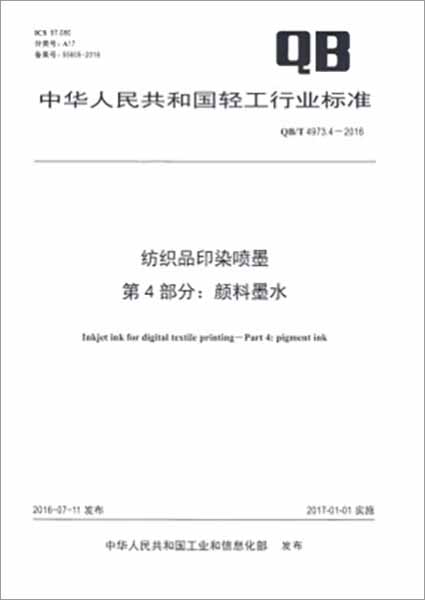
The Pigment Ink for Textile Inkjet Printing Light Industry Standard
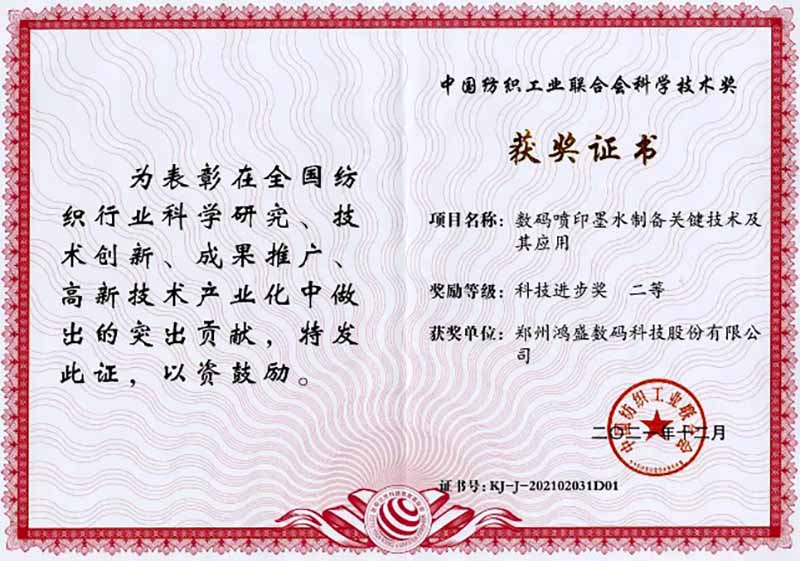
The 2021 CNTAC Science and Technology Progress Second Prize
5. Global service infrastructure and technical support capability
Hongsam's ‘HONGSAM+’ operational philosophy integrates technology, product and service competencies through:
- Domestic network: 4 subsidiaries, 9 regional offices, 4 international trade divisions
- International distribution: Authorised dealer networks across principal textile manufacturing regions
- Technical services: Pre-sales consultation, implementation support and after-sales maintenance
This infrastructure ensures responsive technical support for complex production environments, mitigating implementation risk and accelerating return on investment for international customers.
Conclusion
Hongsam's two-decade specialisation in inkjet ink development has produced a technologically integrated platform that addresses the textile industry's simultaneous requirements for environmental performance, economic viability and production quality. The Jettextile® textile pigment ink system, supported by RCT process innovation, the JETALL® latex ink platform, and global technical service infrastructure demonstrates that sustainable digital textile manufacturing can achieve industrial scale across diverse geographic and market contexts.
The comprehensive product portfolio presented in Table 1 illustrates the systematic approach to application-specific solution development that distinguishes Hongsam's market positioning. Quantified performance improvements – water reduction ≥70%, energy reduction ≥50% and cycle time compression ≥70% – validate the technical and commercial feasibility of pigment-based digital printing as a mainstream production modality. As global regulatory pressure intensifies and supply chain sustainability disclosure requirements expand, integrated technology-service platforms such as Hongsam's represent critical enablers of industry transformation.
Future development trajectories encompass expanded application domains (apparel, home textiles, outdoor products, automotive interiors, cultural creative industries, industrial applications), deepened international collaboration, and continued advancement of the digital-green manufacturing convergence that defines next-generation textile production.
For more information, visit www.ink4you.com or www.hongsam.cn.
-
References
[1] European Commission. (2020). EU Strategy for Sustainable and Circular Textiles. Brussels: EU Publications.
[2] Shen, L., et al. (2020). Carbon Footprint of Textile Recycling: A Case Study of open-loop Recycling of Wool. Journal of Cleaner Production, 259, 120773.
[3] Provost, J. (2019). Digital Textile Printing: A Disruptive Technology Enabling the Circular Economy. Textile Progress, 51(3), 143-203.
[4] China National Textile and Apparel Council. (2022). Annual Report on Technological Innovation in China's Textile Industry. Beijing: CNTAC.
[5] OEKO-TEX® Association. (2023). ECO-PASSPORT by OEKO-TEX®: Standard Documentation. Zürich: OEKO-TEX®.
-
Note
Data availability: Operational performance data cited in this study were provided by Zhengzhou Hongsam Digital Science and Technology Co, Ltd under confidentiality agreements. Aggregated data supporting the findings are available from the corresponding author upon reasonable request.