
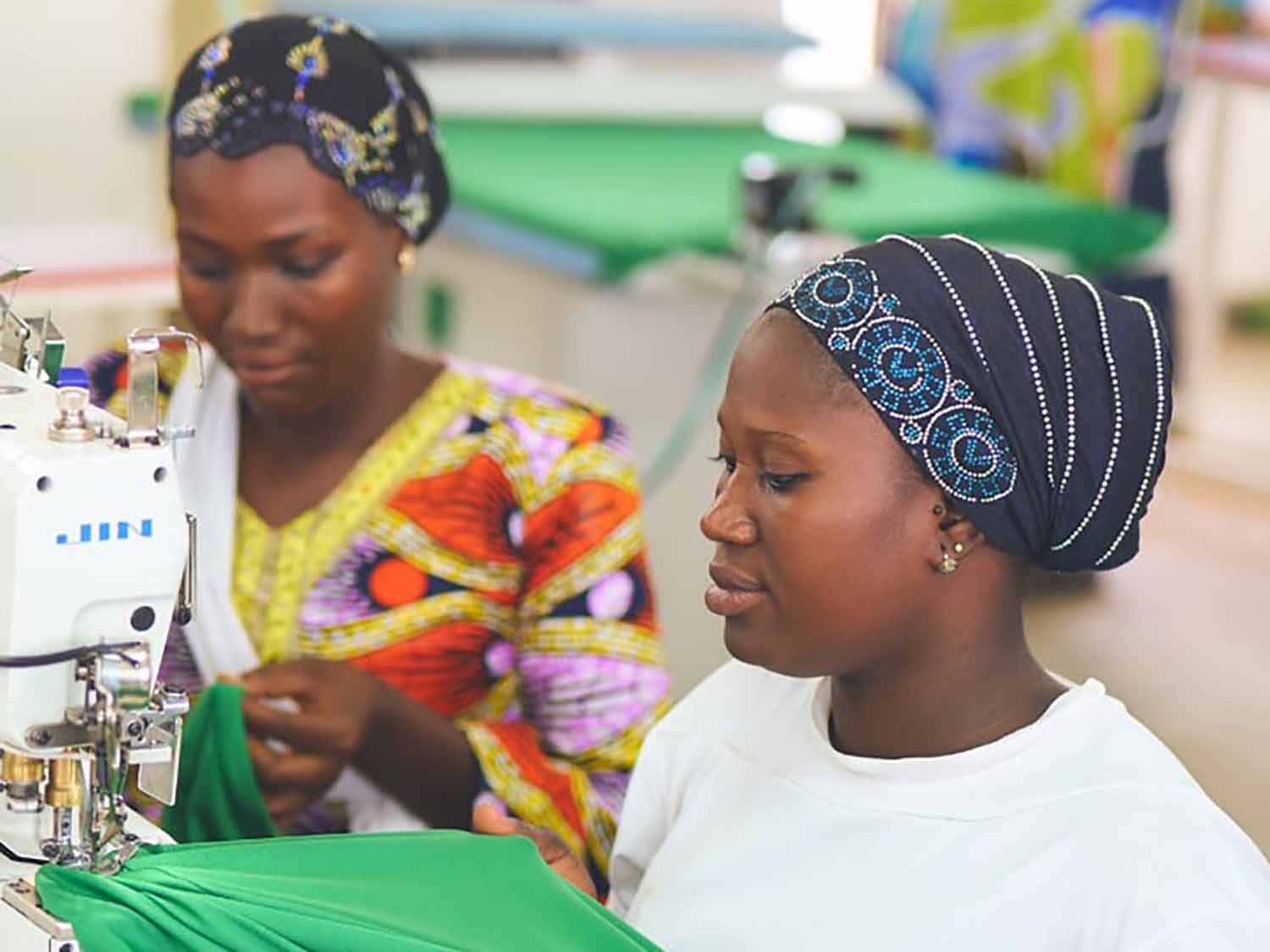


Northshore Apparel Ghana is positioning itself as Northern Ghana’s first regenerative apparel manufacturing hub. WTiN asks why Ghana is positioned well for international trade.
Northshore Apparel Ghana Ltd has partnered with Coat’s Digital to power, Northern Ghana’s first regenerative apparel manufacturing hub.
Backed by the Ghanaian and German governments, the company’s aim is to lead Africa’s apparel manufacturing revolution by proving that apparel manufacturing can be both ethically crafted and globally competitive.
Built on reclaimed land and designed as a zero-waste facility, the project will create thousands of skilled jobs while establishing a new model for ethical, digitally driven apparel manufacturing in West Africa. Coats Digital’s GSDCost, FastReactPlan and FastReactFabric will form the digital backbone of the operation.
The new facility will specialise in knitted and woven garments with a focus on T-shirts, polos, fleece hoodies, children’s wear, sportswear, underwear, leggings and trousers. Already, Northshore Apparel has worked with G-III Apparel Group, which owns brands including DKNY, Tommy Hilfiger and Calvin Klein, and is currently waiting on feedback to further the partnership.
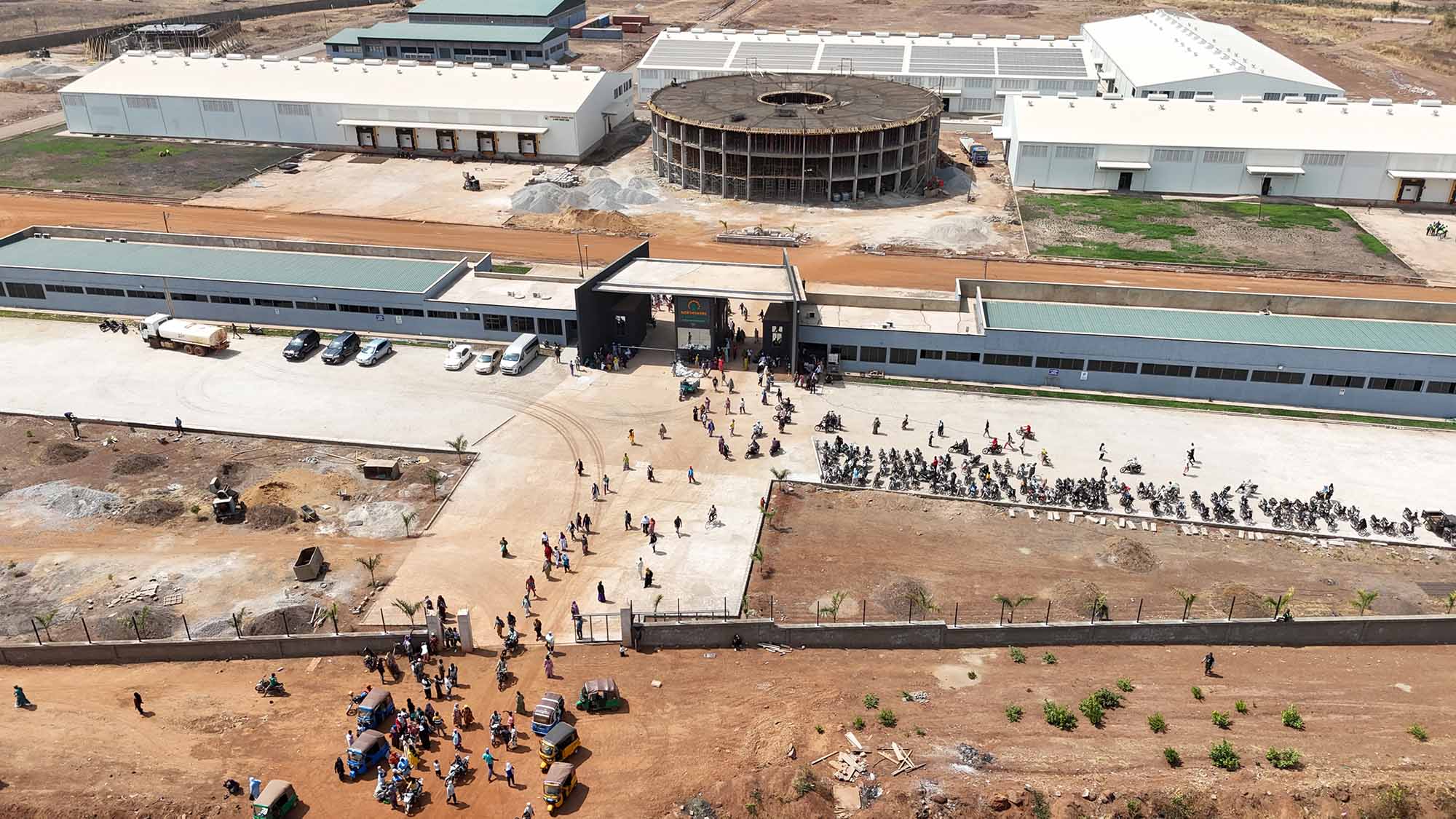
Northshore Apparel Ghana Ltd has partnered with Coat’s Digital to power, Northern Ghana’s first regenerative apparel manufacturing hub
Incorporating technology in modern manufacturing
Nurideen Mohammed, co-founder and CEO of Northshore Apparel Ghana tells WTiN: “We are probably the first facility in Ghana that has chosen a full suite of Coats Digital’s solutions. We decided that we needed to work with Coats Digital from day one, because for us to be efficient and different in the industry, we need our decisions to be driven by data.”
Looking widely at Ghana’s industrial landscape Mohammed says the country has fallen behind in terms of efficiency and the labour economy. He details how there has been difficulties in calculating labour costs effectively in terms of the country balancing its production lines with efficiency.
UK-based Coats Digital is used in over 3,000 factories globally providing end-to-end apparel, footwear and textile software, plus SaaS solutions to improve agility, speed to market, efficiency, transparency and sustainability.
“We elected to go with Coats Digital to make sure that the critical operational areas of our design were taken care of,” says Mohammed.
He uses the example of Coats’ GSDCost – the international standard for establishing and optimising accurate method-time-cost benchmarks for sustainable garment cost optimisation and manufacturing. The tool supports a collaborative, transparent, and sustainable supply chain through the use of standard motion codes and predetermined times, facilitating accurate cost prediction, fact-based negotiation and improved manufacturing efficiency.
Himanshu Mehrotra, managing director at Coats Digital adds: “We started as a partner from the very beginning, so it gave us an opportunity to look at where the most important things for delivery were needed first – to lay the foundation.”
This he says was cost and time, then capacity utilisation and fabric. By taking a layering approach Coats Digital could address problems as the arose and build upon its suite of technology to position the new manufacturing hub well within West Africa’s textile industry.
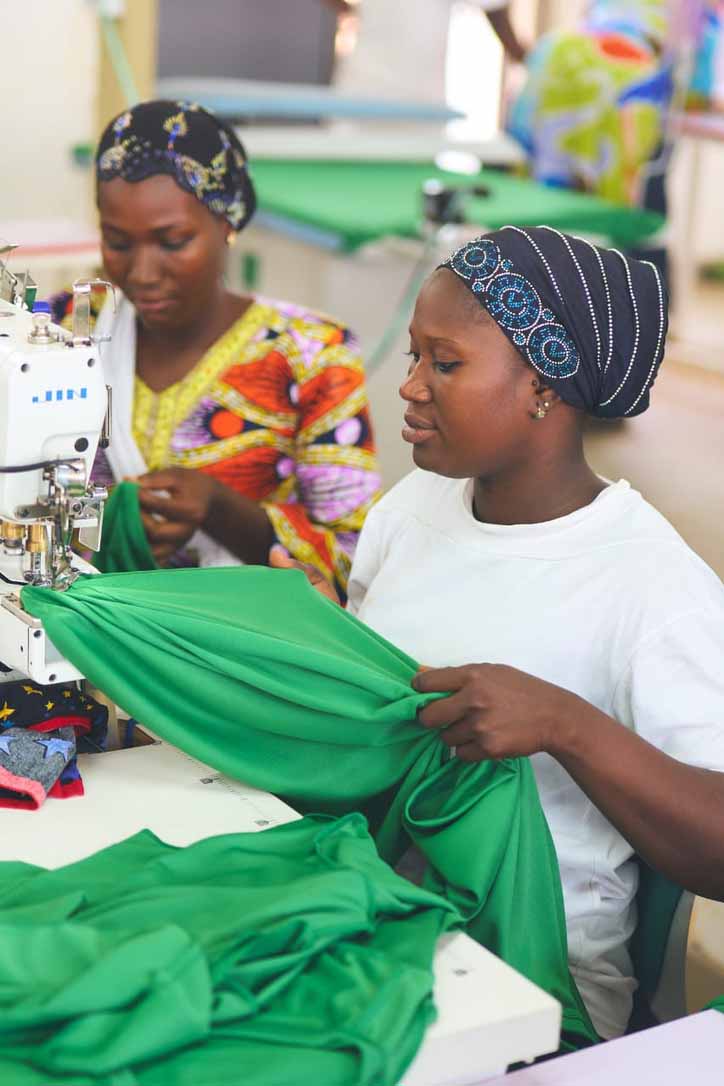
Working conditions are a key part of Northshore Apparel's model
Why Ghana is an ideal site for garment production
Located within the West African cotton belt, the facility has been designed to support shorter, more resilient supply chains while delivering the transparency, speed and responsiveness demanded by today’s global fashion brands.
Mehrotra elaborates: “We see Ghana as becoming a genuine diversification opportunity for many of the global brands.”
Mehrotra tells WTiN how Coats is working alongside the new facility’s infrastructure to set up processes and train GSD engineers – who will be the first licensed practitioners in Ghana.
Ghana, according to Mohammed, has “enormous opportunity,” if Northshore Apparel “makes the right decisions”.
He says: “If we are able to take advantage of the solutions that are provided, we have proximity to the US and European markets.”
Currently Northshore Apparel’s customers are mainly in the US market. But Mohammed says there are also opportunities within the “sub-region” of West Africa’s cotton basin, “which holds almost to around 60% of Africa’s cotton prospects”.
Ghana is in a unique position as it has duty-free agreements with the US, Canadian and European markets. Additionally, due to the UK-Ghana trade partnership, it can also service the UK duty-free. The transition time between Ghana to Europe is roughly 12 days, according to Mohammed, and to the US is a maximum of 22 days.
“In terms of speed to market, we have a leverage,” he adds. “We also have a very liberalised economy, and our political climate is good as we are one of the strongest democracies in Africa. In terms of political risk, it’s low in Ghana. Ghana offers enormous opportunities in the industry and we at Northshore Apparel intend to leverage on that.”
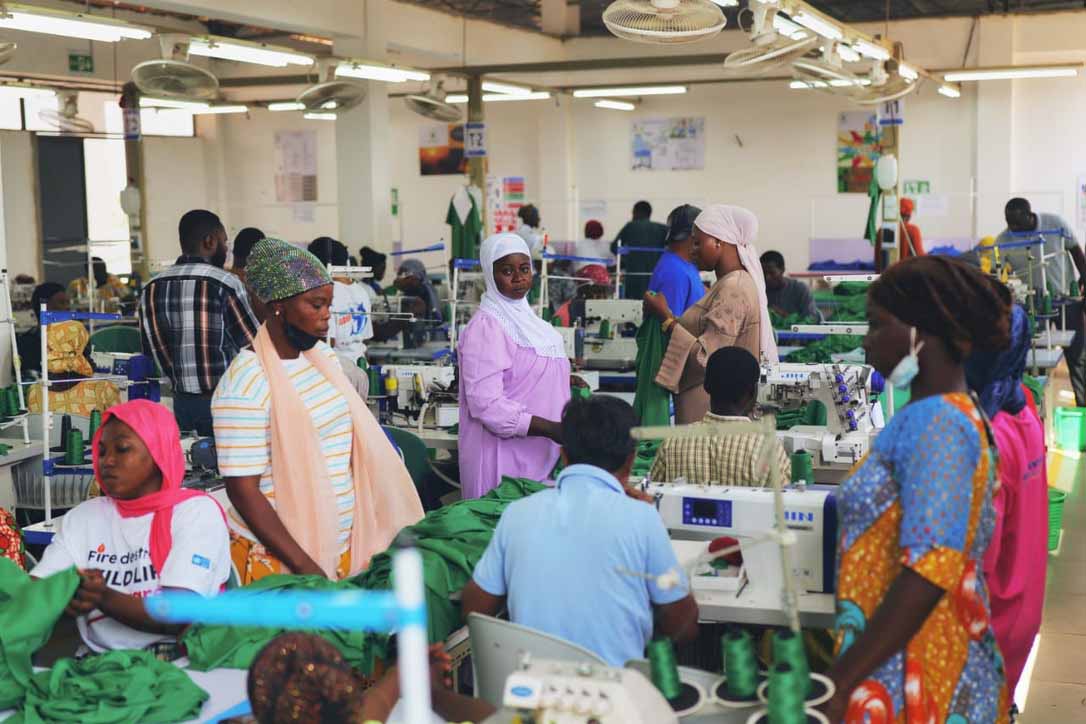
The company intends to hire a further 1,000 new employees by April 2026, and a further 7,000 local workers by the end of the year
Making the most of the new hub
Northshore Apparel is currently training 2,000 new employees to spearhead the launch of the new facility, in January 2026. The company intends to hire a further 1,000 new employees by April 2026, and a further 7,000 local workers by the end of the year.
Working conditions are a key part of Mohammed’s model. He says employees will receive fair wages along with free daily meals, on-site medical care, a creche for nursing mothers, prayer rooms and secure changing facilities. The project aims to link operational efficiency with responsible labour practices.
Additionally, sustainability measures are built into the design. Anaerobic biodigesters will convert solid waste into energy. Water recycling systems will support irrigation, and on-site solar generation will help reduce reliance on external power sources. The goal is to operate on a zero-waste basis while keeping resource use under close control.
So forth, from both an ethical and production standpoint the facility is desirable. It is positioned to support shorter supply chains and improved traceability, which is becoming increasingly important for brands seeking transparency and reliability.
Have your say. Join the conversation and follow us on LinkedIn