




-
Understanding the commercial readiness scale
WTiN’s Commercial Readiness Scale gives an indication of what stage of commercialisation a product is at. It ranges from Emerging: a research stage development; Scaling: the product is being produced on a small but growing scale, and Commercialised: the product is well-established and ready to purchase.


Archroma and Orta Anadolu have collaborated to bring circular dye chemistry into commercial denim production. WTiN explores the challenges and risks of integrating circular dye chemistry into existing supply chains.
Orta Anadolu, a Turkey-based denim manufacturer, is the first denim mill to adopt Archroma’s FiberColors innovative dye range partially derived from recycled wool waste.
Introducing the dyes through its ORTA brand, Orta Anadolu will bring circular dye chemistry into commercial denim production.
Julio Perales, technical & product segment manager, denim at Archroma says: “Our partnership with Orta played a key role in moving FiberColors from concept to commercialisation. By testing the solution in an actual production environment, we were able to prove that circular dyes can deliver on both performance and scalability.”
The aim for Archroma, Perales says, is to strengthen confidence in circular technology and help move it towards broader market adoption.

Julio Perales, technical & product segment manager, denim at Archroma
What the market wants
He says: “Brands and mills are looking for solutions that are credible, scalable, and deliver measurable impact without compromising on quality or efficiency. Circularity is increasingly a priority.”
Much of the pigments in traditional dyes are derived from fossil fuels, requiring vast amounts of water to produce. Plus, much of the toxins in the dyes end up in waterways and escape wastewater treatment. It has been reported textile dyeing is responsible for between 17-20% of global water pollution.
Archroma, which focuses on speciality chemicals for sustainable solutions, has developed products that work along the stages of the denim value chain. A big challenge for the Switzerland-based company has been navigating the evolving landscape of consumer expectations and sustainability demands in the denim industry.
As a partner of numerous denim stakeholders, Archroma has observed a growing trend whereby brands and mills are leveraging innovation to distinguish their products, improve sustainability practices and streamline costs.
You can read more about Archroma’s insights into the denim industry at WTiN.com.
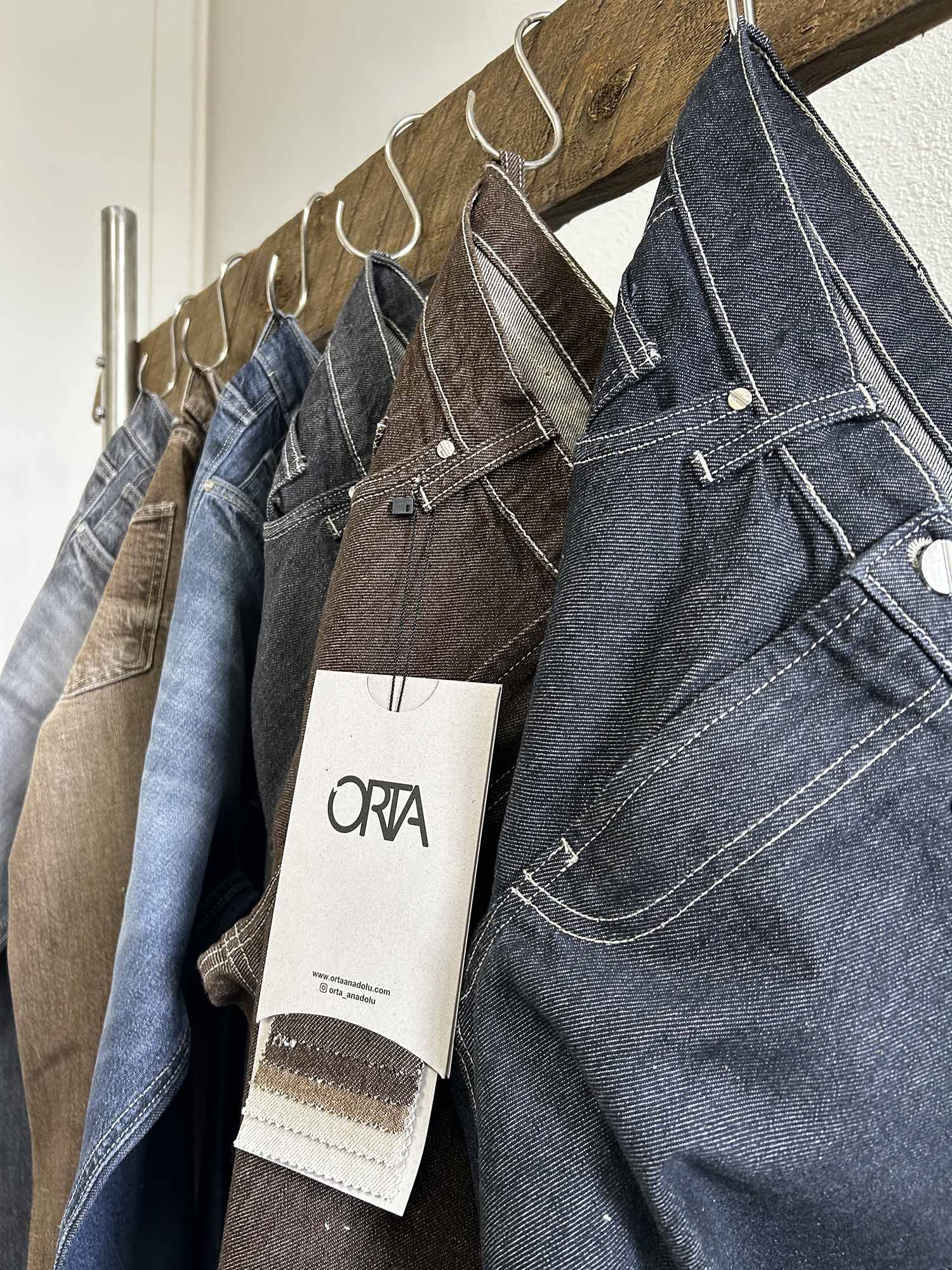
Orta Anadolu, a Turkey-based denim manufacturer, is the first denim mill to adopt Archroma’s FiberColors innovative dye range partially derived from recycled wool waste
FiberColours
Archroma’s latest solution tackles both circularity in dyeing and wool production. With incoming regulations and the industry battling against the likes of greenwashing and fast fashion, many brands and manufacturers are looking for circular solutions to integrate into their value chain.
The use of regenerative materials is one way to keep garments in use and provide pathways for reuse, recycling and biodegradation at end-of-life.
Wool is 100% natural, renewable and biodegradable. Archroma identified wool as a “significant stream that circular chemistry could transform – giving brands a compelling and fully traceable sustainability story”.
FiberColors so forth, builds on Archroma’s EarthColors platform, which has been adopted by over 50 global brands and helped to upcycle more than 60 tonnes of plant residue from the herbal and pharmaceutical industries.
The new dyes are synthesised with a minimum of 50% wool waste; specifically fleeces sheep farmers would usually dispose of.
“By upcycling this unwanted material, the patented Archroma technology replaces petroleum-based raw materials without compromising performance, water or energy consumption, or waste generation in the dye manufacturing process,” explains Perales.
Perales tells WTiN how wool waste, if treated with the “appropriate technology” can be transformed into biobased dyes.
Challenges and risk in developing new technologies and products
“The key challenges are ensuring consistent performance, securing reliable feedstock, and integrating new solutions seamlessly into established manufacturing processes,” says Perales.
These challenges are commonplace throughout the textile industry when it comes to introducing new, and in particular sustainable, technologies. Many brands and manufacturers are concerned about the cost of new technologies, if they must replace existing machinery.
This builds into risks regarding efficiency and meeting output targets. With upcoming Extended Producer Responsibility (EPR) regulations throughout Europe and further afield, manufacturers will become responsible for waste management and end-of-life solutions for the materials they create.
However, EPR differs from country to country and there is still uncertainty about how waste streams will be managed. So forth, securing reliable feedstock such as wool waste could be a concern for brands and manufacturers.
Archroma’s solution offers a viable pathway for wool farmers to offload their waste fleeces and contribute to a circular economy within the textile industry.
Perales adds: “The challenge at this point is to increase awareness for this concept amongst brands that are truly committed to biobased products on an ongoing basis, not just in small, one-off collections, but by establishing timeless products and making them standard collections.”
Scaling up to commercialisation
Scaling circular technologies always comes with some degree of risk. Recycling technologies, especially chemical ones, can be expensive to implement and are often not as cost competitive as their synthetic counterparts.
Renewcell, known operating as Circulose, faced bankruptcy for example, due to high costs and slow market adoption of sustainable materials.
Brand partnerships, such as Archroma’s with Orta goes someway to proving how these technologies can scale.
Archroma’s dyes are GOTS-approved, proving that they deliver the same dyeing and fastness performance as conventional sulphur dyes.
Accreditation and certification such as this is becoming paramount for circular technologies to prove that they can deliver the same, if not better performance, than what is already on the market.
Following a successful trial in late 2025, Orta Anadolu selected three shades from the FiberColors’ palette to feature in its FW27/28 collection.
Orta is a frequent early adopter of revolutionary dye technologies. The mill was among the first to introduce fabrics dyed with Pili’s biobased indigo, a bacteria-based alternative to petroleum-derived indigo dye.
This new collection underscores the commercial readiness of FiberColors for premium denim applications.
Already the response from brands, according to Perales, has been “very encouraging” with them showing interest in solutions that combine sustainability with performance.
“We see FiberColors as part of a broader shift toward more sustainable solutions for the industry, such as reusing bio-waste like wool. Our biobased dyes perform virtually identical to traditional dues and have proven to be scalable, as we have demonstrated with EarthColors and continue to demonstrate.”
Have your say. Join the conversation and follow us on LinkedIn