



Mya Love Griesbaum has built a biotextile startup using fungi to turn discarded synthetics, such as polyester, into new sustainable fabrics. WTiN analyses how Griesbaum has developed the technology and what the company, Mycorrhiza Fashion, can bring to the apparel industry in terms of circularity.
You should read this if you are…
- A manufacturer or research institution exploring biobased textile developments that feed into a circular economy.
-
Understanding the commercial readiness scale
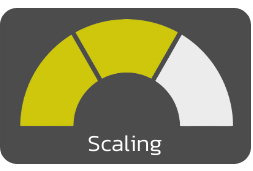
WTiN’s Commercial Readiness Scale gives an indication of what stage of commercialisation a product is at. It ranges from Emerging: a research stage development; Scaling: the product is being produced on a small but growing scale, and Commercialised: the product is well-established and ready to purchase.


What is mycoremediation?
Mycorrhiza Fashion uses mycoremediation to produce its leather alternative. Mycoremediation is a type of bioremediation that effectively absorbs and degrades contaminants in polluted environments. These digestive enzymes, that fungi naturally produce, can be leveraged by mycologists to break down complex plastic waste that humans produce.
Griesbaum says: “Certain species of white rot fungi can generate enzymes that are ideal for breaking down complex organic compounds (such as those found in synthetic textile waste). Additionally, the species we are exploring have incredibly tuneable mechanical properties (making it ideal to experiment with engineering different classes of fabric).”
Context
Mycorrhiza Fashion uses mycoremediation to degrade polyester fibres to a “certain degree”. However, Griesbaum explains it happens at a slower rate than the team would prefer so they are introducing different microbes to the process to expediate degradation so they can use the synthetic material as a feedstock.
Polyester fibres are difficult to recycle or decompose due to their tightly packed chemical structure made from petroleum that resists breakdown. However, due to their durability they are a staple of the fast fashion industry.
As such, Griesbaum says “Mycorrhiza Fashion is tackling the fashion industry’s pollution problem, specifically with the creation and landfilling of synthetic materials, such as polyester. We are designing a system to process existing synthetic fabric waste with microbes to generate a sustainable textile for soft goods applications.”
While the team is currently working on securing intellectual property (IP) on the process, Griesbaum reveals that they are feeding synthetic waste for microbial digestive enzymes to attack and then re-process the output into a sustainable, microbial-based material.
“The fabric we are currently trying to create is an alternative to traditional leather. However, this version is optimised for customisation, specifically by being more easy to sew for designers. Moreover, we introduce minimal material processing so the textile remains imbued by nature’s beauty with its organic motifs.”
She adds that currently many commercial “eco-friendly” fabrics contain virgin petrochemicals and/or are made with biomaterials that have “extremely complex and energy intensive manufacturing process”.
Landscape: A select look at mycoremediation’s current innovators
Mycoremediation is a relatively abstract concept in textile manufacturing and process. Fungi grow and work more slowly than conventional treatments like activated sludge, coagulation or advanced oxidation. Scaling reactors and keeping the enzymes needed active over time can present a number of challenges, plus mills don’t have commercial pressure to switch processes.
However, there are companies out there, working towards similar goals as Griesbaum and her team:
Company name: Myco Renew
Readiness level: TRL 4 – first bioreactor built and validated. Following the construction of its first test bioreaction, Myco Renew launched the ‘T-shirt’ pilot, where mayors from six cities in Europe provided real polyester sportswear for testing. The company identified fungi consortia capable of degrading polyester.
What the technology/concept does: Myco Renew delivers Recycling as a Service (RaaS) using fungi consortia that break down textiles in weeks. After biodegradation the company transforms the by-products into eco-bricks for the construction industry and eco-leather and breathable, bamboo-like textiles for fashion.
Recent news: Myco Renew was selected as a Top 20 Finalist of the Global Change Award 2026, run by the H&M Foundation in March.
Funding: Myco Renew is looking to meet investors, researchers, brands cities and operators working in climate tech, biotechnology, circular economy and industrial scale-up. The company announced this in September 2026 following the news it had been selected for the ‘Fall 2026 Milestone Makers: CleanTech cohort’ at the Nasdaq Entrepreneurial Centre in California, US.
Company name: Shenzhen Institutes of Advanced Technology of the Chinese Academy of Sciences
Readiness level: TRL 2/3
What the technology/concept does: A research team led by scientists Zhong Chao and Ke Li developed an engineered living material (ELM) using Cordyceps militaris (caterpillar fungus). Instead of killing the fungus during fabric production, they placed the organism into a dormant state. When the textile was torn, applied a potato-water nutrient solution reactivated the fungal network, causing the filaments to grow and self-repair the damage.
Recent news: A prototype dress has been made out of the material by Berlin-based Peelshere.
Funding: There is, as of yet, no reported funding for the research project.
-
Q&A with Mya Love Griesbaum, founder & CEO of Mycorrhiza Fashion
WTiN: Please can you tell me what prompted your investigation into fungi-based materials?
MG: Essentially, my research background in mycology and growing interest in fashion coalesced. While conducting research on mycoremediation at the Illinois Mathematics and Science Academy (IMSA), I was inspired by fungi’s regenerative power and ability to digest synthetic pollutants. Concurrently, I had a growing interest in fashion but didn’t want to contribute to its seismic industrial pollution. Consequently, my interests converged. A series of experiments with bacterial cellulose, algae, and fungi ultimately catalysed my biotech startup, Mycorrhiza Fashion, which uses fungi to transform synthetic fashion waste into sustainable textiles with the mission of fostering a radical symbiosis between people, the planet, and clothes!
WTiN: What challenges that face the textile industry are you trying to overcome and how?
MG: First and foremost, Mycorrhiza Fashion is tackling the fashion industry’s pollution problem, specifically with the creation and landfilling of synthetic materials (such as polyester). We are designing a system to process existing synthetic fabric waste with microbes to generate a sustainable textile for soft goods applications.
Moreover, we are in the process of creating a material that is truly sustainable. Right now, many commercial “eco-friendly” fabrics contain virgin petrochemicals and/or are made with biomaterials that have extremely complex and energy intensive manufacturing processes. Our team aims to eliminate these complex pollutants via natural processes (i.e. mycoremediation, etc.).
WTiN: Please can you tell me more about white rot fungi and why you have decided to explore this– what makes it ideal for sustainable apparel?
MG: Certain species of white rot fungi can generate enzymes that are ideal for breaking down complex organic compounds (such as those found in synthetic textile waste). Additionally, the species we are exploring have incredibly tuneable mechanical properties (making it ideal to experiment with engineering different classes of fabric).
WTiN: How does it turn synthetics into a sustainable fabric and what is this fabric that it creates?
MG: The team is currently working on securing IP on the process, so I cannot delineate our methods. Nonetheless, we (in essence) “feed” synthetic waste for microbial digestive enzymes to attack and then re-process the output into a sustainable, microbial-based material. The fabric we are currently trying to create is an alternative to traditional leather. However, this version is optimised for customisation, specifically by being more easy to sew for designers. Moreover, we introduce minimal material processing so the textile remains imbued by nature’s beauty with its organic motifs.
WTiN: Why have you decided to start with leather? What other fabrics will you explore?
MG: The initial fermentation methods we have investigated naturally output a microbial mat that exhibits properties most closely related to conventional leather (in terms of drape, texture, etc.). Although we have been focused on leather textile alternatives, we have also been exploring other options, including lace.
WTiN: How far in your research are you and what are your short-term goals in terms of advancing what you have already achieved?
MG: I have been doing mycology research for nearly seven years. My research started in 2019 at IMSA with mycoremediation. In 2021, I began experimenting with mycelium materials (such as fungi-based bricks). In 2022, I transitioned to conducting research in mycelium fabrics at the Georgia Institute of Technology under the guidance of professors of the GT Materials Science and Engineering department. And, in 2024 received the Georgia Institute of Technology's President's Undergraduate Research Award (PURA) to delve deeper into mycelium materials for textiles.
The vision is to foster a radical symbiosis between people, the planet, and our clothes. So, our short-term goals include finalising our material formulation to ensure we are not greenwashing and indeed creating a truly environmentally sustainable product. Additionally, we are looking to run our first small-scale pilot within the next year.
WTiN: I know you are currently in the mechanical testing phase, but please can you tell me how you intend to eventually scale your technology? Can you envisage this being a commercially available material and process?
MG: At this moment, I cannot publicly confirm the partner we will be collaborating with in the coming months. However, we will be dedicating the next 18 months to testing different manufacturing methods and figuring out how to scale with them. We intend to take inspiration from larger scale vertical farming operations to make this commercially viable.
WTiN: How does the material compare to traditional fabrics in terms of composition and durability?
MG: Composition
- We incorporate legitimately environmentally safe materials.
- Microbial base and plant-derived processing reagents
- We are not creating virgin petrochemicals.
Durability
- According to preliminary tensile testing, some of our formulations have proven to be stronger than conventional leather and even synthetic leather. Our leather replacement outperformed synthetic leather in durability, demonstrating nearly double the break strength.
WTiN: Please can you tell me more about how you are working a recycling company? How is the mutually beneficial and what does it represent in terms of building circular supply chains?
MG: We have received materials (that would otherwise be landfilled) from recyclers, including the Atlanta Recycling Company. We plan on transitioning to working with fashion companies directly. As per new governmental regulations on the fashion industry (such as the EU’s 2026 ban on fast fashion landfilling or incinerating unsold inventory and the US’s fast fashion waste responsibility policies), fashion companies are seeking to partner with waste management services to appropriately handle their waste. Mycorrhiza Fashion strives to create a more circular supply chain by collecting waste from soft goods companies (i.e. fashion) for a fee, growing our fungi to neutralise the synthetic waste, and processing the material into a textile to sell back to fashion.
WTiN: Can you tell me more about the challenges you are facing in terms of finding lab space and funding?
MG: Founders who are recent graduates and/or are just beginning their entrepreneurial journeys are already working with a constrained budget. And, for entrepreneurs who are working in life sciences, finding lab space outside of their universities and within their budgets seems nearly impossible, especially one that houses the materials characterisation equipment we would need to wrap up R&D. Nonetheless, we have found partners who can potentially match the specifications we need (more details to come within the month). We are still in the middle of raising, so, if you know of any investors looking to have a clean tech company in their portfolio and fashionably grow a sustainable future, send them my way.
Impact of potential commercialisation
Griesbaum sees commercialisation as something that is achievable. She says the vision for Mycorrhiza Fashion is to create a “truly environmentally sustainable product” and run its first small-scall pilot within the next year.
The company has already been modelled on the runway. A dress made from its fungi fabric material was showcased at the Atlanta Sustainable Fashion Show in 2025 and Griesbaum also presented the fabrics at the 2026 Fashion Institute of Technology Sustainable Business and Design Conference.
However, mycoremediation is not yet commercially ready. Mycelium-grown materials, also from fungi, are partly commercial but they have struggled to gain traction. Brands such as Stella McCartney and Adidas have launched products using MycoWorks and Bolt Threads’ Mylo, but mostly as limited runs. Bolt Threads paused Mylo production in 2023 after failing to raise funding, while MycoWorks build a commercial-scale plant, but it remains small at a price-premium.
In terms of breaking down textile materials with fungi, it is still very much in the lab and pilot stage with synthetics being the main barrier.
Yet, as there has been attention given to mycelium materials, there could be industry appetite for mycoremediation, plus it plays into a circular economy, which is attractive given incoming legislation surrounding waste, such as Extended Producer Responsibility (EPR), which will require brands and manufacturers to be responsible for their products’ end-of-life.
Bottlenecks to commercialisation
We can use the example of mycelium materials to predict what some of the bottlenecks to commercialisation in mycoremediation maybe. A lack of investment to scale up will prevent growth in this area.
As many innovations in this space are still in the lab, much investment will be needed to support research and brand adoption. As funding exists for research and for proven technology, little exists for the expensive pilot-to-demonstration step in between.
The cost of enzymes that are needed to enhance the white rot’s speed of biodegradation could come in at higher price points also. This also highlights another bottleneck in the speed of the degradation, which could lead to larger reactors, longer residence times and higher capital cost.
Reports say next-generation leathers, more broadly, come in at higher costs, inconsistent quality and need for coatings that are often plastic-based. This calls into the question the true circularity and sustainability of these materials if they will need to be treated with petro-based treatments – the exact substance they aim to eradicate.
Furthermore, feedstock could cause scaling problems as sorting garments by fibre is difficult and costly. Additionally, mechanical and chemical recycling already have infrastructure, investment and brand partnerships. They are still in the scaling stage and while they are still developing there maybe reluctance to invest in mycoremediation.
However, Griesbaum says the company is already working with recyclers such as Atlanta Recycling Company and they plan on transitioning to working with fashion companies directly.
This could be attractive to brands as regulations such as the EU’s 2026 ban on fast fashion landfilling or incinerating unsold inventory and the US’s fast fashion waste responsibility policies, force them to consider their products’ end-of-life journey and partner with waste management services.
“Mycorrhiza Fashion strives to create a more circular supply chain by collecting waste from soft goods companies (i.e. fashion) for a fee, growing our fungi to neutralise the synthetic waste, and processing the material into a textile to sell back to fashion.”
There is potential here for an affluent commercial model once scaled as Mycorrhiza Fashion will be paid by brands to handle waste of which it can then sell back to them once it has been treated and repurposed.
Risks and opportunities
A table of considerations – risks vs opportunities.
| Risk | Opportunity |
| Finance | A circular model could be built where brands pay Mycorrhiza Fashion to handle their waste garments, before buying them back as repurposed circular materials. |
| Technology | While the technology is new and under development there is promise here for it and Mycorrhiza Fashion has received support from Georgia Institute of Technology and is working with brands to test the technology. |
| Market relevance | Circularity in the textile market has been a prolific topic for the past few years that shows no signs of slowing down. This technology tackles both waste and circular materials, which makes it attractive to consumers, brands and manufacturers. |
| Brand adoption | As mentioned brands have been working with Mycorrhiza Fashion, although Griesbaum is unable to name at this moment. Additionally, brands have invested in mycelium materials and garments previously. Therefore, there is appetite for these materials, but they will need to prove themselves on smaller pilot scales before they are introduced in larger collections. |
| Compliance | As EPR, the EU’s Waste Framework Directive, the ban on the destruction of unsold goods and the US Textile Waste Reduction Act come into play, Mycorrhiza Fashion offers a solution for compliance. In turn opening up financial pathways in feedstock management for recycling companies. |
Outlook and directives
Time will tell how well this technology performs and how expensive it will be to implement.
“We are making sure the science is solid,” Griesbaum says. “We won’t release a product that claims it’s sustainable before it’s proven to be sustainable. This means gaining lab validation that our microbes can enzymatically degrade these synthetic fibres generated by fast fashion.”
This is definitely a technology and area to keep an eye on and see how it scales. However, it is still in the scaling stage and finding investors. But by taking it slow and gaining brand feedback Griesbaum is confident the enterprise will scale successfully.
Collaboration we have heard time and time again is key to introducing new materials to the market and developing novel concepts.