



Sponsored by Taiwan Textile Federation
From recyclable stretch constructions to functional trims and digital jacquard production, four Taiwanese suppliers show how textile performance is broadening beyond fabric properties alone.
Performance textiles are being asked to do more than deliver a single technical function. Durability, protection and comfort remain central to product development, but recyclability, material efficiency and manufacturing flexibility are increasingly being considered alongside them.
That shift is visible across Taiwan’s textile supply chain, where suppliers are applying material engineering not only to fabrics, but also to trims, functional systems and production methods. Four companies featured in the Taiwan Textile Federation’s (TTF) latest 2026 Green Textile Solutions online product launch show how these priorities are beginning to converge.
For suppliers and product developers, the challenge is increasingly about balancing requirements that have traditionally been addressed separately. Performance must survive repeated use, while material choices are under greater scrutiny and brands are looking for more flexibility in how products are developed and manufactured.
The episode, ‘From High-Performance Protection to Smart Customization’, brings together TAIWAN PAIHO LIMITED (PAIHO), Asiatic Fiber Corporation (AFC), Wu Luen Knitting Co Ltd and Junmay Label Manufacturing Corp. Their developments span engineered components, thermal and hygiene functions, mono-material stretch construction and digital jacquard manufacturing.
Watch Episode 3 of TTF’s 2026 Green Textile Solutions series, ‘From High-Performance Protection to Smart Customization’.
For PAIHO, the emphasis is on parts of the product that can be overlooked when performance is discussed primarily in terms of the main fabric. The company’s portfolio includes reflective drawcords, high-strength webbings, breathable jacquard mesh and elastic trims, targeting applications where visibility, durability and comfort need to be built into the complete construction.
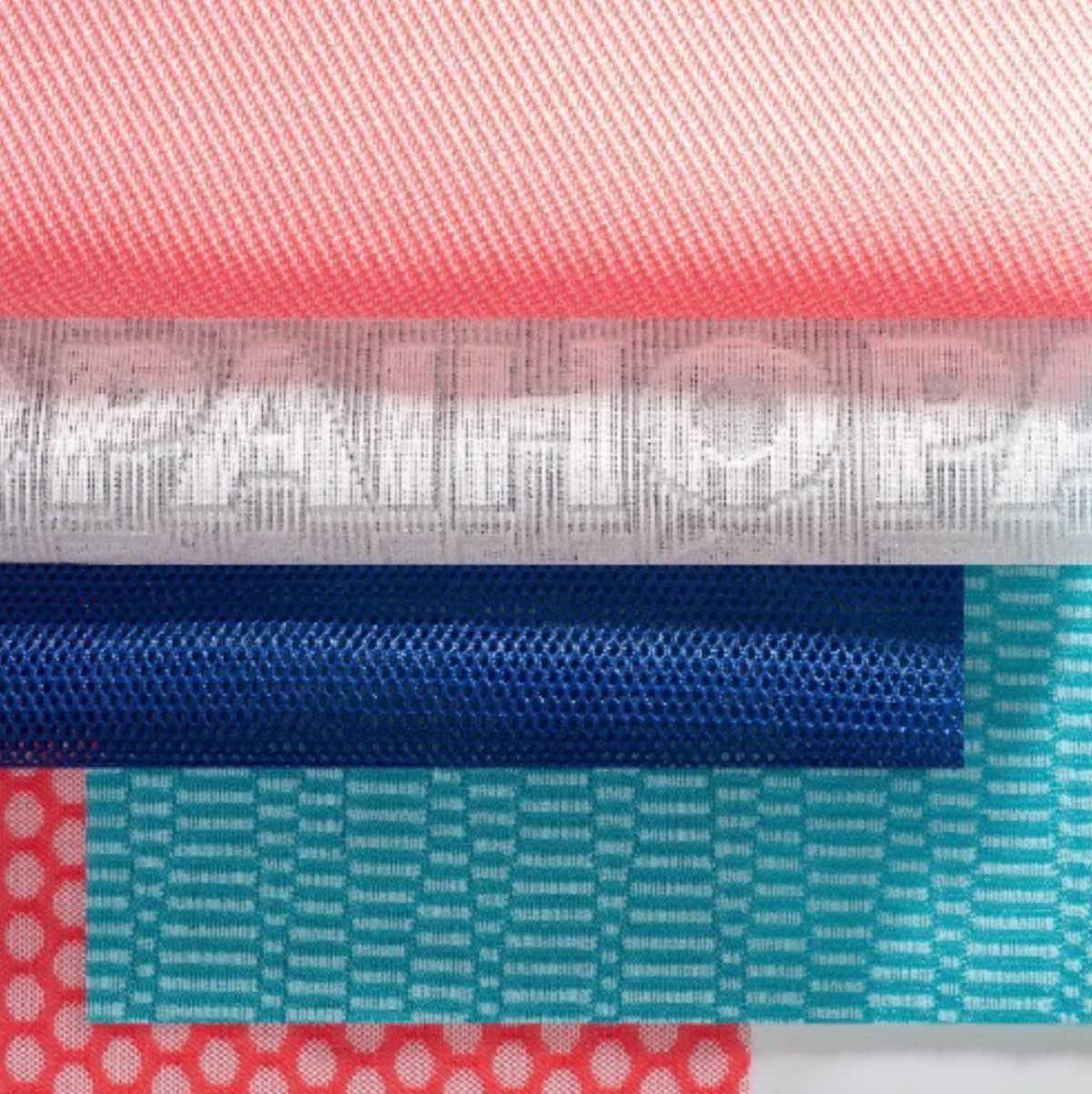
PAIHO’s portfolio includes reflective drawcords, high-strength webbings, breathable jacquard mesh and elastic trims
PAIHO also highlights chemical management within its offering, including elastic trims dyed without azo compounds or heavy metals. Products within the range are supported by standards and certifications including GRS, RCS and OEKO-TEX Standard 100.
The approach reflects a wider consideration for product developers: performance can depend as much on the reliability of trims and components as on the properties of the shell or base fabric. For workwear, outdoor equipment and other demanding applications, component selection therefore becomes part of the broader material engineering process.
Asiatic Fiber Corporation (AFC) approaches functional performance from a different direction. The company describes its platform as Advanced Material Intelligence, using multi-layered textile constructions intended for professional healthcare and industrial environments.
One of the technologies featured is Graphene-plus, which AFC says is designed to improve thermal dissipation. Its material portfolio also includes inherent anti-odour fibres with 99.9% antibacterial efficacy after 50 intensive industrial washes, according to the company.
AFC additionally incorporates bio-mineral far-infrared technology, which it says is intended to support energy return and micro-circulation. Taken together, the technologies illustrate an attempt to move functional textiles beyond passive protection by building thermal management, hygiene and wearer-support functions into the material itself.
The challenge of combining performance with end-of-life considerations is addressed by Wu Luen Knitting through FlexLoop. Stretch fabrics used in sportswear and technical apparel commonly depend on spandex blends, yet blended fibre compositions can create additional complexity for recycling.
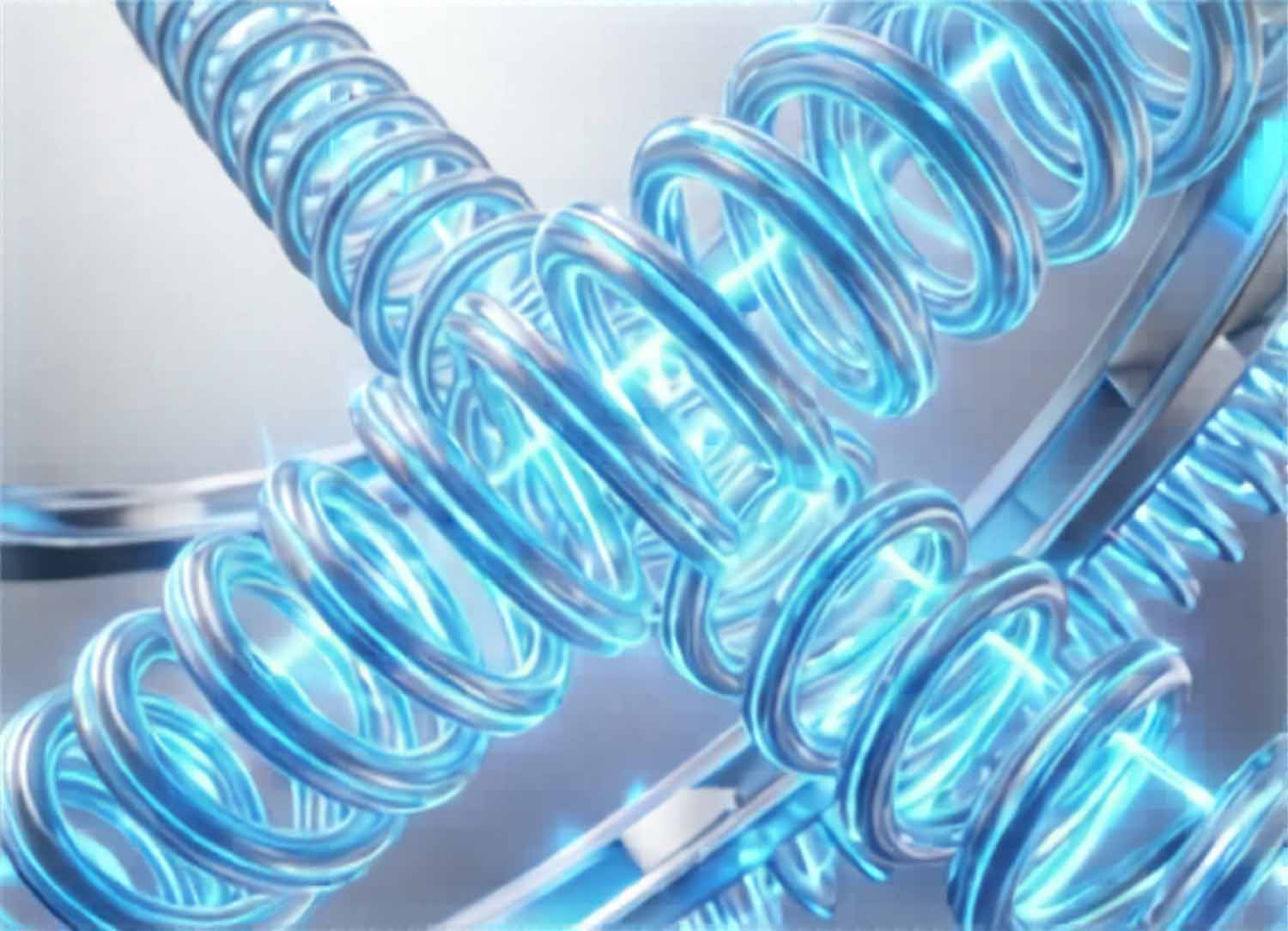
Wu Luen Knitting’s FlexLoop addresses end-of-life considerations simultaneously with performance
FlexLoop takes a mono-material route. Developed using Wu Luen’s proprietary Loop Engineering, the fabric is made from 100% polyester and achieves more than 90% shape recovery without spandex, according to the company. It is also engineered to withstand exposure to sweat, chemicals and ultraviolet radiation.
The significance lies less in stretch alone than in the way that stretch is achieved. By retaining a single-material polyester construction, Wu Luen says the fabric is designed to support closed-loop recycling at the end of its service life. The concept places recyclability earlier in the design process rather than treating it solely as an end-of-life problem.
Manufacturing flexibility is the focus for Junmay Label Manufacturing Corp. The company has spent four decades in woven label and textile production and now combines that experience with European digital jacquard weaving technology to produce high-precision labels and fabrics.
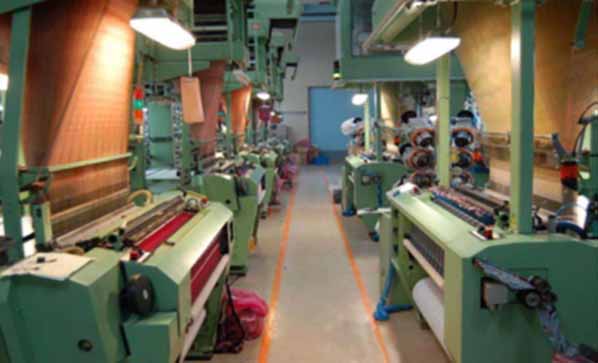
Junmay Label Manufacturing Corp has combined its expertise with European digital jacquard weaving technology
Junmay’s model supports low minimum order quantities and multi-colour customisation, with applications extending from technical protective backpacks to limited-edition footwear. The company also upcycles production waste.
For brands working with shorter product cycles or more targeted collections, the relevance of this model lies in the relationship between customisation and inventory. Smaller production quantities can allow more designs to be developed without requiring the volume commitments traditionally associated with woven textile production. Junmay positions this approach as Smart Weaving for a zero-inventory era.
Across the four companies, the common theme is not a single material technology but a broader definition of performance. PAIHO extends technical criteria into components; AFC focuses on integrated material functions; Wu Luen is attempting to reconcile stretch with mono-material construction; and Junmay links digital weaving with lower-volume customisation.
Together, the examples suggest that functional textile development is becoming increasingly systems based. Material performance, product construction, recyclability and production strategy are no longer separate conversations. They are beginning to influence one another from the earliest stages of development.
For sourcing teams, this broadening of performance criteria also changes the role of the supplier. Technical capability is increasingly tied not just to what a material can do, but to how it is constructed, how it fits within the finished product and how efficiently it can be produced.
The four technologies can be explored in Episode 3 of TTF’s 2026 Green Textile Solutions series, ‘From High-Performance Protection to Smart Customization’.
Ad by TITA.
Have your say. Join the conversation and follow us on LinkedIn