



Sponsored by Interloop
Last year, Pakistan-based textile and apparel manufacturer Interloop doubled revenue under Vision 2025 while cutting absolute Scope 1 and 2 emissions by 9%. Speaking with Otis Robinson, senior analyst and editor of industry transformation and compliance at WTiN, Interloop’s chief executive officer (CEO), Navid Fazil, explores how growth and sustainability progressed in tandem, what resilience means for the textile manufacturer’s next chapter, and its urging of other manufacturers to ‘invest in the future’.
The vast majority of the apparel industry’s climate targets are slipping further out of reach. Sector emissions grew by 7.5% in 2023, according to the Apparel Impact Institute’s (Aii) annual Taking Stock report – the first year-on-year increase since Aii began tracking progress in 2019 – with rising production and a growing reliance on virgin polyester to blame.
But Pakistani textile and apparel manufacturer Interloop appears to be bucking that trend. Now that its five-year Vision 2025 strategy has concluded – a growth plan with the aim to manufacture with high social and environmental standards – the hosiery and apparel manufacturer reports doubled revenue alongside a 9% cut in absolute Scope 1 and 2 emissions, despite a 40% rise in production volume.
Meanwhile, intent on sharing its successes with the wider industry, in September 2026 Interloop joined Target and the Aii for the WTiN webinar ‘ESG & decarbonisation in play: Inside a brand-supplier-implementation partnership’. The webinar drew on the three companies’ work together through the Clean by Design programme to show how collaborative decarbonisation can cut emissions and energy costs at the same time.
Speaking with WTiN, Interloop’s chief executive officer (CEO) Navid Fazil looks back on what drove its Vision 2025 results, the barriers that remain and why resilience will define its next chapter.
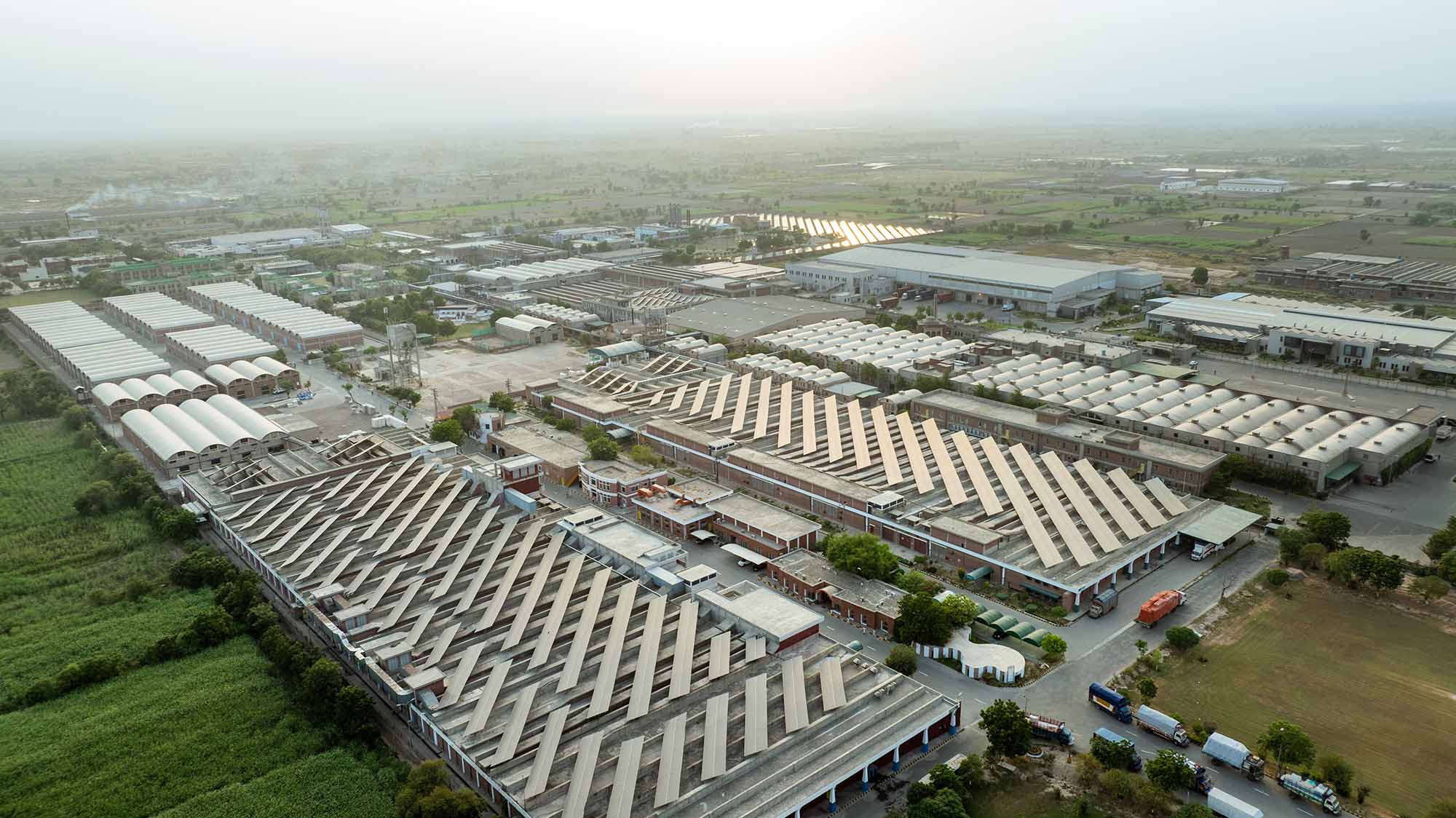
Interloop's industrial park
Otis Robinson (OR): Five years ago, Interloop set out an ambitious Vision 2025 spanning business growth, operational expansion and sustainability. Now that the reporting period has concluded, where do you believe the company has exceeded expectations, and where has reality proved more complex than anticipated?
Navid Fazil (NF): Going in, we thought success would largely be measured by whether we achieved our targets. Looking back at the last five years, I think the more important question is whether we built a stronger business than the one we started with.
I'm proud that we've expanded our product capabilities, doubled our revenue and still managed to reduce our environmental footprint. However, this growth has put immense pressure on our teams and challenged us in many ways including extreme production ramp ups, onboarding new customers in a very disruptive environment, bringing thousands of new people onboard whilst maintaining our core values. We did learn that scaling business is more about ensuring thousands of people are moving in the same direction with the same pace and same passion. This certainly was not easy and has tested us quite a bit. That said, we have resilient, passionate and innovation driven teams who proved that together we could overcome even toughest challenges.
OR: WTiN has observed that many manufacturers have found sustainability targets difficult to deliver on. For example, a 2025 Apparel Impact Institute (Aii) report revealed apparel sector emissions were on the rise, and thus, globally, Net Zero was further from reach than expected. Goals may have been worsened amid inflation, geopolitical disruption and persistent supply chain volatility. Despite these headwinds, Interloop reports lower emissions and water intensity alongside significant revenue growth. What enabled those improvements to happen simultaneously?
NF: There's an assumption that sustainability is something businesses work on once growth is secured. Our experience has been the opposite.
Our engineering instinct, early on, was about efficiency. Every resource can be optimised, and every process can be improved. That became the operating mindset of the business long before ‘sustainability’ was the word used for it.
So, reducing water or energy use was never a separate initiative; it was always part of our core business planning. It was the same discipline we applied everywhere. With this approach we invested in process optimisation, efficient technologies and renewable energy. We not only reduced our impact on an intensity basis but also cut our absolute Scope 1 and 2 GHG emissions by 9%, from 136,409 to 124,132 metric tonnes of CO₂ equivalent (FY21 vs FY 26), despite a 40% increase in production volume.
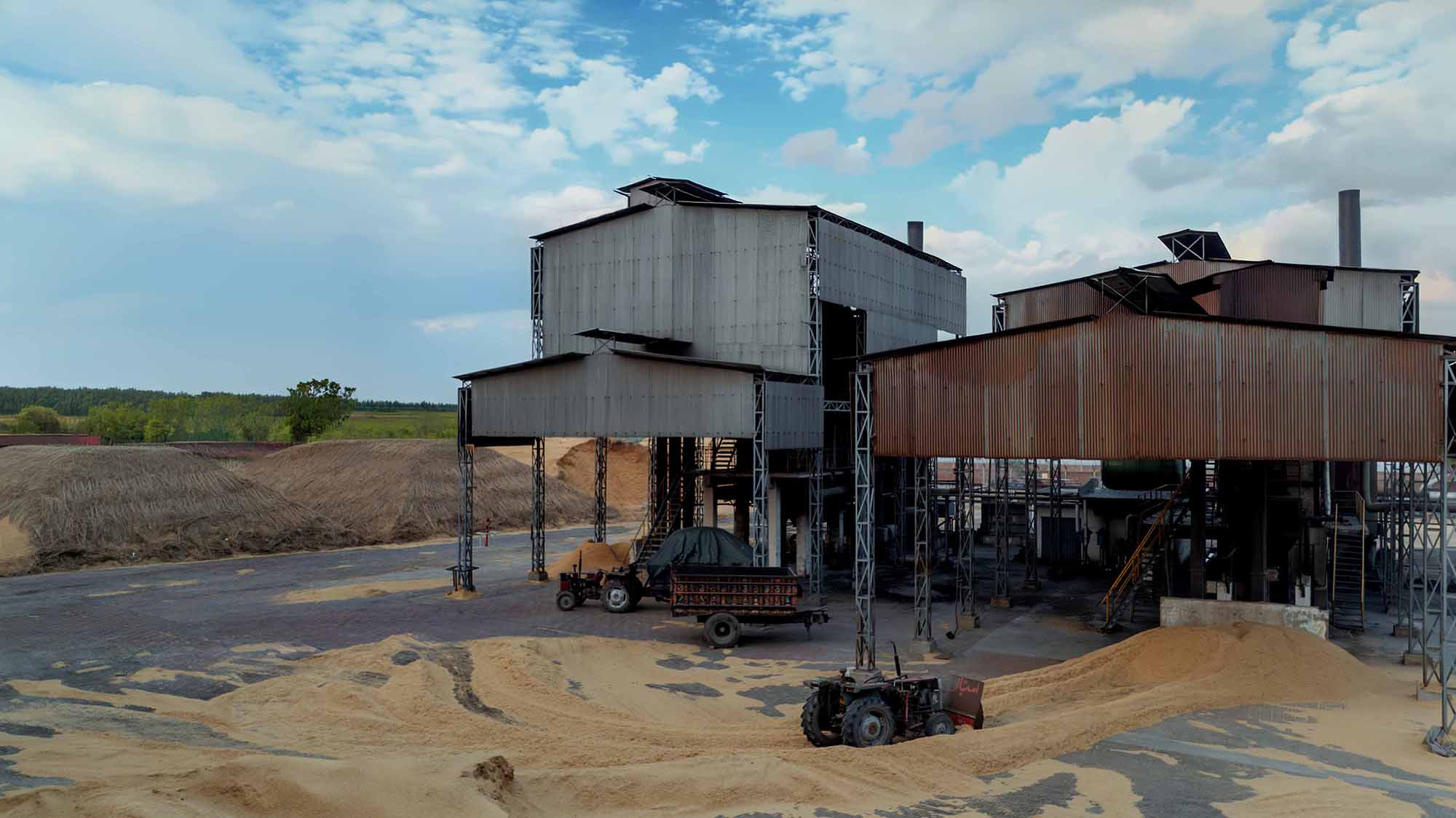
Interloop utilises biomass as a renewable energy source
OR: Over the past five years, Interloop has expanded into new apparel categories, invested in additional manufacturing capacity and progressed its Egypt apparel park. Looking back, what role has operational diversification played in strengthening the business, and where do you see the next phase of expansion creating the greatest strategic value?
NF: One assumption we've challenged is that scale automatically creates strength. It doesn't. Scale without diversity can actually make a business more exposed.
Expanding into new product categories and new countries of production weren't decisions driven by size alone. They were about creating flexibility and resilience in our operations. Business that depends too heavily on one geography or one product eventually finds itself reacting instead of leading.
For Interloop, diversity with agility and flexibility will become even more valuable over the next decade than simply adding more capacity. We see major growth in our apparel and denim categories as we expand our capacities, pivot more towards value added products and use design and innovation to create new opportunities with our customers.
OR: Interloop now sources 70% sustainable materials, but material availability, traceability and cost remain major constraints across the textile industry. From your perspective, what are the biggest barriers to increasing that figure further, and what still needs to change across the supply chain?
NF: This is probably where the industry sometimes oversimplifies the conversation.
The reality is that no manufacturer controls the entire supply chain. Scaling sustainable materials depends on several things moving together, fibre innovation, availability at commercial scale, traceability, manufacturing capability and ultimately, whether it's commercially viable for both brands and manufacturers.
We've increased our use of sustainable materials significantly, and we've done our part in building traceability, the certifications, and the capability to scale. What determines whether that effort translates into real change is whether brands are able to build it into large-scale ranges rather than isolated pilots. That's the piece that decides how fast the rest of the industry can move past 70%.
Our recent partnership with Fashion For Good as an Innovation Partner (Editor’s note: In October 2026, Interloop joined Fashion For good, a global collaborative platform that aims to drive a regenerative and circular fashion industry, as an innovation partner. This partnership will see Interloop test and scale next-generation textile technologies.) is another step in that direction, allowing us to test emerging technologies in real manufacturing conditions and assess their potential for commercial scale.
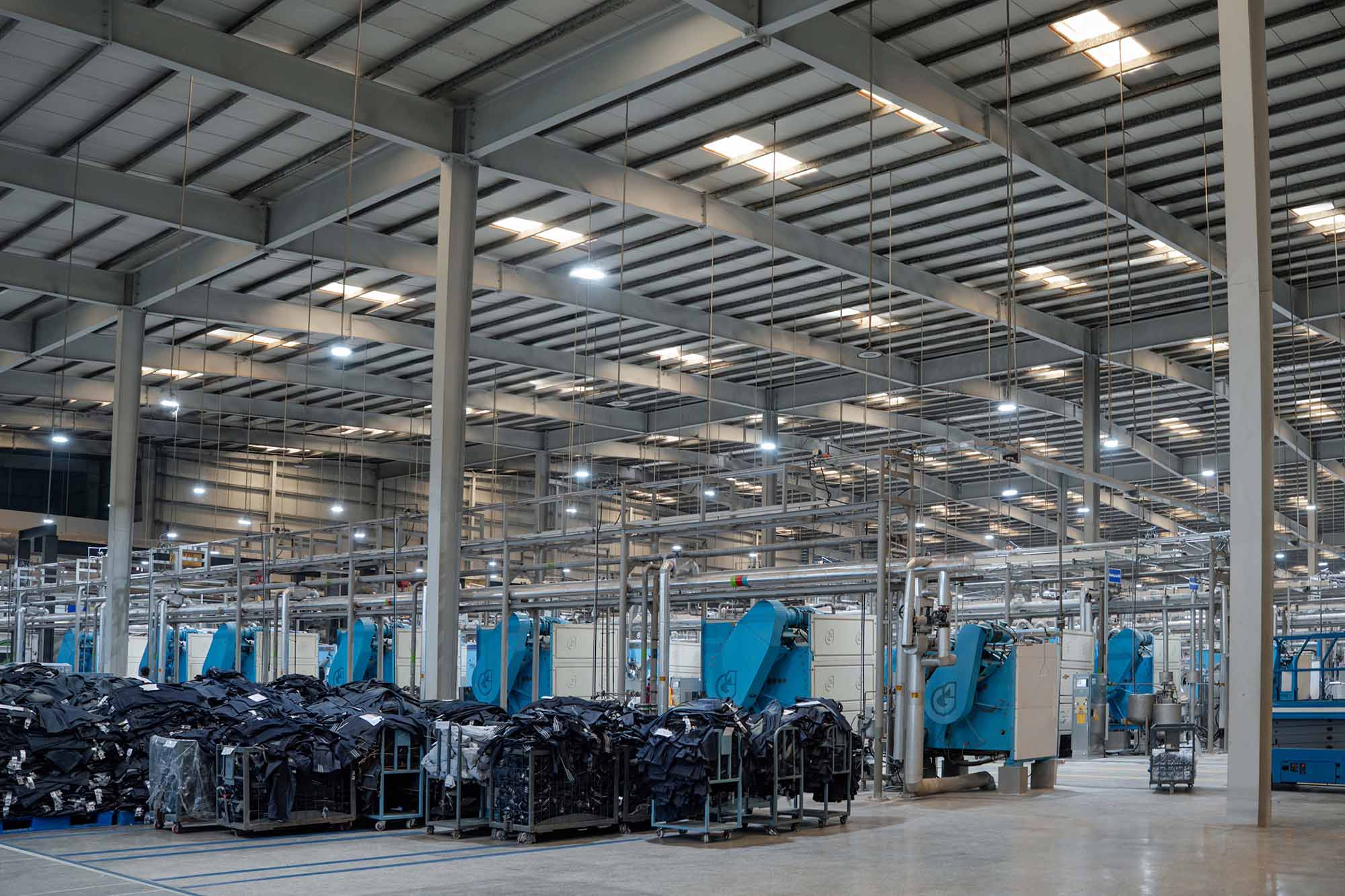
Interloop's garment wash system
OR: Renewable energy generation has become a defining investment area for textile manufacturers, yet many struggles to scale beyond pilot projects. Interloop has reached 21 megawatts (MW) of solar capacity and 43% renewable energy across its operations. What have been the biggest practical lessons from that journey, and where do you see the next opportunities for decarbonisation?
NF: One practical lesson has been how much scale it actually takes. Our 21 MW of solar translates into roughly 4-5% of total energy use, which sounds low until you see it in context, at this scale, no single source gets you there alone. That's exactly why our 43% renewable energy comes from a mix of sources.
Scaling renewables also takes significant upfront capital, much of that is borne by the manufacturer. It pays off over the longer term, but adds real cost to manufacturing during the transition. So, the challenge isn't installing solar or biomass, it's doing both at scale while staying commercially competitive.
Our progress proves that decarbonisation is achievable. The next phase will be harder, the improvement gap narrows while targets like SBTi demand deeper reductions, which means the next gains won’t come from adding more panels, they’ll come from rethinking how energy is used in the first place, and where carbon markets can close what efficiency alone can’t.
OR: Interloop was recently included in the Nike’s Sustainability Council (with only 1 supplier), and was recognised as the Most Sustainable Company at the GUESS Supplier Awards 2025. Such achievements are notable in the industry and highlight the necessity of sustainability as an essential differentiator among suppliers. In your experience, how have customer expectations evolved over the past five years, and what do leading brands now expect beyond environmental metrics alone?
NF: Five years ago, most conversations with brands stopped at compliance, did we meet the requirement, yes or no. That’s changed because we’ve built the depth to engage with them much earlier. Now brands increasingly bring us in before the requirement even exists, wanting our read on what's realistic at scale before they commit to it.
Our inclusion in Nike’s Sustainability Council is particularly meaningful. Being part of that group means sitting alongside other supply-chain partners, exchanging best practices, what’s working and what isn’t and learning from some of the best players in the industry. We recently shared our traceability journey with Nike’s wider supplier network, with the aim to share our learnings and spread the knowledge to uplift the wider apparel supply chain.
That’s what our Vision 2025 set out to be, a partner of choice for our customers, helping shape what comes next, not just deliver against it.
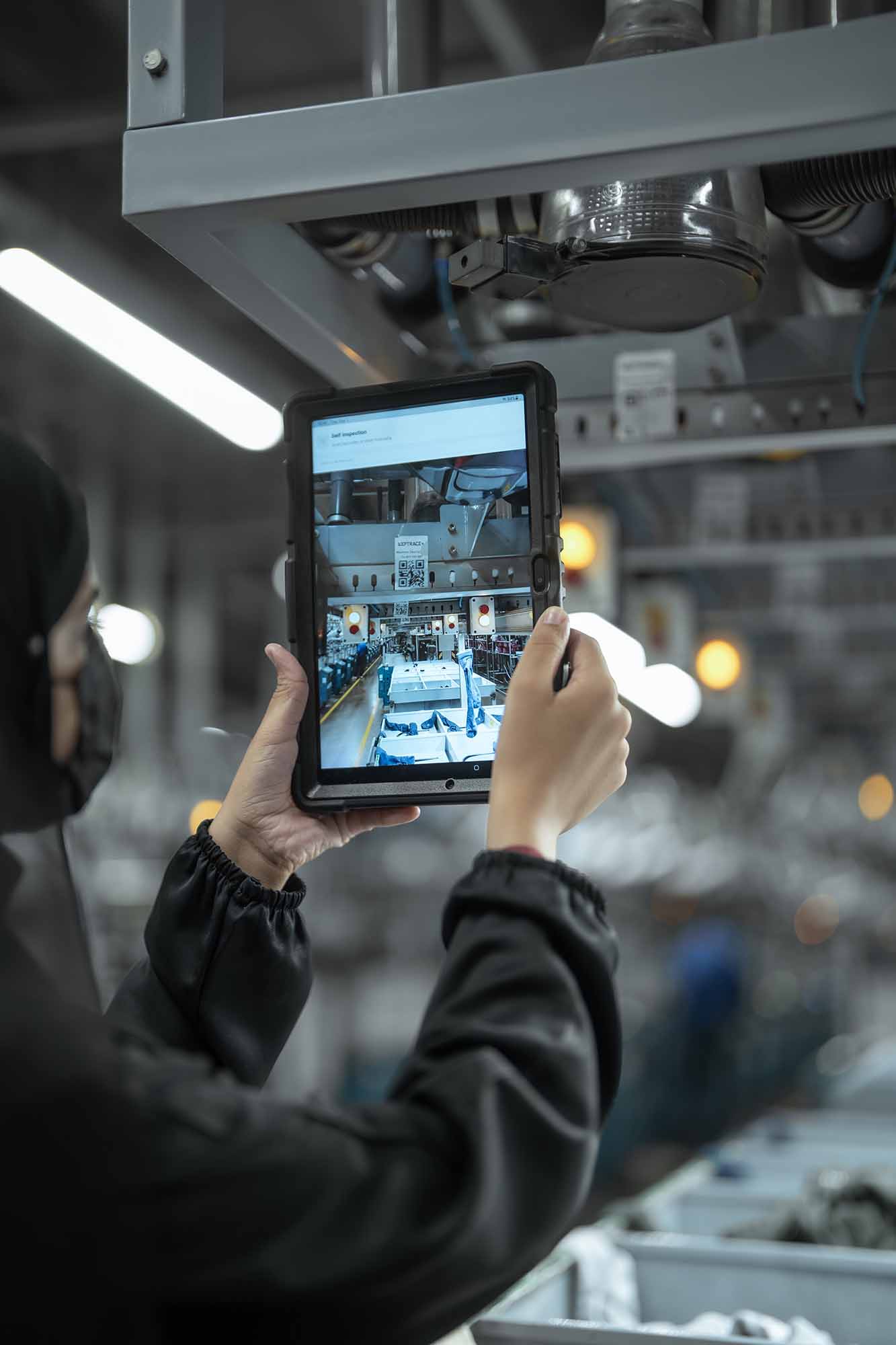
Interloop's Looptrace
OR: Doubling revenue while investing heavily in sustainability challenges the perception that responsible manufacturing comes at the expense of commercial performance. How has your thinking around the relationship between sustainability and profitability evolved since launching Vision 2025?
NF: The instinct towards responsible resource use was never new for us. What changed over these five years was the scale of investment behind it, we moved from doing this well to doing it deliberately, at a size that could actually shift the numbers.
That's also why sustainability and profitability were never really a trade-off for us. The investment we made during Vision 2025 wasn't separate from the business, it's the same investment now showing up in our cost base and giving us room to grow. Vision 2025 didn't create that relationship. It just gave us a five-year window to prove it.
OR: WTiN increasingly hears manufacturers describe resilience – not just sustainability – as the defining priority for the next decade, particularly with regard to those aforementioned hurdles, including geopolitical uncertainty and supply chain volatility. Having completed Vision 2025, has your definition of long-term success changed, and what priorities will shape Interloop's next chapter?
NF: Resilience has become one of the most misunderstood words in business. People often associate it with simply surviving disruption. We see it differently. A resilient business doesn’t pull back the moment markets get uncertain. It keeps investing in what takes years to build, things like capability and culture.
That's probably the biggest lesson Vision 2025 has given us. Long-term success is not about predicting every challenge correctly. It’s about how quickly you can shift gears when the plan changes, which it always does. That's the mindset we’re carrying into the next chapter. That’s why we have continued to grow and win market share despite the extreme disruptions in our supply chains and global markets.
OR: If you were launching Vision 2025 again with everything you've learned over the past five years, what would you approach differently, and what advice would you give other textile manufacturers setting similarly ambitious long-term goals today, considering how goals are not yet being met in reaching sustainability?
NF: I don't think I'd make the vision less ambitious. If anything, I'd make it more adaptable.
When we launched Vision 2025, none of us anticipated the pace of geopolitical change, inflationary pressures or supply chain disruption that followed. Those experiences reinforced the importance of building flexibility into long-term plans without losing sight of the destination.
If I had one piece of advice for other manufacturers, it would be this: don't wait for perfect conditions before investing in the future. The industry rarely gives you that opportunity. Progress comes from making consistent decisions over many years, learning from setbacks and staying committed even when the path becomes less predictable than you expected.
For more information, visit www.interloop-pk.com.
Have your say. Join the conversation and follow us on LinkedIn