



Swedish lab, ArtSilk, is creating spider silk-inspired fibres using proteins made by microorganisms. WTiN speaks to the team about the technology and how they plan to scale up.
A Swedish lab creating spider silk-inspired fibres using proteins that are made by microorganisms has been recognised in H&M Foundation’s Global Change Awards 2026.
Founders, professor Anna Rising and researcher Benjamin Schmuck, at the Swedish University of Agricultural Sciences, are creating high-performance, biobased materials that are both recyclable and biodegradable.
Rising was drawn to spider silk as it is one of the toughest fibres known and is biodegradable if produced under ambient conditions.
However, spiders produce very little material and, as Schmuck explains, are cannibalistic, so are unable to farmed.
“If you want to utilise this material, we must use recombinant methods – we must produce these proteins with some other organisms.”
Schmuck tells WTiN that eventually the research team wants to spin off and establish a company.
He says: “When I joined the lab, six years ago, we were producing proteins in what we call shake flask cultures, which are simple glass vessels where we grow microorganisms. I’ve started to scale up this production process using big fermenters and it’s worked well. Now we can produce spider silk proteins on a kilogram scale.”
ArtSilk’s research
Prior to this Rising spent decades investigating how spiders spin their silk, how the silk gland works, what happens to the proteins and what they look like. Based on this knowledge she began to design a process producing spider silk proteins in bacteria in a water-soluble form.
Rising explains: “This is a unique thing. Others who produce recombinant proteins for making materials produce them in insoluble clumps, which means you must use harsh solvents to solubilise the proteins and then spin them into fibres. This isn’t sustainable.”
As such Rising, Schmuck and their team have sought to create water-soluble spider silk proteins without toxic chemicals or high temperatures.
By doing this they can isolate the proteins and spin them into fibres using the same mechanisms as spiders.
“It is a completely water-based process, we only lower the pH from 8 to 5, so it's just a slight acidification of the environment, and that leads to the polymerisation of the proteins into a very tough fibre,” explains Rising.
She adds: “We’re taking the genes, from the spider, that encode the spirit proteins and inserting them into the microorganisms. So, the only thing we do is culture these microorganisms that will then produce the spider silk proteins for use.”
Now that they have seen success with spinning the fibre and have a stable multifilament extrusion process, ArtSilk is optimising parameters for washing and stretching to make enough material to make a yarn.
Rising envisions the fibres being used in fields such as high-performance textiles; the manufacturing of protective gear and sports equipment.
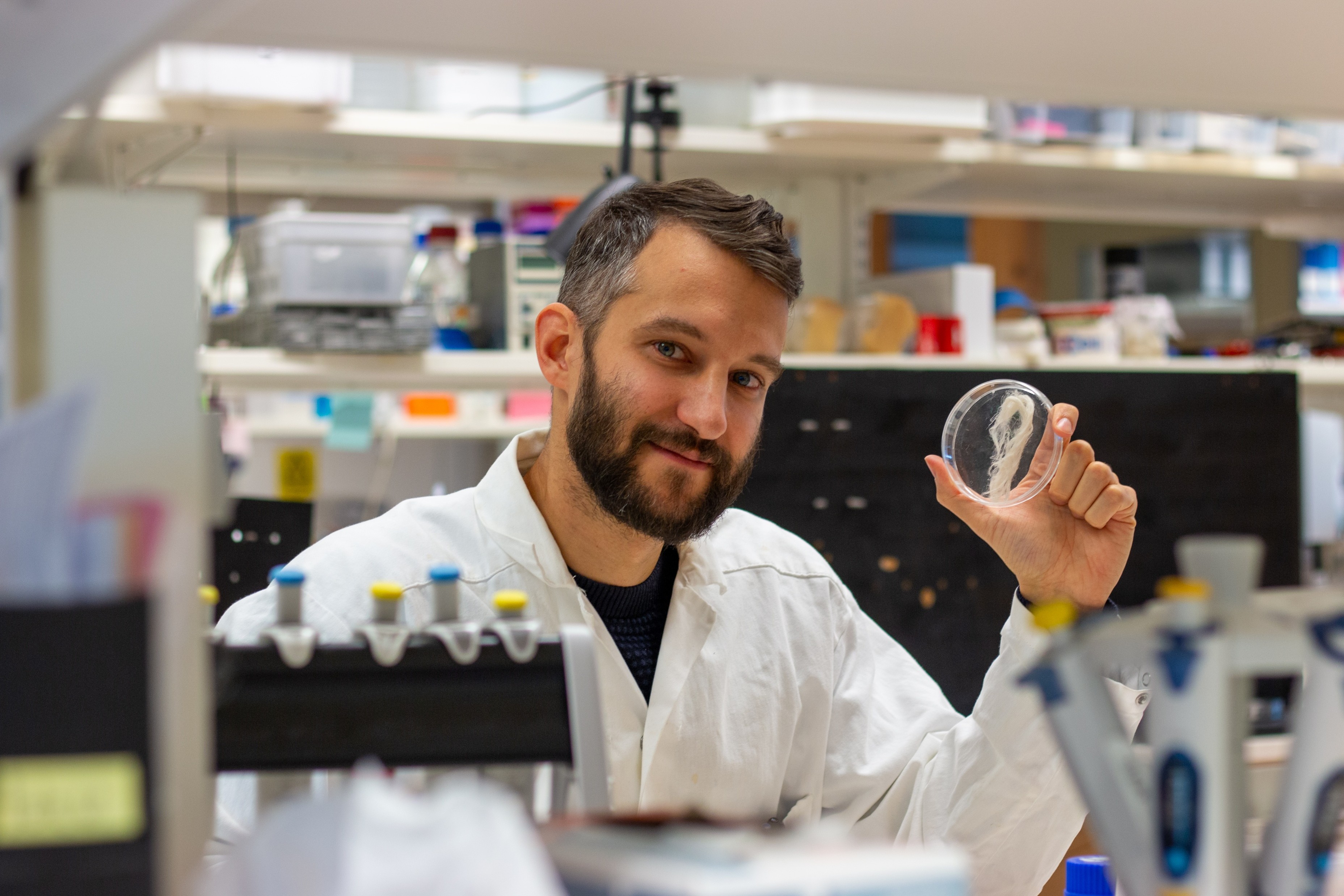
Researcher and founder of ArtSilk Benjamin Schmuck. Credit - Lisa Chroisty
Sustainability becomes a core requirement
Schmuck says: “The textile industry must move away from the non-sustainable fibres they use today. It’s already started from a consumer level as people are aware of the clothes they buy, where they come from and what impact they have on the environment. But also, they will come from a political standpoint as regulations coming in require companies to use more ecofriendly alternatives. Up until now there has been a shortage of alternatives, but now they are popping up all over the place.”
Although there are many biobased alternatives, across the research stage all the way up to the market, many remain expensive or exhibit limited mechanical properties, according to Rising. Additionally, she adds, that some of those new fibres may not be biodegradable at end of life.
Since trade-offs are very common among existing fibre alternatives, ArtSilk hopes to create a price-competitive solution that addresses many of the challenges faced by biobased fibres. This, they believe, can be achieved because the ArtSilk concept allows “full control of the fibre” as all engineering is implemented at the DNA level.
“We can engineer our fibre, not by chemistry, but by changing the DNA, which changes the proteins, which can spin fibres with unique properties,” says Schmuck. “So, we can introduce functions, we can engineer mechanical properties, we can also make magnetic fibres and electronically conductive fibres, so we have extreme versatility.”
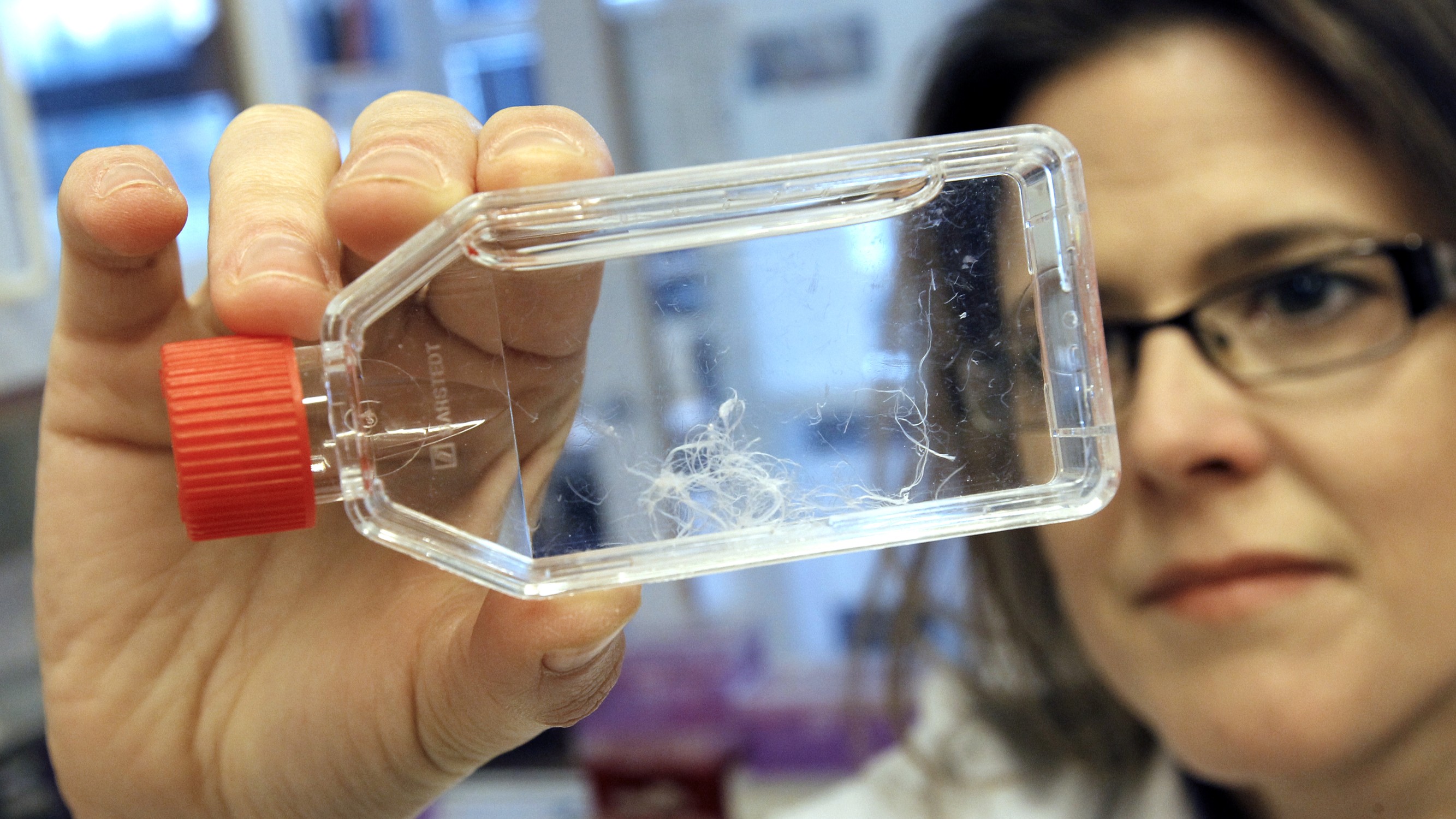
Professor and founder of ArtSilk Anna Rising. Credit - Hans E Ericsson
Integrating biobased fibres
Despite the potential Rising and Schmuck foresee in their technology, they are aware that there are challenges to overcome.
Schmuck says: “Our fibres are produced via wet spinning, which is a mature and widely deployed industrial technique. However, continuous wet-spun protein filaments and their subsequent textiles represent a novel class of materials. Consequently, certain downstream post-spinning processes such as drawing, texturizing, and high-speed yarn conversion may require targeted equipment optimisation and process customisation.”
Rising adds that cost is also a challenge, which ArtSilk has “partially solved”.
She says: “Normally, protein produced by microorganisms are purified by chromatography, which is very expensive, or as insoluble clumps, which makes the proteins non-functional. We found a way to isolate the soluble proteins from the microorganisms with a very simple method that is both time and cost efficient – reducing costs by 99%.”
Schmuck adds: “Rigorous research is vital for inventing novel materials, but impressive laboratory innovations often stall when scaling becomes challenging. This is not a problem that researchers and innovators can solve in isolation. While innovators must design with industrial compatibility in mind, there is a financial and translational bottleneck that prevents many promising materials from ever reaching the market, which is why programs like the H&M Foundation GCA are so essential.”
Scaling up and moving forward
Moving forward, Rising says it’s “important” for ArtSilk to create a prototype textile or yarn to exhibit. This she adds, will be the moment when they can say they are ready to start a spin off company, find investors and partners in the supply chain that can help them fit their technology into existing supply chains.
She says: “We will need investors that are willing to take the risk and invest money to scale. But this this is always the same with new technology. At the beginning they are more expensive and you need to build your infrastructure accordingly.”
ArtSilk has received interest from brands, which Rising says is very useful for the team to understand what brands want from sustainable, biodegradable yarns.
Recognition in the form of H&M Foundation’s Global Change Award is a “big game changer”, Rising says.
“It’s really nice after all this time to get this recognition. I am so happy for the network that we get through this prize. Also, of course, the attention. I think it will be easier for us to connect with stakeholders.”
Each winner receives a EU€200,000 grant and joins a year-long GCA Changemaker Programme. Through a combination of systems thinking, expert support, and industry connections, the programme is designed to help turn early-stage ideas into solutions that can be tested, refined, and brought into the real world.
ArtSilk hopes this recognition gets them further towards commercial implementation and their material being accepted by both the industry and consumers.
“This is maybe one of those alternatives for transitioning to a more sustainable textile economy.”
Have your say. Join the conversation and follow us on LinkedIn