



WTiN speaks to Anna Triponel, CEO and founder of Human Level about how the fashion and textile industry are responding to the role of artificial intelligence (AI) across the supply chain.
Human Level is an advisory firm that propels businesses to be human rights proactive in a rapidly changing climate. In the fashion and textile industry Human Level works with a wide range of companies to help design human rights and sustainability strategies that meet external and human rights expectations.
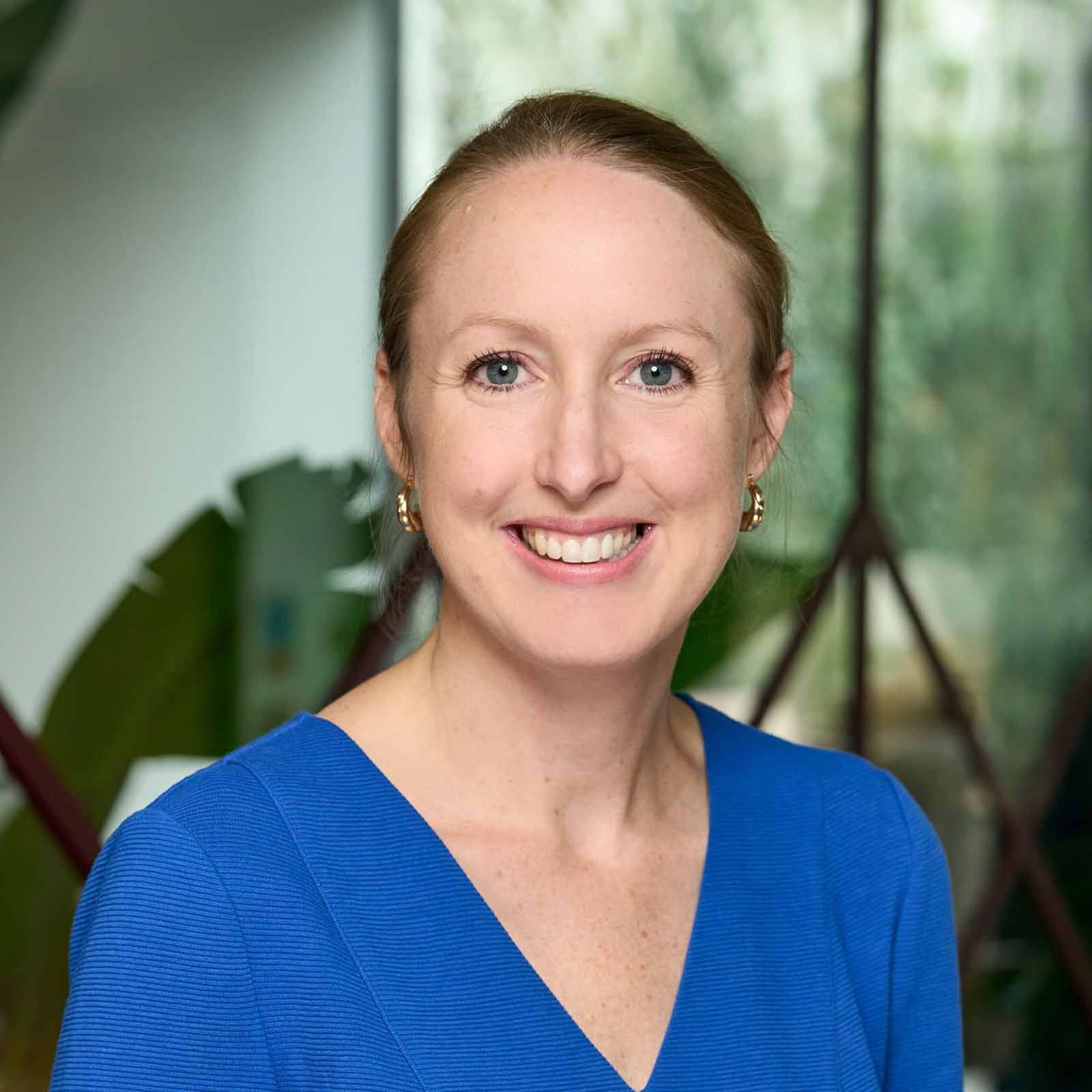
Anna Triponel, CEO and founder of Human Level
In this episode, Triponel speaks about the role of AI and automation in textile sector. She delves into how digitalisation is driving change within the industry and what the biggest risks for workers and other actors in the supply chain are.
We also touch upon the EU’s AI Act, which addresses the risks of AI and positions Europe to play a leading role globally. Triponel also speaks about where AI can improve work and create value and what business leaders should be doing now to keep up and stay ahead of this change.
Throughout the episode Triponel references The United Nations (UN)’s Preliminary Report of the Independent International Scientific Panel on AI: Evidence-based assessment of opportunities, risks and impacts of AI.
Learn more at wearehumanlevel.com.
Have your say. Join the conversation and follow us on LinkedIn
-
Transcript
This transcription has been AI generated and therefore may have some inaccuracies.
Ep. 158: Navigating the impact of AI in textiles
WTiN speaks to Anna Triponel, CEO and founder of Human Level about how the fashion and textile industry are responding to the role of artificial intelligence (AI) across the supply chain.
WTiN: Hello and welcome to WTiN's Industry Experts Podcast. I'm Abi, WTiN's Features Editor, and your podcast host. In this series, we speak with industry professionals from trade organisations and brands to startups and manufacturers about the trends shaping the textile and apparel industry and their businesses' role within it. We cover everything from circularity and recycling to automation and AI. We quiz the experts in the field about their products and ideas across the huge spectrum that is the textile industry.
In this episode, I am joined by Anna Triponel, CEO and founder at Human Level. Human Level is an advisory firm helping businesses to be human rights proactive. We have previously spoken to Anna about her role in forming the EU's Corporate Sustainability Due Diligence Directive. In this episode, we delve into how AI and automation are changing the textile sector and speak about what is driving this change. Anna touches upon the EU's AI Act and the conversations she has had within the industry.
Hi Anna, welcome back to WTIN's Innovation Podcast. Today we're going to talk about how fashion in the textile business around the world using AI and automation. So please can you tell us how you are seeing and anticipate that AI will change apparel business models?
Triponel: Yes, the big question. Thank you so much, Abigail, and thank you for having me back here. I'm really thrilled. Yes, so obviously, AI is changing all sectors, but differently. And in the fashion and the apparel sector, we're seeing a number of changes that have started and, of course, will accelerate. You know, that's just a recent report that came out saying it's not in a matter of years it's in a matter of months. You know, it's like very fast. Design is becoming faster, cheaper, more personalized with generative AI that can produce, you know, so many design concepts in seconds, analyse fashion trends, and tailor collections.
So, design is changing. Manufacturing is becoming more automated. Now, of course, that's not just AI, but it's also combined with robotics and computer vision. So, we're starting to see, you know, the automation of parts of the garment manufacturing in some areas more than Others. We're seeing that happen. The supply chains, of course, becoming more intelligent, like we're starting to understand much quicker where demand is going, the forecasting, how to optimize our inventory. So it's really helping companies see ahead and sort of save costs, right? When it comes to supply chain management. Retail is changing a lot. We're seeing the popup of virtual stylists and AI shopping assistants and people buying through AI rather than through Google or directly through websites. So there's virtual try on technologies. There's a huge push for retail to really get the right products into consumers' hands. So we're really seeing a lot of change that's happening.
But as I mentioned, this report just came out, which is very timely. I'll just conclude this answer on that. It's a report that came out from the UN's first ever independent scientific panel on AI. So it's experts on AI really designed to sort of go into where is AI going and what do policymakers need to know. And they did flag that AI is unlike any other previous technological revolution. Because it's going so fast and that it is absolutely transforming sectors and the physical labour within those sectors and the apparel sector is no exception to that trend.
WTiN: That's really interesting. I will Link to that report in the description. Thank you so much, Anna. It just feels like you can't escape it from any part of the supply chain at all. And so, with that in mind, what do you think is driving this change? Is it legislation, consumer demand, sustainability initiatives, for example, all of the above?
Triponel: Well, normally in questions like this, I tend to answer all of the above because they all have a Role. But actually, for this one, I would sort of say none of those, but actually much more this fear of missing out that companies have. That all the other companies are already using AI to become a lot more efficient, to make money faster, to help not waste money, use good resources. Their shareholders are asking for it. So if they're doing it, we need to do it. So there's this sort of race to leverage AI for maximum optimisation and efficiency that's happening. That's really this competitiveness spirit that's taking off in how we're rolling out AI. It really is the business driver that is pushing this AI rollout, which therefore is leading to these reports where we're saying, Okay, we're going at speed, but how are we doing it and what needs to be in place while we roll out this technology?"
WTiN: That is really interesting. Every week we see different companies like this is what we're doing, and then some day else it's what we're doing. They're all using these different technologies that are effectively doing the same thing. So I quite like that. The what do you call it now? The FOMO.
Triponel: The FOMO, yeah. The AI FOMO. That's exactly why.
WTiN: And. Yeah. Just what do you think? Some of the biggest challenges that you see in terms of how this AI rollout will impact people, and you know, jobs and labour, etc.
Triponel: Yeah, yeah, really, the elephant in the room here with this AI rollout that's happening. I mean, Abigail, you know, I'm obsessed with AI and how AI is impacting the workforce. I've been in this space, you know. For the 20 years of sort of workers and companies and how we advance in a rights respecting responsible business way. And without strong, deliberate, ambitious action now, AI will definitely, without a doubt. Widen significantly the inequality about widen significantly the inequalities that are already there between people that are working in companies. So it really has this potential of being the biggest inequality deepener the world has ever seen. So this is why we talk about it a lot. We really work with a lot of companies on it. It's so significant. On two different levels I'd like to talk about. So the first one being what we think a lot about, which is the quantity of the jobs. This feeling of, oh, robots will take over, AI will take over. It is true that there are jobs that won't be needed anymore in Manufacturing. We know that it's a big area for a lot of, especially women, 60, 75 millions of people all around. In some countries more than others. We know that it's a big source of employment and some of those people will no longer be needed, although we still will need people, of course, to oversee and still do some of the work, but there will be a reduced number of jobs available. And there's also a It applies to other areas beyond manufacturing like we're seeing in the design. Product development It's hard to be a younger person right now. There aren't roles available. Those roles are going out. But if you're senior and really experienced, you've got the roles and you're leveraging AI. So the jobs that are going aren't equal to everybody. There are some jobs that are going that are more the junior roles or the women led roles. Those are the ones.
That are going out the door. And the roles that are coming in are the jobs that are more, okay, I know about AI. I'm AI savvy. I'm the human in the loop. I'm the one that's overseeing this AI rollout. And that's mainly men because men are the ones who are more attracted to these kinds of professions in general. Although, of course. We're trying to change that. So what we're seeing is that the quantity of jobs is reducing and the jobs are left for those who already often have more power in the workforce than those are losing the jobs. And then you combine that with the second layer that I wanted to add. Which is the quality of the jobs. And here we talk a lot about AI is not equal to every I've just finished reading Sarah O'Connor's book, the FT journalist who wrote the book ‘We Are Not Machines’. And she writes about the fact that, and there are other studies, of course. But she writes it really in a really lovely way where she's talking about the stories of people and she's seeing it through the eyes of the workers, not beyond the power sector, but across sectors. And she's describing how AI can be used as your sort of freer, like your liberator, like how I use it. AI is like, oh my gosh, it can challenge me. It can help me get new ideas. Like it can really propel my thinking, but that's because I'm an experienced, I'm a lawyer, like I've done all of these things. But if you are in certain roles it's the opposite. AI becomes your master. You become slave to AI. So AI is used to put a lot more sort of pressure on KPIs. And to monitor those KPIs. It's doing more surveillance. It's monitoring what we call algorithmic management. So there's a lot of pushback of the quality of jobs being weaker and decreased because of how AI is being rolled out. So we're seeing lots of studies. I read everything I can out there about this, about how some, you know. That category of workers that already have the jobs that are harder, in a sense, are then suffering the most because of the reduction of privacy, increased stress, increased monitoring. So the quality of jobs is also at risk in certain uses of AI for those workers that are already more vulnerable.
WTiN: I didn't even think about the quality of the jobs. I don't think that's something that people actually would even start to think about. You just think about Loss of jobs, that's a really interesting perspective to actually analyse, and probably so much there in that space.
Triponel: So much there. You know. I'll just give you a quick example from Sarah's book because it was so profound to go into. She went into all these different kinds of jobs. Now, this is a bit of a tangent, it goes beyond the apparel sector, but I think it's very interesting for listeners. Like, you know, she was talking about how you go into, for example. Translation because you love the art of how you translate one word to another in another language, or you go into the art of writing books or writing scripts and have a you're going to the art of writing books or writing scripts, and because you love that writing process. But AI has come in and has taken off all of that joy because where they're trying to automate.
A lot of the agencies are saying, Here's a script that's already been translated for you. We're going to pay you half and just sort of tweak it so it sounds fine. Well, it's taken out completely the joy from that work, and you're getting paid half. And that's why you might have seen there was that big strike that happened a few years ago, the American Guild of Writers. Because they were being handed, they were fearful they were going to be handed scripts by their producers, the studios, saying, Oh, here's AI generated, just make it sound a bit more human. And they're like, No, that's not all how we work. We're humans and we are creative. We can use AI. But we've got to be the ones who choose. So that's really what's happening at scale is how we are drawn to a job that we might really enjoy. But with the AI rollout, that job might become something completely different, even if we still have the job.
WTiN: Yeah, that makes complete sense. I must say, my friends who work in like animation or even like in labs and stuff. You can see how it's like they have concerns as well. You can see how it's just infiltrating so many businesses. But with that in mind, what do you think business leaders could do to maybe manage, I don't know if this is the right word, but risks that are associated with AI and stay ahead in this growing digital world while also potentially reassuring their employees?
Triponel: Yeah, look. I completely understand this feeling of the sprint that's happening. Like, I get it. You know, I work with lots of companies at senior levels, and I understand that companies are like, we've got to get there and we've got to do it fast. At the same time, though. It is now that we bring in that layer to manage those risks now and in the future. So people often feel, well, we'll do it later. And once we've rolled everything out, and I'm always saying, I get it why you feel that later. Because now you're sort of a bit frantic in that role actually it's now. And there are companies that are doing that and they're putting those sort of the what we call the human rights lens or the responsible business lens or ethical AI lens onto their rollout now. And I can definitely see that then that is having significant business beneficial impacts over the longer run as well. Because of a number of things like people are more wanting to use AI because they're not fearful of it and they're embracing it and they're going a lot faster, in fact, a lot more business friendly doing it that way, even if you've taken a bit more time at the beginning. So I want to describe 10 briefly. 10 actions that I think are really key from everything I've seen and from everything I've read. So number one is putting people at the centre of the AI deployment. So it's a shift in mindset from we're rolling this out to you to we're doing it together and your workers are stakeholders in this AI transformation. So it's really that mindset shift. And IKEA, for instance. Has a really nice, really great approach where they talk about this and they say, look, no one told us how to do it. We don't have a guidebook. People are still figuring it out. But we very early on realize it's got to be alongside the people together we do it. So that's number one. The number two. And a number of companies have committed to doing this already in responsible AI policies, is carrying out impact assessments before rolling out, or just as we're rolling out the AI. So what kind of impact could this AI rollout have? How will it impact job quality? How will it impact that wellbeing worker privacy, discrimination, health and safety, for good and for bad? And of course, very positive impacts. Which we can go into in a minute, but the point is it's about what are those impacts before we roll those out and how will they impact some groups more than others? And we often see more impacts on the more vulnerable workers I talked about, whether it's women or lower income workers or younger workers. Number three is, yeah, you know. Just really this is about people being able to reskill and redeploy and upskill. So people are being asked for different skills sets today. In the World Economic Forum reports that come out every two years on the future of work, they've really put their finger on this and say, you know, out of 100 workers. Perhaps like 70 will need to have new skills in the next five years. So, that's on employers to really make sure that people have those skills. And sometimes those people can't get those skills. And what happens to them? You know, how do we transition them into other roles? I guess a good example of this.
Actually. I just want to give this example where when they replaced the agents A lot of the agents were replaced with this Billy Bot that responded to customers. Instead of saying, “Oh my God, sorry, we now have got much more cost efficient way." They trained them up to become sales design agents remotely and virtual designers. People loved it. They're like, “Oh wow, we get to design these spaces with our customers”. Then they made an increase in sales on remote sales. So it's like win win People get a more meaningful job that they enjoy. And then they also get more money. Number four, I'd say. Is engaging in the workers in designing the AI itself. So how can the workers be engaged to really think about what their role is and what role they can play? Trade unions can play a role there. I've started with some trade union leaders who are really eager to be engaged. Some of them have been. Number five, I'd say. Is thinking about using AI to improve the work itself and not just we're going to become more productive. We will need less people. It's again that shift in mindset from AI helps us to have more like a better working environment rather than to reduce jobs and save money. The sixth one is about establishing safeguards around worker monitoring because that's a big one.
And there are trade union reports coming out now saying it's just not okay how this AI is now really taking over the monitoring. So that means going into what data is being collected, how is it being rolled out. Who can access it? How long do we retain it for? Can workers get access to that? I just read a really interesting case study, actually a few about this. About companies that were committing to showing how they had made certain decisions and then being transparent about that and being open to challenge, to have discussions with the humans. So there's really a way in which you can use AI. But also bring in the humans. The seventh one is more about the last three are really more about bringing in a role as part of an ecosystem obviously your suppliers are also going to be rolling out AI and how are they doing it? And so you're supporting suppliers to do it in a way that is responsible and risk based. So can you support them if maybe they are not running out AI and they're gonna lose out from this digital technology transition that we're seeing because they're in certain countries that don't have access in the same way that we might have in our countries, the buying countries. Let's say. And so how can you support those suppliers to be part of that AI technology in a way that is risk based and responsible. The eighth one I'd say is really Considering the fact that some people will be more disadvantaged than others. So, looking at that vulnerability we talked about the women workers, the informal, the older, the younger. There are just some people who will be a lot more impacted than others. And then the ninth one is being transparent about what you're measuring and showing people the KPIs you're creating. So, you know, how many jobs are we creating or how many jobs, yes, are we losing, but then how else are we navigating? That transition for people? Worker satisfaction. There's a lot now of companies trying to report more about worker satisfaction linked to AI and a few studies in Harvard Business Review showing the opposite, like how AI has, the studies have shown the dissatisfaction that's increasing. So let's be transparent about some of that as much as we can and how we're trying to change that. And then the last. But not least one is about considering your role as part of the ecosystem for responsible AI. AI is happening, it's here. It's being rolled out. We know it. And we know that the policy around it.
The ecosystem isn't strong enough to make sure that it is responsible AI. The authors of this UN report I mentioned have a really nice way of saying it. They talk about sort of a gap in governance. They say it's an evidence dilemma. They say the policymakers need the evidence, need the proof to make the laws. But it's evolving so fast. That we don't have the evidence fast enough to make the laws. So essentially, we have this policy gap, like a vacuum. And so that means that companies have a role to play to be part of that conversation and try and shape the ecosystem for AI roll out in the countries that they are in.
WTiN: No, thank you so much, Anna. That is fantastic. And so much there to think about. I really like the example that you gave about IKEA, and just thinking about that, what are maybe some other opportunities that you see for AI rollout in the textile and apparel sector?
Triponel: Yes, thank you for that question, because of course here we're talking about the risks and it is nice. I'm like, yeah, you know, significant opportunities of AI. Absolutely. You know, if well harnessed and we can manage those risks, AI can, and it's proven already, you know, can improve worker health and safety. Obviously by identifying hazardous tasks or predicting equipment failures, reducing exposure to dangerous working conditions. There's a lot there on health and safety that can be leveraged. Can definitely increase the quality of the work reducing the repetitive and low value work so that people can be freed up, their time can be freed up for the work that they really do enjoy more. So, taking off what they don't enjoy as much. Yes, supporting the better workforce planning. I know when I'm on the ground in some of these factories. A lot of the time the suppliers say to me, well, it's just poor planning. We get the orders and they've changed at the last minute, the volumes changed, and that we scramble. We have to then get more workers in or work overtime, Sunday nights, whatever it is. And that's because of the planning. So if AI can really support that workforce planning. The forecasting that definitely helps then the factories better manage their workers. We see things like the fact that it can help companies do human rights due diligence in a way that they are focused on what matters. So they can, yes. Or look at data at scale and then bring in the resource to really do the deeper dives in person so you're free some of your time for the more meaningful work. Another use that I think is very interesting is how AI is helping companies get information and training out in a much more accessible way, translating materials, making it much more user friendly. Even turning it into visuals and diagrams for workers. It's a lovely tool. Of course, that does mean that some work might go because those are doing that work, but it does mean you can do it at a much greater scale than before. So, yeah. There's a lot here. I know when I just did a speech in Copenhagen for the UN Global Compact on this topic and I asked the room, you know, what's the good and the bad? And yeah, there were lots of goods that were on the scale and there were of course the bad. But there is a lot of good that can be leveraged if we leverage it in the right way. It's nice to hear about some of those opportunities because as you said, we focus so much on the risk side.
WTiN: I think that it is nice to hear that that are obviously just as many benefits. And I feel you're in a really good position to answer my next question. So, we hear a lot about the EU AI Act and your background in law and stuff. Can you tell me a bit more about the EU AI Act and will complying with this law be sufficient for companies moving forward with this rise in digitalization?
Triponel: Yes, the EU AI Act will help. But it's not sufficient is the short answer. So the EU AI Act is the world's first comprehensive AI regulation, a bit like the GDPR, let's say, for privacy. So it really is a landmark. It's a global benchmark for AI governance. And it takes a risk based approach, which is one that I really like, obviously, because in my work. We take a risk based approach based on the UN guiding principles on business and human rights. So it's really about, well, if you are using AI in a way that can be viewed as high risk, like in a high risk category. Then you need to be doing certain things. So the high risk categories could be things like if you're using it for recruitment and hiring and sort of the things that we know bias can be entrenched by using AI. It's there already when humans. But it can be further entrenched through the use of AI. So like HR decisions and worker performance management and this sense of sort of outsourcing to AI for worker management, these are treated as high risk because they can significantly affect people's rights. And livelihoods daytoday in their work. When that happens, when it's highrisk AI system, companies then need to be looking at the risk, managing the risk.
Having human oversight, having data and quality data, documenting what they're doing and what's going on, and being able to have channels that people can raise incidents and they can respond to those. In essence, it does help this act does help companies think about risks before deploying AI and risk to People. Which is very helpful. And it does bring the human back. It really talks about meaningful human oversight. It does look into discrimination risks and it does look into transparency, which is very helpful. And I think the key is about the governance like, how do we strengthen our governance? And that's a really helpful feature. But at the same time, as we just went into. It's not all rollouts of AI where some might also have high risk, but aren't categorized as high risk under the Act. And then when it comes to the obligations, they are helpful, obviously, but I think it's helpful to take a step back and put them into the context of what's happening right now in the world on risk management. Which is that we have a framework for risk management of risks to people under the UN guiding principles on business and human rights, which is also being translated into EU law, the EU. CS triple D, the Corporate Sustainability Due Diligence Directive, which we also have talked about together, Abigail. And so for companies. It's not about meeting all of these different laws in silos. It's about actually applying a risk based approach of human rights to the AI rollout and considering how that can then impact people and what the actions they're taking to minimise those risks to people or remediate them if those impacts have happened. And that approach then would meet the soft law of the UN Guiding Principles. And the OECD guidelines, would meet the EU CSDD if you're subject to it or if you are contracting with a company that is subject to it who wants you to comply with it under contract. And it would help you with the EU AI Act, which is a risk based there might be some specificities, of course. Under the EU AI Act to add. But essentially what I'm saying is that it's really helpful for companies to take a step back and look at it through the lens of risk based on human rights, which is the UN Guiding Principles. And the UCS triple D, and then tailor it to AI on top of that, rather than the opposite. Because then they will get things like a more holistic approach to due diligence. They will apply it across to different areas and uses. They will have workers more engaged. And I think it will just be a much easier, in addition to being more holistic and more meaningful for companies to do it like that.
WTiN: Thanks so much Anna, that's really interesting to think about and how all those different acts will support and guide companies going forward. So, finally, for our listeners here, what is one key action you advise them to take now following this podcast?
Triponel: Yes, that's a good question. After my speech in Copenhagen for the UN, I had about 12 people coming up to me from different companies saying, Well. What can I do now?" And it's like, yes, of course, you wanna know an action now that can help, and otherwise it just feels a little bit daunting, you know, if you look ahead too much about everything that we need to be thinking about, but actually, you just think about what's the next step. And the next step is, A lot of the companies we were chatting with were saying that maybe my next step is to go back to my company and ask the question are we considering the risks to people from the AI rollout? Are we? And if not, how could we? So, that's basically like, are we asking that? And of course, how could we? The next simple step from how could we is to create a cross functional governance of some sort. So, none of companies Have cross functional committees for AI, where they include IT and technology. But are you including also HR? Are you including human rights and sustainability expertise? Of course, often they'll have legal already, but the legal is there, obviously. So having that cross functional governance will then help the company respond to and Surface where there might be risks and impacts that they can then focus on. And it won't be a one size fits all. It will look different depending on what that rollout is. So I'd say that cross functional governance coupled with asking the question is really the two actions, I would say.
WTiN: Thank you so much, Anna. And thank you again for joining us on WTIN's Textile Innovation Podcast. I am sure we will speak again soon.
Triponel: We will. Thank you so much, Abigail. And thank you to the listeners. And we'll chat again soon.
WTiN: Thank you so much for listening. If you have any questions or want to learn more, you can follow us on LinkedIn at World Textile Information Network. you can contact me directly at content@wtin.com If you are interested in sponsoring an episode of the podcast, please email sales@wtin.com Thank you, and we'll see you next time.