Otis Robinson investigates the potential of additive manufacturing in the fashion supply chain through conversation with experts on 3D printed textiles, garment design and industrialisation.
Introduction
In early September 2020, at the ARS Electronica Festival, technology company Stratasys unveiled collaborations with established fashion designers Julia Koerner and Ganit Goldstein [1] – a stark reminder of the resilience of the textile and fashion industries, whose persistence in the face of a global pandemic remains strong.
The collections utilised Stratasys’ PolyJet 3D printing technology to produce luxury examples of direct-to-textile 3D printing. The resulting garments were said to imagine what fashion design could look like when combining the geometric and aesthetic freedom of 3D printing with the comfort of fabric.
But, arguably more importantly, it was suggested that the collaboration could substantially support and push the proliferation of the mass customisation of garments [1]. It’s undeniable that on-demand mass customisation is where the textile and fashion industries are headed in the next decade, and many believe 3D printing will be the technology to strengthen the leap [2].
3D printing, otherwise known as additive manufacturing, is a technological process so advanced that its potential has largely laid dormant as industries catch up with it, particularly in the fashion industry. Today, its prospective impact is reaching realisation across the supply chain, from manufacturing to design to finished garments and even textile construction from scratch.
And its use cases have increased during the ongoing Covid-19 pandemic. For example, multinational garment designer and manufacturer Adidas collaborated with technology company Carbon to produce 3D printed face shields in support of Covid-19 protection efforts [3]. Elsewhere, at the start of a tumultuous 2020, UK-based Ricoh 3D utilised its own 3D printing technologies to help support the production of PPE in the UK after shortages left healthcare workers at risk [4,5].
Thus, as industry remains in crises and many turn their attention to pandemic relief efforts, there remains a consistent focus on the future – one day, when the Covid-19 outbreak is over, these pervasive and innovative technologies may offer a new normal. So, what is the true potential of 3D printing in the textile & apparel industry?
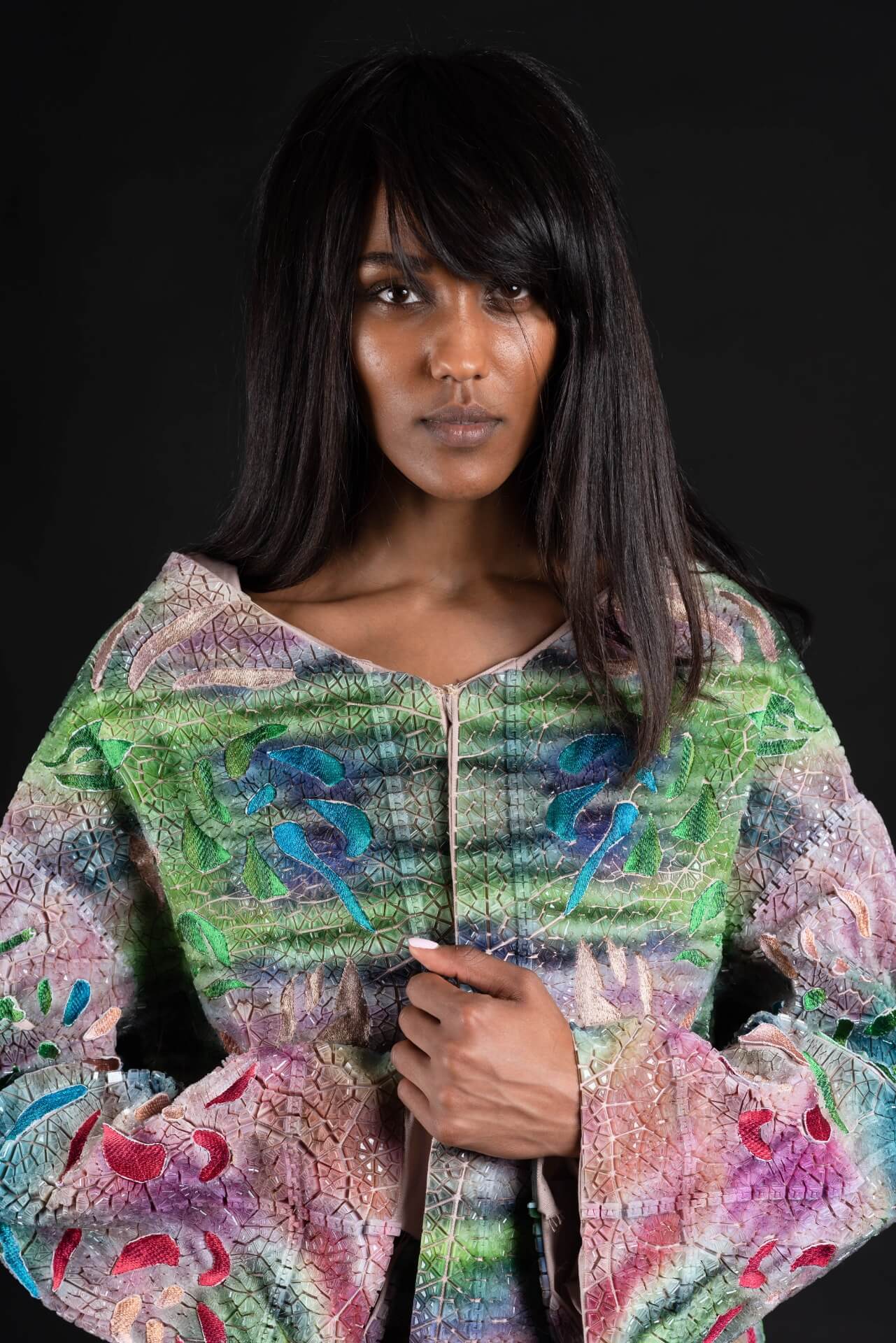
Ganit Goldstein teamed up with Stratasys to develop a colourful dress

3D printing in manufacturing
As hype builds around the technology, 3D printing is ‘fast becoming integrated’ with mainstream manufacturing [6].
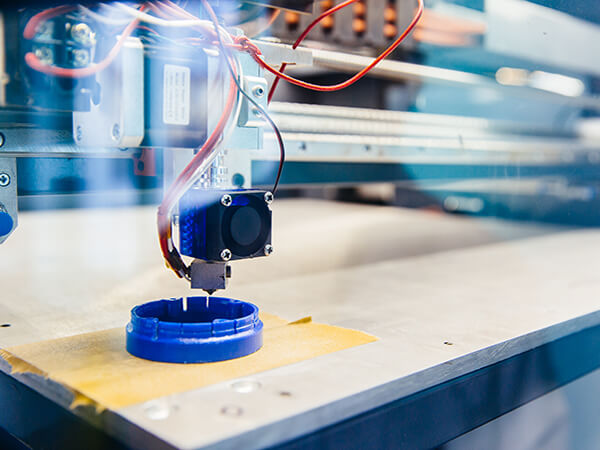
Additive manufacturing, a title interchangeable with 3D printing, describes processes that can create objects in a layer-by-layer fashion. More often, the process involves the construction of a three-dimensional object from a computer-aided design (CAD) model or a digital 3D model [6], and refers to the many ways that objects can be created through the depositing, joining or solidification of a material under computer control [7]. Its automated and on-demand nature makes it a perfect solution to mainstream manufacturing bottlenecks.
Traditionally used for prototyping, additive manufacturing has fast become an idealised machine that can print functional components and parts for use in the manufacturing system [7], with many having posited its technologies as capable of reducing the time and money needed to outsource maintenance. Subsequently, manufacturers today can use 3D printing technologies to print spare parts on-demand – solving issues around stagnating or interrupted production processes [8]. Its applicability is sector-agnostic, though is posited to benefit the aviation [7] and automotive industries [9] predominantly.
Although this application focuses on bringing manufacturing maintenance in-house, its success has generated explorations of additive manufacturing in product development, too. The ability to produce functional objects from scratch is appealing to the fashion industry, where overproduction and waste generation stand as pervasive environmental issues. Consequently, the intrinsically creative nature of 3D printing has led the fashion industry down new avenues, where futuristic garment manufacturing concepts become entirely possible.
Printing textiles
For example, a sizeable chunk of fashion industry R&D focuses on ways to 3D print garments from scratch, which could offer brands a steppingstone from traditional mass production to on-demand textile manufacturing.
But the availability of such technology is few-and-far between. For example, TamiCare, a UK-based manufacturer, claims to offer “the only additive manufacturing technology for textiles” [10], thus has ‘no direct competitors’. The company’s process sprays layers of polymers and fibres, one on top of the other, to create a textile named Cosyflex: the process is said to completely cut out spinning, weaving, processing and dyeing from the value chain, and saves massively on time. “It will take anywhere between seconds to minutes to create a garment,” says Tamar Giloh, chief executive officer (CEO) of the company. Giloh explains that the Cosyflex process can be used to print a variety of products on-demand, including T-shirts, shoe uppers and Giloh’s proprietary hygiene underwear product, Knicks, and has the added benefit of being completely degradable in landfills. The CEO explains the Cosyflex process automates a traditionally labour-intensive production process.
Giloh claims interest in the technology has been snowballing because of its niche position in the market, alongside its green, environmental benefits. During our conversation, Giloh expands on this by sharing a confidential study conducted by third party data providers that explores the potential impacts and limitations of this technology with regard to commercialisation and scalability. The document details its positive environmental impact – Cosyflex does, of course, cut out the spinning, processing and dyeing steps of the traditional value chain, saving water, energy, cost and carbon emissions – and further analysis claims that TamiCare has ‘no direct competitors’. However, Giloh says that despite all these commercial positives, brands are not supportive of the move towards the 3D printing of garments.
Many large brands are interested in the technology, Giloh explains, but have yet to ‘put their money where their mouth is’ and install Cosyflex lines at their manufacturing facilities, instead opting for a cheaper alternative – outsourcing production to purchase finished garments. A reluctance to purchase and invest may be a primary reason the industry has not yet seen more examples of additive manufacturing technology for textiles, and Giloh suggests that small companies with innovative technologies such as this rely on brand investment in order for their technologies to grow in use.
This lack of growth opportunity appears pervasive in the industry: elsewhere there is evidence of companies that offered similar 3D print technologies, only to have closed due to opportunistic hurdles. For example, Electroloom, a company launched on Kickstarter, revealed a self-titled device in 2015 capable of printing fabrics using a process ‘similar to the electroplating of metals’ [11], but by 2016 the company had ‘said goodbye’ due to “slow technical progress, significant scientific risk, a lack of a minimum viable product (MVP) and a poorly defined market opportunity” [12].
This supports other claims that research and development in this field has lagged, and some suggest this is due to its existence as a fundamentally alien manufacturing technology [13]. Nevertheless, technologies that print with fibres could offer a pathway to the success of 3D printing in the textile industry [13].
Additive manufacturing in design
But that’s not to say 3D printing technologies won’t find their use in the textile & apparel industry independently of unique textile additive manufacturing projects. On the contrary, the use cases of 3D printing machinery applied within fashion design are strengthening. Here, modern designers in academia and fashion houses wield 3D printers in similar ways to digital textile printers. This new demand from designers has pitted several companies in competition to develop technology that can replace digitally printed ink with a 3D version [14] for printing on fabric.
The popularity of 3D printing in this sector is likely due to the untethered design freedom not common with traditional methods. Though the concept remains experimental – currently limited to academic and high-end fashion projects – many designers are pushing the boundaries by popularising the use of 3D printing on fabric.
For example, since New York Fashion Week (NYFW) last year (2019), the ability to 3D print directly onto fabric has drawn significant interest from the world of high-end fashion [1]: designers threeASFOUR and Travis Fitch boasted innovative designs on NYFW’s catwalk [1], while other designers including Zac Posen [14], Xie Zimeng [15] and Julia Daviy [16] have received press attention for their 3D print design work.
The use of this technology is essential, says Lori Wahl, senior instructor of apparel, textile and design at the University of Idaho in the US. Wahl believes 3D printing – for prototyping and printing directly onto fabrics – to be an imperative learning tool for future designers. As such, Wahl incorporates the technology into her courses to help her students develop diverse portfolios, alongside workshops on laser cutting and e-textiles among others.
Wahl’s belief comes from experience watching the technology grow in popularity. Throughout the late-1990s to early-2000s, Wahl was employed by international sportswear brands as an in-house product developer and designer. It was around the time that brands started to ‘push the boundaries’ with material innovation and proprietary fabrics, Wahl explains, which meant the team often had its eyes on new technologies – but it wasn’t always easy to get hold of it, particularly in the early days.
“When we would want to do custom components – such as custom zipper pulls – we were always told no because it costs too much to open a mould. But at that time, over in the footwear [design department], the designers were using 3D modelling to prototype shoes. It was fascinating,” Wahl explains. “[But] it was very expensive technology at the time.”

3D printed gown designed by Michael Schmidt and Francis Bitoni, modeled by Dita Von Tease. Image credit Shapeways
Around a decade later, when the technology began to permeate traditional luxury fashion (Wahl cites Iris van Herpen’s work and a famous dress worn by Dita Von Teese, designed by Michael Schmidt and Francis Bitoni as notable moments in pop culture for 3D printing) she says that it began to solidify that additive manufacturing in fashion and fashion design was going to truly impact the apparel industry.
Now, in her classroom in Idaho, the instructor has access to two desktop 3D printers – the LulzBot TAZ 6 and the LulzBot TAZ Workhorse, technologies owned by Fargo Additive Manufacturing Equipment (FAME) 3D. Wahl believes that teaching the use of 3D printing and additive manufacturing technologies prepares the new generation of designers for important product development work throughout their careers, particularly when working for large companies that develop proprietary fabrics or request specific design properties.
This belief translates into the 3D print work the students produce, whereby they test the limitations of the technologies to try to push boundaries. In one experiment, a student attempted to create a “pointy-looking, aggressively studded type of fabric” with a soft filament – the resulting fabric would ‘look painful but feel soft’ – but the sharp points wouldn’t hold their shape.
Other limitations include what Wahl names ‘the problem of adhesion’. Some fabric will allow filament to flow between the fibres of the structure of the yarns, which allows better adhesion of 3D printed parts to the garment. But, as with all printing methods, the process involves a lot of heat, which is not suited to all fabrics.
“There’s the challenge of making sure your fabric does not melt, but there’s not a lot of data with 3D printing on fabrics – I have not yet found a list that says which materials are good [or bad] to 3D print on. It’s still a developing area.”
Although this work remains in its infancy, Wahl says it will prevail by encouraging experimentation. In other words, the process is not yet ripe for full fashion industrialisation because it requires rigorous trial-and-error testing.
“I know with footwear it’s already commercialised; we have 3D print farms that are printing, but I have not heard yet of anything like that on the apparel side where we’re fully 3D printing complete garments,” Wahl explains. Over the years, the instructor has noted many conceptual commercialisation plans, including a project by Danit Peleg that explored downloadable garments for printing at home. “This has some appeal to me because one of the challenges in the apparel industry is [overproduction]. One advantage of working in the 3D printing area is that we can print on-demand. If someone really wants it, they can download a file and print it themselves or send it to a print house to have it printed.
“[Overall], the technology is going to be used in different ways,” Wahl concludes. “Yes, it can be used directly on fabrics to give fabric different features, but it also allows us to model things very quickly – in the case of felting, we can create any shape we want in a 3D environment and we can felt over the top of it – so it could be used to create tools to help us get to the next step.”
Functional footwear
3D printing used for prototyping and increased functionality in footwear is exemplified in the work of brands both big and small. For example, Silvia Fadó, a designer based in Spain, who was introduced to the technology during her master’s degree in fashion footwear at the London College of Fashion, Cordwainers in 2012. Aware of the ‘endless possibilities’ in prototyping and creativity, Fadó welcomed the technology and became inspired by its similarities to engineering and architectural disciplines.
Fadó’s designs are incredibly unique and feature functionalities like hydraulic heels. The idea was to translate the impact absorption from sportswear footwear into luxury fashion high heels, she explains, which would create a cushioning effect. Fadó even worked with a vascular surgeon – “I develop my projects with the aim of improving high-heels,” she says – and claims that they certified “that the shoes present an improvement in blood circulation compared to other high heels in the market”.
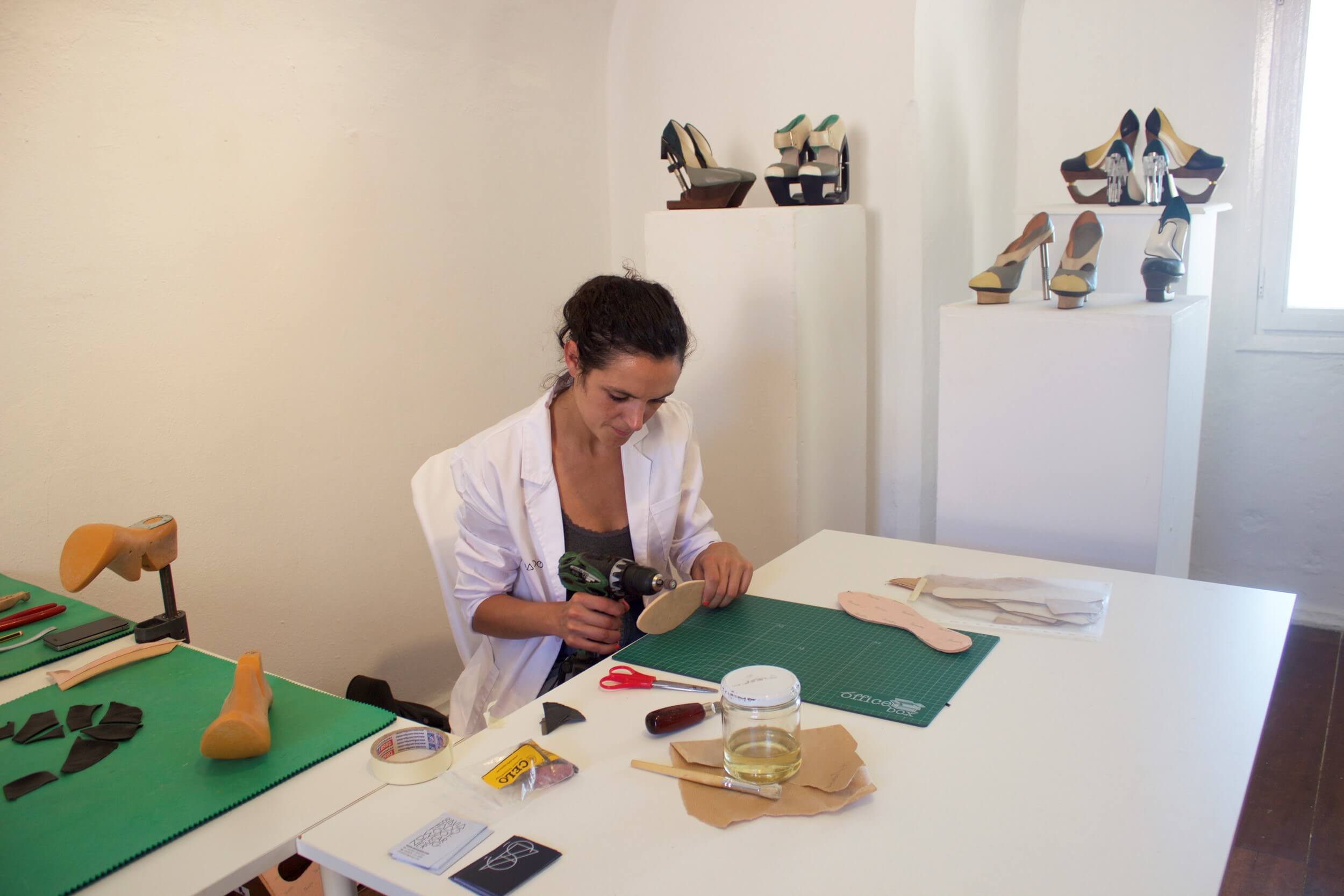
Designer Silvia Fadó in her studio
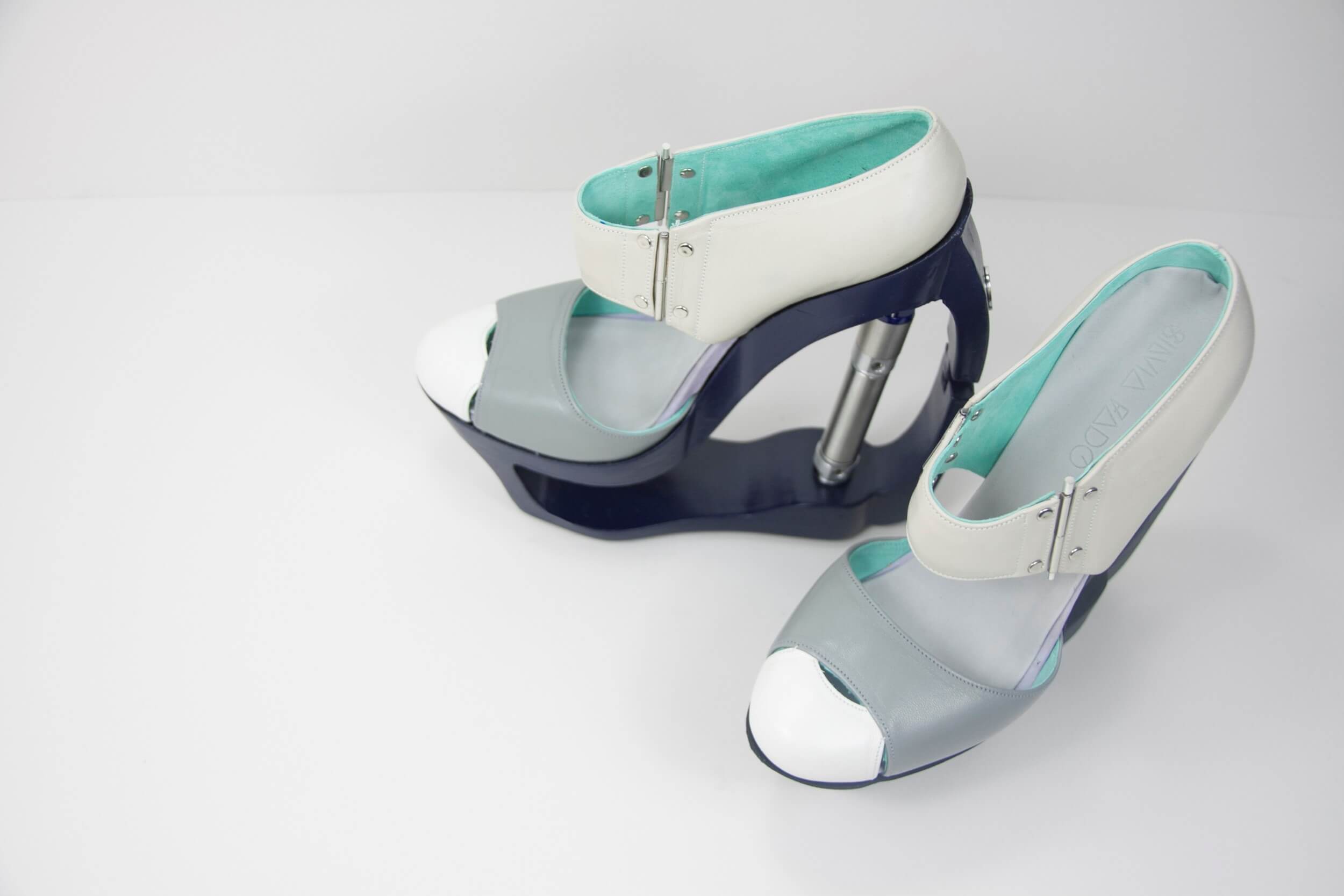
Silvia Fadó's shoe designs incorporate 3D printed elements
Increasing the functionality and potential of luxury fashion design was the primary appeal of 3D printing for the designer: “I am inspired by small mechanisms, and I wanted to translate these ideas. It would be impossible to make them by using traditional methodologies – making moulds, which involves huge amounts of time and money. With 3D printing, it was possible to make all the customised parts, test them, and improve the technology as many times as needed.”
Fadó utilises an ‘affordable’ multifunctional Zmorph printer, which features interchangeable heads and is suited for prototyping and for the final pieces. The shoe designer also collaborates with a filament company named Smart Materials 3D in order to experiment with new materials that can be 3D printed for footwear to generate a range of characteristics such as strength, lightness, flexibility and more. “An example of this is in my collection, Lucid Matters, which was printed in Polypropylene,” Fadó explains. Other materials equipped by Silvia Fadó include carbon fibre and thermo colour-changing filaments.
Fadó’s designs have featured on runways around the globe, most notably at Paris Fashion Week and NYFW. The response from industry and customers has been overwhelmingly positive, Fadó says, and she expects that the presence of 3D printing on the runway will increase over the years – although she explains that sometimes, a more traditional technique may still be the best option.
This way of working has huge potential, Fadó explains, but echoing Wahl’s sentiment, she says there are limitations: “In my experience [with] the filament machines […] certain angles can generate problems and throw a lot of material during the print[ing process]. Nowadays, there are other technologies that are much more effective, but they are expensive because they are at industrial level.”
Industrialising 3D printing
Though the contemporary capabilities of 3D printing are slowly fleshing themselves out, there are indeed bottlenecks to full industrialisation in fashion design, as highlighted by Wahl. First and foremost, in fashion, these bottlenecks are tied to material limitations, but doubly pervasive is the often-overlooked post-processing of printed parts, which is essential for aesthetic and functional purposes in the fashion and garment industry.
AMT, a company focused on the industrialisation of additive manufacturing technologies, offers post-processing finishing technologies that can provide this service: to increase the functionality and aesthetic of printed parts for use in fashion. The company was founded when current CEO Joseph Crabtree dove into the additive manufacturing market and found that the post-processing of 3D printed parts was an undervalued domain.
“Post-processing is the stepchild of the additive manufacturing industry,” says Noud Steffens, chief revenue officer (CRO) at the company. Steffens notes that in industries where 3D printing is popularising – like in fashion manufacturing and design – post-processing can frequently be overlooked.
In industry conversation, it is not common knowledge that once a 3D product is printed it is not completely ready for market, he says. Consequently, in the vision for a fashion supply chain dominated by 3D printing, it is essential that the industry understands the importance of post-processing. Aside from the typical adoption limitations, this is a major hurdle to the industrialisation of 3D printing, Steffens explains, and even today, much of post-processing is manual and thus 3D printing is not ready for the mass-scale production of products.

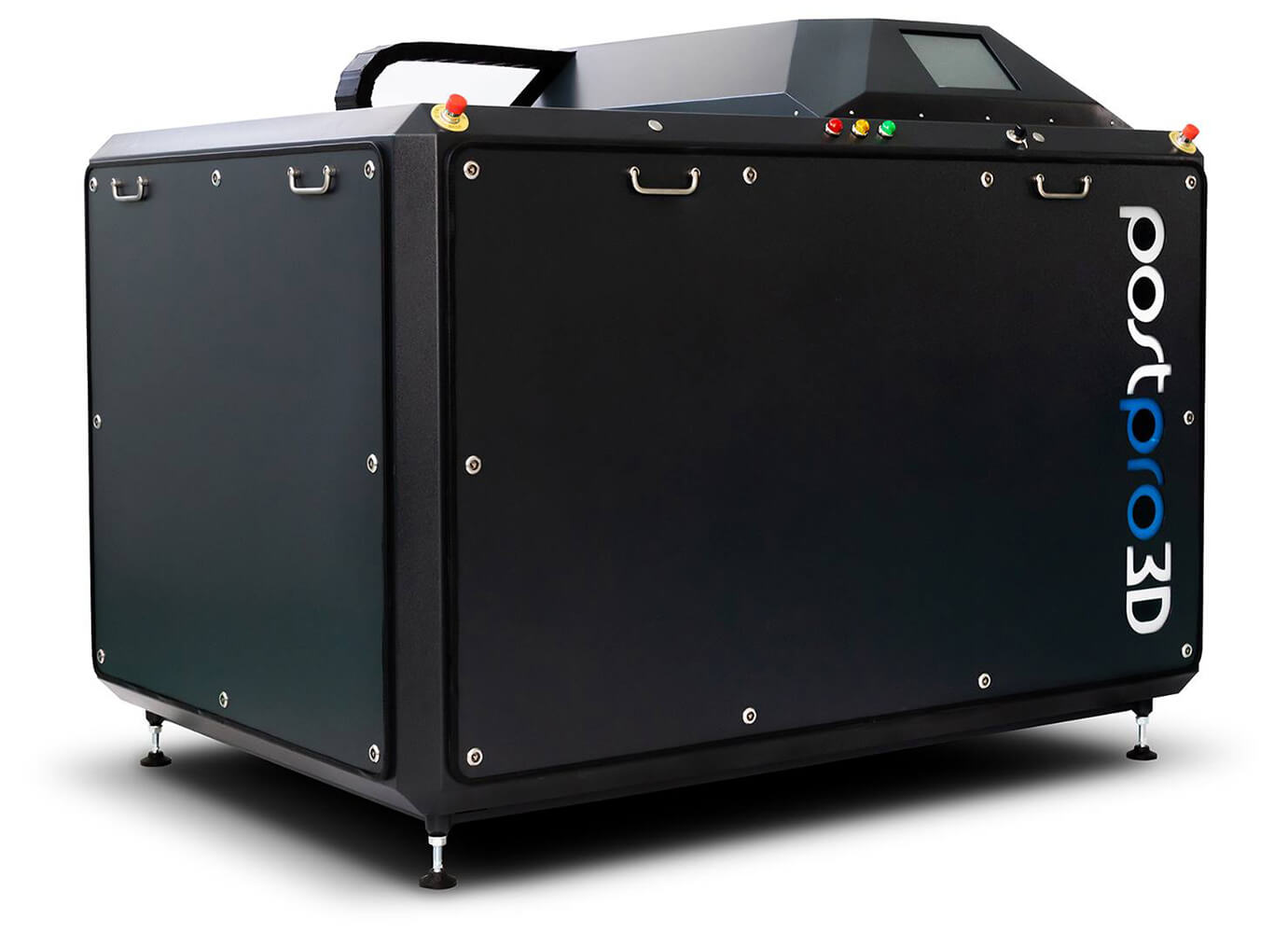
AMT's PostPro machine
“To make additive manufacturing a viable solution for mass-scale production, you need to also address post-processing,” he says. AMT believes it has done just that – the company offers an automated technology titled PostPro, which utilises a process named chemical vapour smoothing. “We envision that we bring solutions to the market that are automated and cover the full, end-to-end post-processing chain.”
As industries turn to Industry 4.0 concepts and are drawn into the potential of 3D printing, post-processing (like that offered by AMT) is fast becoming a priority in order to increase the aesthetic and functional value of printed parts, particularly in the fashion design sector. For example, in using post-processing technologies, the performance of 3D-printed parts can be increased to avoid breakage; to seal the surface so the product works better with liquids; and even to create smoother surfaces to enable better dyeing and coating of the parts.
Footwear (as seen in Fadó’s designs), cosmetics, eyewear and fashion accessories like bags are sectors that are already utilising these 3D printing and post-processing steps, Steffens explains – not only for the aesthetic and functional potential, but because it enables a “better ability to respond to market and fashion demands”. It all adds up to one shared goal: the implementation of 3D printing technologies throughout the fashion design process.
“I think what we’ve seen in the past two years [in the fashion industry] is that 3D printing has become a solution that [sportswear and fashion brands] can actually use for commercial products,” says Steffens. “The demand for 3D printing is increasing because the benefits of 3D printing are becoming more obvious.
“The benefits are more customised, smaller production runs; closer [proximity] to the consumer; less inventory; and faster response time to fashion demands and changes.”
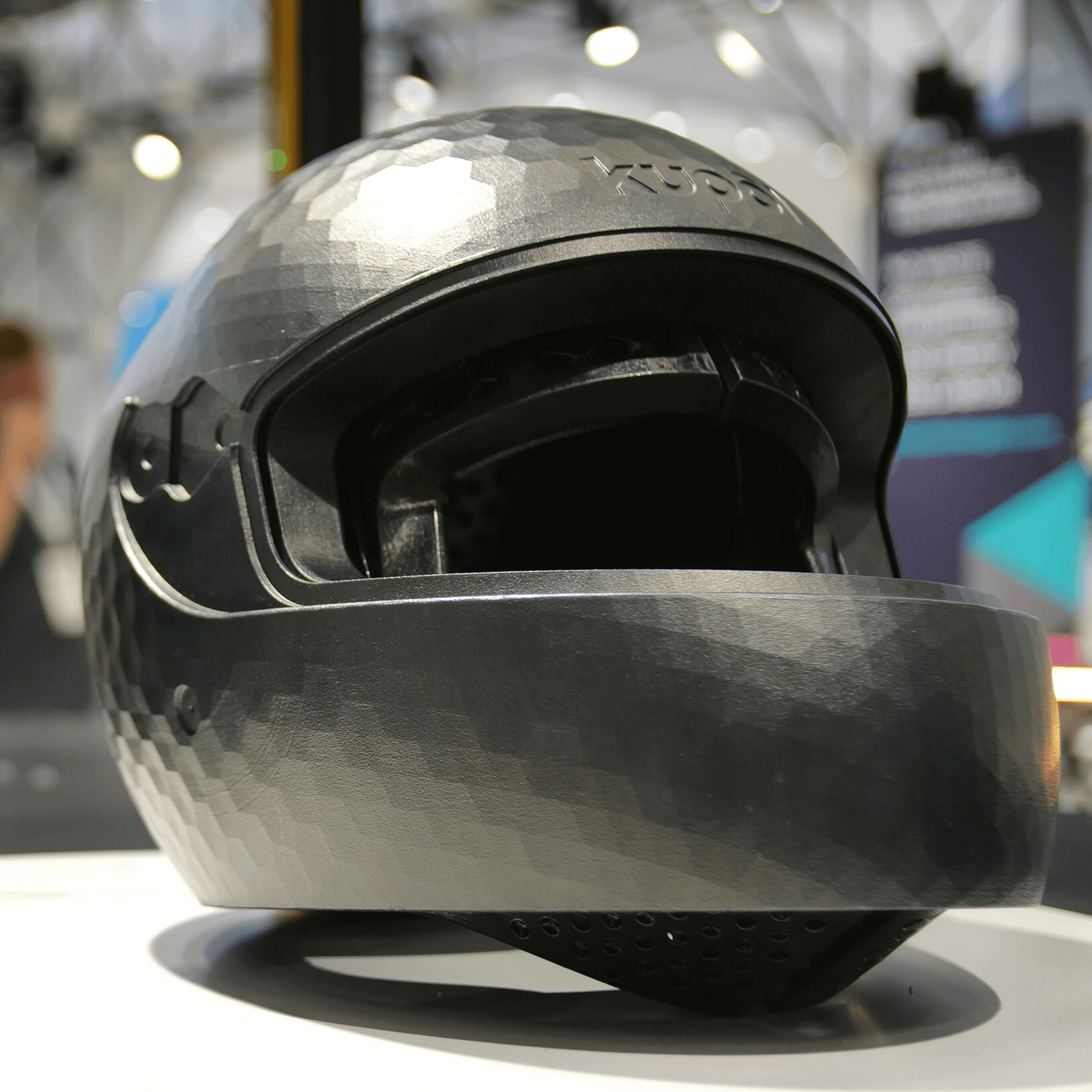
A Kupol helmet finished with AMT technologies
Steffens summarises that, overall, additive manufacturing also allows brands to compete with increasingly competitive fast fashion trends who utilise injection moulding processes, while doubly supporting movements to reduce overproduction through the proliferation of personalisation trends. Repeatability is another reason fashion brands are turning to 3D printing, Steffens claims, since bespoke, manual design may generate more inconsistencies in the final product than a 3D printer would. However, as evidenced with Fádo, 3D printing can also support independent, bespoke, luxury designers with niche perspectives.
Impact
Since 3D printing is already a prominent technology for prototyping, parts manufacture and the footwear industry, it comes as no surprise that the technology is slowly impacting the nature of garment and fashion design.
This use of 3D printing may inevitably lead to the development of rapidly produced, on-demand and customisable garments, which some believe could lead to the end of the traditional high street and birth of a new, interactive, digitised and immediate fashion experience [2]. It has also been suggested that, as it becomes easier for businesses to produce designs on-demand, that the need for freight services for sampling may lessen [17], which could ease the industry’s impact on the environment [18].
Though the concept is littered with hurdles to overcome – such as material, standardisation, industrialisation and post-processing limitations – there is undoubtedly an unwavering push from within the industry to adopt 3D printing as both a manufacturing solution and a design innovation.
References
[1] Robinson, O., “Customised fashion with 3D printing”, WTiN, 2020. [Online] Available: https://www.wtin.com/article/2020/september/140920/customised-fashion-with-3d-printing/ [Accessed 15th September 2020]
[2] Zapfl, D., “How digitisation affects the textile industry”, LEAD Innovation, 2019. [Online] Available: https://www.lead-innovation.com/english-blog/how-digitisation-affects-the-textile-industry [Accessed 11th August 2020]
[3] Owen, J., “Adidas 3D prints protective face shields”, WTiN, 2020. [Online] Available: https://www.wtin.com/article/2020/april/200420/adidas-3d-prints-protective-face-shields/ [Accessed 11th August 2020]
[4] Robinson, O., “Can lights-out manufacturing prevent supply chain disaster?”, WTiN, 2020. [Online] Available: https://www.wtin.com/article/2020/june/010620/can-lights-out-manufacturing-prevent-supply-chain-disaster/ [Accessed 11th August 2020]
[5] Smith, R., “Coronavirus: Steve Bull delivers masks from Telford to Wolverhampton hospital”, Shropshire Star, 2020. [Online] Available: https://www.shropshirestar.com/news/business/2020/04/14/coronavirus-former-wolves-and-england-footballer-delivers-masks-from-telford-to-wolverhampton-hospital/ [Accessed 15th April 2020]
[6] The Economist, “How 3D printers work”, The Economist, 2013. [Online] Available: https://www.economist.com/technology-quarterly/2013/09/05/how-3d-printers-work [Accessed 5th August 2020]
[7] Cummins, K., “The rise of additive manufacturing”, The Engineer, 2010. [Online] Available: https://www.theengineer.co.uk/the-rise-of-additive-manufacturing/ [Accessed 5th August 2020]
[8] Robinson, O., “HARP (high-area rapid printing)”, WTiN, 2020. [Online] Available: https://www.wtin.com/article/2020/january/270120/harp-high-area-rapid-printing/ [Accessed 11th August 2020]
[9] Darby, S., “3D printing on fabric”, WTiN, 2020. [Online] Available: https://www.wtin.com/article/2019/june/030619/3d-printing-on-fabric/?channelid=41525 [Accessed 11th August 2020]
[10] Tamicare, “HOME: Tamicare”, Tamicare, 2019. [Online] Available: www.tamicare.com [Accessed 18th September 2020]
[11] Hipolite, W., “The Electroloom Becomes the World’s First 3D Printer of Fabric – Launches on Kickstarter”, 3DPrint.com, 2015. [Online] Available: https://3dprint.com/65959/electroloom-3d-fabric-printer/ [Accessed 8th September 2020]
[12] Rowley, A., “Thanks and farewell”, Electroloom Blog, 2016. [Online] Available: https://medium.com/electroloom-blog/thanks-and-farewell-b0c128c3043f#.c52nk8a2h [Accessed 8th September 2020]
[13] Chatterjee, K. and Ghosh, T. K., “3D Printing of Textiles: Potential Roadmap to Printing with Fibers”, Advanced Materials, 2020, 32 (4). [Online] Available: https://onlinelibrary.wiley.com/doi/abs/10.1002/adma.201902086 [Accessed 8th September 2020]
[14] GE Additive, “Zac Posen x GE Additive x Protolabs unveil breathtaking 3D printing collaboration at the Met Gala”, GE Additive, 2019. [Online] Available: https://www.ge.com/additive/press-releases/zac-posen-x-ge-additive-x-protolabs-unveil-breathtaking-3d-printing-collaboration [Accessed 11th August 2020]
[15] Listek, V., “Chinese Designer’s 3D Printed Clothing Nominated for International Innovation Award”, 3DPrint.com, 2020. [Online] Available: https://3dprint.com/270543/chinese-designers-3d-printed-clothing-nominated-for-international-innovation-award/ [Accessed 11th August 2020]
[16] Gonzalez, M., “Revolutionary Fashion Designers Who Use 3D Printing in Their Designs”, WTiN, 2019. [Online] Available: https://3dprint.com/235318/revolutionary-fashion-designers-who-use-3d-printing-in-their-designs/ [Accessed 11th August 2020]
[17] Reeves, P., “Additive Manufacturing – a supply chain wide response to economic uncertainty and environmental sustainability”, Econolyst, n.d. [Onlinne] Available: https://web.archive.org/web/20140115023050/http:/www.econolyst.co.uk/resources/documents/files/Paper%20-%20Oct%202008-%20AM%20a%20supply%20chain%20wide%20response.pdf [Accessed 11th August 2020]
[18] Hardcastle, J. L., “Is 3D Printing the Future of Sustainable Manufacturing?”, Environment + Energy Leader, 2015. [Online] Available: https://www.environmentalleader.com/2015/11/is-3d-printing-the-future-of-sustainable-manufacturing/ [Accessed 11th August 2020]