
 |
| Paul Hulme, president, Huntsman Textile Effects |
The need for change in the textile industry today is being driven by powerful forces from both within and beyond the industry. Let’s first study some of the factors which bring us to this very critical situation.
The textile industry is one of the oldest and largest in the world. It has helped nations to grow their economies and improve the livelihoods of their people. For example, around 200 years ago, cities like Manchester in the UK were leaders in the world textile trade and this lasted all the way to the 1920s. Thus, many cite the textile industry as one of the key sparks of the Industrial Revolution.
Even in the chemical-manufacturing sector, the roots of many of today’s pharmaceutical giants can be found in textile-dye manufacturing.
The main reason textile manufacture is so attractive to developing nations is that it can provide significant employment for relatively low-skilled workers. When this coincides with widespread availability of raw materials such as cotton or, more recently, polyester, tremendous opportunity is created for economic and social development. For example, the textile industry in India – one of the largest textile producers in the world – contributes about 14% to industrial production, 4% to its gross domestic product (GDP) and provides direct employment to over 35 million people.
Fast Fashion
Rapid economic growth in Western economies during the latter part of the 20th century led to a consistent boom in consumer demand. The parallel rise in world population created demand for basic clothing. To satisfy these demands, brands and retailers realised they needed to source clothing in bigger volumes and at lower costs. This led to an incredible realignment of the textile-manufacturing industry as factories in the EU/US closed and were replaced by factories in China, India and, increasingly, places like Indonesia, Vietnam and Bangladesh.
Clearly, this comes with significant risk. Typically, within developing economies the infrastructure and the legislative framework to protect the environment and employees are also less well developed. Globally, the textile dyeing-and-finishing industry is one of the heaviest consumers of water and energy. By 2030, it is estimated that the world demand for fresh water will increase by 40% with the increased population, and by 2050 an estimated billion-plus people will also lack the water they need for daily living, such as drinking, cooking and bathing.
There is a critical need for the textile industry to take responsibility and adopt sustainable business practices to truly reduce environmental impact – especially in developing countries, which are most affected by water challenges.
The Heat is On
In recent years, there has been increased pressure placed on the textile industry by governments, NGOs and consumers to do a better job protecting the environment and to take a more proactive approach in reducing the industry’s environmental footprint. And this intense scrutiny is not likely to abate anytime soon. In fact, the industry will likely see tighter regulation as governments step up efforts through new legislation to improve oversight and reduce water pollution by the textile industry around the world.
For example, the government in China has stepped up its environmental monitoring of the textile industry and oversight of textile products in response to the public’s demands for greater accountability.
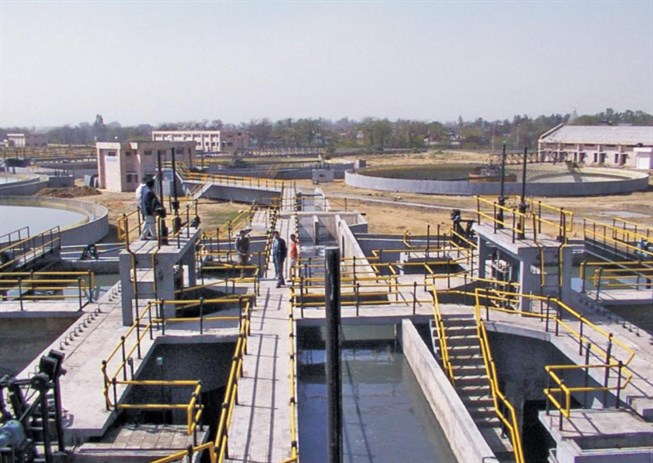
The Indian government – and many others around the world – are also putting in place tighter restrictions to control energy usage and pollution by the textile industry. As recently as 2011, the Indian government shut down hundreds of textile mills in Tirupur due to pollution concerns. The resulting positive impact was that it spurred the industry to take decisive action and most of these mills are now back in operation after they demonstrated that compliance standards were met.
 |
|
Government action spurred textile mills in Tirupur, India, to come together to solve their water-pollution problems |
That’s just one facet of the story. Textile mills – who sit at the heart of the value chain – are being squeezed from all sides. Mill owners have had to grapple with volatile cotton prices in recent years, as well as rising labour costs. Added to this there is growing pressure on them to comply with Restricted Substances Lists (RSLs) from major brands and retailers, which ban the use of many chemicals that provide finishing effects for textiles
This presents the textile industry with a serious challenge – how to continue providing high-performing products in a sustainable way that still makes business sense for the industry?
A United Stand
For nations that are still developing, governments have to strike a very difficult balance – how to introduce legislation which protects the long-term future of the country (ie. its environment and its people) without unduly restricting the essential economic growth.
Recognising these dilemmas, some responsible brands have been working over a number of years to address the issues. However, even some of the biggest apparel and footwear brands realise they cannot do it alone. In 2010 the Sustainable Apparel Coalition (SAC) was formed with the objective of leading the industry towards a cleaner supply chain and increased transparency.
Several major brands and retailers also banded together in 2011 to agree on a joint roadmap towards the Zero Discharge of Hazardous Chemicals (ZDHC), which focuses on the elimination of 11 priority chemicals by 2020. This commitment by major players in the industry is an important step towards addressing the concerns of NGOs and consumers, whilst also driving towards cleaner supply chains. Since then, membership in ZDHC continues to grow as more brands and retailers commit to the ZDHC roadmap. A concrete example of this is how the industry is working with its customers to manage the transition from C8 to C6 short-chain chemistry, as the latter has significantly lower environmental impact.
More and more textile companies have also adopted the bluesign standard – one of the industry’s major voluntary standards for environmental sustainability. To qualify, a company must report its chemical processes, dye compositions and relevant green-workplace initiatives, thus helping to raise transparency of the industry as a whole.
Further downstream, garment manufacturers have increasingly aligned their products with the Oeko-Tex Standard 1000, a testing, auditing and certification system for environmentally friendly operations in the textile and clothing industry. Under this system, garment manufacturers who meet the requirements are allowed to label their products as such, assuring green conscious consumers of the products they buy.
However, the industry still needs to do more – and to do it in a united fashion – if it is to effectively address the public’s demand for greener products, a cleaner supply chain and increased transparency.
What more can be done? For a start, textile chemical companies can help brands and mills to comply not only with regulations but also with brand RSLs, as mentioned above, and to meet legislative and ZDHC commitments. In support of the ZDHC brands, Huntsman Textile Effects has produced a positive list of chemicals that do not intentionally contain any of the 11 priority substances targeted for elimination. This represents a good step towards helping mills deliver improvements, which in turn support the brands’ goals.
More fundamentally, we, as an industry, need to re-examine the way we approach textile processing. For too long, we have relied on the use of downstream processes to remove traces of restricted chemicals – an approach that is neither cost-efficient nor environmentally friendly. This certainly cannot go on.
 |
|
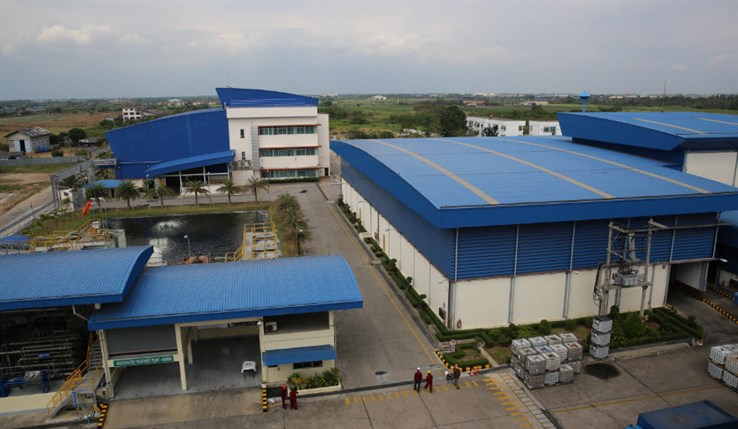
Huntsman’s speciality synthesis facility for the production or reactive dyes, in Mahachai, Thailand |
A Sustainable Future – How We Can Get There
The truth is, we can control output by controlling input. What you don’t put in won’t appear in the end product.
In the last few years, Huntsman Textile Effects and our colleagues in the industry have channelled significant research and development resources towards developing innovative products with environmental and economic benefits. These products are designed to help users considerably reduce water and energy consumption during textile processing, and many of them are already available today.
Using products like AVITERA SE, water consumption per kilogram of material can be reduced by 50%, from an average of 30 to 40 litres to only 15 to 20 litres. It can also help to reduce the amount of processing and energy time by up to 50% and 70% respectively.
By working closely with textile mills, textile-chemicals companies can help mills to identify gaps in their processes, identify and implement both ecologically and economically friendlier solutions, and optimise productivity.
A good example, which embodies the spirit of change required, is the Partnership for Cleaner Textiles (PaCT) in Bangladesh. Organized by Solidaridad with support from the World Bank and involving brands such as H&M, C&A and G Star, the project is designed to help mills develop best practices around cleaner production. Here a chemical manufacturer like Huntsman Textile Effects, with over 100 years of experience, can play an important role by contributing our expertise.
Sustainable Textiles in 2014 and Beyond
The public’s demand for greener products with intelligent effects and the increased scrutiny of the industry by pressure groups will not abate. Creating a sustainable textile value chain for our industry will no doubt be a key business driver in 2014 and beyond.
To make a significant impact, the textile industry must act as one. Major brands and mills must work together to ensure that they get greener products and processes that are validated and transparent in order to achieve their 2020 targets. The journey of a thousand miles begins with a single step, and the first steps have been taken by the textile industry. Only then can we weather well the winds of change and emerge a leaner, stronger and – most importantly – a greener industry.