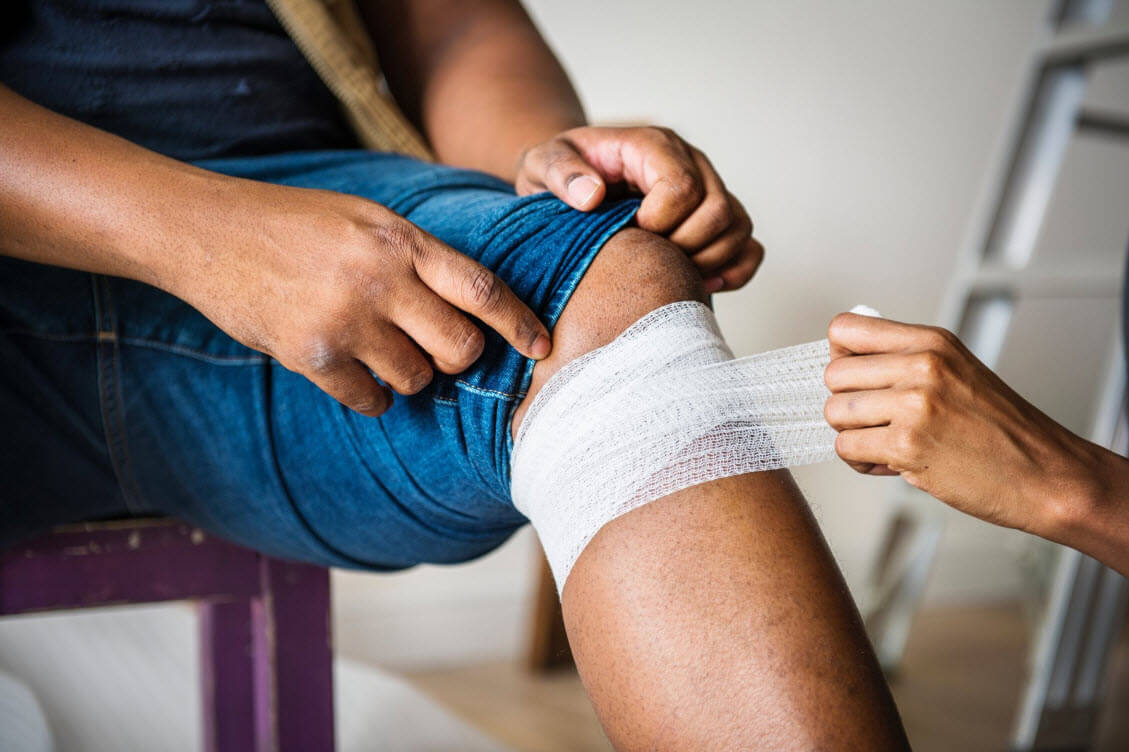
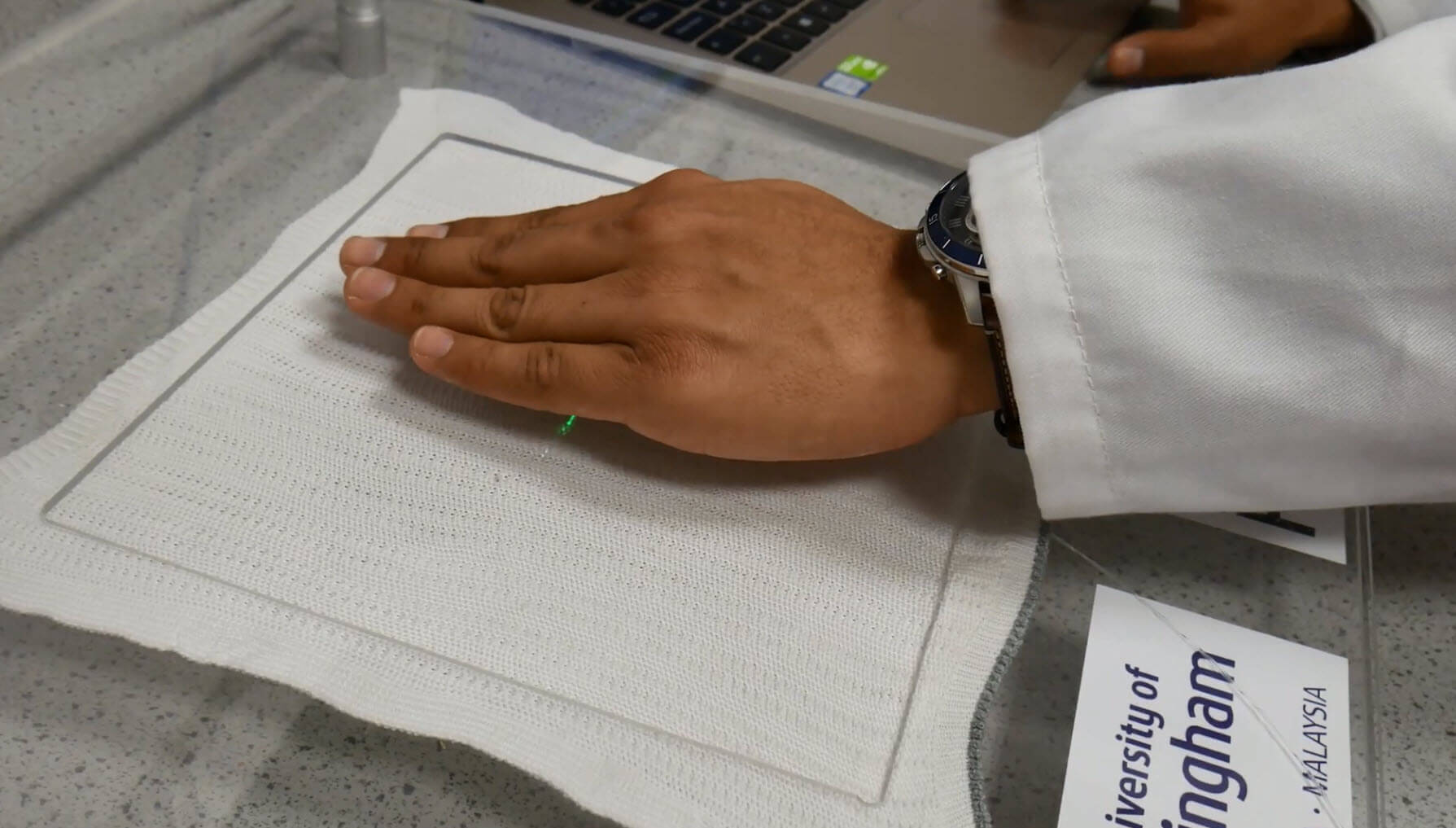
University of Nottingham researchers have secured a major grant to develop a smart wound dressing embedded with optical fibre sensors to assess whether affected tissue is healing well or is infected.
The new disposable dressing could have a significant impact on patient care and healthcare costs for wound management, which stand at GB£4.5-£5.1bn a year – more than 4% of the National Health Service (NHS) budget.
Diabetic foot ulcers represent a large proportion of this cost – standing at nearly £1bn – and these hard-to-heal wounds are the initial focus of the project. Better wound monitoring has the potential to reduce the 7,000 lower limb amputations that affect people with diabetes in England each year.
“Thanks to a £902,524 grant from the Medical Research Council, we can develop a real step change in the care of chronic wounds. Our smart wound dressing incorporates optical fibre sensors which will remotely monitor multiple biomarkers associated with wound management such as temperature, humidity and pH, providing a more complete picture of the healing process.
“At present, regular wound redressing is the only way to visually assess healing rates, however this exposure can encourage infection, disrupt progress, and create a huge economic burden on NHS resources. Instead our technology will indicate the optimum time to change the dressing and send out an alert if intervention is required with infected or slow-healing wounds to improve patient care and cut the number of healthcare appointments needed,” explains professor Steve Morgan, director of the Centre for Healthcare Technologies and Royal Society Industry Fellow at the university.
Developed and validated by the Centre in laboratory tests, the proposed sensors will be fabricated in very thin (~100um diameter), lightweight, flexible, low-cost optical fibres. This versatile platform will then be incorporated into fabric that will look and feel the same as a conventional wound dressing, according to the university.
The dressing will be connected to a standalone, reusable opto-electronic unit to constantly evaluate the wound’s status. The unit will transmit and receive light to and from the sensors; relaying information to both the patient and clinicians. This will be achieved by wireless transfer linked to a mobile phone.
Although the dressing will cost marginally more than the average dressing, the higher initial cost will be offset by fewer dressing changes or clinical visits and reduced healing time, say the researchers.
A 10% reduction in costs associated with visits and appointments would provide £300m annual savings to the NHS alone.
The project will last 34 months in total – 24 months of product development and 10 months of clinical evaluation and chronic wound patient feedback.
Electroceutical wound care to destroy bacteria
A separate study by The Ohio State University found that bandages infused with electricity can help heal wounds faster than typical bandages or antibiotics. But for years, researchers have not really understood why.
The university is offering new clues about the science behind those bandages, and researchers say the findings could help lead to better wound treatment.
The bandages belong to a class of therapies called electroceuticals, which are devices that use electrical impulses to treat medical issues such as wounds.
The study, published online recently in the journal Scientific Reports, is the first of its kind to look at the ways electroceutical bandages kill bacteria around a wound, allowing wounds to heal faster. Electroceutical bandages have been used to treat wounds since at least 2013.
“The goal is to heal non-healing or chronic wounds, and, if infection is present, to remove infection,” says Shaurya Prakash, an associate professor of mechanical and aerospace engineering and co- author of the study. “And what we wanted to understand was the mechanism behind why these electroceutical treatments work to kill bacteria.”
Biofilms are small communities of microorganisms – including bacteria – that can live on the surface of the skin or a wound. The communities are held together by something called extracellular polymeric substances – EPS for short. The substances are generally made up of fats and proteins and can create a protective barrier that keeps bacteria safe from traditional clinical treatment options, including antibiotics. That means that even with traditional antibiotic treatments, some skin infections can linger and prevent wounds from healing.
But electroceutical bandages made of the right materials can break through that barrier, Ohio State's research shows, destroying bacteria and allowing wounds to heal faster. The team developed a new model to study soft-tissue infections to learn more about how the bandages work.
The Ohio State study used haboti silk, a common Japanese weave, in the bandages. The researchers silk-screened silver lines onto the silk and attached a small device to deliver electricity to the biofilm. When they applied the electrified bandage to bacteria-laden biofilm in the lab, the bacteria were destroyed.
The researchers used electron microscopes to monitor the bacteria. They saw that the electric current disrupted the biofilm enough to begin destroying bacteria. The researchers also saw that bacteria continued to die off two days after the electric current was turned off. Their theory, based on these experiments, is that the bandage and electric current produce a potent antimicrobial chemical – hypochlorous acid – that takes over and kills bacteria without harming the healthy skin nearby.
This recent study was conducted on bacteria and biofilms in vitro, essentially meaning in a petri dish rather than on a human or an animal. Prakash is quick to point out that the studies set the stage for further research – experiments that will help scientists better understand the reasons why biofilms work the way they do. That fundamental understanding will help improve the design of electroceutical bandages, he said.
But in the meantime, Prakash and his team sent a few prototypes to The Ohio State University College of Veterinary Medicine. Last year, veterinarians used the bandages to help heal an open sore on a dog with a wound that just wouldn’t get better, even while being treated with antibiotic medications.
“If infection is present, wounds will not heal,” Prakash says. “So, we need to find a way to get through the biofilm to the bacteria.”
The dog arrived at Ohio State late in 2017 with an open, infected wound. Within a week of using the bandage, half of the wound had healed; within 11 days, the infection had cleared.
Those results are promising, Prakash says, but early. The team hopes to conduct additional studies and collaborate with microbiologists at Ohio State to further understand the reasons why these bandages successfully destroy bacteria when other treatment options have failed.