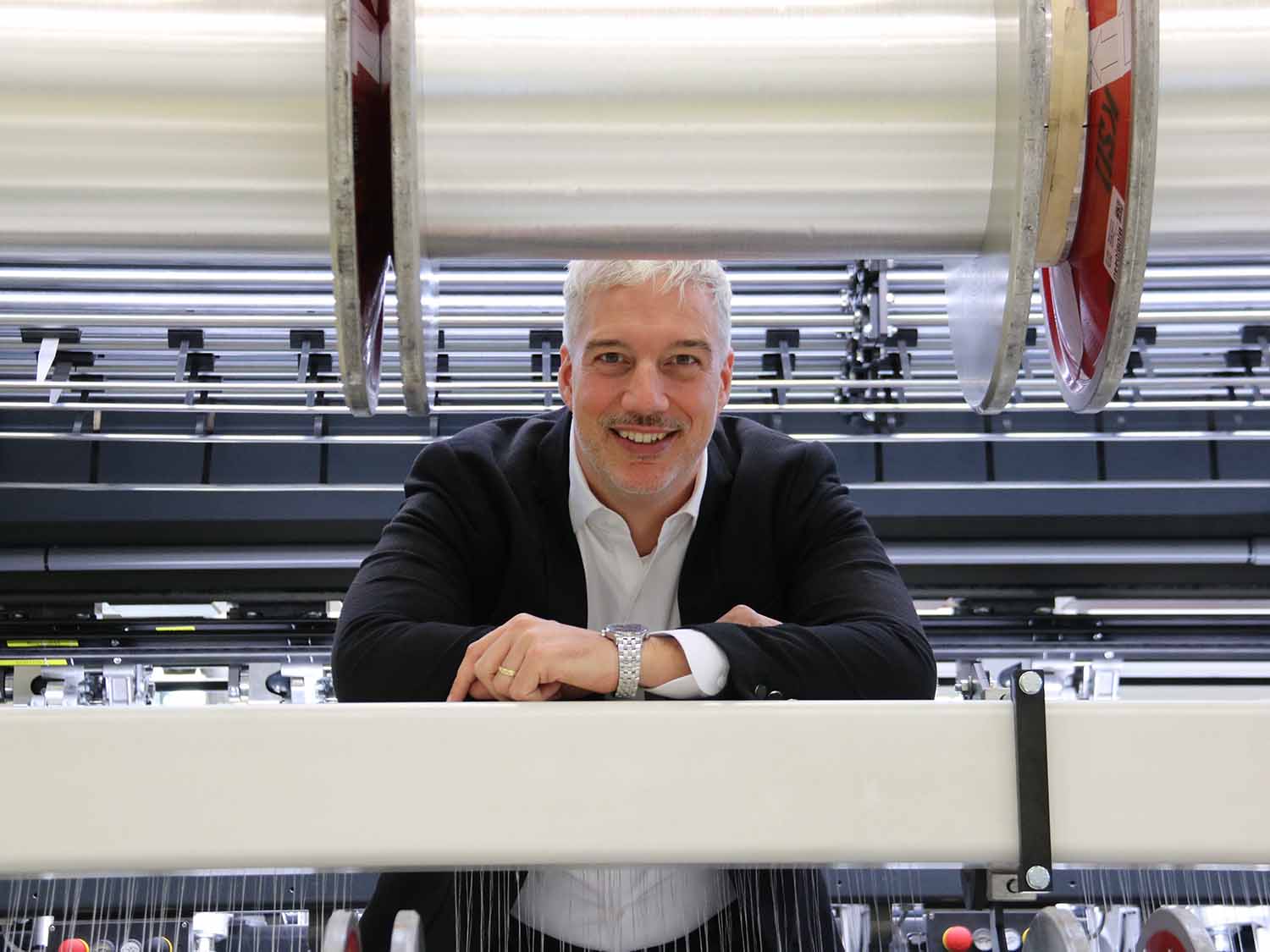
Madelaine Cornforth speaks with Steven Lin, general manager of Asia Kingdom Machinery Industry (AK Dyeing), about the smart washing technology capable of alleviating the contemporary pressures that dye manufacturers face.
Textile dyeing has long been a cause for concern when it comes to the environment – washing processes consume massive amounts of water while generating pollutant wastewater. But washing is an important step of the dyeing process and is required both to complete the dyeing process and to eliminate any unfixed dyestuff.
The process, however, has a strong environmental and economic impact. Subsequently, dyehouse manufacturers are increasingly focusing their efforts on reducing water consumption, because any successful decline in water usage will no doubt lead to a reduction in energy use and wastewater.
While work has been done to upgrade traditional washing systems to systems that reduce the liquor ratio and the energy and water consumption for each kilogram of washed material – by changing the systems to horizontally structured vats instead of vertical ones for example – there are still issues with this, and Asia Kingdom Machinery Industry (AK Dyeing), a Taiwanese dye machinery manufacturer, has a unique solution.
Founded in 1965, the family-run business focuses solely on fabric dyeing technology and can therefore devote its efforts to upgrading and refining equipment and processes alone. Its machinery is prominent in the Taiwanese market for its solutions, but the company also sells into China, Turkey, Vietnam, Bangladesh, the Middle East and, increasingly, Central America.
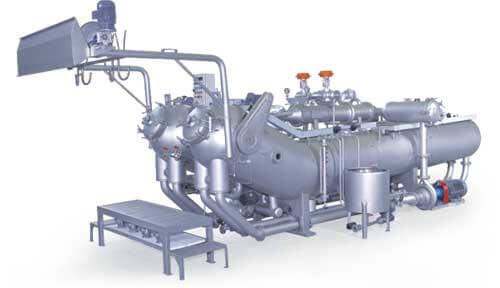
But most recently, it’s the company’s latest piece of technology – the AK-DSL 2018 machine – that has gripped the attention of its customers. In response some of the sector’s environmental hurdles, the machine utilises integrated AI sensors to detect when a fabric is fully cleaned in order to automatically, and efficiently, stop the washing process. Thus, energy and water usage can be reduced as the washer does not carry on with a cycle once the fabric is clean.
This smart wash system has so far reduced wastewater discharge by 30-40%, according to the company. With sensors embedded into the machine, users can also access digital operation data; the sensors monitor steam, water, electric consumption, machine run-speed, fabric run-speed and chemical injection rate.
All the operational data collected through these sensors can then be stored in the industrial computer provided and connects to the dyehouse’s Central Management System. The machine’s smart wash system can additionally monitor and control the fabric washing function in real-time. Overall, manufacturers can wield this technology to avoid over-washing fabric and wasting unnecessary water.
Steven Lin, general manager at AK Dyeing, explains: “When dyeing, the principle is quite easy – if there isn’t enough water for the [amount of fabric that a dyehouse has], half is in the water and the other half is out of the water.” The other half is therefore in steam. “If the fabric is of low quality, nobody really cares,” he continues. “But if the fabric is high-end and there isn’t enough water to soak it in, a high-quality product cannot be created.”
Lin adds: “It’s pretty much the same as when you wash your clothes at home. This is a quality issue. What we’re focusing on is during washing, since it doesn’t cause any fault problems. Why don’t you just focus on washing instead of mingling on ‘can we do this, can we do that’. And then, the problem is most people are trying to play around with this.”
Currently, the fabric does not get moved in the washing process and much of the fabric gets steamed instead of washed and only the fabric directly in the water is properly cleaned.
“After that, we get a new technology and with this it’s almost as if you’re tracking your water,” says Lin. “It’s like if you’re washing the dishes, when you wash them, you put soap on, you clean, clean, clean. What’s the point of keeping on washing it – why do you keep on doing it for the next 10 minutes?”
The AI sensors monitor when the fabric is completely clean and stops the wash process automatically as soon as it senses that all the fabric is clean.
“Users can observe the water being drained out,” says Lin. “We look at this water and say, ‘Hey, it’s clean now, why do you keep on pumping water down the drain?’ The whole system has its own brain. All you need to do is tell the computer ‘This is what we call clean’, the technology learns, ‘ok this is clean’.” The machinery therefore knows when dyed fabric is clean and that when it is clean, it needs to stop the washing process. “The machine stops and stops the water coming in,” adds Lin.
Pressures
AK Dyeing’s new technology is a response to environmental and economic issues in the industry. Lin notes a triad of pressures placed upon dyehouses: the first of these is from brands. “Brands go to dyehouses and check their wastewater – how much they’re pumping out – [and] they don’t care what you do, but you have to reduce it,” says Lin.
The second pressure comes from government regulations. “The government will shut you down,” he says. Lin explains that most governments will check on dyehouses to monitor the quantity and chemical composition of wastewater produced – once this exceeds regulations, they can shut dyehouses down and “this is pretty similar all round the world [now]”.
A recent example of this comes from Indonesia. Lin explains: “Last year [2018] the market in Indonesia was really good but now many of my customers can’t produce. They have had to stop production.” This is because in 2019, Indonesia held an election with an agenda orbiting environmental protection, according to Lin. As a result, “the government put the army [in place] to monitor the factories,” says Lin. “One customer got locked down for 28 days for pollution – they say ‘your factory is pumping out wastewater’ and put you into jail. That’s [been] a big shock. I can help them to avoid that, keep the business running and avoid any issues.”
Thirdly, dyehouses also face pressures to clean up their processes by NGOs (non-governmental organisations). “With NGOs, there’s no hiding anymore,” says Lin. “They [NGOs], send people in, find out what you’re doing and [if the findings are negative] put it on YouTube or social media.” This can cause public backlash as social impact has become increasingly important. “Nowadays, everyone wants to be seen as an anti-polluting, environmentally-friendly enterprise,” adds Lin.
The biggest benefit of AK Dyeing’s technology, therefore, is alleviating these pressures. The AK-DSL 2018 machine can reduce water and energy usage, the amount of textile effluent created, and allow manufacturers to still produce a wide range of high-quality fabrics, meeting their customers’ demands.
Lin says: “They can still dye a wide variety of high-quality fabrics. Before we could dye on a range of fabric but now, water usage is so limited that dyehouses can only do 10-20% of fabrics.”
This is because some fabrics work with a lot less water and some require a much higher amount of water simply due to the nature of the fabric and its properties. As a result, smaller dyehouses are barely getting business.
“That’s why we say this smart AI technology can produce the same quality while it doesn’t cost manufacturers – they can produce the same variety of high-profile fabrics while reducing their water usage to half of what it used to be,” says Lin.
He continues: “You get whatever order you can. You don’t choose customers. They come to you and ask you to do it.”
Investment
With these pressures gaining momentum, Lin has had a wave of investment in the AK Dyeing technology from certain countries, particularly Vietnam: “There was a sudden surge in investment from Vietnam. There is a trend [surrounding] the problem between the US and China. A lot of my Chinese customers are moving their factories out of China to Vietnam, Indonesia or elsewhere. It’s the same company – they’re just moving factories.”
In China there are two cases: “One is that manufacturers feel there is too much competition, so they just sell their factory and make a quick buck,” says Lin. “The second one is where people want to stay in the industry – then they have no choice. They must invest in [digitalised and sustainable] equipment.”
He notes that many larger manufacturers that work with big brands move their factories around to satisfy them. “The brands tell them, ‘this place is better because it’s lower tax’, to get their orders for example. They have to move their factories to accommodate,” says Lin.
Usually, the taxes then get higher in that country and the factory has to move once again. This technology from AK Dyeing, however, could help prevent this expense of a continuously moving factory and the chase for cheaper manufacturing.
“I believe our technology would give them a good chance to survive,” says Lin. “A lot of my customers are small to medium-sized dye houses. They have no control – it’s the market.”
With this investment, there is a cost benefit, with the reduction of resources used and the increase in efficiency. Lin says: “If we can reduce the wastewater, first you reduce the water being used, the steam, chemicals and time, because washing fabric takes time. Manufacturers can reduce their lead times and become more flexible when taking a job.”
Taiwan
Being a Taiwanese company, Lin says that the country is split down the middle when it comes it digitalisation. While half of the country’s textile manufacturing industry can see the benefit of digital processes, the other half doesn’t quite fully understand Industry 4.0 and its benefits.
Lin says: “I think after we test it, this new technology, they will be like ‘yeah, there’s a true benefit’, but it’s going to take a bit of time. [Taiwan] is at the initial phase. We are still waiting for that transition point where it becomes industrial standard.”
Lin says he believes Industry 4.0 will become an industry standard in three to five years, “because the Taiwanese government, or the economic department, will be pushing for it,” he says. “Taiwan has got to find a new market because China is hungry. We’re surrounded by big manufacturers. China is like ‘I know what you’re doing’ and then does the same. So, what’s the next move? That’s what we are all trying to figure out to stay one step ahead.”
The reshoring movement is also affecting markets like Taiwan, as consumers demand locally made customised products that arrive the next day.
“Last year we had a customer move back to Honduras because they were getting a lot of orders from the US,” says Lin. “The interesting thing is the customer wasn’t doing anything new – no new fabric, no new nothing. They were just sitting there and then suddenly the market made such a shift to them. They started saying they needed more machinery from us [AK Dyeing] and for us, it’s been quiet for a couple of years, so we we’re like, what’s the rush? He said he had orders banging his door down, shifting from China to Latin America.”
As a result of their proximity to Europe, Central America, the Middle East and Egypt are all gaining increasing market share of the global textile finishing industry, notes Lin. Consequently, it is important for Taiwanese, Vietnamese and Chinese manufacturers to upgrade their machinery to not only alleviate pressures from regulations and brands, but to maintain capacity in a shifting consumer landscape.