It may be some time before graphene becomes a primary component of everyday garments, but it is starting to creep its way into some textile products, with protective wear being one key area of application.
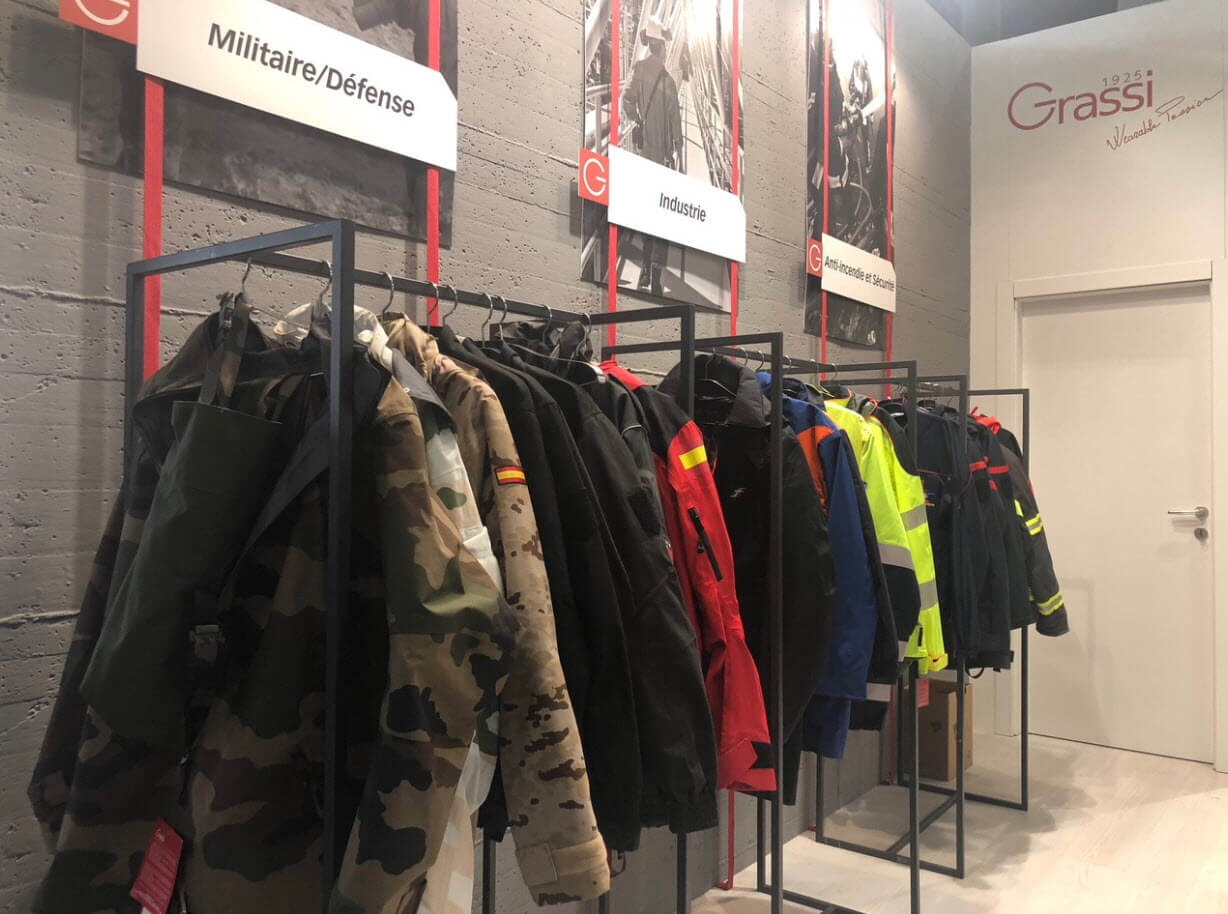
Alfredo Grassi showcases graphene-enhanced workwear
Leading this development is Italian company Alfredo Grassi, which showcased its graphene-enhanced workwear at Expoprotection in Paris earlier this month – the result of its partnership with Directa Plus. Among the collection were construction worker and law enforcement uniforms, as well as firefighter and military gear.
The collection is led by the company’s overall aim to not only protect the end user, but to incorporate stylish elements such as comfort and fit, as function and fashion continue to merge.
According to Alfredo Grassi’s R&D manager Daniela Ferroni, integrating graphene into its garments achieves thermal comfort – ‘spreading heat throughout to improve the performance’. The company believes that there is a ‘real need’ for this particular function – not just in workwear, but across various sectors such as sports and outdoor wear. “Thanks to graphene, we were able to propose a solution,” says Ferroni.

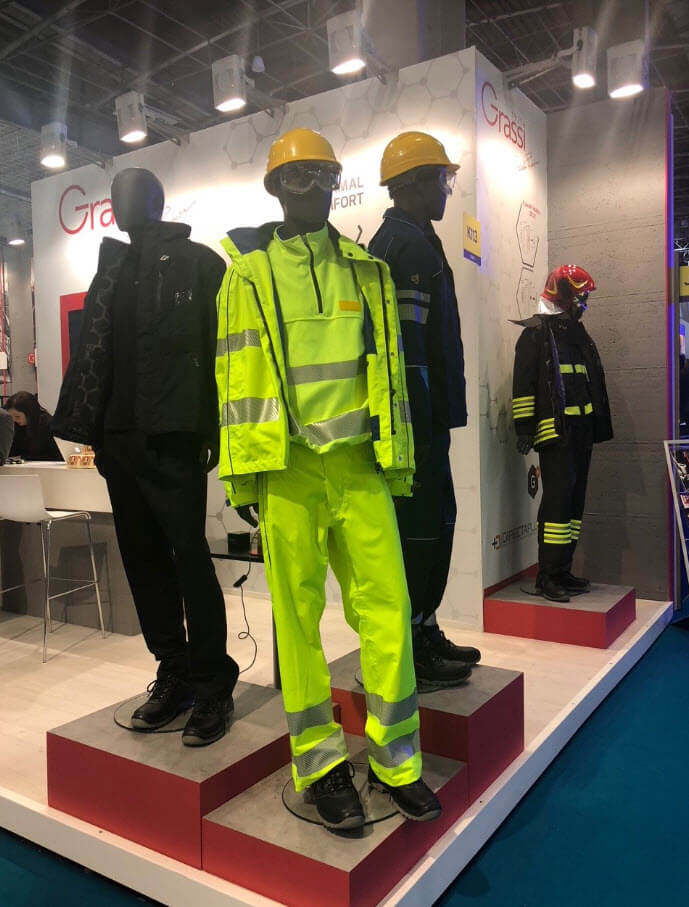
The main aims of the graphene incorporation is to achieve thermal comfort and conductivity
The surface of the garments is printed with Graphene Plus and, according to Ferroni, it can be applied on various fibres including polyamide, polyester, aramid and so on. The graphene enables the homogenisation of temperature – meaning that the thermal input can return to its original state.
The second property achievable through graphene enhancement is electrical conductivity – a concept that Alfredo Grassi is currently developing. And, together with various other properties the company’s workwear offers, such as light weight, waterproof, ease of use and breathability, the addition of graphene creates a ‘synergy’ of advanced technical functions, says Ferroni.
With the marriage of graphene and textiles still very much in its infancy, Alfredo Grassi no doubt encountered ‘many’ challenges while producing its workwear garments. Ferroni recalls: “We needed to understand all the possibilities of graphene; we faced challenges right from the manufacturing stage to the testing stage – as there are no ‘ready-to-use’ testing methods [for graphene in textiles], so we had to search and speak with certified bodies.”
The company also faced challenges adapting these testing procedures to the end use. “In the beginning, it was difficult to identify proper methods to characterise different uniforms,” says Ferroni. “Testing is the same across all garments, but the challenge comes from adapting and engineering graphene to the final application; each garment is a specific project – it all depends on the type of fabric and factors such as stretch and durability etc.”
Alfredo Grassi conducts all its R&D in-house while working very closely with its industry partners and considering the needs of its customers, says Ferroni. It is the responsibility of the company, she adds, to show them the capabilities of graphene.
“Generally, our customers are very interested in innovative materials, but they needed to see this. So, our work is to demonstrate that, and we will continue to work on that,” adds Ferroni.
The company also places a strong focus on sustainability, believing that innovation cannot exist if it doesn’t consider the environmental impact of its products. This is partly what sealed its partnership with Directa Plus, as Graphene Plus has been independently certified as non-toxic and non-cyotoxic, meaning chemical-free production. Ferroni says: “This way, we don’t create problems for the user; only this type of graphene has these performance attributes.”