
AlgiKnit, a US-based start-up that operates in the field of biomaterials, has won a €100,000 prize in the Dutch Postcode Lottery Green Challenge 2018.
In the final round of the competition, Tessa Callaghan, co-founder and director of Innovations, AlgiKnit, impressed the competition’s international jury with her company’s environmentally-friendly ‘seaweed textile’.
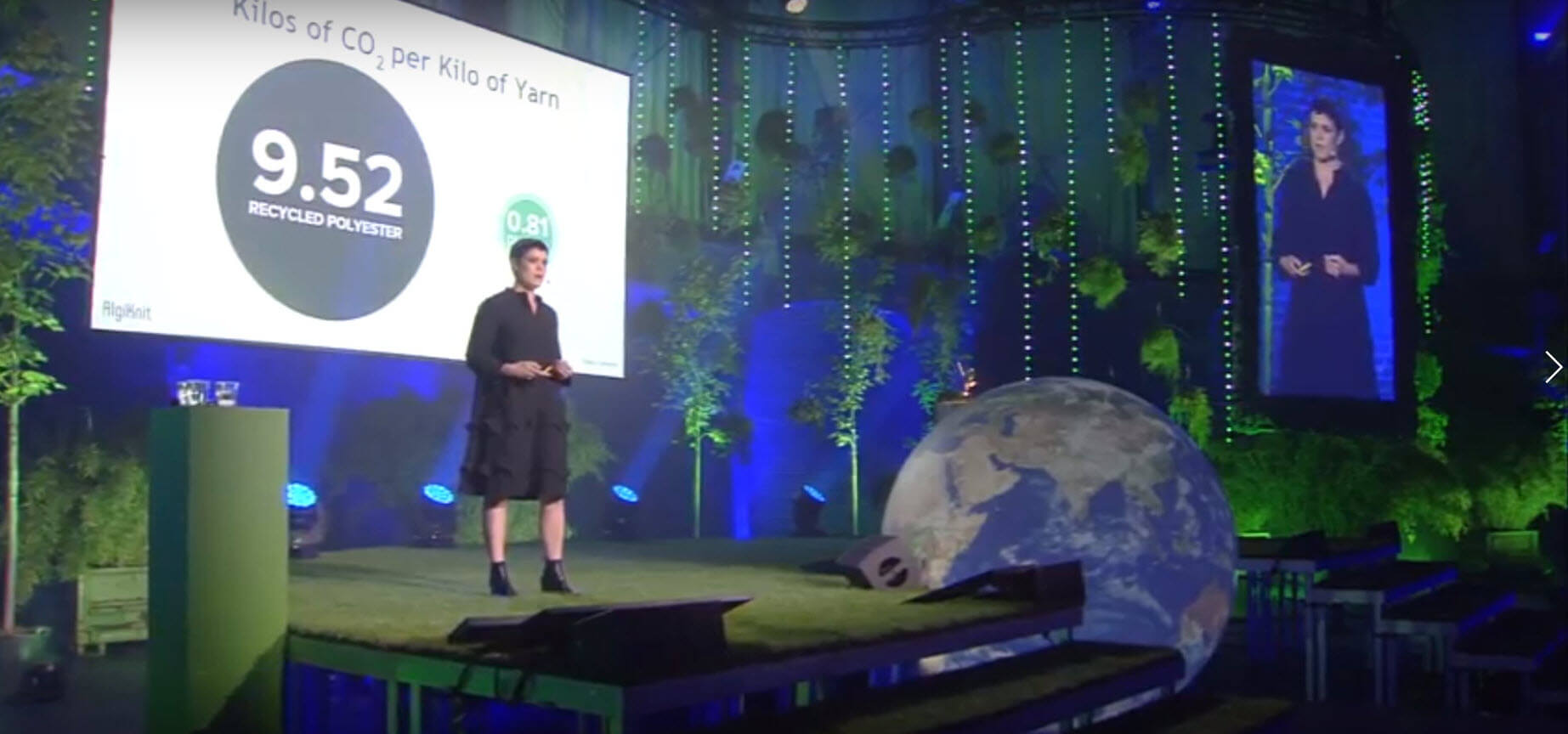
AlgiKnit's Tessa Callaghan delivering her pitch at the ceremony
The textile is composed of yarn made from kelp, a type of seaweed. By using biomaterials, AlgiKnit offers a solution that has the potential to transform the highly-polluting textile industry into a circular economy.
After use, the seaweed textile can serve as compost or animal feed, the company states, adding to its eco-friendliness. Furthermore, the material also reduces the carbon footprint of the clothing industry as no harmful fibre particles are lost during the washing process. Particles from other synthetic materials such as polyester are damaged and lost from the garment during laundering, meaning they pollute waterways, and eventually, the sea.
The company is now working to develop a prototype T-shirt, with sneakers being the next product planned. Describing the AlgiKnit concept to the award jury, Callaghan says: “Choice is opportunity. Every day we choose the ways we want to present ourselves to the world around us, and we do so by fashion.
“But underneath the surface, what we’re choosing to promote is an industry that is toxic, releasing pollutants into our air and our water, including 1.2 billion tons of CO2 annually,” continues Callaghan. In her speech, she explains that the garment industry is highly wasteful, with 60% of all clothing sent to landfill in the very same year it is produced.
However, kelp promises to ease our reliance on synthetic and natural materials that are not recyclable or biodegradable. Kelp is fully compostable, a process that can even be done at home by the consumer.
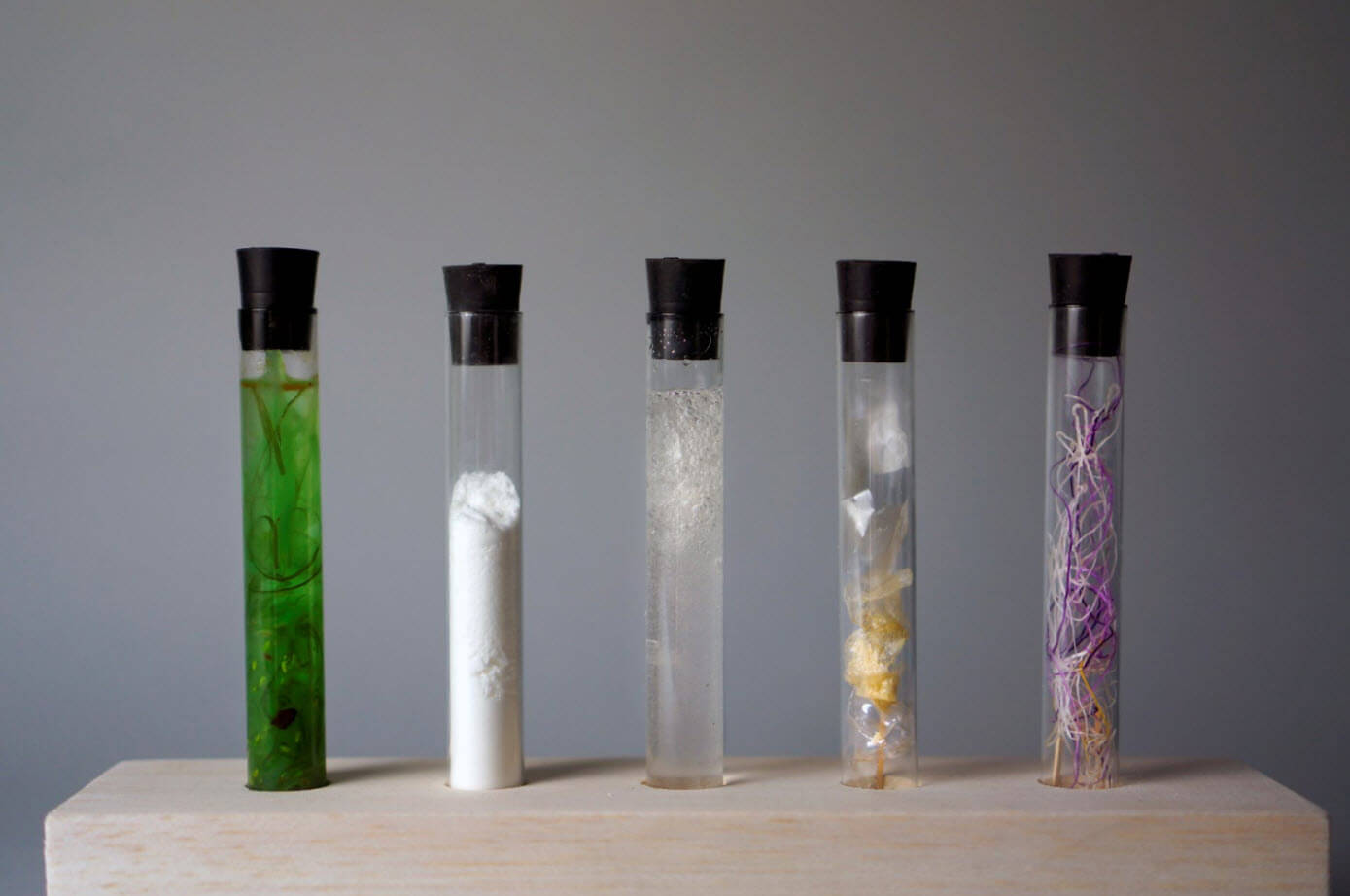 The process of turning raw kelp into yarn
This contributes to its eco-friendly reputation, while it is also said to reverse the damage caused by marine pollution. “As one of the fastest-growing organisms on Earth, kelp grows at a staggering rate of up to five times faster than land-based plants,” says Callaghan. “Producing tens of billions of kilos per year, this seaweed nurtures both ecological and economic damage caused by overfishing and pollution.”
She continues: “By transforming the natural polymers found in kelp with a novel combination of green chemistry and plant-based polymers, we have been able to create a yarn that is durable, easily dyed and fully compostable.”
Callaghan states that the material maintains cost-effectiveness in the garment product industry to a similar level as conventional materials. This is achieved as garment manufacturers using AlgiKnit’s yarn do not have to invest in any new machinery or modify their existing lines.
“By replacing the raw materials and chemicals used throughout the wet spinning and yarn production process, we actually don’t have to replace any of the mechanical infrastructure used throughout the textile industry.” This, Callaghan says, allows AlgiKnit to enter the market with a product that can compete at the same cost as natural fibres such as cotton.
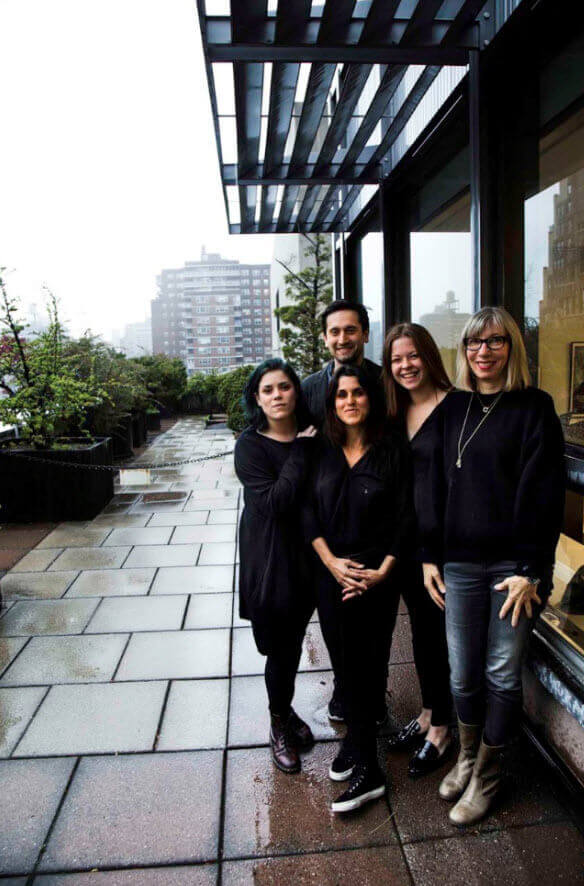
The AlgiKnit team
With the issue of microplastic pollution and the environmental impact of the textile industry gaining momentum in recent times, more of the industry’s key stakeholders are working to find solutions.
One of these innovative solutions is the Great Bubble Barrier, which claimed the top prize of €500,000 at the ceremony. Designed by Anne Marieke Eveleens, the development is an air bubble screen for use of riverbeds that catches plastic before it reaches the ocean.
According to the company, around 80% of the plastic found floating in the ocean enters via rivers. In order to tackle this ‘plastic soup’, the Great Bubble Barrier sends high-pressure air through a perforated tube on the riverbed. This creates an air bubble curtain that blocks both the stream of plastic waste on the surface and the floating microparticles underwater. The plastic then floats to the waterfront along the air bubble curtain where it is collected for recycling.
This year’s competition saw a record number of entries, with 845 entrepreneurs from 100 countries submitting their sustainable business plans aimed at fighting the effects of, and ultimately reversing, climate change.


