
Aran Biomedical, a partner in the design, development and manufacture of implantable medical devices, has recently announced its new medical textile valve covering solution, ValvTEX.
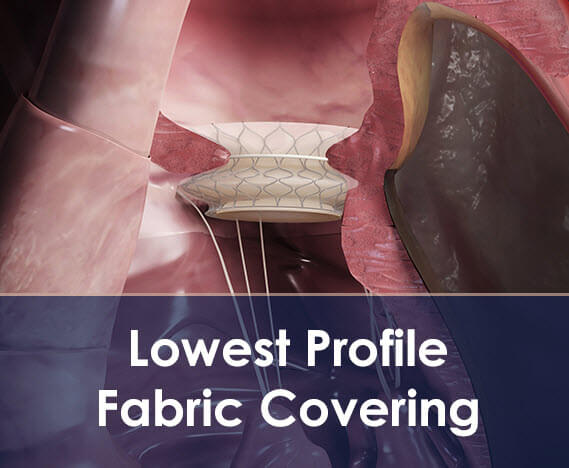
The ValvTEX technology platform was created to reduce the delivery profile of transcatheter heart valves that require a valve skirt
ValvTEX has been created by the Irish medical company specifically for mitral, aortic and tricuspid heart valves.
“Aran Biomedical’s focused investment in medical textile and coating technologies has enabled our skilled engineers to deliver a proprietary medical textile valve covering solutions to support the exciting fields of mitral, aortic and tricuspid heart valve replacement,” says Peter Mulrooney, CEO, Aran Biomedical CEO.
The ValvTEX technology platform was created to reduce the delivery profile of transcatheter heart valves that require a valve skirt, while also offering some unique advantages.
The solution involves custom low-profile fabric attached onto the valve frame without the need for sutures (surgical stitches). Lower delivery profile is achieved by reducing the amount of fabric pleating during crimping, along with the reduction or elimination of sutures required to attach the fabric.
“Typically, the valve skirt or textile cover of a heart valve is manually sutured to the frame,” adds Eoghan Groonell, business development executive, Aran Biomedical. “Through the use of the ValvTEX proprietary fabric to frame technology, Aran Biomedical has eliminated the need to manually suture the fabric skirt onto the frame, meaning less material on the device and a reduction in resources, ie materials and labour.”
Not only does this improve manufacturing time, but a further advantage from the attachment process is the ability to create an impermeable seal at select regions of the skirt, which can help inhibit paravalvular leakage (a rare complication related to the surgical replacement of mitral and aortic valves).
“The primary benefit in reducing implant delivery profile is to the patient, enabling quicker recovery and hopefully greater patient comfort.
“For the physician, the smaller delivery profile may facilitate easier closure of the access point and potentially additional options in terms of access point location for implant delivery,” says Groonell.
Additionally, reducing or eliminating the need to suture the fabric onto the valve frame can significantly improve manufacturing time for the device.
What’s more, ValvTEX is not limited by a specific material and the fabric can be developed using a wide range of implant grade yarns.
“Most devices using the ValvTEX technology platform have used polyethylene terephthalate (PET),” adds Groonell. “This is largely based on the established clinical history of this material being used in cardiovascular or structural heart implantable devices over the years.”
Considering the increased interest in transcatheter product development to treat a greater range of structural heart conditions, the ValvTEX platform technology is ideally positioned to support next generation devices.
“The technology platform has been developed over a number of years,” says Groonell. “What may seem straightforward, ultimately involved considerable design work, process development and refinement.”
For more information about Aran Biomedical, visit www.aranbiomedical.com


