
Digital transformation poses a number of challenges to businesses. IIoT MES platform provider LeaderMES CEO Amir Aloni talks to Tansy Fall about managing change, security and implementation.
Manufacturing execution systems (MES) are used to track and document the manufacturing process, from raw material through to the finished product. Whilst ERP and MES often share similar data, an ERP system is built as a business management software designed for use as a strategic guide, while MES is operationally focused.
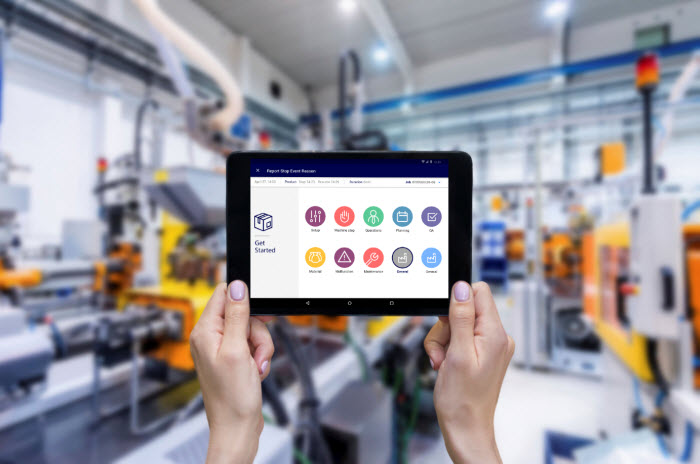 The LeaderMES dashboard
In an individual textile sector factory, for example, the MES system may record the transformation of yarns into fabric. The data collected in the MES system should enable the factory owner or worker to assess whether the production workflow can be better optimised or alert them to potential issues on the factory floor, among other factors.
Over time, MES systems have gradually become more sophisticated and their capabilities are on the verge of an upturn with the invent of smart sensors to gather data from production lines in real-time and cloud-based platforms, which enable more efficient data sharing.
However, developing and implementing a smart MES system is not as simple as it sounds, as LeaderMES CEO Amir Aloni knows all too well. Having provided industries of all varieties with production management and production floor systems for over 15 years as Emerald Information Systems, LeaderMES was born only a few years ago to create a solution that would “provide small and medium sized manufacturers with a jump start into the smart manufacturing world,” says Aloni.
The cloud-based solution, part of which is built on CISCO hardware, came to the market in January 2017. It has been designed to be an agile solution for production management, providing a real-time window onto the factory floor. Though the system focused on SME businesses, it is billed as a ‘digital transformation enabler for mass-production’ and is an example of an Industrial Internet of Things (IIoT) platform.
Overcoming challenges
Installation and implementation of IIoT platforms while bringing many benefits to businesses that choose to invest in them also present a number of challenges.
Change management
The first of these is around practicalities of adoption. According to LeaderMES a typical IIoT project can take up to 24 months to fully install at a business. This is due to lengthy stages of implementation that include: establishing reliable connectivity; collecting a body of data; analysing that data; identifying data infrastructure gaps; training staff and allowing time for feedback. Each of these processes can take months and the change management process that sits parallel can cause the project to derail.
Aloni explains: “The whole concept of digital transformation is something that you need to manage. Without the management commitment, it’s very hard to achieve a change. You can’t just install something and expect someone to just change the way they operate on a day to day basis. Operators and production floor workers must also be part of the process. You need to engage with them and explain the process, explain the reasons [behind it] and the expectations.
“The other big obstacle, which we have encountered in the past, is mid-management. We see that higher management and operators are quickly engaged in the process, but the mid-level managers find themselves in a position where everything is changing, and they don’t know how to manage the day to day business.”
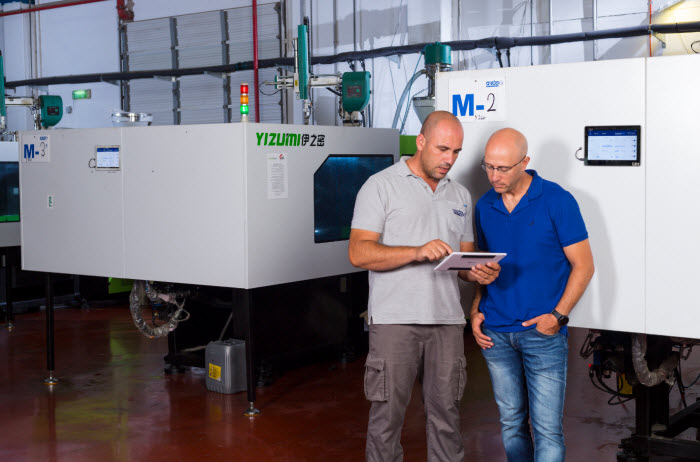 Factory managers review analytics using the LeaderMES system
With this awareness LeadeMES has created a specific set of tools designed to help middle managers to manage digital transformation changes and enable them to take action rather than being overloaded with data. “You must have a leader. If there is no digital transformation leader it’s very hard to make it happen,” Aloni adds.
And, there are tangible benefits to managing digitally focused change well in a business. “From our experience, the average increase in productivity – that we’ve seen in an initial project of say three months – runs at around 30% […] That is achieved by implementing not only the system, but also through management of the change. [Success comes] if you do that properly using the right tools – visualisation tools, involving the operator on the floor, providing those operators with the right tools that they need to actually make the change happen and connecting everybody. We’re talking about creating a language for management and operators. Once you do that, you can achieve that level of productivity increase.”
Staged implementation
As well as helping the user to manage change in their business, LeaderMES recommends and facilitates a staged implementation of IIoT capabilities. The LeaderMES user, for example, can opt for:
A preliminary phase whereby non-intrusive IoT monitoring, which enables basic data collection, visualisation and alarms
Stage 1, which provides a data infrastructure, production context and tools, basic calls to action and environmental data collection
Stage 2, which supports the production process, provides traceability, quality, material and energy monitoring, and facilitates planning and maintenance
Stage 3, which requires constant data collection and enables calls to action
Aloni says: “If you’re looking at the overall offering that we have and the general concept of data and production management systems, the variety is large. You start with data collection, digitisation, which is important and interesting, but it has limited value.
“The next stage that we offer is looking to put the data in the production context. There, we are talking about adding a layer of industrial engineering into the data. We need to synchronise the data that is coming from the production floor with the events that are happening there. So, if you’re changing an order or changing a tool or a material, there are a lot of events happening there, and what we provide is a system and the right tools to put the data in that specific context. Once we have the data in the context of lean manufacturing, we can start to manage of the KPIs, assess uptime and downtime, the yield of the machine, the efficiency, production rates.”
Security
A further issue is the common concern of businesses that opening up their system to a cloud-based IIoT platform may compromise their data and operational security. Aloni says: “If you look at the history of the whole industrial communications protocol, you see that there are two generations: SCADA, which is built on the premise that you have a firewall which will take care of problems; and then there is a new generation of IoT protocols which is built on two-way connectivity with a device. You need to provide someone access from the cloud to the device.”
Neither of these systems ensure data security for the user. This is where edge-computing comes in. Whilst this is largely thought to be a solution to help optimise applications or cloud computing systems by allowing data collection and analysis to happen where the internet makes contact with the physical world ‘at the edge’ there are also security benefits of this kind of system.
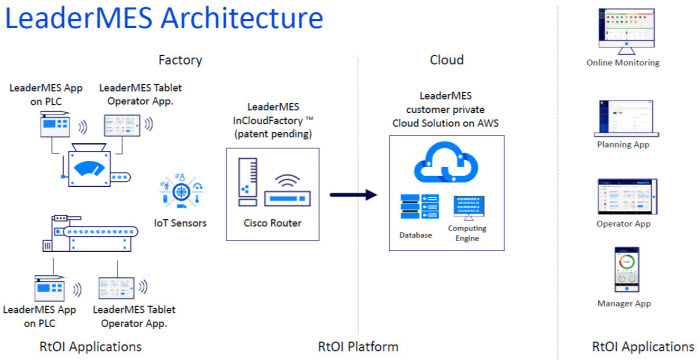
LeaderMES has developed such a solution to give peace-of-mind to its users without relinquishing functionality. Aloni says: “The concept that we have developed is a frontend device that sits at the customer’s site. What the device does is act as a middle ground between the cloud and the IoT device. It collects the data from the IoT device, does the initial analysis of the data, summarises it into batches and then pushes relevant information to the cloud. [In this way] there is no need for two-way connectivity. We have introduced a new approach to the whole concept of industrial IoT security.”
Amir Aloni, CEO, LeaderMES
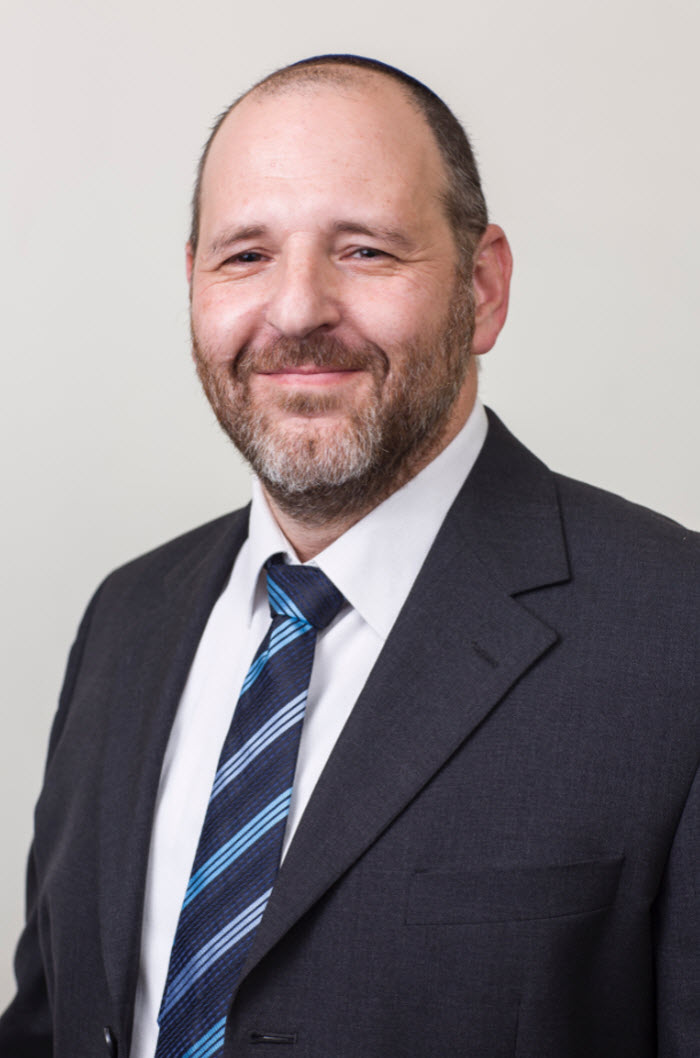
Amir Aloni has 20 years of hands-on professional experience in IT, specifically in industrial information systems. He is the founder and CEO of LeaderMES, part of Emerald Information Systems which Aloni established in 2000. The company aims to spearhead the introduction and implementation of the Fourth Industrial Revolution by connecting the manufacturing floor to the digital world, harnessing big data.
Aloni is an expert in management and control of advanced manufacturing, and in implementation of large-scale Industrial IT projects. Under Aloni’s direction, LeaderMES has developed a cloud-based secure platform and smart applications that can be quickly and easily implemented, providing in-depth monitoring of the manufacturing environment, control over the manufacturing management and improvement in efficiency and revenues.
Have your say. Tweet and follow us @WTiNcomment