Leader in wearable technology, Despina Papadopoulos tells Olivia Selka about her experience in the field and how, in order to deliver successful products, the technology and textiles industries must communicate better.
Despina Papadopoulos is an expert in wearable technology and e-textiles. Having begun her career studying Philosophy in Belgium, she went on to do a second masters in the graduate Interactive Telecommunications Programme at NYU back in the mid-1990s. Papadopoulos believes the biggest industry challenge lies in eliminating the strategical and mindset disparities between technology and textile companies.
“I’ve been in this world for many years,” she begins. “It started as ‘wearable computing’, it has since been described as ‘fashion technology’ and now covers a whole area of e-textiles.”
“In the early years the advances were dominated by people developing materials, such as conductive ribbons or yarns, who didn’t really understand yet what the use would be,” says Papadopoulos. “And I worked with them to develop prototypes and applications where they could demonstrate what they were doing. This was around the late 1990s-early 2000s. I continued to work in this area, which had many ups and downs, and garments were created from what now may be perceived as glorified wiring set ups.”
Papadopoulos is the CEO and founder of Principled Design, a design and development studio in New York that specialises in creating and developing solutions for companies with a focus on wearable technology and e-textiles.
“A lot of what we do is try to connect the various players in the industry, create bridges and try to innovate on the design, prototyping and maintaining the integrity of the garment so it doesn’t become something of a cyber-garment; opening up the space where design meets technology,” she says.
Challenges
Papadopoulos explains that one project that highlighted the challenges regarding supply chain and integration between textiles and technology was the Ralph Lauren Winter Olympics Team USA heated jacket, for which Principle Design was commissioned.
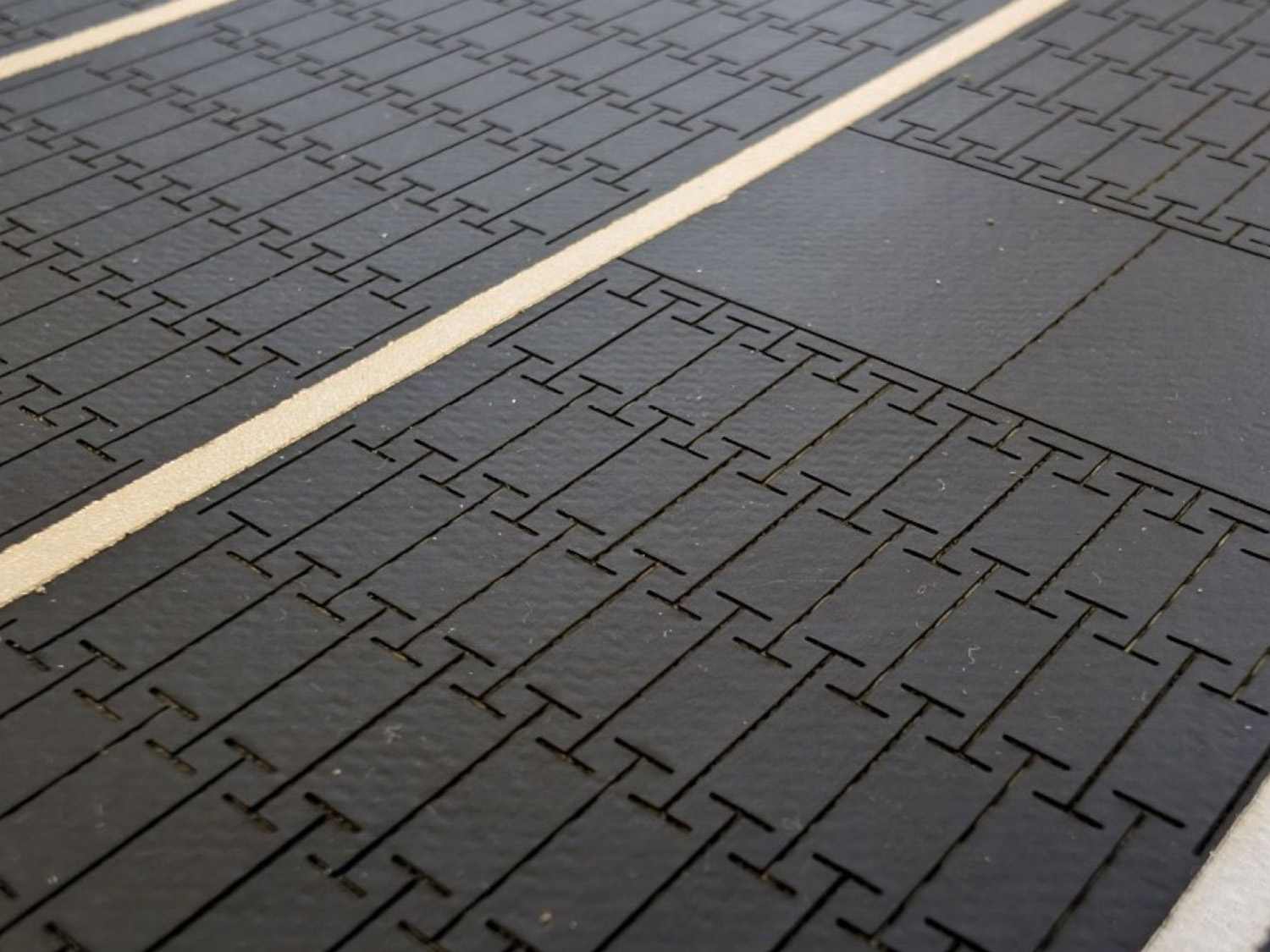
The project was born out of a collaboration with DuPont who designed and built the heating pad, which is laminated on top of the fabric. But despite both companies having ‘amazing histories of innovation’,” she says. “This was a new exploration in which neither companies had expertise in bringing an interface together between fabric and hardware, textiles and electronics, so they were stuck.
“Principled Design was commissioned to design and manufacture the connector part between the heating pad and battery source,” continues Papadopoulos. “In this process we realised how many people were required to create a connection between fabric and wire as well as two different industries and mindsets,” she adds, touching on the way in which, when it comes to manufacturing a wearable technology product, many companies are required to collaborate.
Upon launch of the Winter Olympics Team USA jacket, Ralph Lauren published an article in its magazine based on all the different players that had to come together to develop the Winter Olympics jacket. Having commissioned DuPont to do the inks, DuPont turned to Butler technologies, a high-tech precision screen-printer based in Pittsburgh, to print the inks on the fabric. Apparel manufacturer 99Degrees was given the task of bonding the heater to the jacket’s lining, while high-tech design firm Key Tech designed a battery pack that was slender, lightweight and controllable by athletes wearing gloves, and finally Papadopoulos’s company, Principled Design, was tasked with creating connectors that attach the battery pack to the heater in a streamlined way.
“Obviously in garment creation you may have different companies that create the zippers or buttons and fabric, but the actual construction almost always happens under the same roof,” says Papadopoulos. “But when you bring all these different electronic and high-functioning material components together into one product, every juncture creates miscommunication and increase in cost. It becomes very restrictive for smaller companies or people who want to quickly prototype something.
“What do you think is the biggest challenge faced when creating wearable technology?” I ask her.
“The integration between textiles and technology is far and above the biggest challenge,” she says. “Until very recently, and in many cases this is still an issue, you have a barrier between the people who design and the people who do the electronics.
The integration between textiles and technology is far and above the biggest challenge
“Very often these are not parallel tracks and at some point further down the line the project manager tries to get the separate teams together and there’s a lack of cohesion,” adds Papadopoulos. “They may know the basic cross requirements, but more is necessary. We haven’t really seen people taking an agile development cycle approach where everyone sits together to prototype and iterate. It’s about being able to understand electronics and apparel development and add a different layer of design to really bring the two industries together.”
It’s safe to say the wearable technology industry to date has been dominated by the big players in the textiles and technology fields, and Papadopoulos highlights Google Jacquard as a keynote. However, according to her, commercialisation is still a big issue: “This challenge remains and has not changed over the past 20 years.”
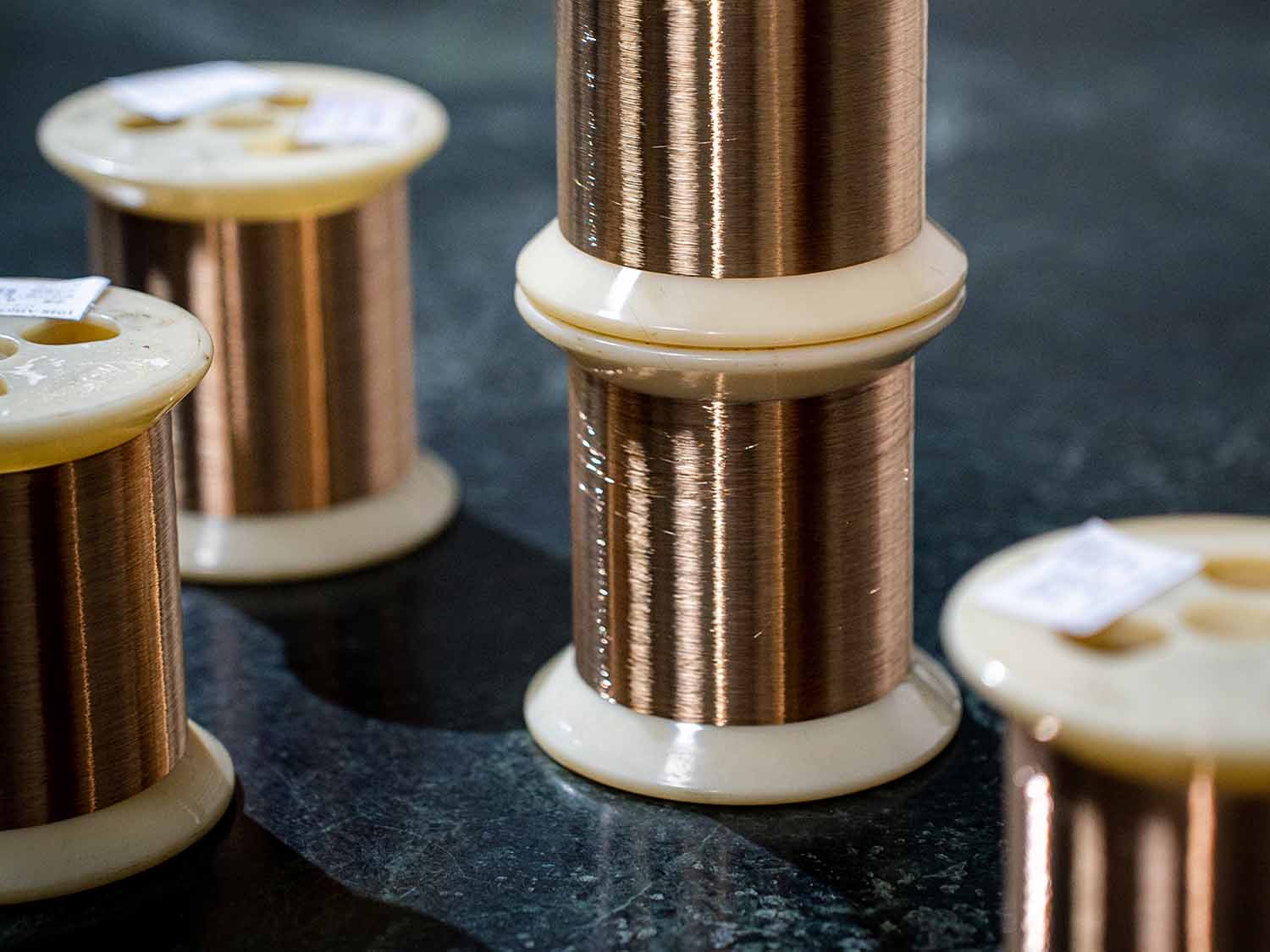
“If you’re not a huge company, to embark on creating wearable technology is difficult because most of the materials are very difficult to source, and this kind of prototyping is expensive,” says Papadopoulos. “There are almost no out-of-the-box solutions. It’s specialised and one size does not fit all. I’ve been in this industry for many years and even to me it’s not straightforward which yarn we should use when so many properties are requested. The tools and capabilities of this hybrid industry are changing year by year, if not every six months, which on one hand is great because new things are coming out, but you have to test their performance and it translates that to make the investment tricky and expensive.”
And, while some companies do have the funds to create these materials best suited for e-textiles, it’s recognising how to showcase them that is another a battle. In 2018, Principled Design worked with material engineer company Lubrizol, on the development of the Multi-Tech Commuter Jacket. Papadopoulos explains: “Lubrizol had all these materials but were unsure how to present their benefits to people at trade shows because they were just pieces of film or pellets sitting on their table and no one could really imagine how to use them.”
She adds: “So, we did a review of the various materials and came up with a few different concepts for product demonstrators. We created a very thin jean jacket, that was different to things already on the market – something more urban, that would really solve the problem of varying temperatures throughout the course of the day.
“We wanted to demonstrate a thin fabric with a thin sandwich of materials that could still provide enough heat that your body can sense it, so we used a series of stretch-restrictive coatings around the connectors to also demonstrate a resistance to connector fail points without adding more hardware and maintaining the flow of the fabric.”
Papadopoulos explains that due to the integrity and soft hand-feel of Lubrizol’s fabrics, alongside the substrates that make it much easier to print onto them the conductive inks, the company was a great candidate for exploration between textiles and technology. The product was named Most Intriguing Flexible and Printed Electronics Product of 2018 by Printed Electronics Now.
The question of sustainability and e-textiles
When applying her experience in this growing hybrid industry to discuss the issues surrounding textile sustainability and end-of-life disposal of e-textiles, Papadopoulos explains: “This is a big issue. Many of the conductive yarns contain silver and we really have almost zero data regarding what happens to it after use and when the micro-silver elements go into the water. We know that this is not a good thing, but we have almost zero information on what happens.”
She continues: “Consumers are already bad enough at disposing of battery-powered items in their house. So, the question remains: what happens with something with integrated technology in it, like circuits for example? I hate to admit that as an industry we haven’t really touched on it yet.
“Of course, people are talking about it, and I do see the apparel industry making steps to reduce environmental impacts. But there really aren’t enough studies done on e-textiles in the water stream etc. I think it’s very positive that we see companies becoming much more aware and responsible, but at the same time there are the limits of science.”
Data-driven wearables
Another key concern when it comes to the bourgeoning wearable technology industry is data security. Do companies ensure they are transparent with users regarding wearable technology data and is it kept safe? Papadopoulos spoke in length regarding this issue, stating: “In many ways, this comes down to strategy.”
“Data is attractive to companies because it’s an amazing source of revenue,” she says. “They use the data to make the product better, because they can sell the data and make partnerships through the data. There are companies that I’m talking to more and more who just focus on the data they need in order to improve their products for the users and implement a very locked system where nobody else has access to the data. A lot of it really falls on the company’s ethics, and how much the consumer demands control of the data.”
To illustrate her interest in e-textiles and data usage, Papadopoulos refers to a project with Nivea Research, in Germany, on antiperspirants. They wanted to create a lab-like test on-the-go and, with the help of Principled Design, made a T-shirt that measures with great accuracy how much someone sweats under their arms with the data being sent via Bluetooth to the researchers. The data was exclusively for lab work, and though users were advised that their data was being used, there was no information provided to volunteers to see how much they actually sweated.
“I suggested that they share this data with the users and provide an incentive for volunteers to put on the shirt,” she says. “They ended up implementing it and the users loved it. I think it’s important that companies ensure the data that is captured is communicated to the user as clearly as possible. Even data that companies think is not relevant or interesting to the user should be transparent.”
Envisaging the future
“What do you envisage will drive the future of the wearable technology market?” I ask Papadopoulos.
“I’ve been saying for years, it’s my wish that wearables do not just focus on the functional but also on social functionality, which invites a new conversation,” she says. “I think it’s interesting to create wearables that somehow reflect the need for socialisation that takes place not just on the virtual but the day-to-day face-to-face proximity base.”
“I think health and wellness is going to be a huge driver. The amount of stress people have and how you engage with your environment and what effect the environment has on your wellbeing. I think this is something we will see a lot more of in this space.
“And in medical devices we see great promise. There’s more interest here in terms of investment because the return can be more obvious, and here there is a greater willingness and appetite for risk taking.”
To learn more about Principled Design, visit http://principled-design.com/