
Earlier this year, TissueGen, the developer of Elute fibre, exhibited at MD&M East – the largest and longest MedTech event on America’s East Coast. It’s a place for R&D managers and executives from across the Northeast and beyond to stay on top of the latest industry advancements, including first looks at innovations yet to hit the market.
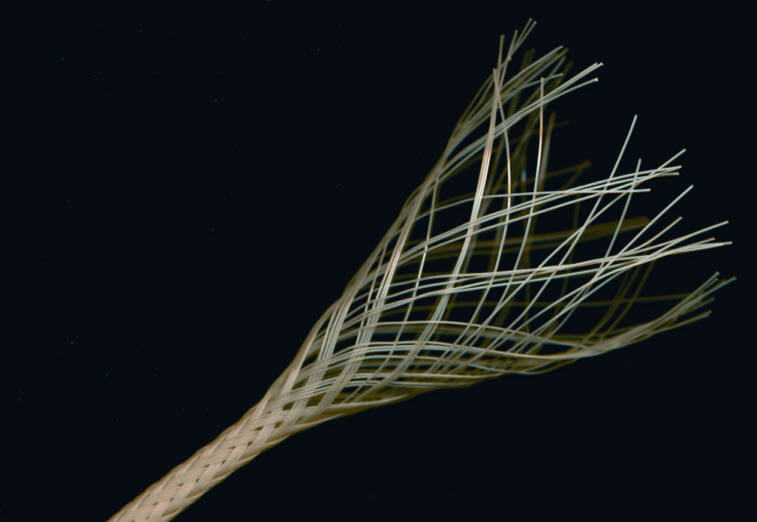
Elute fibre may serve as an active scaffold for tissue engineering and regenerative medical applications
Elute fibre enables controlled sustained delivery of sensitive pharmaceuticals and biologics from biodegradable fibres for advanced drug delivery, nerve regeneration and tissue engineering. TissueGen works with leading pharmaceutical, therapeutic and medical device companies to develop fibre and textile medical devices for use in drug delivery applications.
The company recently issued a new white paper on tissue engineering and regenerative medicine entitled ‘Patented fibre manufacturing for biologic and pharmaceutical delivery’. Here, we summarise some of the key points addressed.
The paper begins by discussing how progress in implantable and topical drug delivery has paved the way for the next generation of medical products and breakthroughs in tissue engineering and regenerative medicine. According to TissueGen, drug-loaded fibres enable improved patient compliance and lower negative outcomes at relatively low cost by adding controlled sustained delivery of sensitive drugs to new and existing devices.
Historically, the types of biologics and pharmaceuticals that could be loaded and delivered from fibres while remaining viable have been limited by the fibre manufacturing process itself. However, a patented and modified wet extrusion manufacturing method enables production of fibres loaded with the widest range of drugs for incorporation in topical and implantable medical devices and controlled sustained delivery within the body.
According to TissueGen, Elute fibre may serve as an active scaffold for tissue engineering and regenerative medical applications that require sustained, controlled delivery of sensitive molecules. It can deliver drugs that range in size from small molecule pharmaceutical agents to viruses in controlled sustainable profiles over days, weeks or even a year based upon the drug and fibre properties. Elute fibre in biologics and pharmaceutical formats may replace traditional biodegradable fibres currently incorporated in medical devices.
TissueGen designs Elute fibre to provide tailored release profiles by modifying a number of parameters including fibre size and shape, drug concentration, polymer type and molecular weight, and degree of crystallinity imparted to the fibre throughout the manufacturing process.
TissueGen offers Elute fibre in many physical formats including monofilament, hollow, bi-component (core-sheath) and even gel-filled centre. Because Elute fibre is sufficiently strong to be woven, knitted or braided, it is said to be ideal for medical textile applications that may benefit from localised, non-system drug delivery.
Elute fibres are said to offer unique advantages over traditional drug delivery formats. Their long cylindrical geometry provides a slower drug release rate than similar radius spherical geometries, resulting in inherently longer therapeutic windows for similar pharmaceutical concentrations. And because Elute fibre is manufactured in a highly controlled wet extrusion process, the resulting fibres are more uniform in size distribution than typically found with other formats.
According to TissueGen, Elute fibre is an ideal drug delivery platform for a broad range of medical applications, including advanced pharmaceutical delivery; antibacterial envelopes; dermal wound healing; orthopaedic devices; regenerative medicine; small and large vascular grafts; solid tumour remediation; spinal cord injury repair; sutures; and cardiovascular stents.
ARCHER Stent
Speaking of stents, TissueGen has leveraged Elute fibre technology to develop the ARCHER stent, a patented self-expanding medical device offering drug delivery from an implantable biodegradable stent. The patent covering the stent describes a helical coil comprised of multiple units of reversing right-hand to left-hand coils.
According to the company, the ARCHER stent is ideal for applications where positional stability and radial stiffness are critical during early recovery and later, may benefit from controlled degradation of the device to gradually return mechanical load to the healed tissue. ARCHER stent may full biodegrade, leaving the healed tissue in its place.
Industry recognition
Elute fibre was developed by Dr Kevin Nelson while he was a bioengineering faculty member at the University of Texas at Arlington. He later founded TissueGen to bring the technology to the market.
Since announcing Elute biodegradable drug-loaded fibre in 2013, TissueGen has gone on to win several industry awards, including two Future Textile Awards, hosted by WTiN, for Most Innovative Small Size Company, and a prestigious R&D 100 Gold Award in the Market Disruptor Services Special Recognition category. In 2016, TissueGen was awarded ISO 13485:2003 certification and last year, it scooped the Medical Device Engineering Breakthrough Award by MedTech Breakthrough – an independent organisation that recognises the top companies, technologies and products in the global health and medical technology market.
On winning the most recent award from MedTech Breakthrough, Nelson says: “Progress on implantable and topical fibre-based delivery of biologics and pharmaceuticals is paving the way for the next generation of orthopaedic medical products, tissue engineering breakthroughs and advances in regenerative medicine. This award is further recognition that these technologies represent the future of medicine.”
Nelson will present on ‘Enabling the next generation of drug delivery through implantable medical devices’ at IFAI Expo 2018 on 15 October.


