By Virendra Kumar Gupta and Pallavi Kohli, Department of Textile Chemistry, MLV Textile and Engineering College, India
Abstract
The application of nanomaterials is increasing in field of textile chemical finishing as the effects produced are long lasting compared to conventional finishing chemicals. There are large number of nano- finishing chemicals available in the market, which are to be used in textile finishing treatments, but the right selection of nano-chemicals is vital in order to achieve durable, effective and long-lasting effects. The characterisation of nanomaterials is very useful in predicting the quality and effectiveness of the products. The particle size distribution, presence of functional groups, emulsion stability and after-application effects are important parameters for nanomaterial application. In this work, nano-silicone emulsions, which are used in textile finishing, are taken as nanomaterials for characterisation.
1.0 Introduction
Nano-materials are particles of an organic or inorganic nature having the size range 1-100nm and these dimensions are practically attainable for the textile application 1,2. Nano-materials are of two types: (a) Nano structured; (b) Nano particles. Nano-particle materials exist in dispersion or emulsion form.
Nanomaterials have properties significantly different and improved from the coarser and grained varieties3,4. Nanomaterials may be formed from metals, semiconductors, polymers and organic compounds. Micro- and nano-materials in emulsion form may produce exceptional change in the properties of the fabric. Nano-particles have a high surface/volume ratio5,6. The application of nanoparticles to textile materials produces various functional finishing properties, such as antibacterial, UV blocking and self cleaning7,8. The durability of effects produced by nano-silicone emulsion softeners is far better than conventional silicone emulsions.
To see the effect of nano-silicone emulsion softener on the performance of cotton khadi fabric, four nano-silicone softener samples were taken from a reputed manufacturer and applied on 100% cotton khadi fabric by the pad-dry-cure method. To see the performance and durability of nano-silicone softener on fabric, the presence and nature of functional groups in the molecular structure were analysed by FTIR test. The penetration of nano-silicone particles in the fabric structure depends on the particle size of the nanomaterials. The particle size of nano-silicone softener was analysed by particle size analyser. The penetration of nano-silicone particles into the fibre structure was analysed by scanning electron microscope.
2.0 Materials and methods
2.1 Materials
Four different types of nano-silicone emulsion softeners were taken from the local suppliers designated A, B, C and D. Scoured khadi fabric samples were taken for application of nano-silicone softeners by the pad-dry-cure method.
2.2 Methods
2.2.1 Particle size
The particle size distribution of nano-silicone emulsions was analysed in a particle size analyser instrument, supplied by the Malvern Instruments (UK).
2.2.2 FTIR Spectroscopy
FTIR spectroscopy uses infrared radiation with a wavelength range 2-15µ. In this spectroscopy the change in vibrational motion of atoms in a molecule is measured. The vibrational motion depends on masses of atoms, geometrical arrangements and strength of bonds. There are two types of vibration in the molecules, which are stretching and bending. The bands corresponding to these two modes of vibration are encountered in the IR spectra of a molecule.
2.2.3 Scanning electron microscope
SEM is used to visualise the morphology of fine structures at very high magnifications, which are significantly higher than can be achieved with an optical microscope. In SEM we use an accelerated beam of monoenergetic electrons that are focused on the surface of the sample and become scattered over a small area. The signals generated are collected and amplified.
3.0 Results and discussion
3.1 Particle size distribution
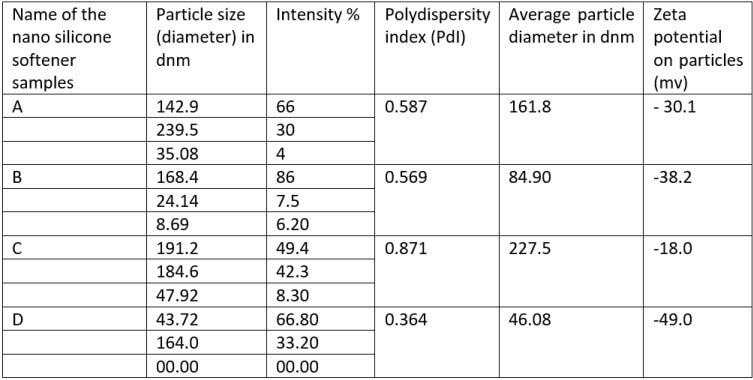
Table 1: Particle size distribution of nano-silicone emulsion softeners A, B, C and D
Table 1 reveals the particle size variation of nano-silicone softeners A, B, C and D. The highest variation is shown by sample C and the lowest is possessed by softener D. The polydispersity index predicts the variation of particle diameter in a given sample. High polydispersity-index materials are not classed as good quality products. The samples B and D have a particle diameter size less than 100 nm, so they will be truly classified as nanomaterials. Samples A and C will come under the micro-silicone emulsion category (particles diameter more than 100 nm) though they are sold and used under the nanomaterial category. Samples B and D possess high negative zeta potential, which prevents the particles from agglomerating and gives stability to the nanoparticle emulsion. Good stability of the silicone emulsion also improves the finished fabric quality after application. Finer nanoparticles show better penetration in finishing (Fig. 10).
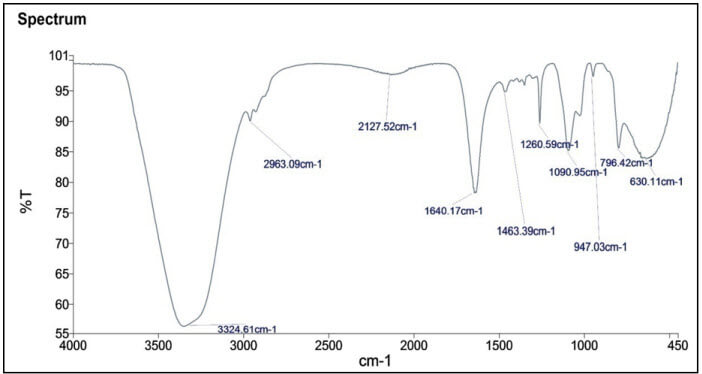
Figure 1: FTIR spectrogram of nano-silicone emulsion (A)
The FTIR spectrogram of nano-silicone emulsion A in Figure 1 depicts absorption bands at wavenumbers 3324/cm, 1640/cm and 1463/cm. These wavenumbers show the presence of amines, alkene and alkane groups in the silicone molecules. These groups in molecules are responsible for bond formation with cellulose molecules and improve retention of molecules on fibre.
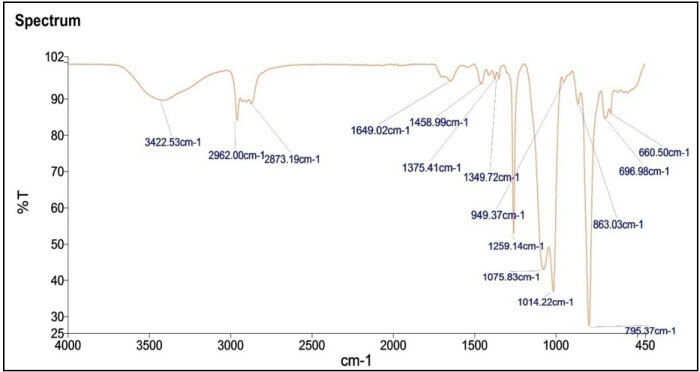
Figure 2: FTIR spectrogram of nano-silicone emulsion (B)
The spectrogram of nano-silicone emulsion B in Figure 2 shows absorption bands at wavenumbers 949/cm, 1014/cm, 1075/cm and 1259/cm. These wavenumbers show the presence of amine groups in the silicone molecules. These amines groups in molecules are responsible for bond formation with cellulose molecules and produce a permanent effect on fibre.
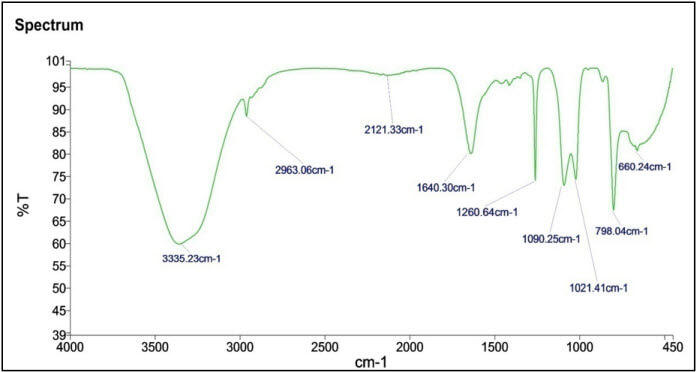
Figure 3: FTIR spectrogram of nano-silicone emulsion (C)
The spectrogram of nano-silicone emulsion C in Figure 3 shows absorption bands at wavenumbers 1021/cm, 1068/cm, 1260/cm, 1639/cm and 3333/cm. These wavenumbers predict the presence of alcohol and amine functional groups in the silicone molecules. These groups are responsible for making bonds with cellulose molecules and give a permanent effect on fibre.
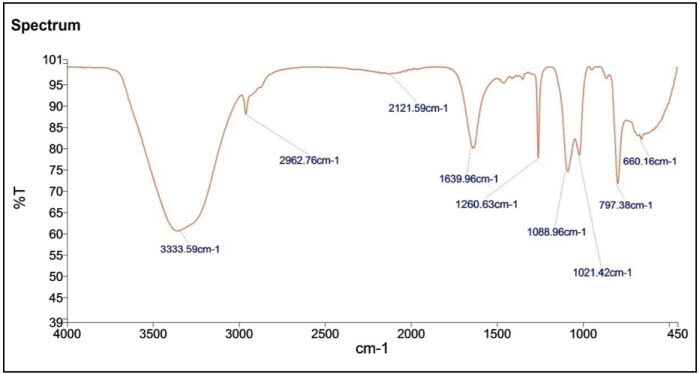
Figure 4: FTIR spectrogram of nano-silicone emulsion (D)
The spectrogram of nano-silicone emulsion D in Figure 4 shows absorption bands at wavenumbers 1090/cm, 1260/cm, 1640/cm and 3325/cm. These wavenumbers show the presence of alcohol, alkane and amine functional groups in the silicone molecules. These amine groups in molecules make bonds with cellulose molecules and impart permanent softness to fabric.
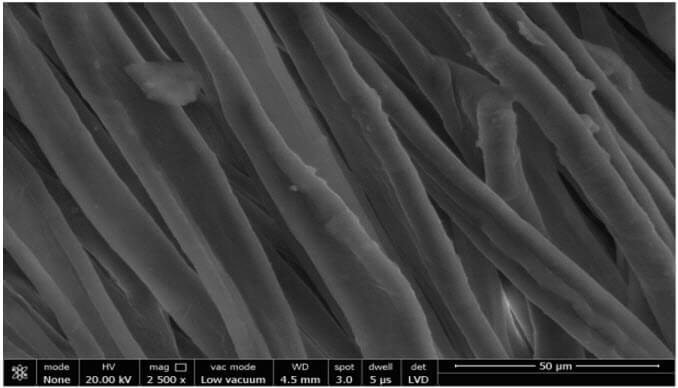
Figure 5: SEM image of bleached cotton khadi fabric
(Magnification 2500 x)
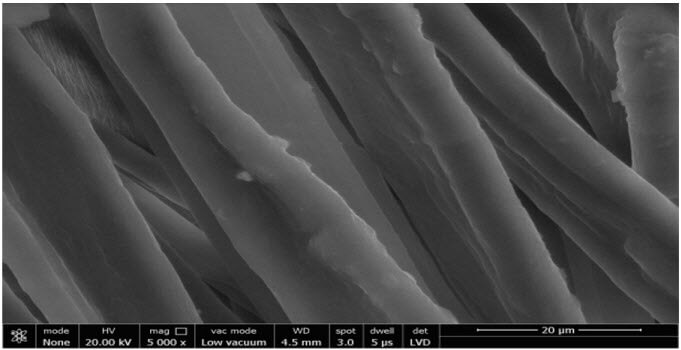 Figure 6: SEM image of bleached cotton khadi fabric
(Magnification 5000 x)
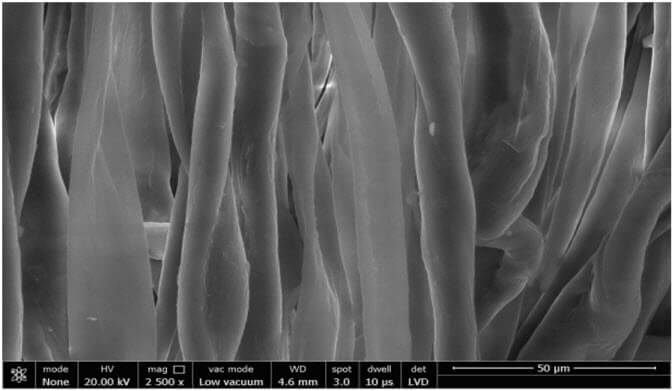
Figure 7: SEM image of silicone emulsion A and C treated cotton khadi fabric
(Magnification 2500x)
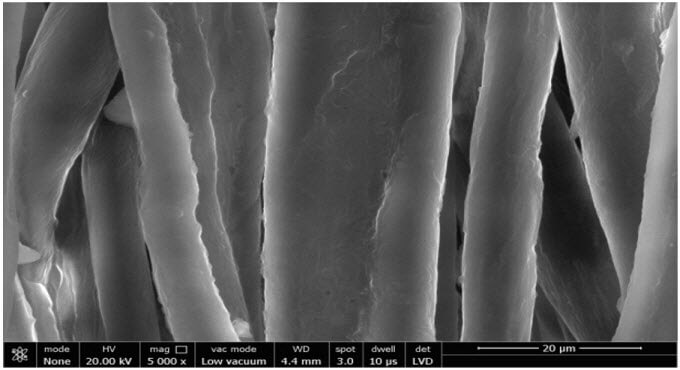
Figure 8: SEM image of silicone emulsion A and C treated cotton khadi fabric
(Magnification 5000x)
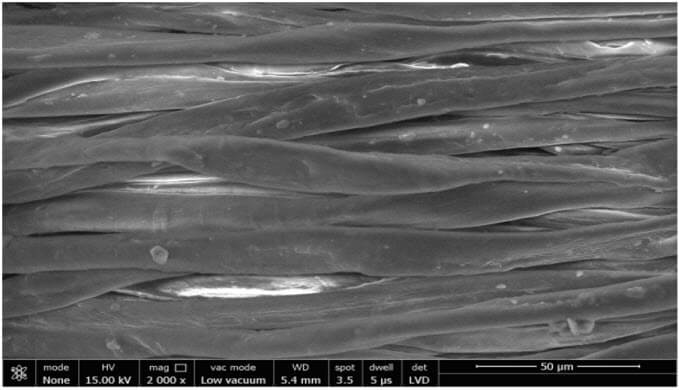
Figure 9: SEM image of nano-silicone emulsion B and D treated cotton khadi fabric
(Magnification 2500x)
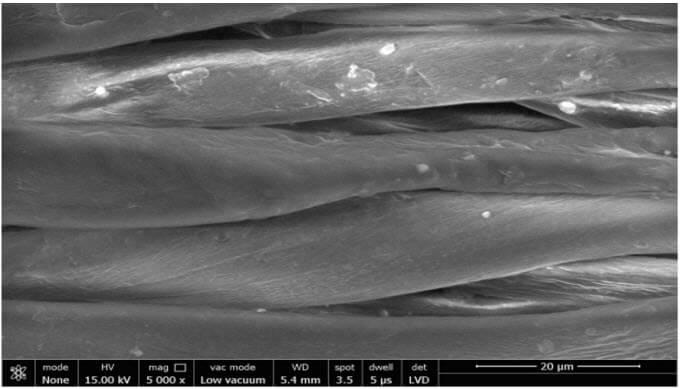
Figure 10: SEM image of nano-silicone emulsion B and D treated cotton khadi fabric
(Magnification 5000x)
The cotton khadi fabric samples finished with conventional silicone (A and C) and nano-silicone emulsion (B and D), were scanned by scanning electron microscope. The SEM image of bleached fabric (Figure 5) shows normal fibres and yarn. The application of conventional silicone softener (A and C) on bleached cotton khadi fabric (Figures 7 and 8) has only a surface effect and penetrates in inter-fibre spaces. The bigger particles diameter of conventional silicone (micro- and macro-) materials do not allow the penetration of particles inside the fibre and the presence of bond forming groups in polysiloxane molecules allows bonding with the fibre and gives its effect on fabric. The SEM image of cotton khadi fabric finished with nano-silicone emulsion (B and D, particle size ≤ 100 nm) shows penetration of nanoparticles inside the fabric (Figures 9 and 10). The presence of amino groups in the silicone molecules allows the molecules to react and make a bond with the fibre to produce long lasting effects.
Conclusion
The experiment trial reveals that out of four samples of nano-silicone emulsion softener, only two softeners belong to the nano category, while the other two softeners, though claimed as nano-silicone, did not fall into the nano category. The properties and effect of nano-silicone emulsion softeners are better than those of conventional silicone softeners. The penetration of nanoparticles inside the fibre structure produces a better softening effect on the fabric.
References
- Li, M.A. El-Sayed, J. Phys. Chem. B, 105 (2001) 8938.
- E. Brus, J. Chem. Phys., 80 (1984) 4403
- G.L. Audran, A.P. Huguenard , US Patent 4302523 (1981)
- F. Ziolo, US Patent 4474866 (1984)
- Lee H. J., Yeo S.Y. and Jeong S.H., Journals of Material Science 38(2003)199.
- Xin J.H., Daoud W.A. and Kong Y.Y., Textile Research Journal 74(2004)97.
- Fei et. al., Nano Technology, 17(2006), 1927.
- Qi et. al., Journals of Materials Chemistry, 17(2007), 3504