
WTiN talks to Evelyne Cholet, secretary general of the French Textile Machinery Manufacturers’ Association (UCMTF).

Evelyne CHOLET
What is the state of the French textile machinery sector?
In France, we combine 30 companies with total annual sales of US$1bn. Our member companies export most of their machines. Asia has been the major regional area for exports for quite a number of years and our most important single market is China, where we have established very effective service networks.
French textile machinery manufacturers are particularly strong in long fibre spinning (wool, acrylic), yarn twisting and control (including technical yarns), space-dyeing, heat setting for carpet yarns, carpet systems, dyeing and finishing, felts and belts for finishing processes, nonwovens, air conditioning of textile plants, and recycling processes of textile materials.
Companies such as NSC, Laroche, Superba, Fil Control, Dollfus & Muller, and AESA Air Engineering are world leaders in their sectors.
What have been the key textile-related developments for you this year?
Many uncertainties have developed over the last few months. For example, tariff increases, potentially developing trade wars and currency movements. Business decision makers do not like uncertainties and as a result, they may postpone investment decisions. However, I strongly believe that they cannot do it for long because the fundamentals of the global textile industry have not changed. For example, in France, the apparel industry has very creative brands with international recognition but, except for the luxury goods, there is only a limited production in France. I do not see how production could return to France because production needs a network of different and complementary operations. These networks have been developed in Asia and cannot be duplicated in the short-term, but to stay at state of the art it is necessary to invest on a permanent basis.
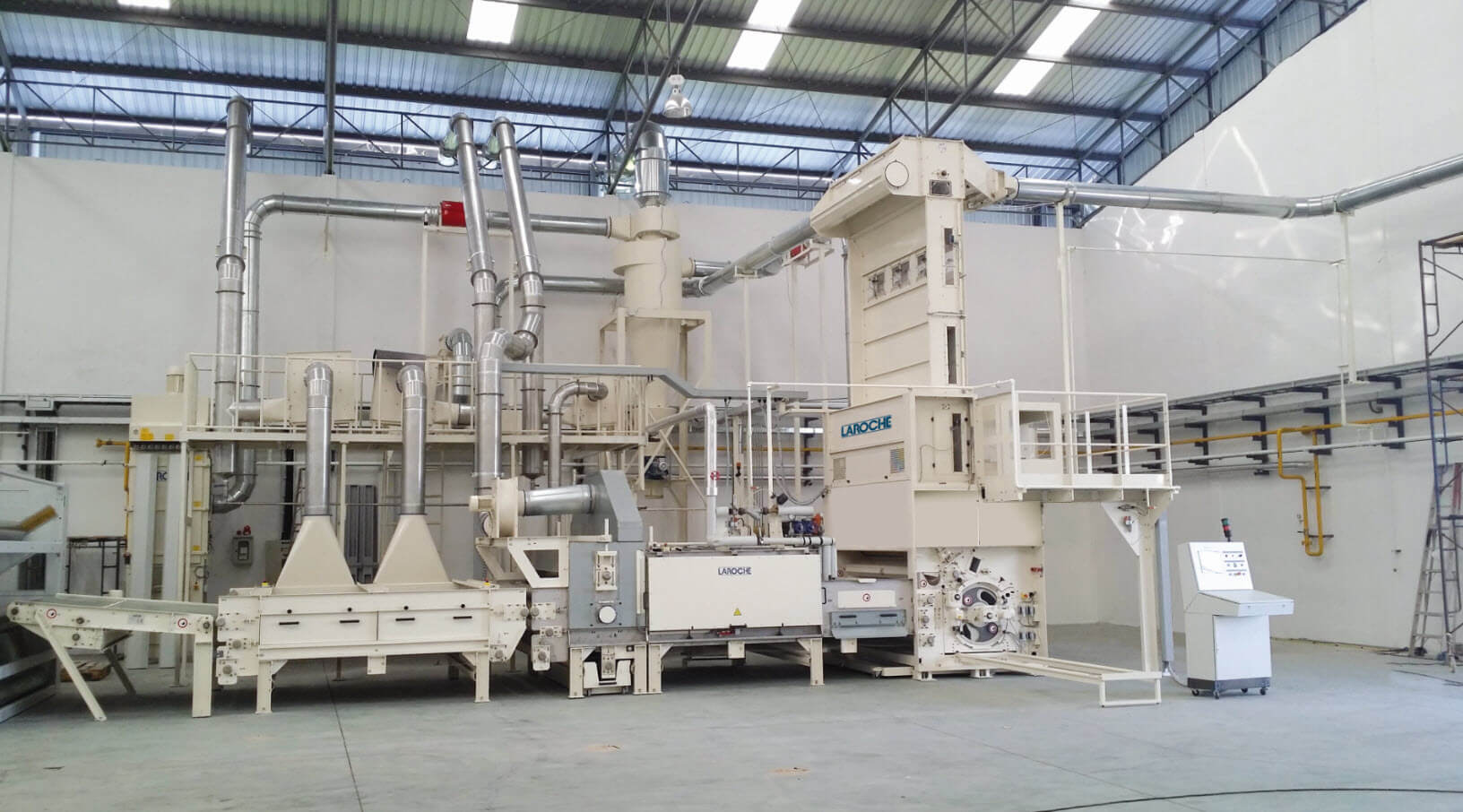
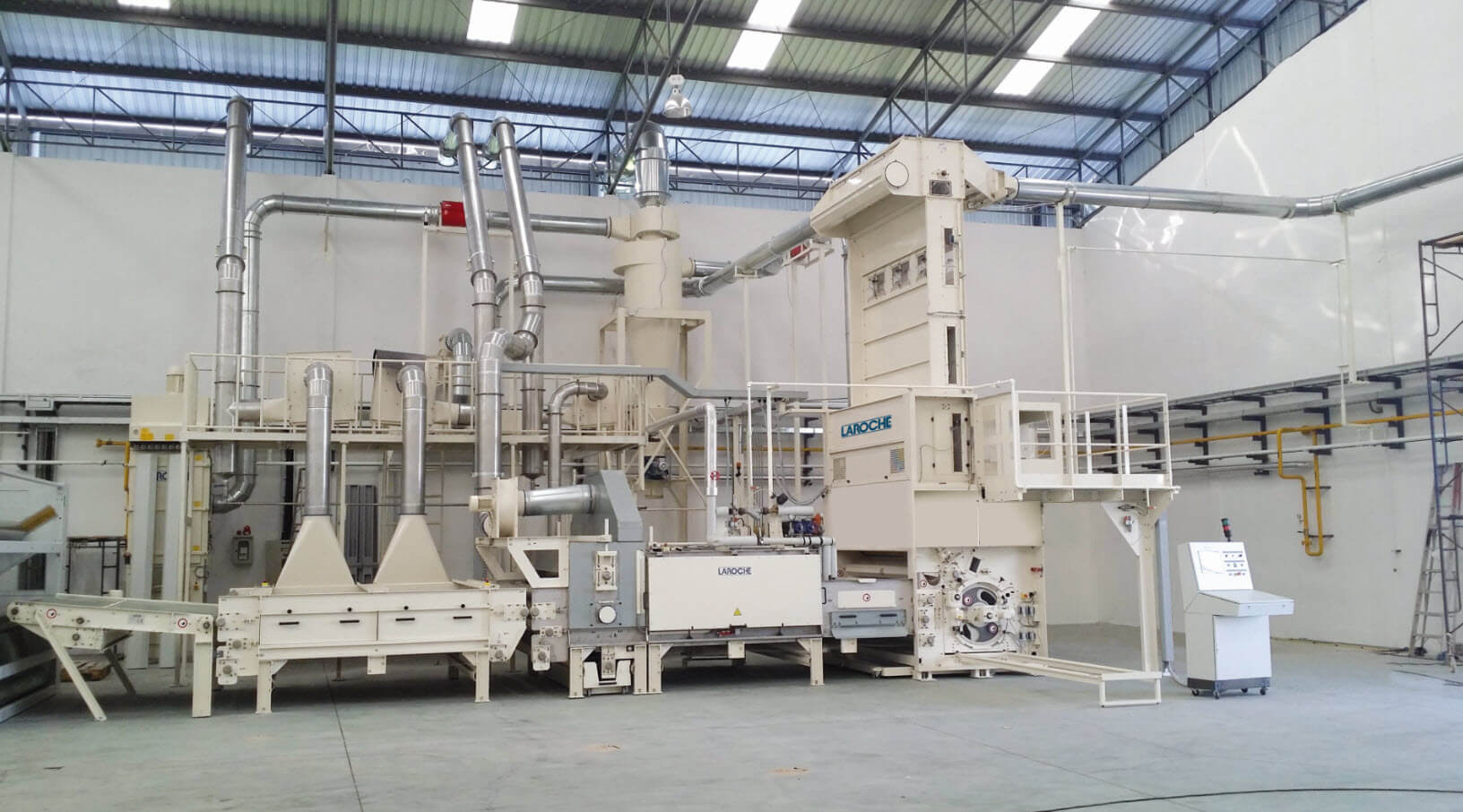
Laroche specialises in the textile waste recycling and airlaid nonwoven field
What technological trends are you seeing at the moment?
The textile industry is often described as an old industry with few innovations going on, however this is not true. The products are changing – their quality has to be up to the international standards – and the production process has to be eco-friendly and competitive, and working conditions have to be addressed.
These trends are not going to change due to short-term uncertainties, although they may accelerate. In this instance, our customers need strategic partners such as providers of innovative industrial solutions and cutting-edge technologies.
What trends have you seen develop in the Chinese and Asian markets in particular?
Low-quality mass-production products are decreasing in demand for both the international market and the national Asian markets.
Asian textile industrialists have to be very close to their markets to be able to adapt quickly to consumer needs. This is particularly true in the apparel industry as new collections come in every season, but it is also true in home textile and carpet manufacturing. As for the technical textiles sector, it needs a more engineering approach; a close connection with the customers but also with the fibre industry and with us, the machinery manufacturers.
What measures do you and your members take to adopt a sustainable manufacturing approach?
Thanks to a thorough analysis that we have conducted, we estimate that in the last five years, machinery from UCMTF member companies has saved up to 40% of energy consumption and that each year, we are increasing these savings, albeit at a lower rate. We have done the same with water usage, which is particularly important in the dyeing process. Savings have also been made in terms of raw material usage.
Our members’ new machines offer very good rates of return and it is then possible to associate the requirements of our environment with the profitability of the industry.
 Superba is a world leader in space dyeing and heat setting for carpet yarns
What are the main challenges your members are facing at the moment?
Industry 4.0 is not a buzzword but a real challenge both for the UCMTF, its members and our customers because, with today’s global competition, the gap between the fast-moving and low-moving competitors is widening at an incredible speed. This new challenge is a great opportunity for us because we are used to working very closely with our customers – and implementing Industry 4.0 needs this cooperation.
How has the recent slowing of China’s economy impacted your member companies?
For many years, China has been our most important market. We have seen ups and downs, but the underlying force is very clear: China has become the world’s main textile producer, and the need for investment is huge. We believe it will remain in this position whatever the commercial trade wars, which may develop and could slow global growth. Therefore, we believe China will still be our most important market for the years to come. We like that idea because we have developed very strong relationships with many Chinese customers and established a very efficient network of services in China.


