Valerie Hostyn from Concordia Textiles discusses new technology, sustainability and the challenges associated with the market and standardisation changes.
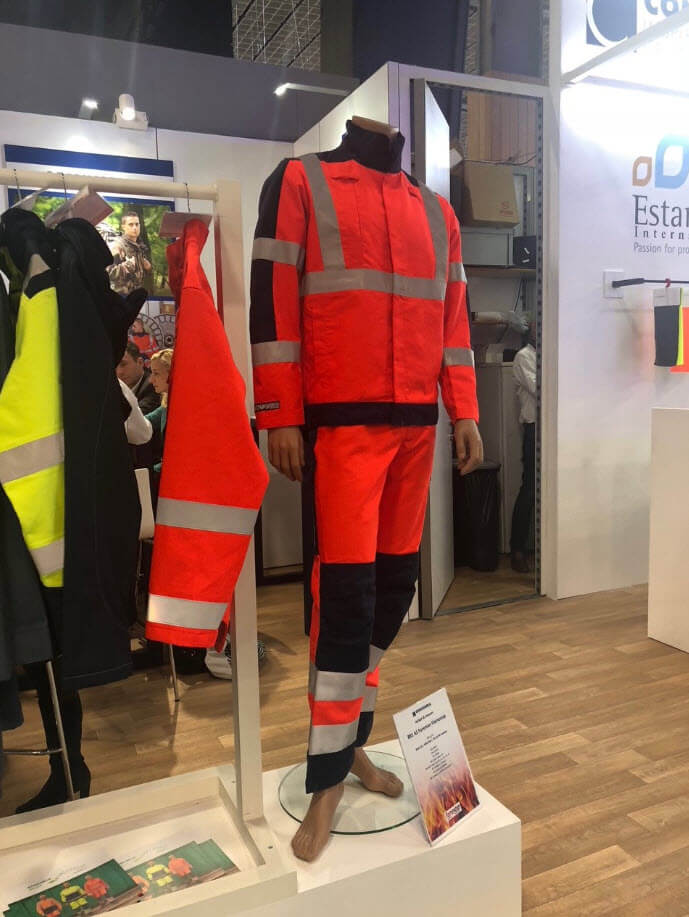
According to Concordia, stretch and light weight properties are in high demand among the protective textiles market
WTiN: Please can you tell me a bit about Concordia Textiles?
Valerie Hostyn: Concordia Textiles is based in Belgium. We are a vertically integrated textile manufacturing and finishing company, which means we weave, dye, print, coat, laminate and finish all in-house in our factory. We have three business units – workwear, fashion and customer-specific solutions. Specific solutions could be anything from automotive to home decoration; it could be anything within our range of production.
WTiN: What are you exhibiting at this year’s Expoprotection?
VH: We have several new products, which can be divided into three categories: Waterproof and breathable, heat and flame resistant, and heavy duty. For waterproof and breathable fabrics, we have invested in a new lamination line. This line can help laminate our fabrics with membranes and/or knits and polar fabrics and enhance fabrics that already exist. It is a plug-and-play system that we can work with to develop products up to the technical level requested in public and private tenders.
WTiN: Am I right in thinking you use recycled polyester in your products?
VH: Yes, aside from our normal collection, we also have our green line of products. The first level is using yarn that is more environmentally friendly produced, such as Tencel.
The next level is using recycled yarn and we use Repreve yarn from Unifi, so we make 100% recycled products. And then you can also go circular, whereby the whole fabric can be taken apart and then the yarn is used to produce workwear again.
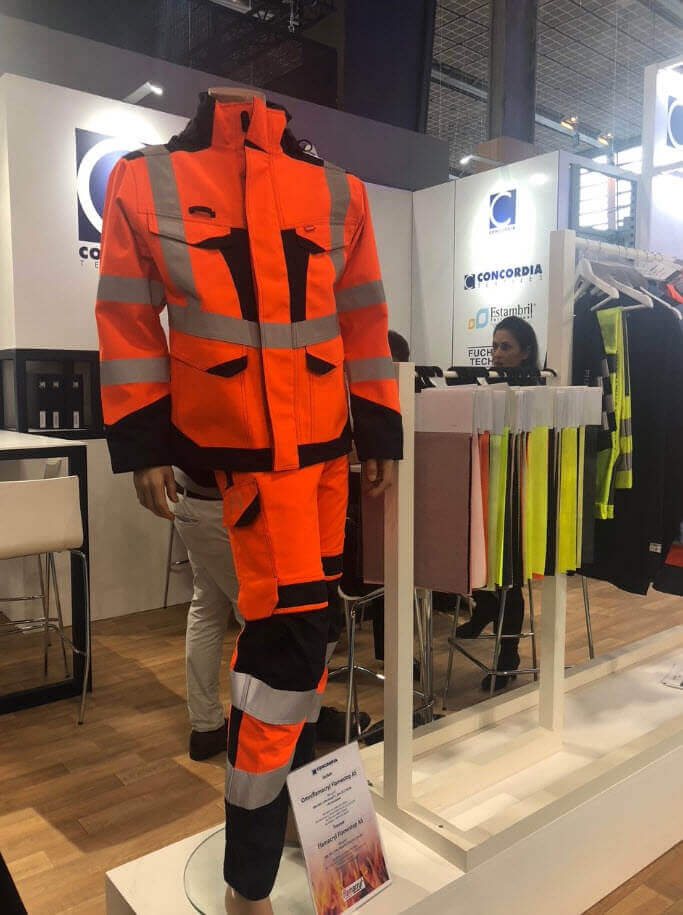
Concordia exhibited at Expoprotection in Paris earlier this month
WTiN: Can you also tell me a bit about your Tickmokiller technology?
VH: Our Tickmokiller technology was first developed for our military range of products. It is a blend of different fibres and the innovation side of it is that permethrin is inherent in the yarn and slow releasing. This gives you continuous protection from mosquito and insects, as well as inherent flame-resistant properties.
Additionally, we are also working on workwear fabrics with this technology.
WTiN: Every company faces its own share of challenges; what would you say are the key challenges you face as a company?
VH: Standardisation and regulation changes are one of our challenges. We understand the standards that are in place, but it can be confusing for our customers. With all the different levels of protection it can be challenging for the end users to know what this means and what they need to have to protect their workers.
WTiN: Do you find that your end users are interested in comfort when it comes to your products?
VH: Yes, so stretch and light weight are in high demand. Stretch in a more common fabric is fine as you have elastane, but when it comes to workwear, elastane is not usually good enough because it cannot withstand high washing temperatures. There are other possibilities, but then it has to be spun right and not shrink etc, so it is difficult.
When it comes to lightweight fabrics, that’s again fine in normal wear or in waterproof and breathable wear as you can have good membranes and good properties, but with heat and flame protection, this is a different story because when you go lighter, you cannot compromise on the level of protection.
WTiN: What is your company’s experience with working with Asia?
VH: We produce in Asia as well, but those products are mostly for garment manufacturers who have their main offices and headquarters in Europe. We do deliver a lot of fabrics for fashion and technical heat and flame fabrics for the local market.
WTiN: Do you only focus on the European market?
VH: We are more focused on Europe, yes. In America for example, the standardisation is completely different again. For example, they have mannequin tests for heat and flame resistance and our products are less suitable for that market. We are looking at the Middle Eastern market, but they are very price-driven over there, and they already buy a lot of Chinese and Asian products.
WTiN: Looking at smart textiles, what opportunities, applications or challenges do you think this will have for your company?
VH: We are always investigating, and we have a very strong R&D team, so whenever there are companies who are presenting these smart textiles, we will trial them if we believe in them. In terms of electronics, we are not doing anything at the moment, but this is something we will always follow up on if there is a demand for it. But for now, electronics are not washable, and this needs to be solved first before we would invest in them.