Carolina Hernandez and Yohan Gendreau from CTT Group tell Andy Rhodes about the company’s exoskeleton research project and smart car seat
Smart composite and smart textile developments are revolutionising many markets across the globe. Countless research institutes around the world are exploring the potential of these materials, and now, one Canadian institute has created an innovative composite solution.
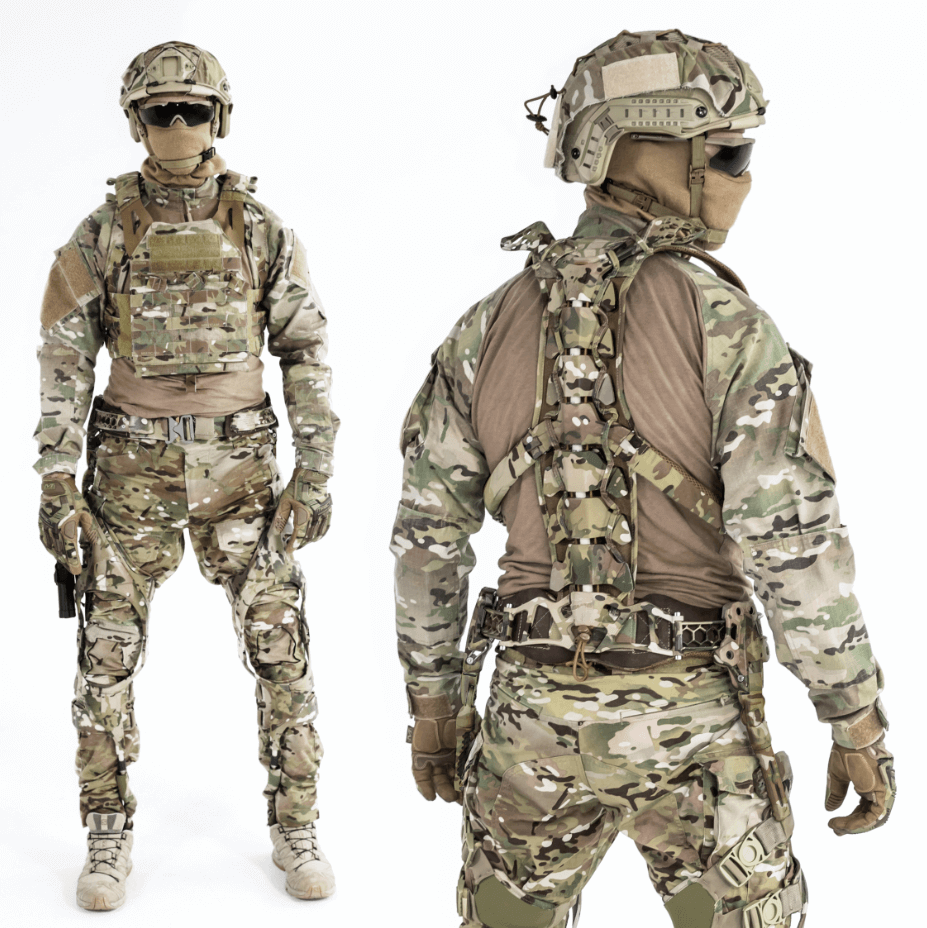
CTT Group and the Composites Development Center of Quebec (CDCQ) have come together to develop “complex composite material parts for human performance enhancement.” Their applied research project takes the shape of a human exoskeleton.
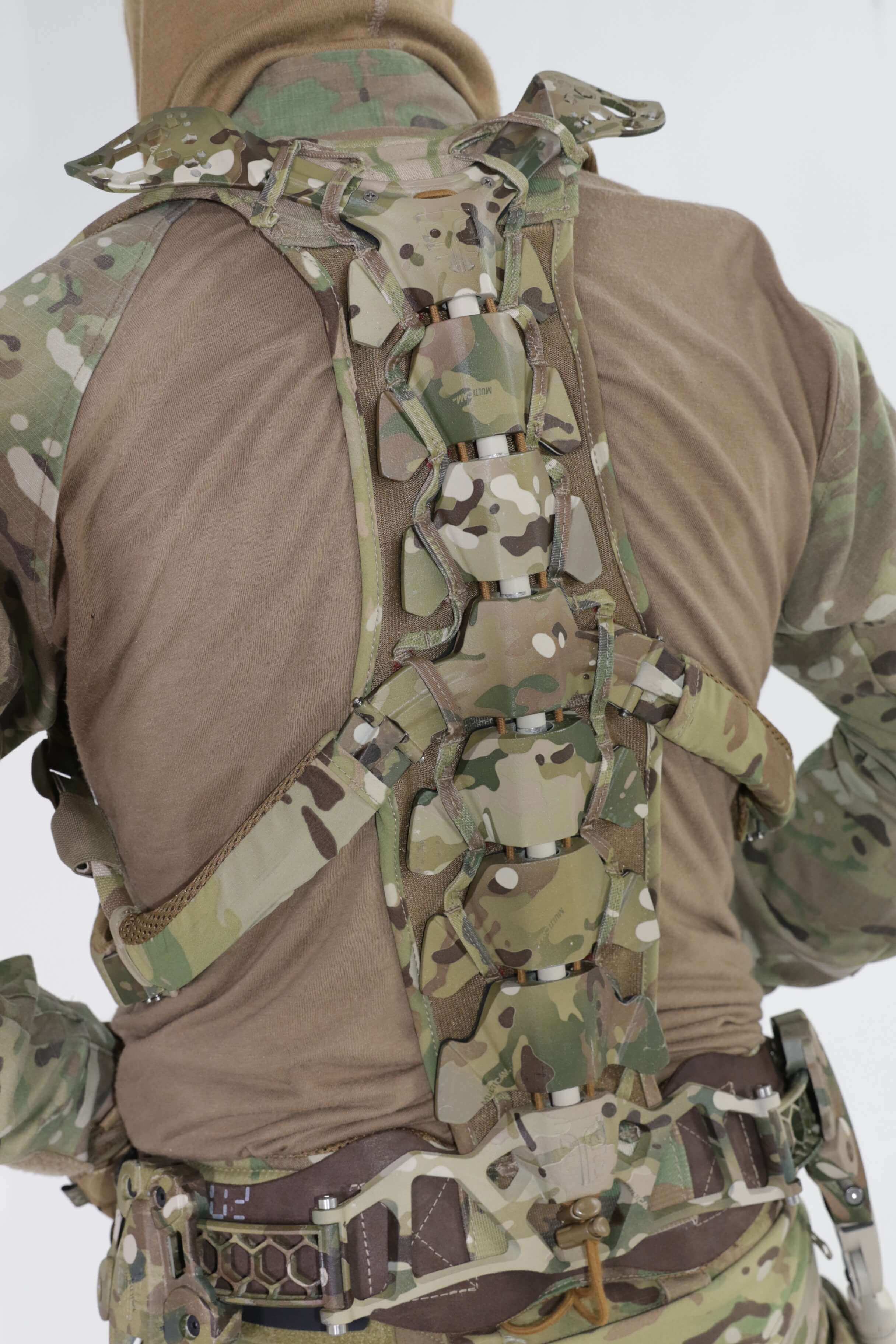
The exoskeleton has been designed for military applications to ensure that soldiers can carry heavier loads in the field. Despite the increased weight, the loads could in fact feel lighter in some cases.
The team, which also included researchers from Mawashi Science and Technology, in collaboration with Mat-Comp and École Polytechnique Montréal, used ‘Net shape’ manufacturing technologies, such as tailored fibre placement, and custom fixtures to create the exoskeleton.
According to the team, the technology demonstrator has achieved a good potential for mass reduction, reducing material waste and lowering production costs while maintaining good mechanical strength.
During the development process, a good synergy and complementarity of the technology transfer centres was the key to the implementation of this exoskeleton project.
Following the announcement of the research, Carolina Hernandez, marketing and communications manager, and Yohan Gendreau, project manager, CTT Group, spoke to WTiN about the project and the work of the institute.
“At first I was a student on the project before I was hired here, and we are in charge of the fibre reinforcement for the exoskeleton,” says Gendreau. “The exoskeleton was actually developed by a company called Mawashi Science and Technology which is based here in Quebec, Canada, and they develop systems to help people enhance their performance.”
He continues: “The exoskeleton they developed with us is actually a passive exoskeleton that was developed for the military to help them carry twice the load they usually can. So, instead of being able to carry 100 lbs of equipment and supplies, they can carry 200 lbs with this by transferring the load in the ground on the feet. There are no actuators, it’s a really passive way to do it, but it works well. They also do a lot of biomimicking, so what they have designed really looks like a skeleton and parts are shaped like real vertebrae.”
Exploring the possibilities
Gendreau states that the work of the joint project was largely exploratory in nature, but that it held significant potential for the future. The main issue with previous exoskeleton-type developments was that they tended to be heavy, costly and slow to produce. However, this consortium believes it has found an alternative solution.
“The project was successful in an exploratory sense,” Gendreau says. “The idea was that since the exoskeleton is now metal 3D-printed in titanium, it’s a slow process to do it and it’s quite heavy. The idea was to cut the price and cut the weight of the original design. It was really successful in those ways since we started with a geometry that was quite complex, so at this stage it was just to see if what we wanted to achieve was feasible and we managed to demonstrate that it is. We managed to cut the weight by almost 40% without doing too much optimisation.”
Mawashi Science and Technology is now working on finding partners to market and sell the development. Gendreau says: “They’re focusing on trying to find interested parties and sell contracts for this exoskeleton, but they showed some interest in forming some parts of the exoskeleton via different methods.”
Smart car seat
As well as its exoskeleton, CTT Group has also recently worked on the development of a smart car seat in collaboration with French firm Thales. CTT Group states that the connected car industry will be worth an estimated US$1tn by 2023, growing at a cumulated 96% annual growth rate for the next six years. Current vehicles are not yet equipped with the artificial intelligence required to interact with the driver and assess their ability to drive in their condition.
These innovations are not limited to private vehicles, but they can also affect various types of transport, including public transport, meaning it can provide added value for passengers. In order to achieve this, Thales reached out to CTT Group and the two began working on the challenging assignment.
One of these challenges was that the collaboration already had experience of sensors used in other markets, such as clothing and health where they are in direct contact with the wearer’s skin. In this case, however, the need for this specific development indicated that the sensors had to read through different layers of clothing.
“To meet this challenge, we used volumetric conductive materials in combination with piezoresistive materials to take advantage of three-axis sensitivity,” says Justine Decaens, technology innovation director – Intelligent Textiles at CTT Group. The group also faced the challenge of creating an interface for the data processor of the sensors. To solve this, the team developed a tailor-made solution from scratch.
Describing the project, Hernandez says: “The project that we did with Thales for the smart car seat with the smart textiles in was interesting. We have a lot of technology today on cars, but we want, and Thales wanted, to have more information that was really useful for insurance and the passengers themselves.”
She continues: “We started by looking at what we know, so textiles, and we figured out how we could construct a solution that may log information from sensing our weight on a seat and use it to tell us many things such as if your heart rate is good, if you’re not having any health problems.
“The huge problem is that in the beginning, for instance, the cost may be too much for one seat, so we have to figure out how much it’s going to cost for the full production, how we were going to sell it and market it.”
Hernandez states that for people without a background in textiles, projects like this show how these materials can be used for much more than just clothing. “Textiles like these are a new area for a lot of consumers and manufacturers. For someone like me who doesn’t have a natural background in the textile industry, smart textiles are opening up a whole new world of possibilities.
“These textiles can be used on so many levels for developments in a lot of sectors. For the exoskeleton, we are not only thinking about military, but also about the health of the person that is in the military,” she concludes.