US wet wipes manufacturer Diamond Wipes International has announced the acquisition of Ode to Clean, the world’s first cleaning wipes made with 100% plant-based ingredients.
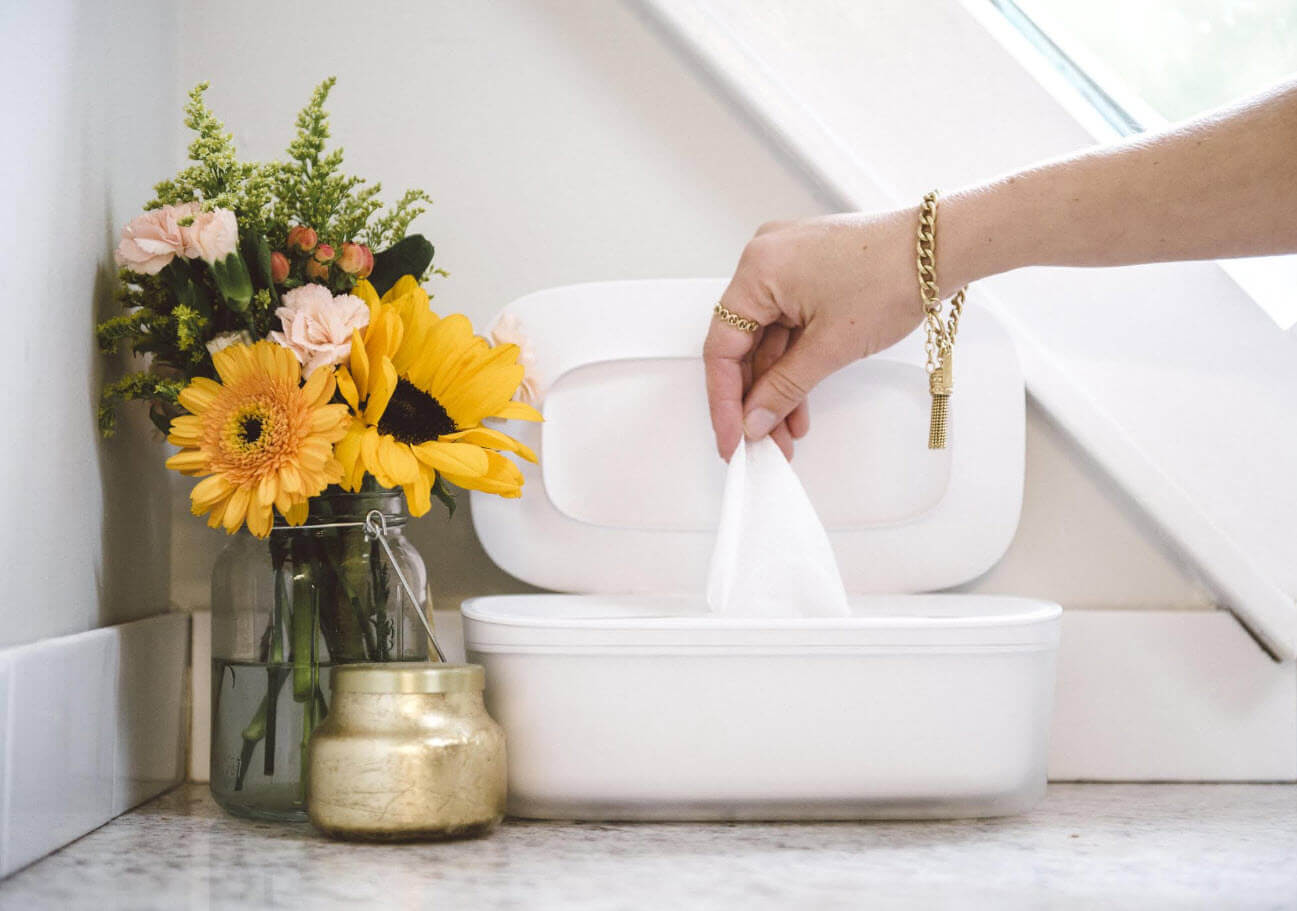
Ode to Clean wipes use 16% less plastic than other cleaning wipes
The Ode to Clean brand was founded in 2016 by Solugen, a biotechnology company specialising in green chemistry, a process to create greener and safer chemicals. During its research, Solugen’s Gaurab Chakrabarti, a doctor researching cancer, and Dr Sean Hunt, a scientist, discovered a unique enzyme that produces a pure form of hydrogen peroxide which they called Bioperoxide.
By combining their expertise, Chakrabarti and Hunt identified an opportunity to integrate Bioperoxide into an everyday cleaning product that does not compromise performance for safety.
“We saw a need for natural cleaning wipes without toxic chemicals,” says Eve Yen, founder and CEO of Diamond Wipes International, Inc. “More and more customers are becoming environmentally conscious of the products they use in their daily lives. Ode to Clean is the perfect solution that customers can feel safe using in their homes.”
According to the company, Ode to Clean is made with 100% plant-based materials and uses solar-powered and wind-powered manufacturing. This contributes to the product’s environmentally-friendly nature, as Chakrabarti explains.
“Many so-called ‘natural’ household cleaning wipes use toxic chemicals, and rely on petroleum-based manufacturing,” says Chakrabarti. “Sean and I developed a technology that reduces the waste and pollution in the production process, but also created a purer product that would be clean and safe for our families.”
Diamond Wipes states that by combining the company’s innovation, research and design capabilities with Ode to Clean’s “cutting-edge micro-manufacturing will create a product that is unmatched in today’s market”.
Furthermore, Diamond Wipes is launching an upgraded version of Ode to Clean wipes in November 2018 featuring a biodegradable substrate and an improved formulation of Bioperoxide to provide more effective cleaning performance.
The wet wipes industry is under pressure to introduce more biodegradable products which break down in wastewater systems. As many of the market’s most popular wipes contain plastic binders and other non-degradable fibres, they do not break down in the same way as toilet tissue, often contributing to blockages known as fatbergs.
A team of scientists at UK-based scientific and sustainability consultancy company WRC carried out tests to determine the extent to which conventional wet wipes break down when they are flushed into the sewers. In the tests, they put wipes into conical flasks full of water and rotated them on a shaking platform to mimic the turbulent water conditions in a typical sewer.
The results of the experiment found that none of the wipes they tested – all of which are labelled as flushable and are available from UK retailers – break down in wastewater systems. According to Ode to Clean, its wipes use 16% less plastic than other cleaning wipes refills and contain 0% paper. The paper industry is the third-largest industrial polluter.
A recent report published by Smithers Pira suggests that despite the current issues regarding flushability, the global nonwoven wipes market will reach a value of US$21.8bn by 2023. This figure marks a dramatic rise from its current value of US$16.6bn, with the forecast period exhibiting a compound annual growth rate (CAGR) of 5.7%.