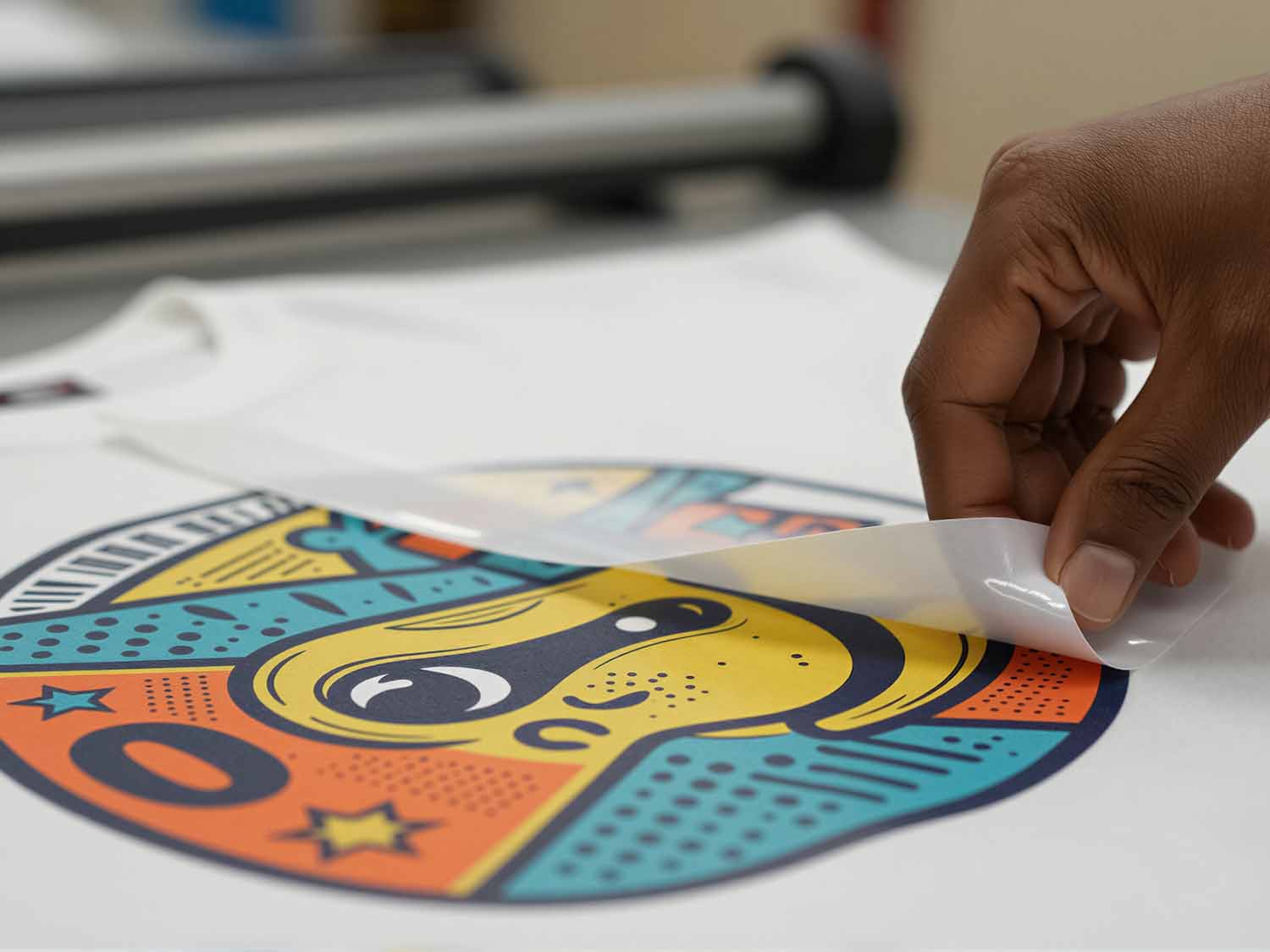
Can digital textile printing help bring the Australian textile and clothing manufacturing sector back to sustainable growth? There are experts who believe this scaleable finishing technology can give Australian design talent room to thrive.
Faced with the proximity of China’s manufacturing juggernaut, it is no surprise that mass textile and clothing manufacturing has declined in Australia, but digital technologies are giving the industry a chance to find new niches.
“The Australian market is still tiny,” says Julian Lowe, founder and general manager of The Textile Hub in Sydney. The entire clothing and footwear manufacturing industry in Australia has been in decline and today employs less than 20,000 people. And those Australian fashion houses that have remained have outsourced to China, Vietnam, Fiji or Indonesia to print and produce their apparel.
But slowly, digital textile printing is managing to coax some designers back to their homeland for production. “We can compete on time with the big markets in China,” says Lowe. His textile printing business, a start-up that he founded in July last year, can bring down turnaround times for Australian brands and retailers to one or two weeks, compared to 12-18 weeks overseas, and offers a smaller minimum printing requirement of 50-100m, compared to 500-1,000m overseas.
Moreover, faced with rising local labour costs, Chinese firms’ decision to hike prices between 20% and 30%, combined with increasing the size of minimum orders, has made Australian producers more attractive to home-grown fashion houses.
Despite the positive outlook, however, there are still not many digital textile printing companies in Australia. There are two major polyester printing houses – Mereton Textiles and Sublitech – both sublimation printers are based in Sydney suburbs with print runs of 300-400m/day – and three players in the natural fibres market – The Textile Hub, in Sydney; Next Printing, in Melbourne, which also offers synthetics; as well as the British player Think Positive Prints, which has studios in London and Sydney. These companies work with smaller workloads, producing about 100m/day.
The Textile Hub, for example, works on an EFI Reggiani Renoir Compact inkjet printer. It also produces on Roland screen printing equipment and a Mimaki wide-format inkjet printer. Australian-made Rimslow coating and washing units then get the fabric ready, which after printing is steamed before being washed and dried. Clients choose The Textile Hub not only for its smaller print runs that work well for samples or novice designers, but also to prevent inventory build-up and waste. Sustainability was the deciding factor for Sydney-based customer Tonia Bastyan, for example, who is preparing to launch children’s swimwear brand Conscious Swim and wanted to produce as ethically and as sustainably as possible.
There are also several minor players that work with one or two primary customers or boutique textile printing studios, such as Frankie and Swiss in Melbourne. Founded by sisters Michelle and Jacqui Redman, the company offers custom print designs onto natural fibre fabrics with the help of a two-tonne stainless steel textile printer, which they have named Florence. Frankie and Swiss celebrate products that are proudly handmade in Australia, a recipe that is paying off. “We also have Florence 2 here now and will be adding additional printers in by 2019,” says Redman.
However, all Australian companies struggle to find talent. It is a long-standing problem. An International Specialised Skills Institute Victoria report stated as long ago as 2014: “The globalisation of retail through the rapid development of internet technologies has […] left many Australian fashion retail brands floundering,” especially the educators that service these sectors, says Redman.
Frankie and Swiss, for example, have struggled to recruit talent. When they could not find the right person to run Florence in 2015, they ended up employing someone as an apprentice. They have also started an in-house design school to support and nurture the industry as a whole.
According to a recent report from Indian market research company Stratview Research, the whole Asia-Pacific region will generate a healthy demand for digital textile printing inks in the foreseeable future, although Europe will certainly remain the largest market. While it projects the global market to grow at a compound annual growth rate of 17.5% during the period between 2018 and 2023. For Australia itself, WTiN Intelligence: Digital Textiles forecasts steady growth for the market, as we saw a 23% increase in output volume in the first half of 2018, compared to the same period last year.
In line with this forecast, Lowe also predicts a steady growth. “In Australia we are already at the forefront in swimwear and we are also strong in colourful shirts,” he says, emphasising that Australia can still increase its exports of digitally printed textile products.
In a recent interview (January 2018) with the Australian Financial Review, the former CEO of Australian retail major Woolworths, Paul Simons said that he also thinks that there is room to bring the fashion manufacturing industry back to Australia – developing demand for more local digital printing. He believes that the demand for Australian-made products will rise as consumers become more concerned about the supply chain. “Today more people are becoming concerned about ethics in production and it is a selling feature if you can demonstrate you have higher standards of production,” he says.
Lecturer Emma Lynas, who teaches textile design at RMIT University in Melbourne, views digital textile printing as the ‘opportunity for designers to keep production local.’ Lynas, however, also points out ‘the aesthetic limitations of the technology’ and insists that therefore ‘traditional methods such as screen, block and rotary still have their place.’
Apart from getting designers to print in Australia, Lowe’s mission is to foster new talent as well as innovation. He works with researchers at the University of Technology in Sydney, in particular Cecilia Heffer, a design academic and textile designer who specialises in contemporary lace and textile innovation. Innovation in Australian fashion also comes from the Australian Future Fibres Research and Innovation Centre (AFFRIC), at Deakin University in Melbourne.
“We won the H&M Foundation Global Change Award a couple of years ago,” says Deakin’s Professor Xungai Wang. His team’s work focused on sustainability. They converted old denim waste into fine powders, and then printed or coated these onto a new piece of fabric. This way, the team was able to recycle old denim, and colour fabric without using the traditional water and energy intensive dyeing process.
Overall, the country’s digital textile industry is growing, and its potential is increasing the more designers and customers prefer ethical and sustainable production over cheaper products from Asia. Innovation and new talent should make a positive change for the industry in coming years as well.