The company has partnered with TerraCycle to implement the US REDYPER programme. Founder and CEO of DYPER, Sergio Radovcic, tells Fiona Haran more about it.
Around 20 billion diapers are dumped in landfills in the US alone each year – a major environmental problem since their use became widespread in the 1960s and 70s.
DYPER, an eco-friendly diaper service, is hoping to reduce this number by introducing the ‘world’s first’ compostable diaper – the result of its recently announced partnership with TerraCycle, a waste management company, to implement the REDYPER composting programme in the US. The service enables existing and new subscribers to return their soiled diapers for composting.
Though composting DYPER diapers at home has always been possible, the company says that the TerraCycle partnership allows everyday families to ‘skip the DIY’ and help ensure that their used diapers don’t contribute to the landfill waste.
Family values
DYPER was launched 18 months ago and development of the REDYPER programme started about a year prior to this, says the company’s founder and CEO, Sergio Radovcic, who explains that family is at the heart of the business.
“My daughters are the inspiration for starting this. When they were diaper-ready, we never actually put too much thought into diapering; we were occupied by many other things as new parents. But generally speaking, we’re good citizens – we recycle, we try to be bioorganic. When it comes to your children, there is the dilemma of cloth diapering versus disposable diapering. Generally speaking, disposables are not very positive for the environment. DYPER is our take on improving the impact of disposable diapers,” says Radovcic, who is based in Arizona, US.
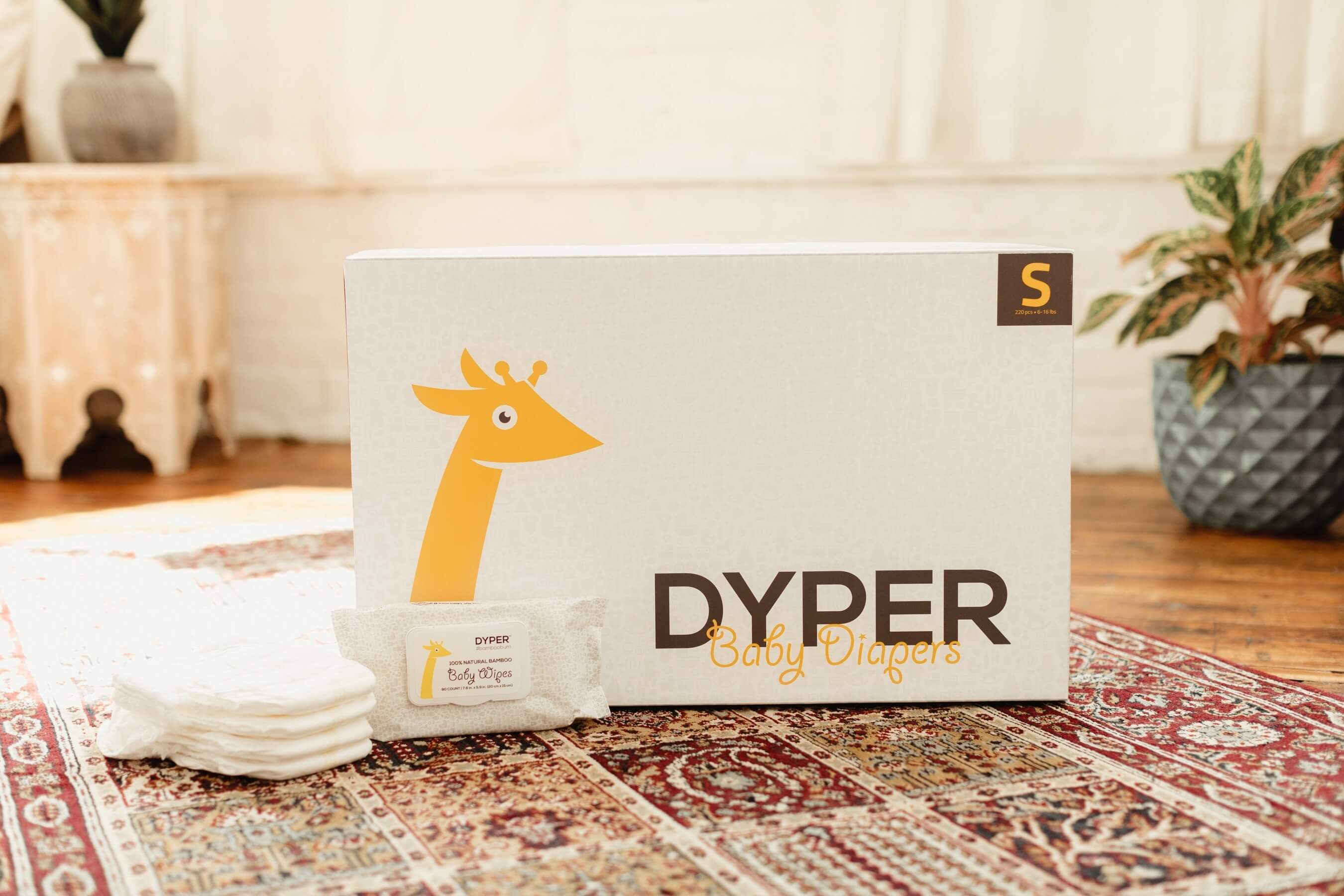
DYPER supplies its product through a monthly subscription service, providing an “environmentally-sound, cost-effective and convenient way to receive diapers”. Along with being compostable under the right conditions, DYPER’s product is made from responsibly-sourced bamboo and free of chlorine, latex, alcohol, perfumes, lotions, PVC, TBT, or phthalates.
DYPER subscribers that opt-in to the REDYPER programme are provided with bags and a specially designed box engineered to the strictest United Nations Hazmat shipping standards. When the box is full, subscribers can download a pre-paid shipping label from the DYPER Composting Program page found on the TerraCycle website for easy return of their soiled diapers for composting. The waste composted through this programme will be used in specialised applications, such as for vegetation in highway medians.
When selecting the materials for the diapers and packaging, Radovcic explains that he had to think carefully about cost versus the environment. “We made a lot of choices – not popular choices, expensive choices – whether it’s how we package our product or how we source it,” he says. “For instance, we package the diapers in oxo-degradable bags and boxes that are made from non-virgin wood. These are not popular things in terms of the competitive landscape.
“We chose plant-based viscose from bamboo versus traditional PE or PP-based nonwovens – which is a very expensive choice for our backsheet and topsheet. We wanted to use readily available nonwovens because we wanted to make sure that the diapers could be composted in commercial facilities for the diaper service we launched with TerraCycle.
“We did have this pressure on the pricing side to make sure that these materials, when put together, could actually support a customer’s budget,” he continues. “Also, from a performance perspective, plant-based materials have different performance characteristics than established standards of other diapers and absorption rates etc. It took a lot of work … we’re in the third generation of our diaper now, so it has taken three iterations already based on customer feedback. But to improve and adapt to these unique challenges of the materials, the biggest challenge is getting customers to be willing to take some compromises. There are lots of things we’ve made customers subscribe to in terms of thinking.”
Meanwhile, the Netflix-style subscription service that DYPER offers speaks to the consumer need for convenience and reliability – something that has proven key during the Covid-19 crisis with essential items being in short supply.
“We haven’t skipped a beat in delivering our packages,” says Radovcic. “We plan for subscription, so we always have to plan ahead for subscribers who want to replenish their supplies. And because we have this relationship with the customers, it’s different than when you buy one-off packs from Amazon for instance – that’s really helped us and our families. We’ve had thousands of encouraging letters about removing the diapering side from the mix.
“So, we’re benefiting from an increase in sales but we’re also benefiting from our customer satisfaction – we’re validating what we told them before the crisis about predictable subscription, guaranteed deliveries, and convenience at home. Customer service is one of the most important facets of our business when it comes to making diapering a responsible choice.”
Carbon offsetting
The company is also very keen to reduce the carbon footprint of diapering, especially considering the vast emissions that are produced from landfill disposal.
For instance, in 2008, the UK’s Environment Agency performed a large-scale, scientifically-validated study of the emissions from manufacturing to landfill disposal. Based on the fact that a child is typically in diapers for two and a half years, the study stated that for disposables, the potential global warming impact is 550 kg of carbon dioxide equivalents per child over this period – equating to an estimated total global warming potential of 0.4 metric tons (Mt) of carbon dioxide equivalents per year. For reusable cloth diapers, the baseline scenario based on average washer and drier use produced a global warming impact of around 570 kg of carbon dioxide equivalents, making the two diaper types similar in terms of environmental impact.
“They were able to qualify that the impact of the diapering journey is about 18.3 kg of CO2 per month,” says Radovcic. “So, we took that worst-case scenario and offset it so that every time you buy our product we’re offsetting the worst-case scenario of CO2 footprint. So, you have better sourcing, better packaging, better materials, carbon offset, and you can choose if you want to participate in composting at home or return to us for composting.”
Customer feedback
The TerraCycle-supported DYPER Composting Program is part of DYPER’s ongoing initiative to make eco-friendliness in the baby segment more effective and convenient. Discussing the set-up, Radovcic says that the company started by doing a lot of lab testing in controlled conditions to reach the right results. It then deployed the diapers with a composting facility in California which allowed the company to test with real customers, to see what the impact is of putting them into composting. “We were then finally able to launch the national programme, which is an industry first,” he says.
The diapers are currently manufactured in Asia and North America, explains Radovcic, with the company also eyeing a third manufacturing site in Europe. “We’re qualifying a few sites – from an environmental impact perspective,” he says. “We want to get as close to our end customers as possible.”
The customer response to the REDYPER programme has been ‘overwhelmingly positive’ so far, explains Radovcic, with the company seeing families ‘who are really endorsing it’.
“We’re extremely excited about where the diaper is going, and we plan on expanding it as we grow as a company,” he says.
The programme currently services the US, apart from Alaska and Hawaii. And, like it’s manufacturing sites, the company is already looking at extending its reach. “We’re pursuing it in the UK. The UK is a unique market, diaper costs are very low compared to the rest of the world,” says Radovcic. “But we need to provide education to customers to make sure it is an approach that works for them – education on the price and the impact of composting.”
Prior to DYPER, Radovcic too sought education as he had little experience of the diaper industry. He therefore hired some knowledgeable consultants to gain some much needed understanding and support. And, despite entering an already saturated market, the entrepreneur believes that appealing to the interests of today’s consumers will hold the business in good stead.
“It’s about capturing the needs and wants of the millennials, who are more conscious than prior generations about the environment,” he says. “It’s much more than looking for a product in a store and buying it off the shelf. We’re not the only ones who are benefiting from the change of ‘better for you, better for the planet’. And since we launched, we are now getting more support ... more manufacturers are now willing to build my diaper.”
Radovcic also points out that the company can’t solve every problem relating to the environmental impact of diapers, but that “we are trying to do our part to be part of the solution”.
“I wish I could build a unicorn diaper that disappears into nothing, but I can’t,” he says. “We can’t make imperfection get in the way of progress. Yes, it’s not perfect but it’s certainly a step, and if we as a small company can afford carbon offsets, better materials, and more responsible disposal mechanisms, it may influence our larger peers. That would be the ultimate win – not just us doing it but others doing it as well.”
And long-term, this approach will prove essential amid the growing ageing population, as Radovcic explains: “The challenge for the industry is the adult diaper category. Because people are having more babies in the developed nations, that tsunami is going to hit us in the adult diaper category, especially since the diapers in these nations are four times physically larger. So there are more materials being used and over a longer period of time – around 10-15 years of adult use. We hope the things we’re doing today will have a good impact in the future for the adult diaper category.”
Radovcic says DYPER is currently at the beginning of its journey, with “18 months being nothing compared to our competitors” but hopes that the genuine connection it has built with customers will help the business stand the test of time.
“Customers have joined an Ambassador programme to actively promote the brand, bringing us third-party representation,” he says. “They thought it was important to spread the message [about DYPER] and our joint point of view. The power of connecting with new families when they have children is extraordinary.”
To learn more about DYPER and the REDYPER composting programme, visit www.dyper.com