General manager of EDANA, Pierre Wiertz, addresses some of the current issues circling the nonwovens industry, and outlines some of the trends expected to drive trade in 2019.

Pierre Wiertz, general manager of nonwovens trade association EDANA
WTiN: What are the biggest challenges circling the nonwovens industry at present?
Pierre Wiertz: 2018 might well become a milestone as far as the number and amplitude of external challenges affecting the nonwovens and related industries are concerned. The issue of plastics, for example, has been a huge story. Despite all the industry’s efforts, the improper disposal of wipes continues to cause problems, and stakeholder questions on the raw material composition and trace contaminants affect several product categories. But these challenges also represent opportunities. The way the nonwovens industry reacted to market forces to introduce alternative teabag substrates is a case in point and I’m sure further innovation is on the horizon.
More generally, as an industry we have a duty of care to ensure our products perform while also mitigating their impact on the environment. In specific reference to wet wipes, we continue to act to ensure wipes pass agreed standards on ‘flushabilty’ and dispersion. The revised industry guidelines help wipes manufacturers assess whether their products can be flushed, and the labelling code of practice complements these guidelines in recommending improved visibility of the ‘do not flush’ logo.
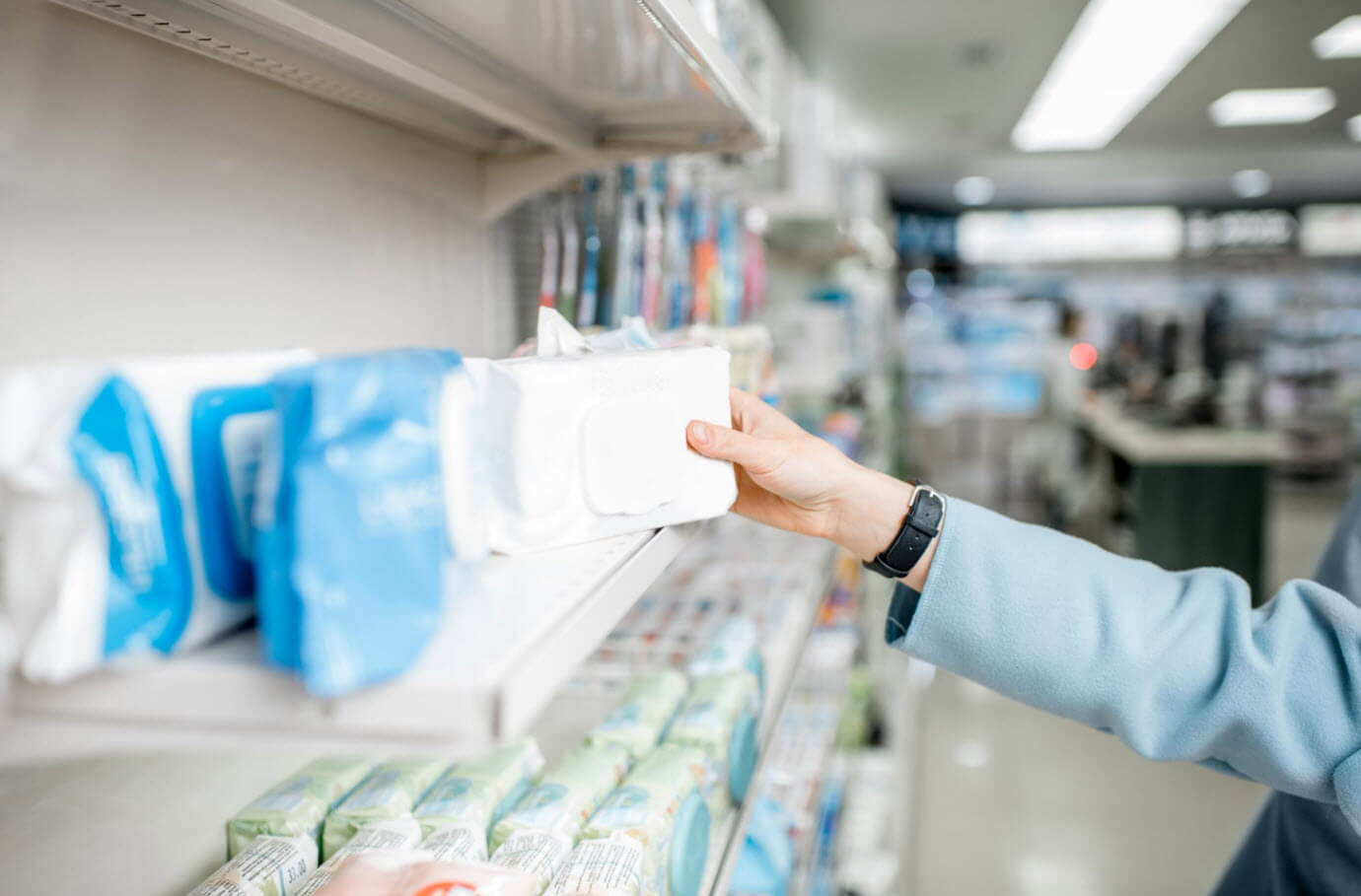
The correct labelling of wet wipes continues to dominate industry discussions
WTiN: What industry events are you looking forward to in 2019?
PW: EDANA is organising a record number of events next year, with an extensive global reach. We will convene the nonwovens supply chain in New Delhi for the first ever edition of Outlook India, with the 3rd Latin America edition to follow in São Paolo, Brazil, in May. We are also hosting Filtrex India in New Delhi in April. We are very excited to co-organise the Nonwovens Forum during ITMA 2019, a great opportunity to engage with the wider textiles sector. And, we are already receiving queries for Outlook 2019, which will be held in Athens, Greece, in October. Of course, there is a number of external events that EDANA is looking forward to attending, including IDEA, CIPDEX, and Techtextil in Frankfurt.
WTiN: What trends do you expect to dominate in 2019?
PW: There will be a further focus on measures and innovations that foster sustainability. The EU’s 2018 Circular Economy Package examines, for example, how products are designed, produced, used and recycled. The circular economy and its implications (better designs, reduced use of raw materials, development of new technologies, recycling, upcycling, system thinking) are high on the agenda of the nonwovens value chain for producers, converters and suppliers alike. On a technical front, I’m not sure I can speak of ‘dominance’, but I’m very excited about integrated sensor technology and what nonwovens can do in the fields of acoustics and battery technology.