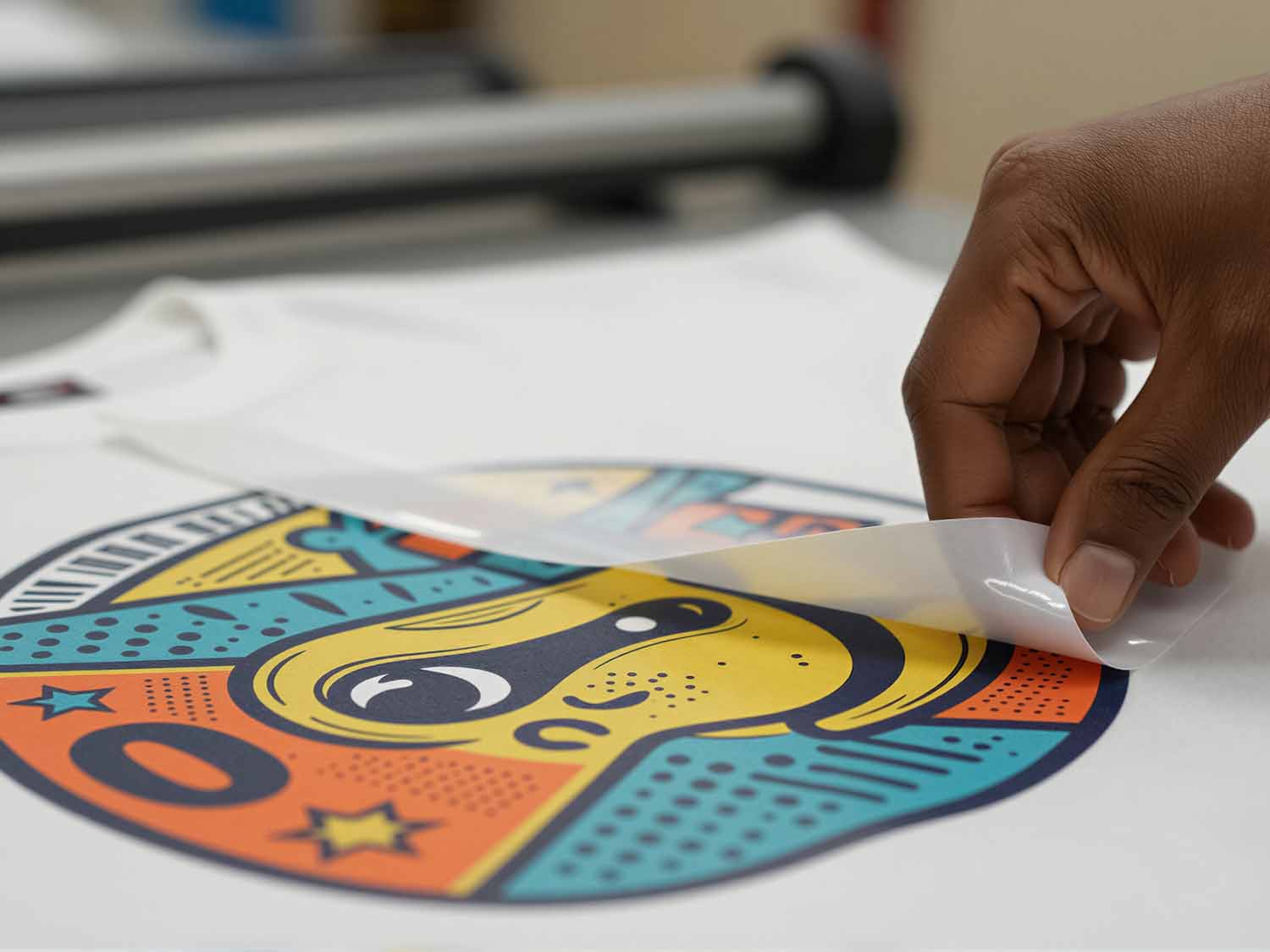
Colour management issues are squeezing profit margins, but Dustin Bowersox explains how Datacolor’s solutions can ease the burden suffered by many textile manufacturers. Joe Link reports.
In any competitive manufacturing environment, the prospect of wasting inventory due to production discrepancies is incomprehensible. Yet, this is something digital textile print houses frequently contend with due to issues around colour management.
If the colour on the substrate doesn’t match with what is on the original design then a print run will need to be stopped, resulting in ink and fabric waste. This is a particularly prevalent issue for textile manufacturers who have switched from analogue to digital printing.
Since its inception, inkjet printing technology has been hampered with colour inconsistencies but the latest colour management solutions are looking to eradicate the problem.
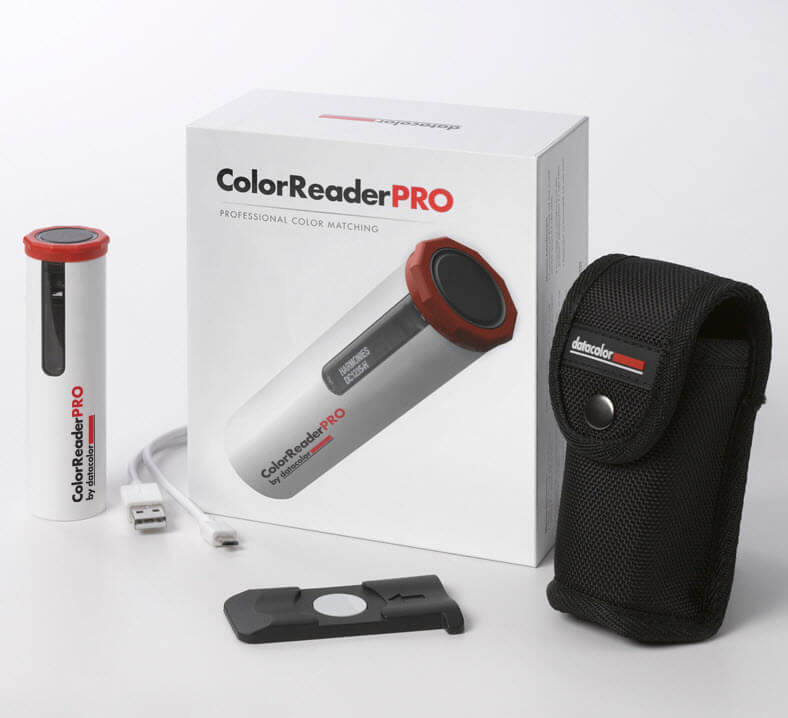
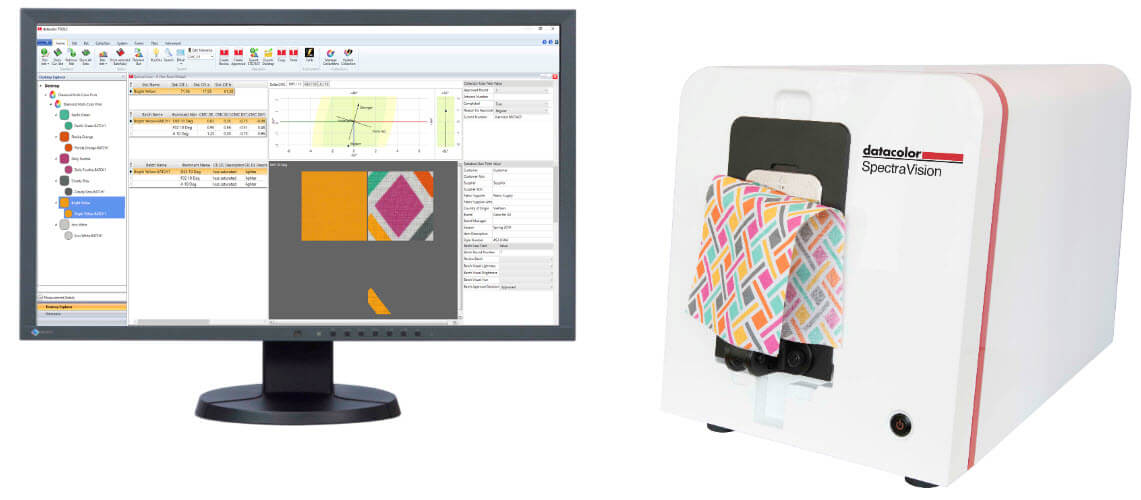
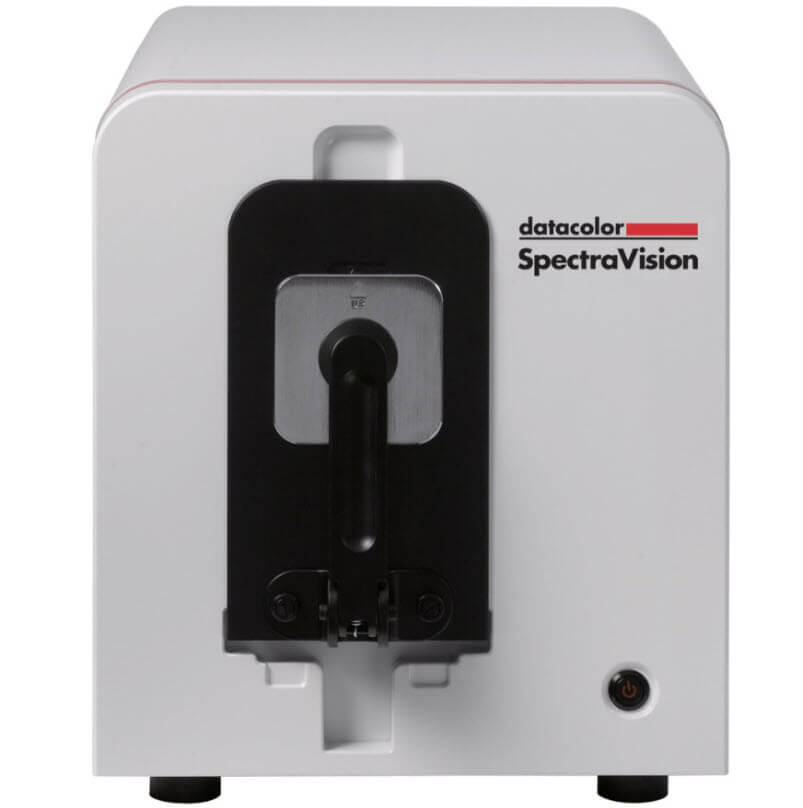
Operating in this market is US-based global business Datacolor, which recently exhibited at ITMA Asia in Shanghai to promote its latest solution SpectraVision, the 800 and 500 Spectrophotometers and the ColorReaderPRO – all of which are beneficial to smaller businesses looking to capture colour inspiration, as well as global brands and textile mills, the company claims. It also signifies the company’s desire to expand in China, which is home to the world’s largest textile printing market. Emerging markets in South-East Asia are also a draw for Datacolor, so much so the company has just added Vietnam to the list of 25 countries in which it is present.
According to Datacolor’s marketing manager of textile and apparel, Dustin Bowersox: “Delivering the right colour is complex, since many variables need to be considered to achieve the intended colour again and again.
“Our latest solution, SpectraVision, enables textile suppliers and brands to objectively measure and digitally communicate the colour of un-measurables, which range from prints and trims to yarns and laces,” adds Bowersox. “This helps cut costs and streamline textile production. SpectraVision technology also combines an advanced hyperspectral spectrophotometer with state-of-the-art software to measure and communicate accurate colour results.
“Another recent solution of ours is the Datacolor ColorReaderPRO, which is an ultra-portable, Bluetooth-connected colour-measurement device that provides precise colour identification across major colour standard libraries, including CSI and Coloro. ColorReaderPRO also enables manufacturers to quickly identify accessory, trim, zipper and thread colours.”
Datacolor, which was established in 1970 and has representatives in over 100 countries, recently partnered with software developer Inèdit to introduce a colour selection tool and corresponding software to the digital textile printing industry with the aim of “enabling designers to accurately measure colour inspiration in the real world and update their textile designs instantaneously with the measured colour,” Bowersox says. This solution allows designers to capture colour inspiration using the ColorReaderPRO tool, and transfer it wirelessly into a textile design using the Inèdit iPad app.
However, despite a growing digital textile printing market, the vast majority of printed fabric is produced traditionally. Consequently, Datacolor’s SpectraVision is compatible with both analogue and digital solutions, the company says.
The dawn of digital textile printing has paved the way for new trends, like fast fashion, which demand increased speed-to-market. This has placed more pressure on brands and mills to improve uptime, but this isn’t easy. Bowersox explains: “Colour can be a major roadblock to on-time production.”
Understandably, Bowersox believes that Datacolor’s solutions help companies divert such a roadblock. “When manufacturers are empowered by instruments and software that can cut production time, increase accuracy and reduce costs, they are able to further streamline operations and avoid many of the common roadblocks that slow down textile production,” he says. “And with 50% of the world’s materials considered un-measurable, it can be difficult, costly and time-consuming to perform objective colour assessment for these materials, which can be detrimental to brands in today’s fast-paced textile environment. This is why, in addition to our existing textile industry solutions, we introduced our SpectraVision to enable retailers and suppliers to objectively measure and communicate these un-measurables.
“Our solutions help textile manufacturers make quantitative data-driven decisions and enable consistent colour management throughout the supply chain. In today’s fast-paced textile industry, it’s more important than ever for manufacturers to keep up with shortening production cycles while maintaining a high level of quality.
Bowersox adds that there are clear cost benefits to each of Datacolor’s textile solutions. He adds: “Our colour measurement and management tools decrease colour approval steps, lower standard costs by storing data digitally and reduce the hefty costs of shipping physical samples back and forth overseas.”
Nevertheless, in such a traditional industry, textile manufacturers have often questioned both the reliability of digital solutions and the investment costs. Similar questions have been posed to Datacolor regarding its solutions and, in response, Bowersox says: “We appreciate investment costs are an issue in any industry, so it is important to us that our customers see a notable return.”
He adds: “Textile brands and suppliers can see savings of up to 50% on their current colour approval process costs with Datacolor SpectraVision. For SpectraVision, we offer savings calculators for suppliers and brands, which calculate a return on investment by asking relevant questions about un-measurable requests, average number of approval rounds and colour communication time. After utilising the calculator, suppliers and brands are provided with a breakdown of realistic savings that can be achieved thanks to SpectraVision.
“There are also financial benefits to each of Datacolor’s textile solutions. Our colour measurement and management tools decrease colour approval steps, lower standard costs by storing data digitally and reduce the hefty costs of shipping physical samples back and forth overseas.”
Datacolor has launched seven textile-specific colour measurement tools since 2014: the 45 Family; 500 Family; 800 Family; CHECK3; 200 Family; ColorReaderPRO; and earlier this year, SpectraVision. Datacolor is meeting demand, which highlights how extensive colour management problems have become for textile printers and we can expect Datacolor’s product range to expand further. Bowersox says: “We will be launching a suite of web-based solutions and services that will help customers execute product development more quickly and less expensively, while still delivering desired quality.
“Color Lifecycle Management allows retailers and their suppliers to eliminate common bottlenecks in the product development process: from colour ideation and palette creation all the way to end customer, which results in improved product quality, faster speed-to-market and overall cost efficiency.
“This will start with Datacolor Certify – a colour assessment and lab audit service that helps retailers to significantly reduce the time and cost of product development by ensuring their supply chain is qualified and capable of meeting their expectations for colour quality.
“Additionally, the web-based ColorHub will provide greater transparency into a mills colour performance in real time. ColorHub is a depository of production colour data and run history that gives brands and suppliers confidence that they’re delivering the desired product quality by identifying potential colour issues prior to shipping.”
Some analysts believe that education is key to tackling the root cause of colour management issues. Switching from analogue to digital is a big transition and the company involved, along with its staff, have a lot learn. Some industry insiders also go as far to criticise the aftercare service from OEMs, but Bowersox stresses that Datacolor’s customers are not left dissatisfied: “We currently offer a variety of training services, including webinars, seminars and even hands-on product training courses at our corporate headquarters in New Jersey,” he says. “Our company is known for its exceptional customer service. We take pride in going above and beyond to answer questions and provide solutions for our customers. Our clients know they can rely on our dedicated global support team for training and assistance.”
With 2018 drawing to a close, Datacolor is focused on making 2019 equally successful and with ITMA taking place in Barcelona on 20-26 June, the company is likely to attract plenty of attention for its latest textile applications. It will also provide the company, which says it has attained an 87% share of the textile market, with the opportunity to meet new and, most likely, existing clients.
For more information on the company’s products visit www.datacolor.com.