In 1962, Japanese scholar Kaname Akamatsu propounded the “flying geese model” where one economy, like the first goose in a V-shaped formation, can lead other economies toward industrialisation, passing older technologies down to the followers as its own incomes rise and it moves into newer technologies.
A similar trend is taking place in Asia where China’s economy is continuing to grow, which is providing benefits to neighbouring countries. The textile and garment business’ of Vietnam, Bangladesh and Cambodia have all benefited in recent years.
Historically, the textile industry was the cornerstone of development for most countries. In fact, it remains the world’s foremost industry with a vast impact on the socio-economic development of many nations. The global apparel and footwear industry was worth $1.7 trillion in 2017, growing at 2% per annum through 2022. If the industry was a country, it would be the world’s eighth largest economy after Italy.
Cotton’s influence on industrialisation and trade
Sven Beckert, in his scholarly book Empire of Cotton, has captured a fascinating account by weaving together the story of cotton with how the present global world came to exist. Farmers in the Indus valley were the first to spin and weave cotton. In 1929, archaeologists recovered fragments of cotton fabric at Mohenjo-Daro. The Vedic scriptures, composed between 1500 and 1200 BC, allude to cotton spinning and weaving. From the ancient times well into the nineteenth century, the people of the Indian sub-continent were the world’s leading cotton manufacturers. From there, cotton growing and manufacturing skills moved West, East, and South - placing Asia at the centre of the global cotton industry. The continent would retain this dominance well into the nineteenth century.
As the modern world came of age, cotton came to dominate world trade. Cotton factories towered above all forms of European and North American manufacturing. “Cotton was the cradle of industrialisation in virtually every other part of the world.” India had 1.6 million spindles in 1877, rising to nearly 9 million in 1930. In China, the industry expanded rapidly from under a million spindles in 1908 to almost 4 million in 1930. However, in the same year it was Japan, with 7 million spindles, which boasted the largest capacity. By the twentieth century, Asia had regained the global cotton industry - where it had largely originated.
Cotton is the world’s oldest commercial crop and one of the most important fibres for textile production. Grown in 75 countries, with a total of 33 million ha area under cultivation, cotton is one of the most significant crops in terms of land use after food grains and soybeans, representing 2.2% of the global arable land.
Cotton has always been central to economic development. By 1900, about 1.5% of the human population was engaged in the industry, either growing, transporting, or manufacturing cotton. Currently, according to Fairtrade, the livelihood of 100 million households depends on cotton cultivation. Another 200 million persons are engaged in the cotton industry indirectly in farm labour and ancillary activities, such as ginning, pressing and logistics. According to information collected by ICAC, the total employment in cotton production in 60 major countries is estimated at 150-200 million. The study estimated that the highest employment in cotton agriculture is in Asia, significantly in three major countries: China (56m), India (50m) and Pakistan (16m). Africa has up to 50 million employed in cotton agriculture due to predominance of small holder farmers cultivating less than two hectares. Cotton remains a major source of revenue for many developing countries. India, China and Pakistan account for 52% of the global cotton production.
A comprehensive report titled ‘Measuring Sustainability in Cotton Farming Systems- Towards a Guidance Framework’ - by ICAC Expert Panel on Soil, Environment and Economic Performance of Cotton Production (SEEP) - gives an objective assessment of the negative and positive environmental, economic and social aspects of cotton cultivation. In the last decade, five key Voluntary Sustainability Initiatives (VSI) - dedicated to cotton - were launched by brands and other stakeholders in response to consumer concerns. These include: Better Cotton Initiative; Cotton Made in Africa (CmiA); Fairtrade Cotton; Organic Cotton; and My BMP (Australian Best Management Practices)
Transformational jobs in apparel manufacturing
As developing countries explore ways to enhance living standards and reduce poverty, they are increasingly focusing on policy options to create jobs that are good for development. For South Asia this policy is imperative as the region is in the midst of a demographic transition. For the next three decades it must absorb over 10 million people who will enter the workforce every year. The World Development Report describes jobs as the cornerstone of both economic and social development whereby the value of a job to society can far exceed its value to the individual jobholder. The apparel industry employs millions of female workers and is regarded as the gateway into formal manufacturing jobs for women, whose alternative is agriculture or the informal labour market. Highlighting the role of cotton textiles in mobilising industrial labour, the Empire of Cotton found that cotton manufacturing became the most female-dominated industry to emerge in the eighteenth and nineteenth centuries. Women dominated the cotton textile workforces throughout Europe and the United States, although male workers dominated in Mexico and Egypt. Most women came from the countryside due to the families’ strategy to retain access to land by supplementing dwindling agricultural incomes through wage work. Even today, the share of female employment in the textile and apparel industry is higher than in other manufacturing industries. In Cambodia, Myanmar, Laos, Vietnam and Bangladesh, 75% of the workforce in the industry is female. Only in India and Pakistan does the industry employ more men than women, which reflects the wider challenge of low female participation in the overall economy (ILO 2017).
Apparel industry and the ‘bottom billion’
Hans Rosling, the founder of the Gapminder Foundation, offers an alternative perspective about the way we look at things. In his book Factfulness, he describes how we have achieved real progress in eradicating extreme poverty and illustrates the transformative impact of jobs in apparel manufacturing. According to him, the world population could be divided into four income levels as illustrated below. Each figure represents one billion people and the seven figures below show how the current population is spread across four income levels. Those at Level 1, earning below $2 per day, indeed suffer from destitution. The folks at Level 2 (income $2-8 per day) eke out a living by making about $4 a day. If you can land a job in the local garment factory, you will be the first member of your family to bring home a salary (about three billion people live like this today). Level 3 represents people with daily incomes ranging from $8-32 per day and those earning daily above $32 are placed at Level 4.
Interestingly, human history started with everyone on Level 1. Just 200 years ago, 85% of the world’s population was still on Level 1, in extreme poverty, whereas today most people are spread out in the middle, across Levels 2 and 3, with similar standards of living to those enjoyed by people in Western Europe and North America throughout the 1950’s.
A case in point is Bangladesh. One year after its independence in 1972, Bangladeshi women had, on average, seven children and a life expectancy of 52. Today, Bangladeshi women have an average of two children and a life expectancy of 73. In the last four decades, Bangladesh has risen from Level 1 to Level 2.
During a similar period apparel exports have grown significantly, from $1.3m in 1980-81 to $29bn in 2017. A small tailoring outfit named Reaz Garments pioneered exports of readymade clothing when it shipped 10,000 men’s shirts to France in 1977. But according to a research paper by JETRO, the real breakthrough came with the establishment of Desh Garments, whose owner Nurool Quader Khan set up a joint venture with the South Korean Daewoo in 1978. The company sent 130 trainees to Daewoo’s state-of-the-art garment factory at Pusan. Upon their return after six months of training, a six-line factory with 600 workers was set up under Daewoo’s supervision. In 1980, another South Korean company, Youngone Corporation, opened a garment factory in Bangladesh. Today, Youngone exports over $1.9bn worth of garments, of which 65% come from Bangladesh where it employs 65,000 workers in its 16 garment factories.
Textiles and international trade
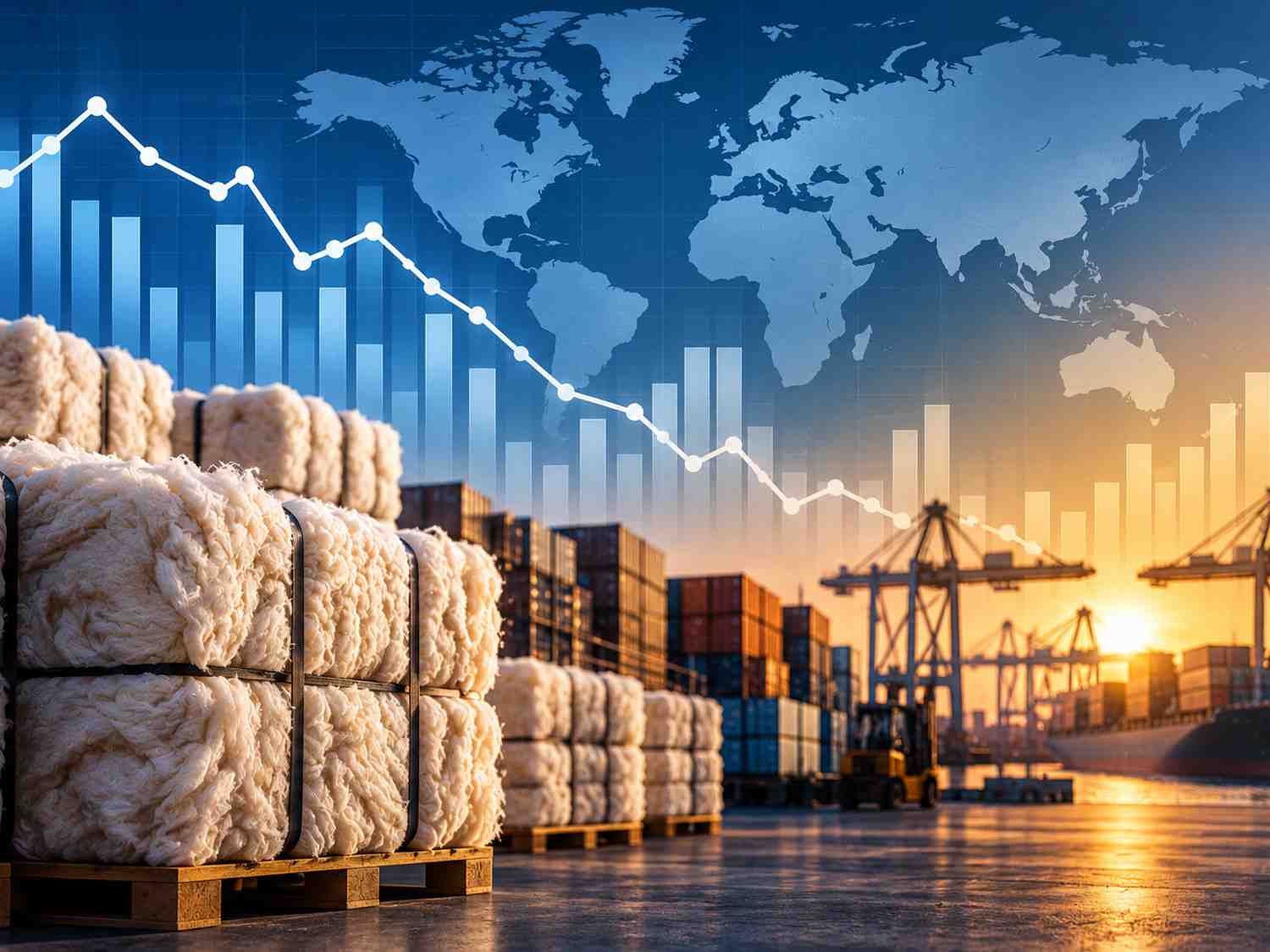
Textiles is the world’s most globalised industry. According to the World Trade Organisation (WTO) in 2017, textile & apparel trade was ranked among the top five merchandise exports representing 6% market share. The phasing out of the MFA regime in 2005 led to remarkable growth of international trade in textiles & apparel, from $471bn in 2005 to $736bn in 2017. More significantly for major producing countries, it is a chief source of export earnings. For India and China, textile & apparel exports represent 12% of the total number of merchandise exports, whereas for Bangladesh over 80% of total exports come from apparel products. The figure is 16% for Vietnam.
The textile industry has a remarkable transformative impact on our lives, especially on the global industrial economy. Most importantly, it has the influence to lift millions out of extreme poverty and accelerate women’s economic empowerment.