Otis Robinson reports on the functionalisation of textiles against Covid-19 by the CHT Group, which now produces HeiQ’s Viroblock NPJ03 to aid the fight against the pandemic.
Due to the ongoing pandemic, interest in protective textile coatings is at a high. To effectively reduce transmission rates of the Covid-19 virus, demand is skyrocketing for surface and textile treatments that kill the virus upon contact – this demand is not simply from medical and health facilities, but from all corners of industry that textiles touch, including the fashion, automotive and manufacturing sectors.
And demand is set to become even higher, says Jens Isenbeck, head of marketing & corporate communications at the CHT Group, especially as customers realise the efficacy of such products, in particular, HeiQ’s Viroblock NPJ03.
CHT Group, a global player active in developing, producing and supplying specialty chemicals, is now distributing this technology to the market to help fight against transmission rates. It’s thanks to a licensing agreement enabled by HeiQ, the Swiss specialty chemicals company behind the antiviral and antibacterial development, that allows CHT to produce and sell HeiQ Viroblock NPJ03 by CHT. Alongside the company’s BESO EFFECTIVE product family, Isenbeck says CHT is able to provide a “wide range of textile effects for additional functionalities”.
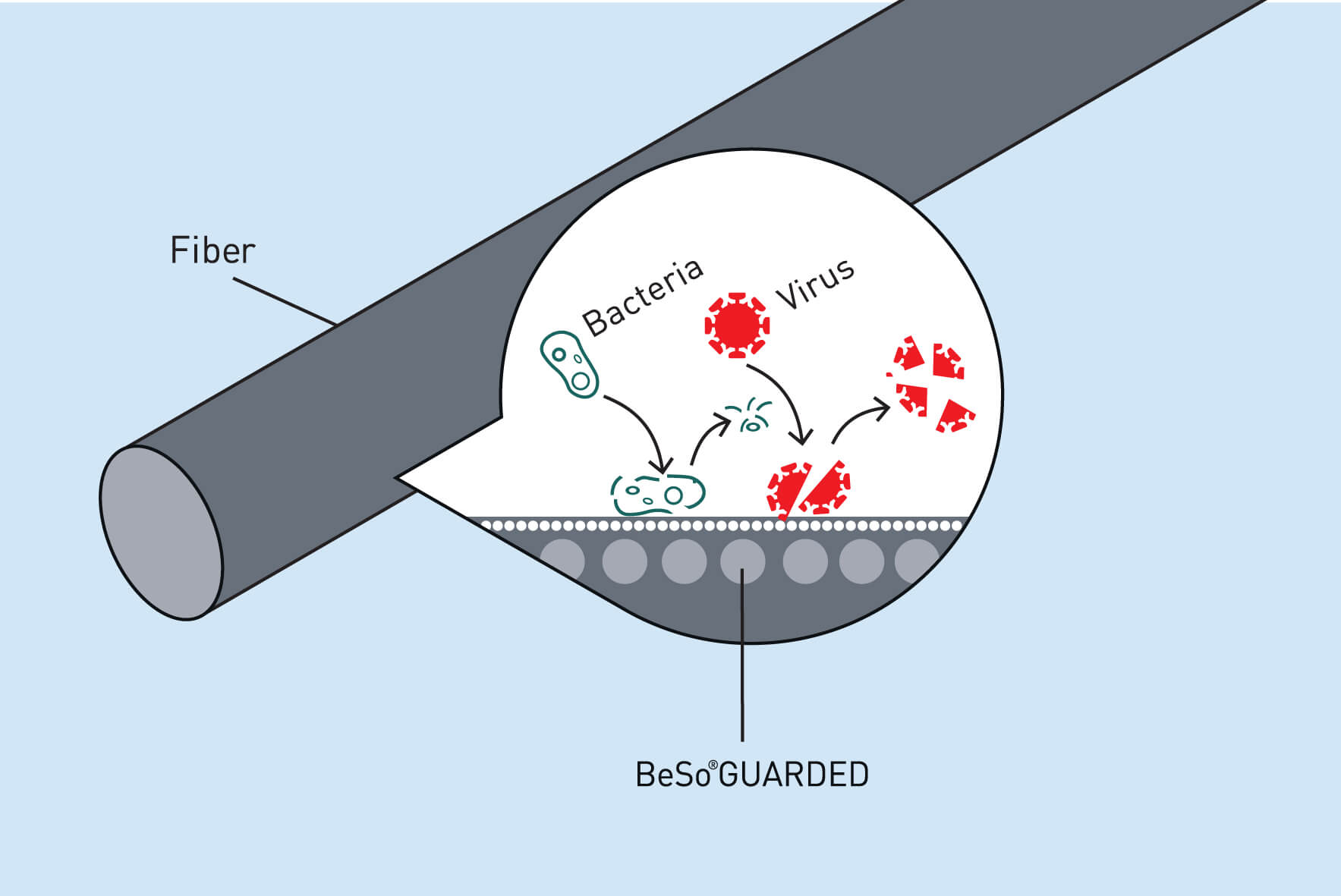
According to a report by German trade magazine TVP, the efficacy of Viroblock is derived from particular technologies. Silver technology, which has been used for decades, fights both viruses and bacteria, the magazine reports.
“Silver ions that have been applied to textiles react among others with sulphur groups, which are in many proteins of the bacteria cells and disrupt the metabolism and cell division of these cells. But silver is also effective against viruses that, strictly speaking, are not living organisms but ‘only’ infectious substances.”
Thus, the silver technology lures viral particles, leading to complete immobilisation and deactivation.
This capability stands alongside CHT’s expansive protective portfolio. It was reported by WTiN in May that the company had begun catering to increased demand for similar health-related products in the wake of the coronavirus. For example, in March, the CHT Group began producing hand disinfectant at its factory in Dußlingen, Germany. Later, when HeiQ offered its proven Covid-19-immobilising textile treatment to its peers, the company made use of its licensing agreements to help proliferate the spread of the solution.
Interviewed by TVP magazine, Robert Zyschka, head of application field finishing at CHT Group, explains that the product is an essential impregnation into standard protective wear for medical textiles, “because the spread of viruses via clothing can be stopped”. Such finishing products are essential during global catastrophes like a pandemic because protective clothing is often worn for longer than required due to shortages.
But Zyschka also believes everyday clothing and seat coverings in buses, trains and airplanes should also be treated with the product to ensure the entire community is protected. The magazine additionally reports there are no health consequences related to the impregnation of the Viroblock product: “I know of no study that has ever made a problem out of the silver ions that have been used for decades. The functionalisation of textiles with this innovation is therefore a safe and efficient way to break possible chains of infection,” Zyschka told TVP.

Isenbeck says the impact of the HeiQ Viroblock NPJ03 product has been enormous, and he suggests the demand for such products in standard textile applications will continue to rise if interest is continually piqued. Though antiviral and antibacterial coatings are not often a necessity in textiles like garments and vehicle seats, the slowly changing post-pandemic world may see a rising consumer awareness, and a customer that seeks products that can guarantee protection and safety. This would mean the functionalisation of textiles may be a trend strengthened by efforts against the pandemic, even further than we see already – for example, the functionalisation of textiles such as PPE or medical wear.
“We see a lot of potential here,” Isenbeck concludes, suggesting standard fashion and automotive industries could be fast adopters of such treatments. “The industry just needs the information that there are possibilities like that for their products.”