The Future Fashion Factory (FFF), a five-year, £5.4m textile industry-led innovation project, has unveiled its developing technologies and evolving projects at an event in Saltaire, UK.
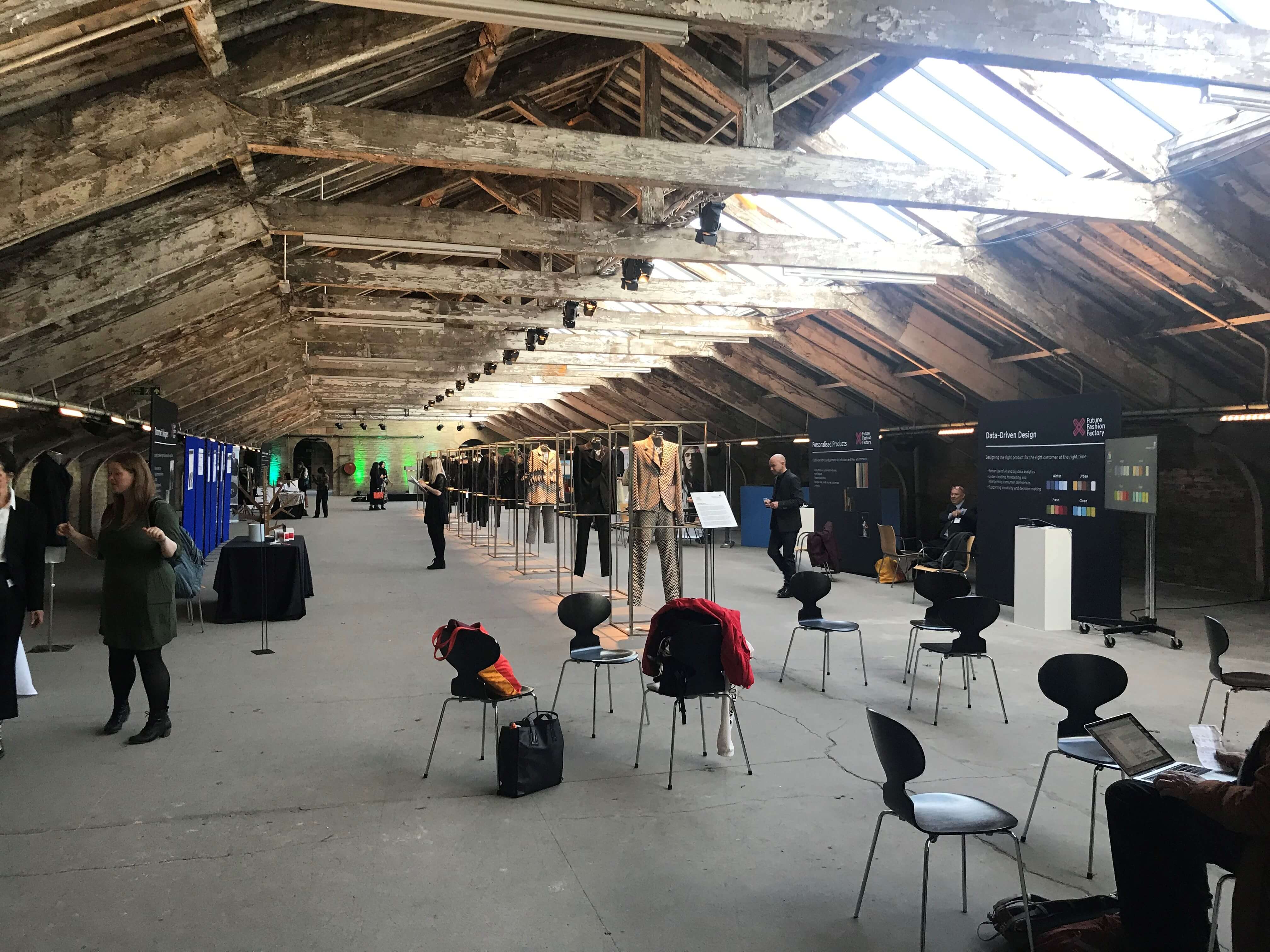
Following the announcement that the FFF would be opening applications for a second round of project funding, the event – titled Innovation and Heritage: Future Fashion Factory Year 1 Showcase – took place on 16 October 2019 at Salts Mill, Saltaire, with the aim of sharing project updates and developments with the industry.
The event enabled a number of FFF Year 1 members to share their research developments among their peers, and primarily, Industry 4.0 concepts were abundantly featured in such demonstrations.
One project labelled ‘Communicating aesthetics’ demonstrated the capabilities of haptic technologies to communicate fabric handle. Using a haptic pad, visitors were able to ‘feel’ bubbles on display on a screen.
Elsewhere, University of Leeds’ Dr Qianqian Pan, a research fellow of colour science and technology, revealed that a new AI-powered, data-driven design tool titled ColorPedia, is close to a launch date.
The tool, which uses artificial intelligence (AI), will gather trending colour palettes from around the globe and align word and colour associations to allow designers to search for colour palettes based on mood, tone and style.
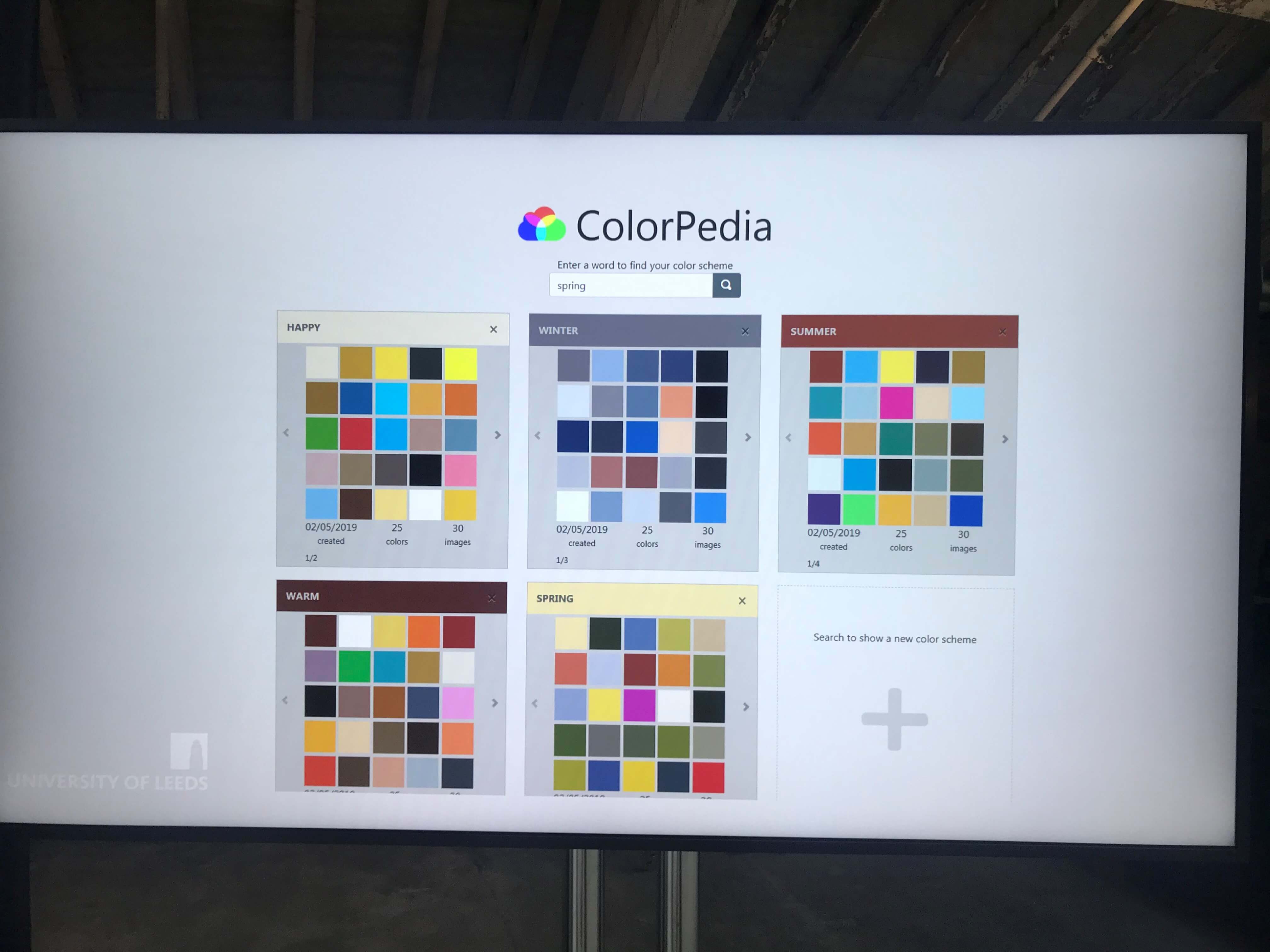
On screen, example searches included keywords ‘happy’, ‘winter’, ‘summer’, ‘warm’ and ‘spring’, all which conjured individual, tonal colour palettes that Pan says can narrow down colour options and cut design time. The product has additional potential to ‘disrupt’ retail experiences by allowing shoppers access to the same search tool for use on clothing retail websites.
Simultaneously, Professor Chris Carr, chair in textile technology at the University of Leeds, shared with visitors skin analysis equipment intended to help manufacturers customise or engineer fabric for specific, individual, personalised and environmental needs.
Other projects at the showcase event included plans by Deluxe Beds for a modular bed mattress made from re-purposed textiles to limit mattress waste at landfills; efforts from W.T. Johnson & Sons to develop a system that can “predict the effect of any finish on any fabric”; and developments from Abraham Moon & Sons on a digital system for measuring colour in wool dyeing.
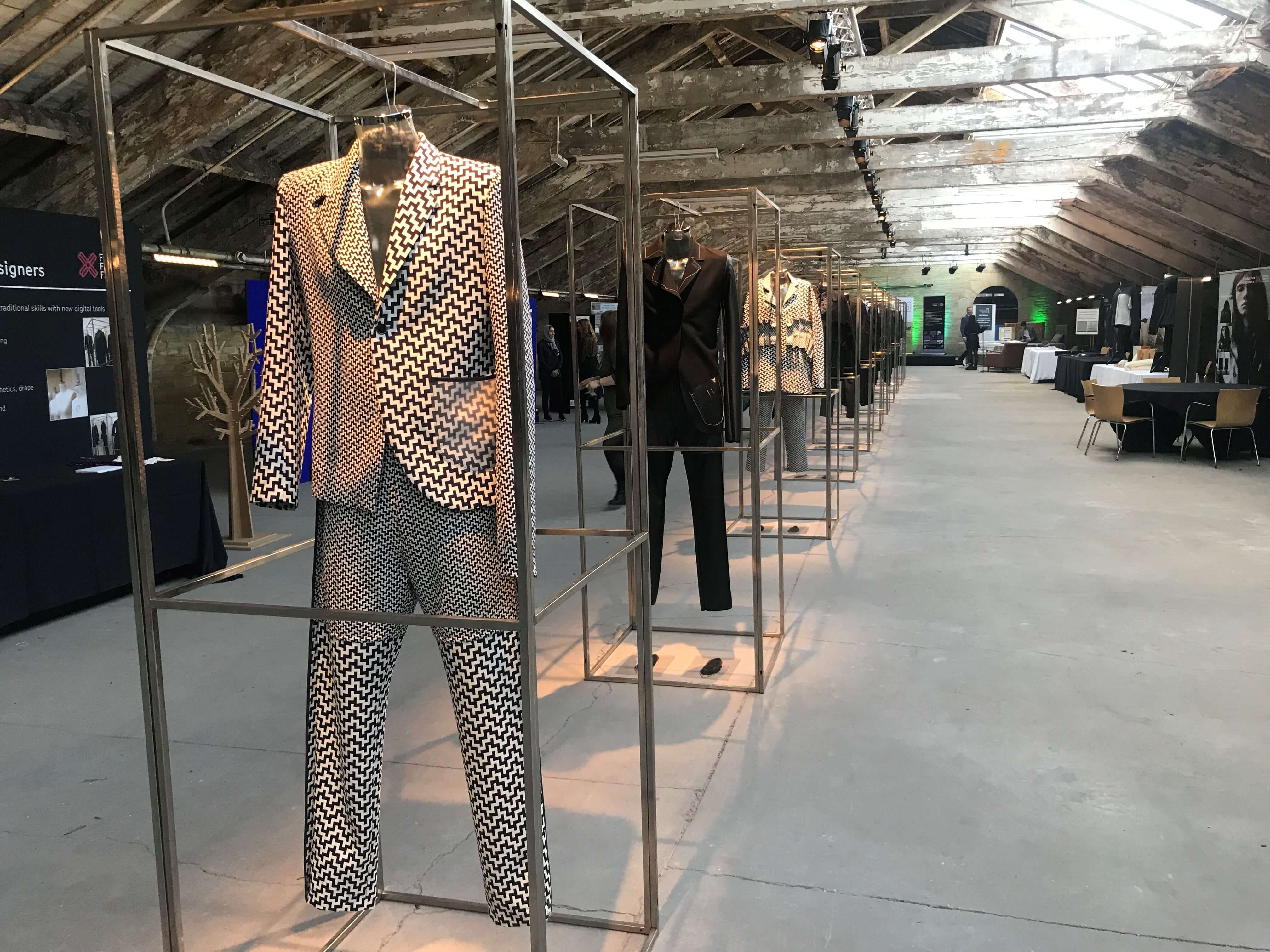
Meanwhile, throughout the show, as part of a “unique project to reinvent the region’s textile heritage for a new generation of fashion designers”, Yorkshire mill AW Hainsworth and Yorkshire Textiles showcased unique items made with a ‘New Heritage’ cloth by designers at Hainsworth Creative Hub, as well as garments specially constructed for the event by the School of Design at the University of Leeds.
A short film on the FFF-funded project revealed designer Rebecca Ough’s journey through examining the ‘historic’ jacquard punch card designs held at Leeds Industrial Museum to seeing the finished product come to life.
Later, as part of the celebrations for Wool Week, Campaign for Wool’s own Peter Ackroyd acted as the FFF’s guest speaker. Ackroyd explored the importance of sustainability in contemporary fashion, ‘how important’ innovation is within the textile industry and cited FFF’s commitment to such innovation as a necessary support to the industry.
The talk followed an evening of demonstrations and networking where brochures were shared to encourage interested parties to apply for FFF funding and potentially collaborate with researchers on an innovative project.
In an earlier interview with WTiN, FFF director Stephen Russell said: “By continuing to respond to additional industry challenges and forging new high-quality research collaborations, we are working to ensure the Future Fashion Factory continues to develop [after 2023], in whatever form that takes.”
The FFF is a project that supports innovation in the fashion and textile industry, the company says. It is part of the Creative Industries Clusters Programme, an £80m initiative led by the Arts and Humanities Research Council (AHRC) as part of the Industrial Strategy.
The Programme is led by the University of Leeds in partnership with the University of Huddersfield and Royal College of Art.