The company’s first endeavour into performance finishes, the Safe Wear range offers protection from viruses and bacteria for the textile industry and consumers. Fiona Haran finds out more.
Right now, the simplest of tasks such as shopping for groceries or getting on public transport carry significant risks to health and safety, meaning that consumers and the textile industry are looking for solutions that can offer peace of mind.
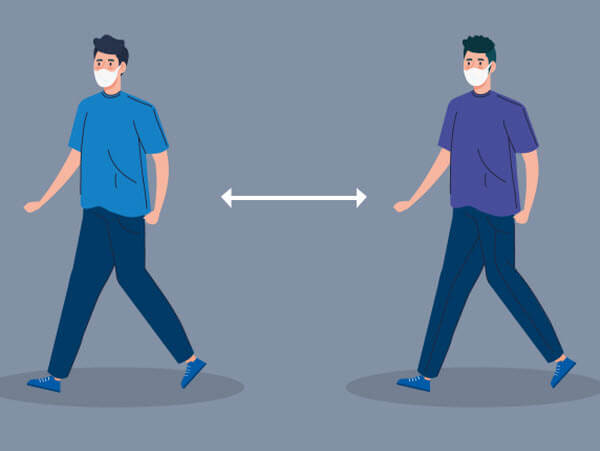
What we wear can play a big part in this, especially as our clothing could be contaminated if good social distancing or safety regulations aren’t maintained.
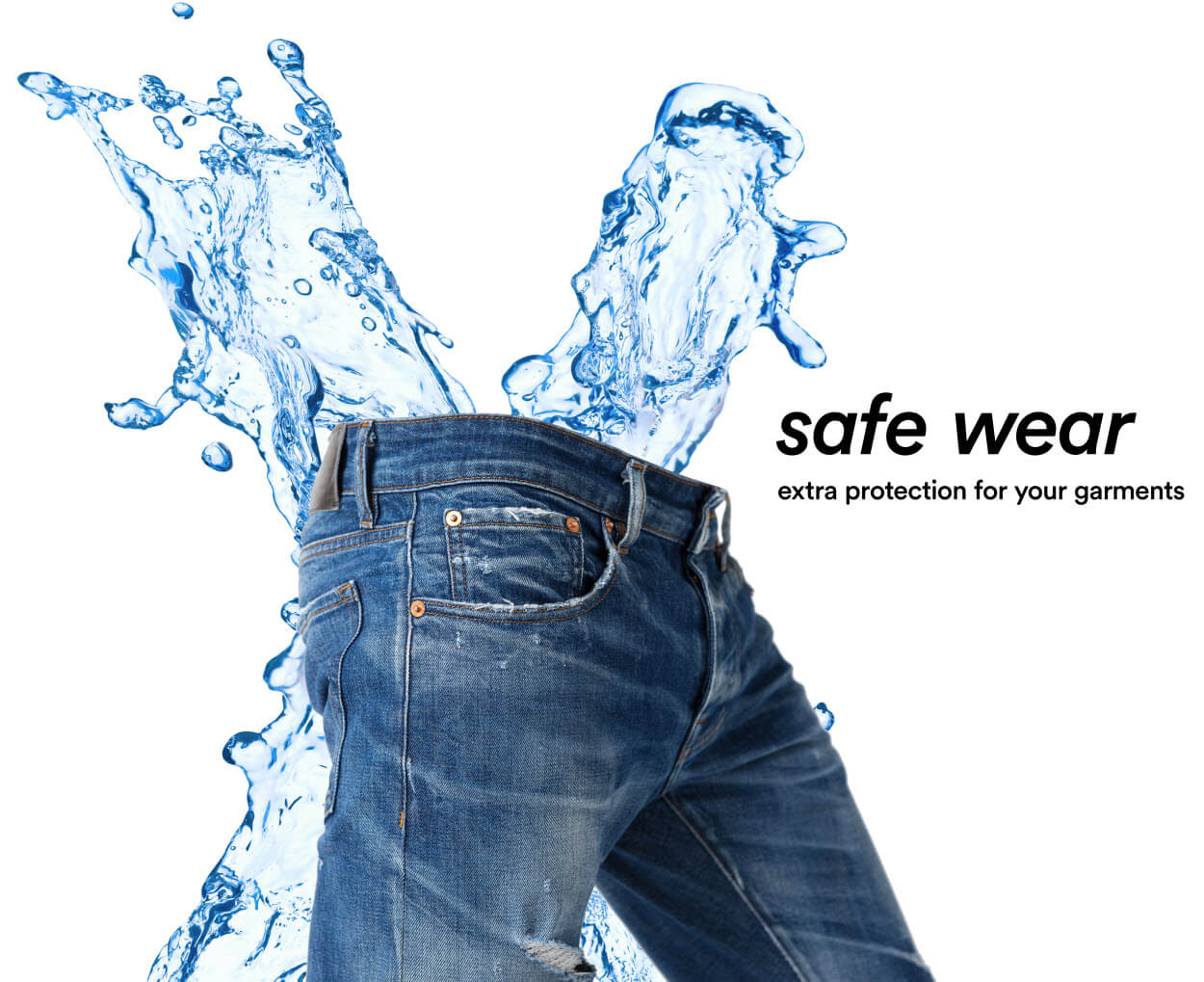
Fortunately, Garmon, the textile auxiliaries business unit of Kemin Industries, has recently introduced its Safe Wear line of products – its first endeavour into performance finishes – which provides extra protection for garments, primarily casualwear.
According to the company, the Safe Wear line provides solutions for the industrial laundry and manufacturing processes that address consumers’ demand for safety amid the current health concerns in the world.
“Being based in Italy and San Marino, we’ve seen very closely the Covid-19 pandemic and what’s happening, so [Safe Wear] was a direct response for a lot of reasons,” explains Kimberly Nelson, president of Kemin Textile Auxiliaries.
“We’re wondering whether we should go to the grocery store completely covered with gloves or masks,” she continues. “It’s that idea of ‘how can you feel safer when you walk outside your front door’? And I think that’s where a lot of the inspiration came from, because you already put on your mask, which is your clothing as well, so how can we enhance the actual clothing to further protect yourself? And not have it be a special protective style of wear.
“You still want to go out and look nice in your jeans and shirt, and so that’s what we want to treat, to make sure you’re safe in your everyday life.”
Portfolio range
To make this happen, the Safe Wear line has been designed to include different technologies, levels of protection and price points to suit all needs of the textile industry and consumers.
Included in the line are:
- HeiQ Viroblock NPJ03
- Garmon Sani-tex
- Garmon Elam Sani-tex
The former is the most advanced product in the Safe Wear line. Created by HeiQ, a Swiss company of which Kemin Industries is part owner, HeiQ Viroblock has a strong, patent-pending antiviral and antibacterial effect against enveloped viruses – including coronaviruses – and bacteria.
Research shows that viruses and bacteria, such as SARS-CoV, a similar virus to the one that causes Covid-19, can remain active on textile surfaces for up to two days. Garments treated with HeiQ Viroblock actively inhibit viruses and kill bacteria upon contact, helping to minimise the potential for re-transmission of pathogens from textiles.
HeiQ Viroblock has been designed to stay active on treated garments for 30 gentle domestic washes, ensuring safety for the consumer that lasts for a good part of the garment’s life.
Thanks to the partnership between Kemin Industries and HeiQ, which began in 2017, Garmon extensively tested HeiQ Viroblock on garments to optimise dosages and application for garment finishing, ensuring an action that does not alter apparel’s properties and look.
“Partnering with HeiQ has strengthened our knowledge of performance products,” says Nelson. “They’re doing an amazing job digging into the medical industry and making sure that frontline workers are safe. We just wanted to try and take that one step further to get this antiviral technology to everyday consumers.”
“It was also easier to launch the entire line in a shorter time because of this partnership we have with them,” adds Francesco Romiti, Garmon’s digital marketing manager.
The other products in the Safe Wear line, Sani-tex and Elam Sani-tex, are designed to remove germs and bacteria from garments, ensuring hygiene standards. Both have been designed to guarantee an effective, immediate action while maintaining a very competitive price point.
Additionally, the solutions are easy to use – something Garmon always aims for. “We focus not just on the chemistry itself but on the actual application and how someone in a laundry in Bangladesh for instance, works with the product,” Nelson says. “So, we’re really focused on the user-friendliness and how we can help that aspect of it as well as the sustainable technology.”
Unlike Viroblock, however, Nelson says that Garmon cannot make any antiviral claims for Sani-tex and Elam Sani-tex just yet, adding that this will rely on further testing once it becomes available.
“Sani-tex and Elam Sani-tex are a little bit more approachable in terms of price point, but don’t have any antiviral claims,” she says. “So, when a customer is choosing between them, the Ferrari is the Viroblock, but some people don’t actually need that antiviral marketing claim tied to it because it’s not really necessary for their customers.”
Instead, Sani-tex and Elam Sani-tex are pitched as solutions to help both laundries and brands provide consumers a finished product that is safe and respectful of their health.
“The products are sanitised to make them clear of any unhygienic bacteria that a garment would ever come into contact with,” Nelson explains. “So, from being shipped to your house to the whole packaging process or at the shops where various people are touching it, it defends against that.
“But after the first home wash it no longer has that effect. It offers peace of mind that when you take a garment home you don’t have anything to worry about. It doesn’t bring any substances into your home to further deal with. When you’re looking for a durability aspect, that’s when you go over to the Viroblock.”
All the products in Garmon’s Safe Wear line have been designed for application in the last phase of garment finishing, either alone or in combination with a compatible softener. Safe Wear products have been tested to be suitable for any kind of fibre, including natural, synthetic or blends.
Smart foam system
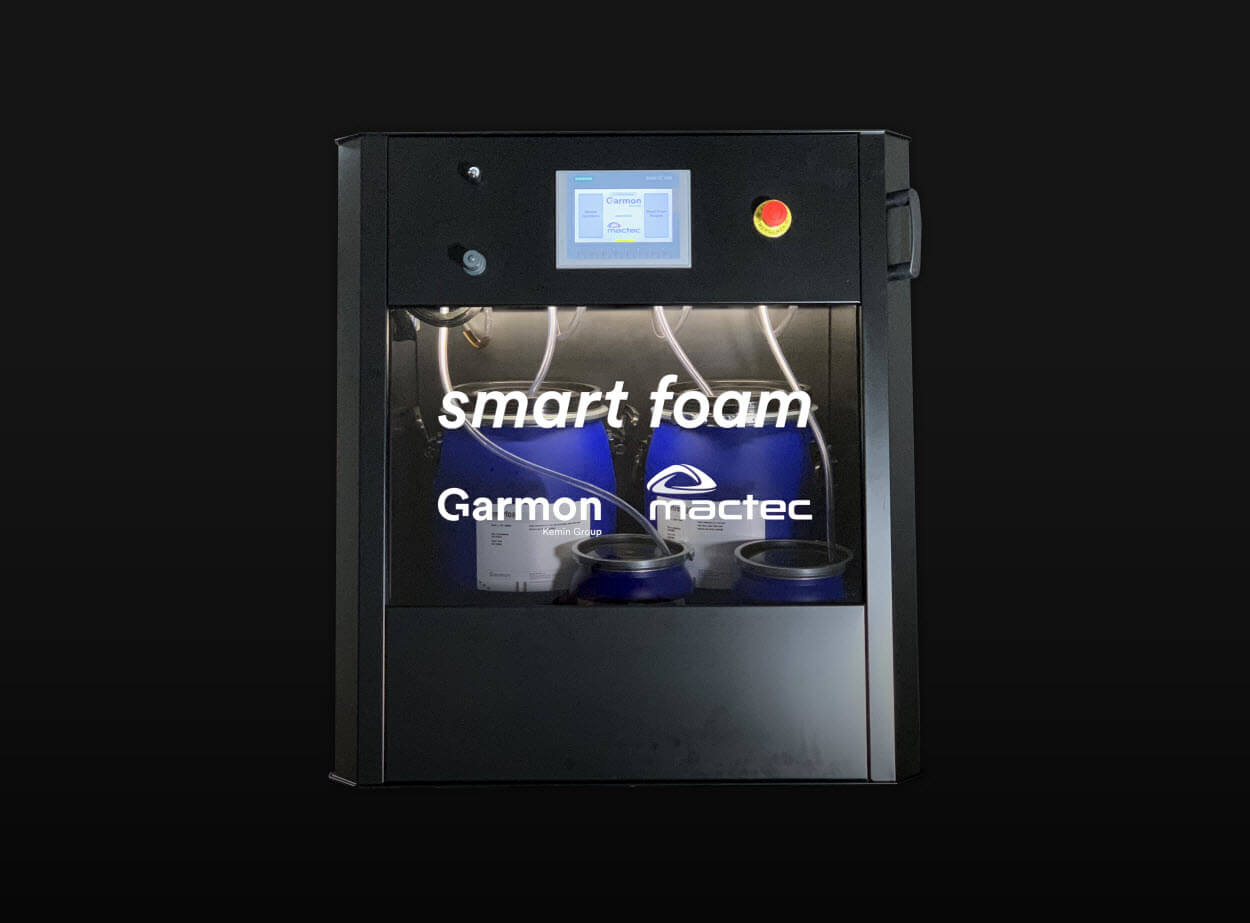
All Safe Wear products work with Garmon’s smart foam finishing technology, a system it launched last year to save water in garment finishing.
With smart foam the chemical carrier is not water, but a special foam created with a combination of new technologies: Garmon’s tested and selected range of chemicals – easyfoam and easyfoam pro, Garmon’s special foaming agents, and foam-generating equipment. The smart foam system can be used to create everything from traditional finishes to unique fashion concepts and styles.
“Smart foam presents a lot more integration of the chemistry and the technology,” says Nelson. “We see a big opportunity with that and modernising our customers’ manufacturing facilities to better utilise safer chemistry. It’s really hard to use safe chemistry with a really old safe machine. The marriage of the two is a really nice space of innovation we’re about to explore further.”
Garmon says it is continuing to promote the benefits of its smart foam system during this time, besides the new Safe Wear line.
“We presented smart foam in the middle of October and now we’re selling the treatment, the chemicals,” says Romiti. “We’ve started to see the smart foam system in laundries. Our Safe Wear line is important but we’re still keen to focus on products we launched in the last year – things we were developing before the pandemic.
“We expect to enter the ‘new normality’ with the same products we were working on – maybe even stronger.”
Adaptable approach
This emphasis on strength is particularly important during the Covid-19 pandemic, which has seen various textile and apparel companies struggle financially. However, Garmon believes that its emphasis on safety will prove valuable across the value chain – particularly among its biggest markets of China, Bangladesh and Pakistan.
“There’s a lot of frustration from the supply chain right now regarding what’s happening,” says Nelson, “and a lot of our laundry customers feel that this is a product that they can go to their customers with and encourage them to get some more confidence to place more orders with this kind of safety aspect. It could add value to the final product.”
Additionally, its global sales team plays a big part in driving mass production. Nelson says: “We have a push-pull method from the ground and also to the brands so that any sales process or any message especially regarding this particular period is a high volume product. It can hopefully push through projects faster to get products out to a larger audience.”
The company has also been able to learn from the other markets it operates in – namely China – in order to face the challenges head on, as Nelson explains.
“I think at first, everyone was like, ‘How do we do business?’ But I will say that we quickly adapted,” she explains. “China was hit first, so our team in China went through this about three weeks before Italy came under the same problem.
“China in general is a much more digitally advanced country – we’ve done virtual demonstrations of garments via video conferencing. They’ve taught us how to properly work in the Covid era. We’re lucky that we saw and had their experiences to share with us. We’ve never been without focus or help.”
Garmon says it will continue to gather such insight for its product lines in order to continue to meet consumers’ requirements for safety, performance and sustainability.
“Let’s not compromise having a really wonderful performance chemical, but let’s not also compromise the sustainability path that we were all working towards,” Nelson says. “We’re making sure we apply more interesting chemistry now and to make sure it’s still being done in a safe way. There are a lot of areas we can innovate in to advance our industry even further.”
For more information on Garmon’s product portfolio, visit http://www.garmonchemicals.it/