The owners of a yarn dyeing operation founded in New England, US, six years ago hope to take their company’s production to a higher level as it works through the challenges faced by a start-up manufacturer.
Attorney Claudia Raessler and her husband, Ken, founded Maine Dye & Textiles in Biddeford, Maine, in 2012, buying the assets of a defunct dye house, with the help of a few partners. The operation has evolved several times since then, including moving to a larger facility in Saco, Maine.
Initially known as Saco River Dye House, the Raesslers changed the company’s name more than a year ago to more closely identify with the textile heritage of New England. They also coined the company slogan: ‘Putting the colour of Maine back into textiles.’
The fledgling firm has since seen steady growth, evolving into a dye house that mostly serves technical textile markets. Rope & cordage is the company’s primary industrial market. Maine Dye hopes to expand to other areas in the coming years. Raessler is currently doing sampling in technical wear with FR material.
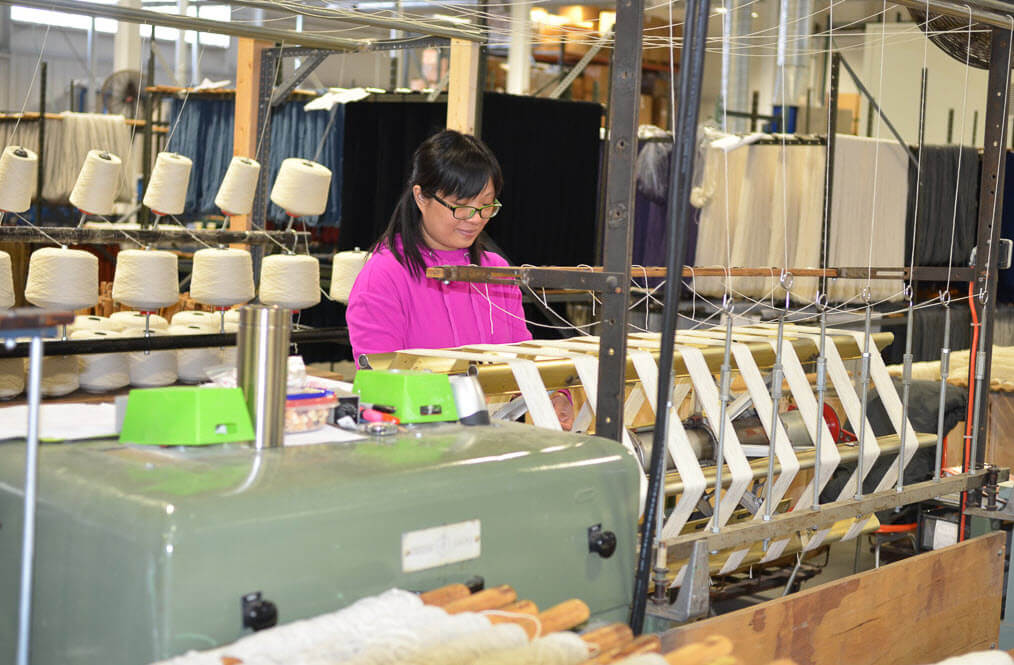
In 2016, the Raesslers spent US$750,000 in private money to buy two Bellini dyeing machines, two Fadis winders and an RF System drying machine. That equipment allowed them to move into the technical textiles market. The investment was used to replace vintage equipment that dated to the 1930s. It also helped reduce the environmental impact of the company’s production.
From its founding, Raessler has viewed her dyehouse as a unique opportunity to create and serve well-defined markets where support is needed for the production of high value-added textiles, sampling for new product development, or where expertise is required to handle a wide range of fibres. Currently, Maine Dye & Textiles supports skein and cone dyeing, finishing services and sampling. Both the equipment purchased in 2012 along with the new technology acquired in 2016, support all phases of its operations for both natural and synthetic yarns.
As the dyehouse moves forward, Raessler says focus will remain on providing customer-centric services; building a workplace environment supporting cultural diversity and employee growth; and a production process that cares about environmental improvements.
“No one claims providing quality dye services for textile manufacturing is easy,” says Raessler. “Whether it is the expertise required for colour development or the skill to work with new materials. As an industry resource, however, Maine Dye is a small business working hard to create a positive impact within the textile supply chain.”
As many other recent start-up textile and apparel firms have discovered, a significant obstacle is finding skilled workers. That is true in Maine despite the state once being a major centre of textile activity. Most of the major manufacturers closed during the first decade of the 2000s. Equally tough, especially in the Northeastern US, is finding industry-specific training programmes.
Raessler has had discussions with the local community college system about developing a curriculum. Another option is online programmes through the North Carolina State University College of Textiles.
In what may have been a first in the US textile industry, Maine Dye and Textiles sought to boost production through crowd funding earlier this year. However, when the company was about two-thirds of the way to its goal, the platform used for the equity funding effort ran into a government regulatory compliance issue and the money had to be refunded, prompting the company to look at other options for growth.
Undaunted, the Raesslers are now focused on serving existing customers and are hopeful of picking up some business from other manufacturers.