
This year Harris Tweed Hebrides has been celebrating its 10th anniversary as the company looks back on a successful decade in which it has helped turn around the Harris Tweed industry.
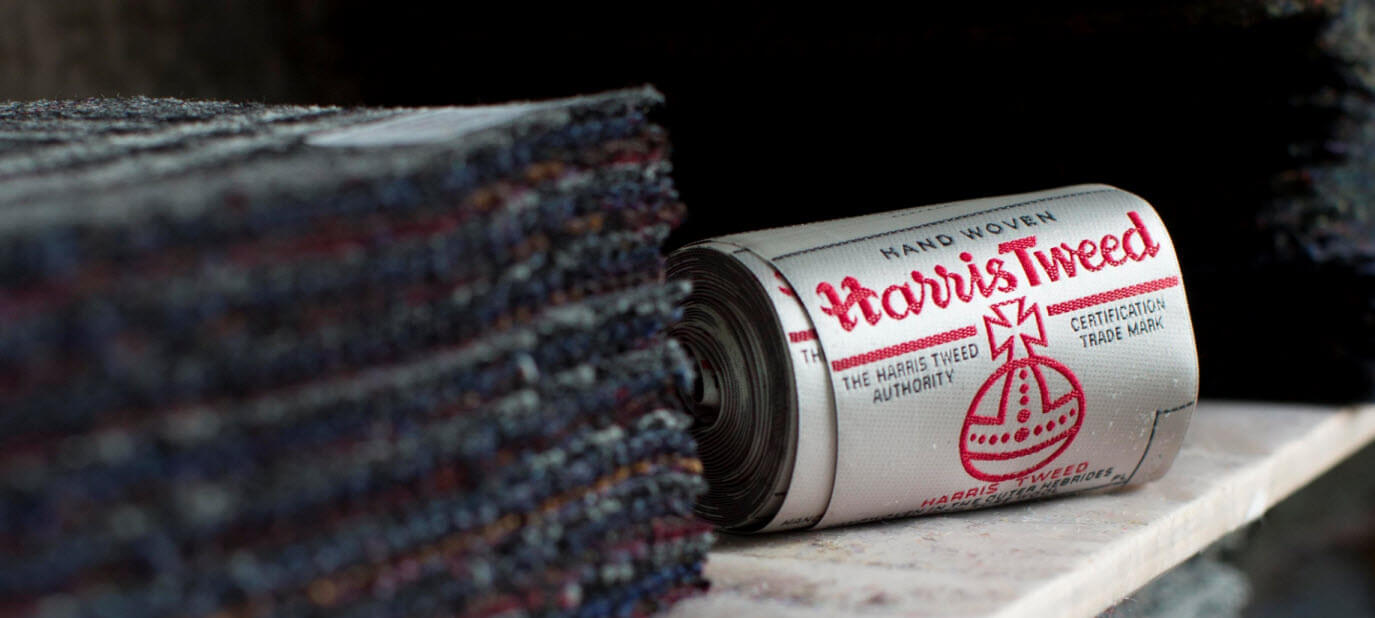 Harris Tweed Orb labels
“Although the Harris Tweed industry has existed for well over 100 years, it had almost collapsed in 2008 when we started production from the Shawbost mill,” says Margaret Ann Macleod, the Harris Tweed Hebrides sales director.
“Since then, we have focused on design, quality and customer service to rebuild long-established relationships and forge new opportunities.”
Today Harris Tweed Hebrides accounts for around 75% of all Harris Tweed production. It employs over 70 people while also giving work to around 140 independent home weavers who live across the island of Lewis and Harris.
To mark its 10th birthday, Harris Tweed Hebrides’ contribution to the fashion and textile industry was recognised at the Scottish Style Awards, held on 31 March at the Kelvingrove Art Gallery in Glasgow.
Harris Tweed Hebrides fabric was presented in a special catwalk show and the company received an Outstanding Achievement award.
Commenting on its first 10 years, Ian Angus Mackenzie, who has led the company from its inception, says: “It has been a great journey and a credit to everyone involved. The age profile of weavers and mill workers has been transformed, new markets have opened up and Harris Tweed now has a great future as well as a glorious past.”
Margaret Ann Macleod, the Harris Tweed Hebrides sales director (centre, back row) with the group of Australian woolgrowers
Macleod adds that it has successfully evolved Harris Tweed fabric as it enters a new era. “We have transformed the image of the fabric and greatly extended its range of uses,” she says. “In the early days it was essential to send out the message that Harris Tweed was a fabric of fashion, working with young Scottish designers to present a completely different image.
“That took us into new clients and younger markets. We have continued to secure very high-end clients and this is vital to perceptions of Harris Tweed.”
She adds: “The use of the fabric in the tech accessory sector, which really started in Japan, has been hugely beneficial to growth in demand. All of this was made possible by the people who work at Harris Tweed Hebrides as well as the home weavers. Making it a year-round industry with secure employment and changing the age profile of the workforce have been major achievements.”
The increasingly diverse uses of Harris Tweed Hebrides fabric have been striking, and Macleod says that “the many different end uses there are for Harris Tweed continues to amaze us. My personal highlights this year are from two ends of the scale – the Manolo Blahnik shoe collection and the Hello Kitty Harris Tweed dolls sent to me from one of our long-established Japanese customers. Two very different commercial products both using Harris Tweed fabrics.
“Other exciting brands using Harris Tweed Hebrides fabric this year included Thom Browne, Supreme, Vivienne Westwood and Prada. We also secured a number of new customers making furniture and interior accessories. These include Vanessa Arbuthnott and Neptune, both based in the UK. We have also been working on an exciting project with Triumph Motorcycles, which has produced a special edition of the legendary Triumph Bonneville – The Dapper Bonnie – complete with Harris Tweed seat and trim.”
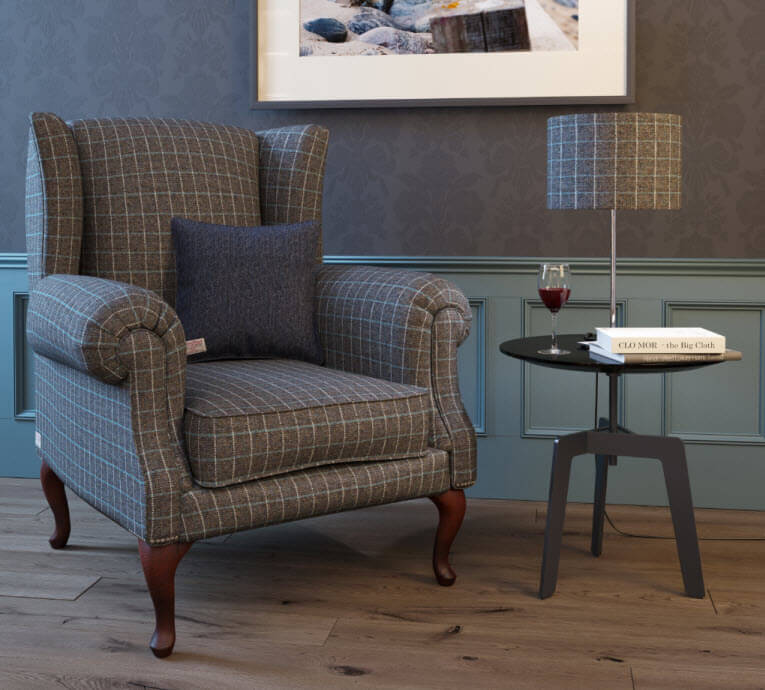
Chair and lampshade from UK furniture manufacturer Blackhouse, made using Harris Tweed Hebrides fabric
Commenting on the most popular Harris Tweed Hebrides fabrics over the past year, she says that “fabric sales have varied across different markets. Our range of classic Harris Tweed patterns which are stock-supported remain very popular. Here we offer everything from the bestselling grey herringbone to our classic blackwatch tartan. These fabrics remain strong sellers year-on-year.
“Looking at the rest of the collection, our plain fabric, which would be classed as marl, has been very popular with both our male and female customers. Mainly focused around our grey marl palette this fabric collection has been very strong over the past 12 months.”
The Harris Tweed Hebrides autumn/winter 2019/2020 fabric collection will be showcased at Première Vision Paris in September.
“Selling is well under way for our new autumn/winter 2019/20 collection and we have already seen a very positive reaction to new designs, particularly oversized herringbones and houndstooth options in more muted pastel shades,” says Macleod.
“This reflects a focus on ladieswear – we have seen a number of new customers and existing customers moving towards ladieswear with their Harris Tweed ranges.”
As demand grows for its cloth, Harris Tweed Hebrides has been upgrading its facilities and last year unveiled a £2.4m extension of the Shawbost mill, built to house new blending and dyeing facilities.
 Daniel Crossley, pattern room assistant at the Harris Tweed Hebrides Shawbost mill,
wearing garments made using its fabric from the Harris Tweed Clothing Company
Macleod says that the project has led to significant changes in the company’s production department. “The new dye house and blending department are now fully operational and this has created significant efficiencies, while hugely improving the working environment across the mill,” she says.
“We have been working alongside the Marzotto Group and their technical support companies to help deliver a transformational project. We are able to offer improved flexibility. Harris Tweed has always been recognised for its richness and depth of colour in the yarn, which is all manufactured at our mill, and this project set out to ensure we can offer our customers the flexibility with batch sizes and colour development they require.”
She adds that the relationship with Marzotto also comprises a sales and marketing agreement. “This involves working closely with the team at Estethia G.B. Conte, a division of Marzotto,” says Macleod. “It is working well, with Alvise Boniver Conte and his team leading on sales enquiries for ‘mainland’ Europe.
“This provides us with significant in-market support across Europe, including showrooms in Italy, Germany, France and Spain. After the first year of this partnership, they now also manage our sales activity in China, South America and Canada, which are all potential growth markets for us. We remain closely involved with all our customers, both established and new.”
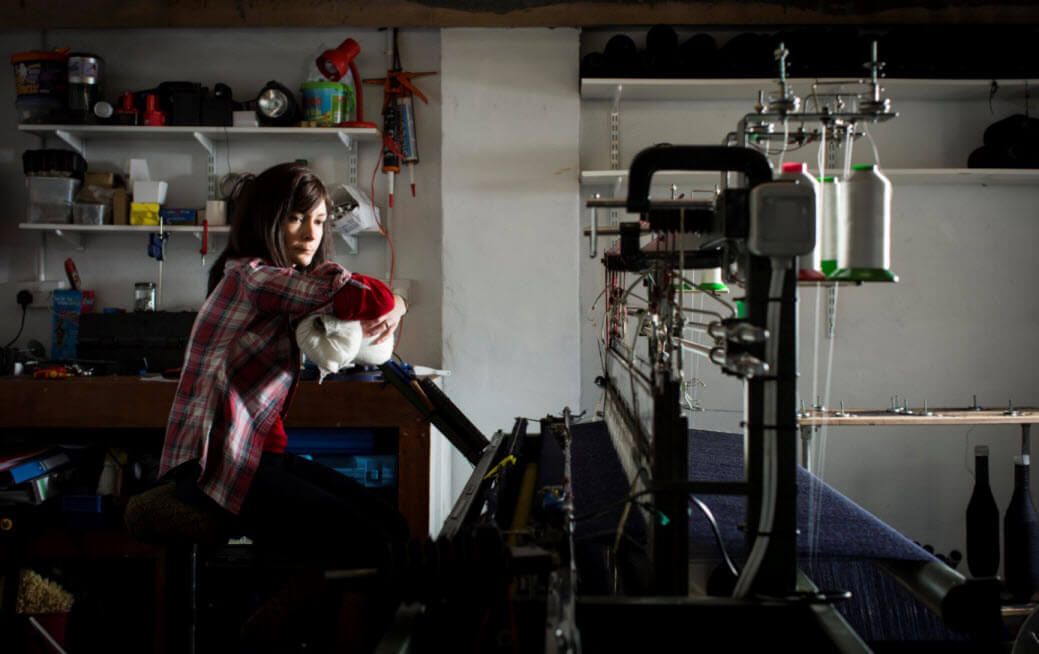
Erica Macrae, one of a new, younger generation of Harris Tweed home weavers
Macleod reveals that demand for Harris Tweed Hebrides fabric remains strong across its major markets. “We have again been working to full capacity this year,” she says, adding that its markets continue to develop.
“Over the 10 years we have seen some significant changes,” says Macleod. “For example, the UK market is now much stronger than when we started, from haute couture to the high street. We have also seen significant growth within the interiors market, where we produce a heavier weight of fabric for upholstery and contract upholstery customers. This has been a very positive sector for us over recent years and we continue to expand and diversify our fabric range in this area.”
She adds that Japan “remains an exciting market for Harris Tweed Hebrides. Here the consumers recognise the Orb and look for the quality and provenance associated with Harris Tweed.
“As an industry this year we have been working across Japan, focusing on the brand profile. We are lucky to enjoy a close working relationship with many of our Japanese customers, for whom we produce exclusive designs. We will be attending the JITAC European Textile Fair later in the year and we are confident that the Japanese market will remain strong.”
Macleod says that the company also continues to explore new markets. “We are always looking at new markets. There are markets in Europe where Harris Tweed once had a significant presence, but it has virtually disappeared. One of the reasons for our arrangement with Estethia – G.B. Conte is to help us get back into these places where it is more challenging for a small company in the Outer Hebrides of Scotland to be directly represented. We also look forward to an increased presence in China as a result of the Estethia G.B. Conte activity there.”
She adds: “We have seen furnishing fabric sales increase throughout this year with customers like Tetrad and Blackhouse, which both manufacture furniture in the UK. This is a sector where we see significant potential for growth, particularly within the North American market where we can see strong opportunities to develop new relationships.”
As Harris Tweed Hebrides looks to continue exploring new markets, Macleod also stresses the importance of tackling any challenges it might face. “Operating a production mill in the textile sector is always challenging. We are lucky enough to have many new opportunities coming our way, and inevitably that will always bring new challenges.
“At the moment anyone in business in the UK is faced with the prospect of barriers to trade. Manufacturing fabric in one of the remotest parts of the UK, we rely on effective routes within the UK, into the EU and then to the rest of the world. Any barriers to ease of trading with Europe or the rest of the world remains a concern.”
Meanwhile, Macleod says that across its different markets the unique story of Harris Tweed continues to boost its appeal. “As defined by the Harris Tweed Act, 1993, Harris Tweed can only be ‘handwoven by the islanders at their homes in the Outer Hebrides, finished in the Outer Hebrides, and made from pure virgin wool dyed and spun in the Outer Hebrides.’
“We are privileged to have an industry on our island with such a prestigious history, which also means the provenance and brand awareness of our fabric helps to ensure we can maintain a strong market position, providing we continue to focus on design, colour, quality and customer service.
“Many Harris Tweed customers appreciate that our fabric is always 100% pure new wool and each and every metre of fabric must be hand-woven to ensure the cloth is authenticated by the Orb symbol as Harris Tweed.”
She adds that the growing demand for eco-friendly fashion is also benefiting Harris Tweed Hebrides. “The trend for sustainable raw materials, particularly wool, remains strong as discerning consumers look for traceability, provenance and sustainability when they make a purchase,” she explains.
Looking ahead to the next 10 years and beyond, Macleod says: “We will remain focused on quality – ensuring the Shawbost mill is equipped to meet demand and exceed the expectations of our customers. The last 10 years have taught us that we always need to be looking for new markets and collaborations, as well as working closely to support existing clients.”
She adds: “We need to keep promoting the provenance of Harris Tweed. An understanding of the complexity of the process and why the brand is so unique are very important in maintaining its status and appeal.
“I don’t think anyone, 10 years ago, would have predicted that Harris Tweed Hebrides would have travelled so far and so fast or that Harris Tweed would, once again, have become such a ubiquitous brand, sought after by international fashion houses and revered by a new generation of consumers. The challenge for the future is to maintain the status of the brand, the quality of the product backed up by continuing investment, and an awareness of the heritage that Harris Tweed Hebrides represents.”
- Harris Tweed Hebrides will be exhibiting at Première Vision Paris (19-21 September), STIB Barcelona (25-27 September), Milano Unica Shanghai (27-29 September), and JITAC European Textile Fair (JETF) in Tokyo (16-18 October).
New board appointments
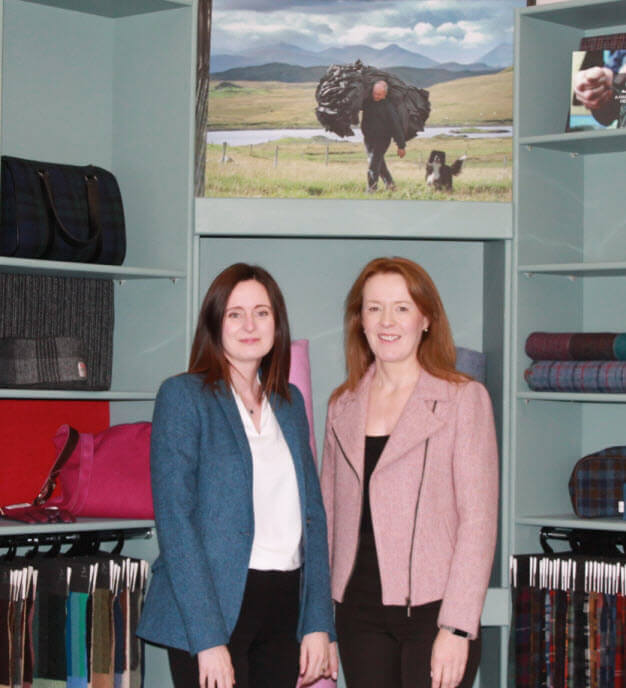 (Left) Elaine MacRury, the new Harris Tweed Hebrides finance director,
and (right) Margaret Ann Macleod, the new sales director
In July Harris Tweed Hebrides announced the appointment of two current employees to key positions on its board.
Elaine MacRury, previously financial controller, was appointed finance director, while Margaret Ann Macleod, formerly the brand development director, became the new sales director.
Brian Wilson, the Harris Tweed Hebrides chairman, says: “These appointments recognise both excellent service to the company and also the need to underpin its continuing success by refreshing the board and management structure.”
Chief executive Ian Angus Mackenzie adds: “Over the past 10 years, we have seen a significant heartening change in the age profile within the company and industry. As we move into our second decade, it is the right time to reflect this in the make-up of the board while also recognising our confidence in Elaine and Margaret Ann.”
Australian woolgrowers visit
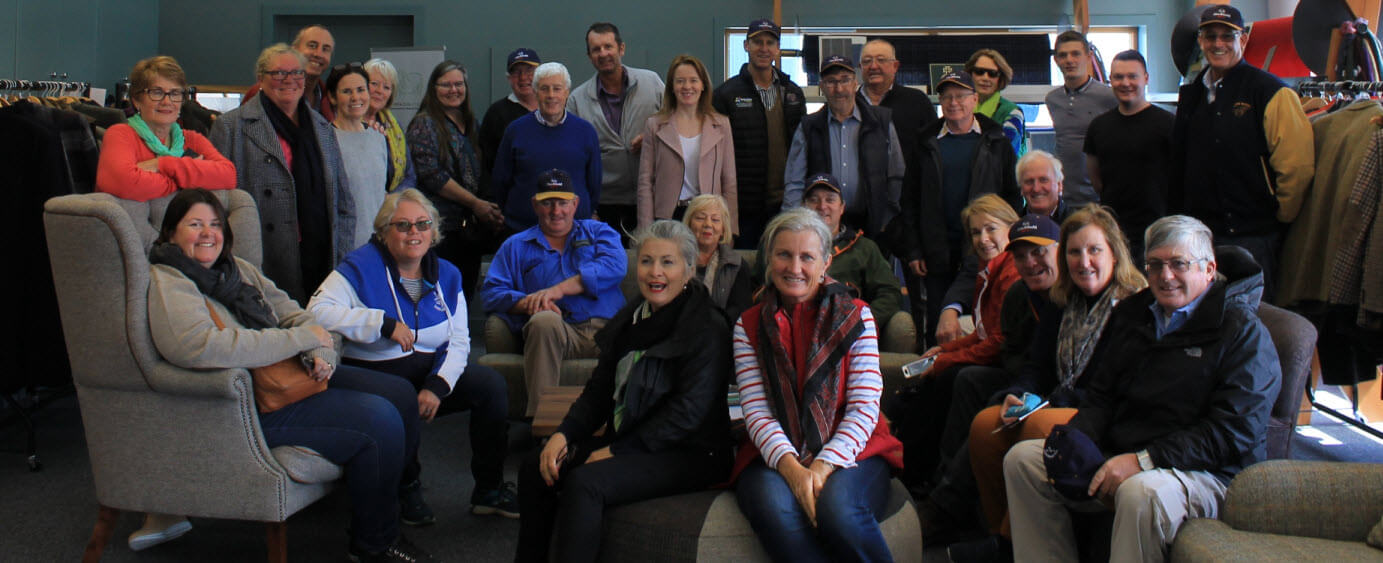 Margaret Ann Macleod, the Harris Tweed Hebrides sales director (centre, back row) with the group of Australian woolgrowers
This summer Harris Tweed Hebrides hosted a number of Australian woolgrowers during a tour of the UK wool textile industry.
As well as enjoying a visit to the Harris Tweed Hebrides mill at Shawbost, the group met with a number of island crofters (Scottish farmers with small holdings), many of whom combine crofting with Harris Tweed weaving.
“The crofters look after their sheep herds on a very different scale compared with Australia,” said Margaret Ann Macleod, the Harris Tweed Hebrides sales director. “The average flock on the islands is around 70-150 sheep with access to 5-10 acres of crofting ground. Most of our Australian guests have farms well in excess of 10,000 acres, caring for thousands of Merino sheep.”
She added: “We were delighted to welcome the delegation of Australian wool farmers. It was a whistle stop tour of the Hebrides and the group spent some time with Harris Tweed Hebrides to fully understand our manufacturing processes and to meet with a home-based hand weaver.
“The delegation left Harris Tweed Hebrides to visit the Harris Distillery to sample a little of the island gin – Harris Gin – always a good combination with Harris Tweed!”


