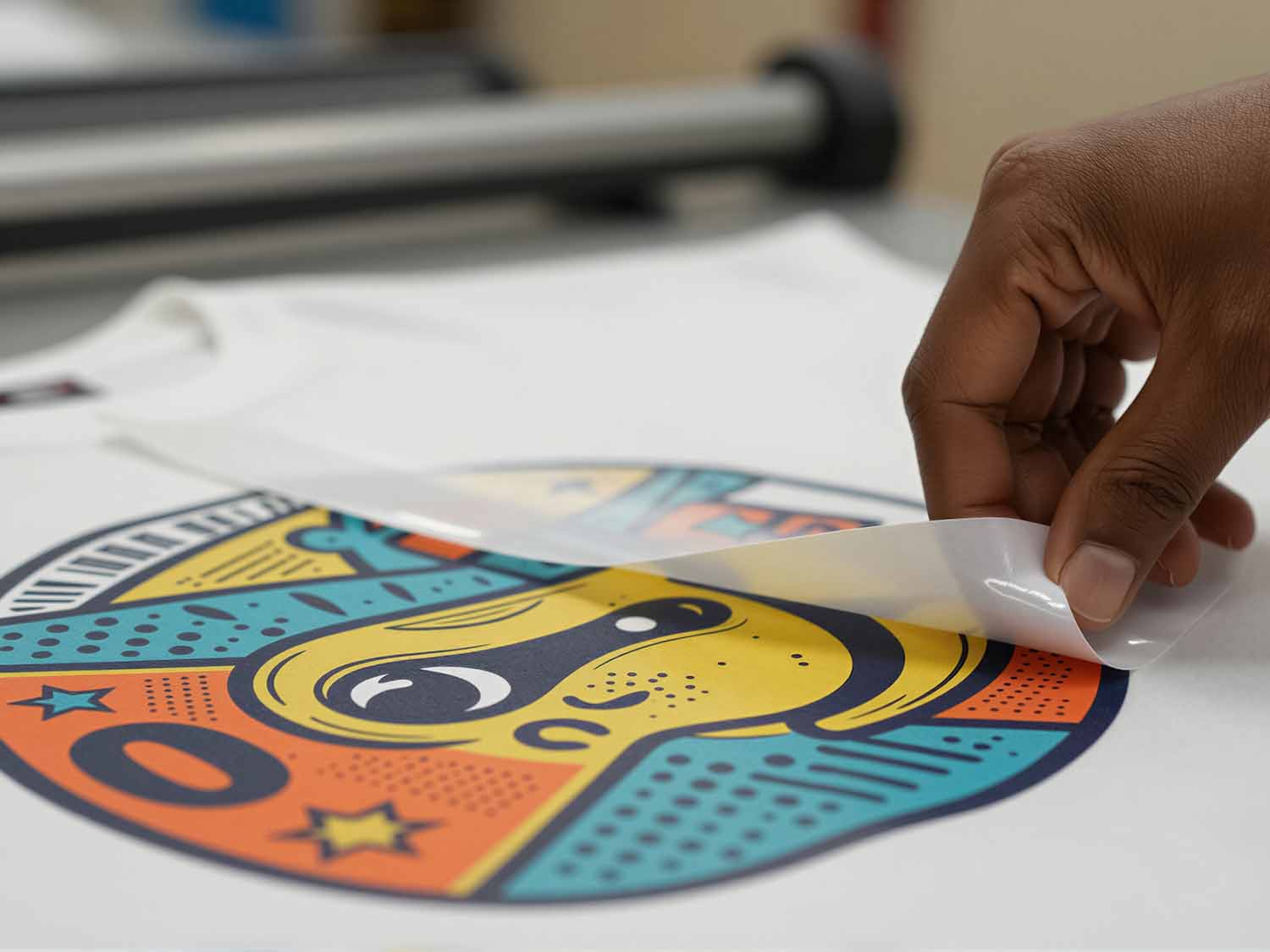
High-profile machinery launches grab much of the limelight within the digital textile printing sector, courtesy of marketing campaigns that promise faster production speeds and increased uptime.
Such is the influence of ITMA, where OEMs were keen to unveil their latest high-profile hardware solutions at the 2019 instalment of the quadrennial exhibition, which is considered by some to be the world’s largest textile machinery-focused trade fare. At the show, large swathes of visitors were attracted to the booths of OEMs in Hall 3 – the digital printing quarter – where new technologies were being launched, or demonstrated, on an hourly basis.

However, Huntsman’s business unit director for digital inks, Mike Mordente, believes there needs to be more emphasis placed on the developments which have been made to digital textile inks. After all, some analysts claim that a printer is only as successful as the ink used within it.
From a print house perspective, the performance of both machines and inks are of equal importance. Faults with either component will tarnish the printed product, resulting in disgruntled retailers and brands.
The importance of ink
But it is claimed that advancements within the ink sector could have the largest impact on some of the digital textile printing industry’s greatest sticking points.
For some time, analysts have stated that innovation is key to overcoming issues around sustainability – a challenge that has plagued the textile industry for decades.
The emergence of inkjet textile printing, and its continued evolution, has gone some way to tackling this threat but more still needs to be done.
Huntsman’s latest ink innovations, NOVACRON Advance and ERIOFAST Vista, were launched back in June at ITMA Barcelona.
Mordente says: “NOVACRON Advance is a next-generation reactive ink offering the deepest shades available in the reactive inks market, while expanding the achievable colour space beyond today’s best available technology. The range has been designed and tested for excellent jetting performance across all printing modes and speeds.
“It is important to provide high-colour-density inks,” Mordente adds. “NOVACRON Advance incorporates a new formulation technology to provide a range which significantly increases the colour strength and further improves the robustness of the inks, improving quality consistency and efficiency in digital printing – hence improving sustainability.

“At the same time, with cost pressures on the rise with the proliferation of high-speed printers, NOVACRON Advance enables mills to achieve significant savings on ink consumption,” he says. “In conventional printing, polyester-cotton represents a sizeable portion of the global textile printing market. However, the market has lacked a technical solution that gives inkjet printers the required performance in colour appearance, fastness and handle. As we already know, some existing inks have known limitations.”
Users of digital pigment inks, for example, have faced well-documented hurdles through the years. Pigments have been plagued with viscosity issues, a poor rubfastness and a restricted colour gamut, but a lot of R&D has since been spent on eradicating these problems, so much so that the uptake in pigment inks is rising across the digital textile printing market.
Meanwhile, ERIOFAST Vista is “a breakthrough approach catering to a growing market demand for bright shades on polyester-cotton blends in digital direct printing applications”. Mordente adds that it is “a proprietary system for the freedom of choice in digital textile printing”. But crucially, “the ink is UREA free, has exceptional fastness properties, superior colouristic performance, superior fabric handle, enables low temperature wash-off and consumes minimal amounts of water compared to existing solutions”.
Positive reaction
Despite not being as high-profile as the HP Stitch S series and the MS Mini Lario – incidentally, both printers were showcased at ITMA 2019 – Mordente has been encouraged by the feedback he has received for Huntsman’s latest inks.
“Customers were impressed by the shade depths afforded by our new NOVACRON Advance Black. Its unrivalled depth combined with exceptional reproducibility are also significant highlights. Customers appreciate the range’s colour brilliance, strength and colour saturation,” he says.
“For our ERIOFAST Vista digital ink range, customers were keen to evaluate this high-performing, sustainable dye-based formula with their expanding inkjet capability for polyester-cotton printing.”
Principled success
Huntsman has three core values: innovation, sustainability and collaboration. These principles, Mordente hopes, will help the company to expand throughout the world’s major printing markets of Asia, Europe and the US. Mordente says: “The digital printing sector continues to grow in these areas as fast fashion continues to dominate. Our global team of technical experts are located in the growing regions and can offer advice on production and process efficiency.”
But as well as sustaining the fast fashion movement, which has come under intense scrutiny in recent years, inkjet technology is similarly fuelling the emergence of more ethical business models such as Web2Print and print-on-demand (POD). Businesses that have adopted these models, or others like them, are an example of how the digital printing sector’s continued evolution since the 1990s has helped the textile industry to become more sustainable. This influence is expected to continue in the years ahead, experts suggest.
“Huntsman continues to innovate with new digital ink solutions that meet shifting market trends,” Mordente says. “As the polyester-cotton market grows, we have responded with industry-leading solutions that meet both the performance and production needs of mills. As customers demand better, high-density blacks, we have constantly improved our formulation to meet the needs of the fashion and apparel segments.”
Digital transformation
It is unquestionable that the inkjet textile market has transformed in the last two decades. Back in the 1990s, when the first digital textile printers achieved speeds of one or two sqm hour, it was unimaginable that inkjet solutions in 2019 would operate at 90m per minute.
“New machinery and inks have significantly increased productivity and performance in the roll-to-roll printing sector,” Mordente says. “This has allowed printers to allocate more production – including very long runs – to inkjet printing, and the technology is being increasingly applied to new applications in the automotive, home furnishings and outdoor sectors.

“Huntsman has a large innovation team dedicated to the development of new solutions for the roll-to-roll market. We have a full range of inks to print on all textile substrates with a full gamut of rich and deep colours and we are constantly upgrading our inks to provide the best reliability, runnability, and reproducibility. We will continue to stay ahead of the game and introduce new inks to help printers raise their performance and productivity,” he adds.
But as with most environmentally-friendly technologies, they come at a cost and sometimes the infrastructure isn’t in place for them to succeed – a case in point would be electric vehicles. They have been proven to considerably reduce carbon emissions in our busy cities, providing they are powered by renewable energy, but the biggest obstacle facing the rollout of electric vehicles is a distinct lack of charging points.
Following protocol
Nevertheless, the emergence of strict regulations, both in China and western economies, means that the industry’s hand is being forced on the issue of sustainability. But critics argue that this places companies in a tricky position: they are being forced to spend on green technology or pay out large fines for non-compliance. Either way, profit margins could shrink and jobs may be put at risk.
“Sustainability is key to survival in today’s apparel and textile industry and it has two sides: environmental and economic. With steady innovation in digital inks, digital textile printing contributes to both,” Mordente says.
“Inkjet textile printing is a planet-friendly technology that achieves considerable energy and water savings compared to traditional printing methods. It also uses less chemicals, reducing waste and enhancing operator safety, and produces fewer greenhouse gas emissions. This helps mills and printers comply with tighter environmental regulations and standards, which includes the restricted substances lists of the world’s top brands.
“On an industrial scale, digital textile printing is fast, flexible and cost-competitive over short runs. It enables mills and printers to meet the needs of global brands, which want to produce unique designs in deep shades, deliver high-quality results and shorter lead times,” Mordente continues.
Meanwhile, the ink type is an important factor to consider as some categories are more environmentally friendly than others. Ironically, despite highlighting some of their weaknesses previously, digital pigments are considered to be the most environmentally-friendly inks available on the market because they don’t require a pre-treatment. This means the only finishing process that needs to be carried out is drying or baking. Consequently, by using pigments, the consumption of water during the production process is significantly reduced.
Taking the lead
Mordente says: “As a dyes and chemicals innovator, Huntsman Textile Effects has been a pioneer in the digital printing sector since its earliest days, and we continue to develop new solutions in collaboration with print head and machine manufacturers to revolutionise the full spectrum of digital textile ink formulas.”
Overall, the future looks bright for the digital textile printing industry thanks to the R&D carried out by companies like Huntsman. The percentage of digitally-printed textiles continues to rise year-on-year, helped by the fact that inkjet printers can achieve far greater top speeds than ever before. But there is also a quality aspect to consider as brands and retailers still prioritise quality despite acknowledging environmental concerns. If the value isn’t there, customers will look elsewhere.
Moreover, customer buying habits are changing in relation to issues that are facing the textile industry. In order to protest against the unethical manufacturing processes of some brands and retailers, consumers are shopping elsewhere with companies that have already implemented new business models, such is the influence of digital manufacturing. But with its three fundamentals – innovation, sustainability and collaboration – Huntsman will be best placed, according to Mordente, to not only succeed but lead when it comes to innovating digital inks for textile applications in the years ahead.